Are ATVs Street Legal in Ontario?
One of the biggest head-scratchers for new ATV and UTV riders in Ontario, or even seasoned riders new to the province, is whether you can legally take your machine on the road. It’s a common source of frustration and confusion, leading many to assume they're strictly confined to trails or private property. But the truth is more nuanced, and this guide is here to untangle the provincial and municipal rules, helping you understand exactly when and where your off-road vehicle can hit the pavement.
The Short Answer: It's Complicated (But Mostly Yes, With Conditions)
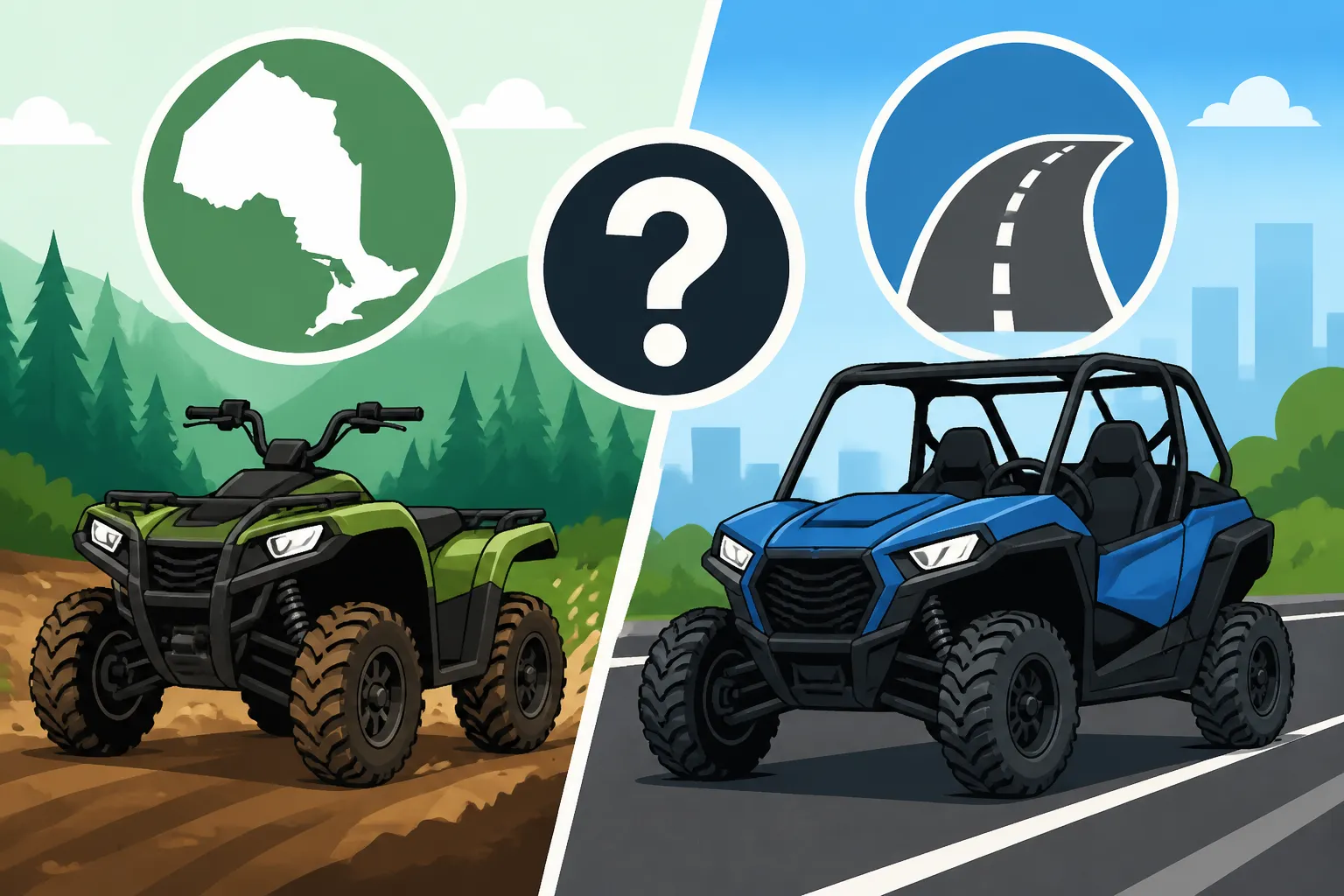
Let's cut right to it: yes, ATVs and UTVs can be street legal in Ontario, but it’s not a blanket "ride anywhere" rule like with your car or motorcycle. This isn't just about throwing a licence plate on your quad and heading down the highway. There are specific conditions that must be met by your vehicle, by you as the operator, and by the roads you intend to ride on. Ignoring any one of these can lead to hefty fines, so it’s crucial to understand the full picture.
Why the Confusion Exists: Provincial vs. Municipal Rules
A lot of the confusion stems from the layered nature of the laws governing off-road vehicles (ORVs) in Ontario. At the provincial level, we have legislation like the Off-Road Vehicles Act and sections of the Highway Traffic Act that lay out the foundational rules. These acts define what an ORV is, what equipment it needs, and who can operate it. However, they also hand a significant amount of power over to local municipalities – your townships, cities, and counties – to decide whether ORVs are allowed on their specific roads.
This creates a patchwork system across the province. You might be able to legally ride your ATV on a road in one township, cross an invisible line, and suddenly be breaking the law in the next. This local control often catches riders off guard, as they might assume provincial permission means universal access. It’s a common pitfall, and it means your homework doesn't stop at understanding the provincial guidelines; you need to dig into local by-laws too.
Provincial Enabling Legislation: The Framework for Road Use
Ontario’s legal framework doesn’t explicitly ban ORVs from roads; rather, it sets the stage for conditional access. The Off-Road Vehicles Act is the primary piece of legislation that governs these machines, defining them and outlining requirements for registration and safe operation. It works in conjunction with the Highway Traffic Act, which generally governs all vehicles on public roads.
Crucially, the province has created a system where municipalities can "opt in" to allow ORVs on their roads. This isn't just a free-for-all; it's a carefully structured approach to manage ORV use responsibly. The legislation differentiates between various types of ORVs, such as ATVs (All-Terrain Vehicles), ROVs (Recreational Off-Highway Vehicles, often called side-by-sides or UTVs), and off-road motorcycles. Each class might have slightly different regulations regarding road use, especially concerning things like width and weight limits. Understanding these distinctions is key to knowing if your particular machine qualifies. For a deeper dive into the foundational laws, check out [The Off-Road Vehicles Act and Ontario Riders]. You'll find specific details about vehicle classifications, such as [The ATV Class Under Ontario Regulation 316/03], which helps clarify what constitutes an ATV under the law.
Essential Requirements for Road-Legal ATV/UTV Use in Ontario
So, you’ve learned that your ORV can be street legal. Now, let’s talk about what that actually entails. It’s not just about getting a licence plate; it's about ensuring your machine is properly equipped, you're properly licenced and insured, and everything meets provincial standards.
Vehicle Equipment and Modifications
Your off-road machine, while built for the trails, needs specific equipment to be deemed safe and legal for road use. Think of it like taking a dirt bike on the road – you need more than just the engine and wheels. Essential requirements include:
- Headlights and Tail Lights: These aren't just for seeing the trail at night. Your ORV needs proper headlights (high and low beam) and tail lights, including brake lights, to be visible to other road users. [Ontario ATV Lighting Requirements] provides more information on this.
- Mirrors: You need at least one mirror to see behind you, typically mounted on the left side, though two mirrors (one on each side) are often preferred for better visibility and safety. For specifics on these, see [Ontario ATV Mirror Requirements].
- Horn: A working horn is mandatory to alert others to your presence, just like any other road vehicle.
- Muffler: Your ORV must have an exhaust system that effectively muffles sound, preventing excessive noise. This is often a point of contention for riders who love a louder aftermarket exhaust, but for road legality, quiet is key. Look into [Ontario ATV Muffler Rules] for more details.
- Brakes: A functional braking system that meets provincial standards is non-negotiable for road safety.
- Tires: Tires must be suitable for highway use, meaning they are in good condition and designed to handle paved surfaces. Aggressive knobby tires, while great for mud, wear quickly on asphalt and may not be considered appropriate.
- Width and Weight Limits: This is especially important for side-by-sides (UTVs). Ontario has specific limits on the maximum width and weight of ORVs permitted on roads. Many larger UTVs, particularly those modified with wider suspension components or oversized tires, can exceed these limits. Always measure your machine, especially if you've added aftermarket parts. Companies like SuperATV offer a range of accessories, and while they can enhance off-road performance, you need to ensure any additions still keep your machine within the legal parameters for road use. Understanding [Ontario ATV Width Limit for Road Use] and [Ontario ATV Weight Limit for Road Use] is crucial before you head out.
Driver Licensing, Helmets, and Insurance
It's not just the machine that needs to be ready; the operator does too. You can't just hop on with a learner's permit or no licence at all.
- Driver's Licence: To legally operate an ATV or UTV on a public road in Ontario, you must hold at least a G2 or M2 class licence. A G1 or M1 learner's permit is generally not sufficient, as it typically comes with restrictions that prevent independent operation of an ORV on a public road. This ensures that you have a foundational understanding of road rules and demonstrate competence. For more details on what's required, consult [Ontario's G2 and M2 Licence Requirement].
- Helmets: Helmets are not optional. You, and any passengers, must wear an approved motorcycle helmet that is securely fastened. This is a critical safety measure, whether you're on a trail or a paved road. Make sure your helmet meets the necessary safety standards; [Approved Motorcycle Helmets in Ontario] outlines what to look for.
- Insurance: Just like with any other motor vehicle, your ORV must be insured. You need a valid motor vehicle liability insurance policy, and you must carry proof of that insurance with you when riding. Riding without insurance is a serious offense in Ontario and carries significant penalties. This policy protects you and others in the event of an accident. Dive deeper into this topic with [Ontario's Mandatory ORV Insurance].
Registration and Plates
Before your ORV can touch a public road, it absolutely must be registered with the province. This means obtaining an Ontario Vehicle Permit and a valid licence plate.
- Registration: Your ORV needs to be registered in your name, just like a car. This process usually happens at a ServiceOntario centre. It’s how the province keeps track of ownership and ensures the vehicle is legitimately on the road. For a comprehensive guide on this process, see [Registering an ATV in Ontario].
- Licence Plate: Once registered, you'll be issued a distinct ORV licence plate. This plate must be securely mounted and clearly visible on your machine. There are specific rules about where the plate should be placed, often at the rear for quads, ensuring it doesn't obstruct vision or pose a hazard. For details on proper plate placement, check out [Ontario ORV Plates and Where They Mount].
Where You Can (and Cannot) Ride on Ontario Roads
This is arguably the most crucial and confusing part of ORV road legality in Ontario. Meeting all the vehicle and operator requirements is only half the battle; you also need to know which roads are open to you.
The Municipal Opt-In System: Checking Local By-laws
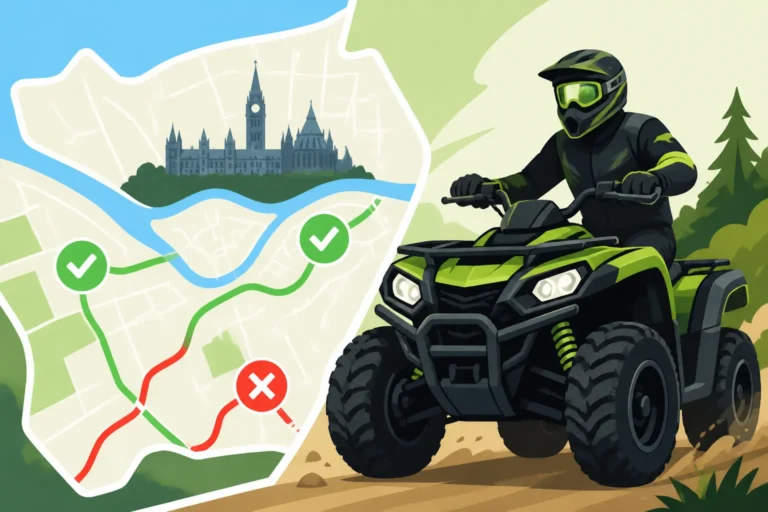
Ontario operates under an "opt-in" system for ORVs on municipal roads. This means that provincial law generally restricts ORVs from public roads unless a specific municipality has passed a by-law permitting their use. It's not the province opening roads; it's the municipalities making the decision for their own jurisdiction.
This patchwork approach means that a road that's open to ATVs in one township might be strictly off-limits in the adjacent one. It's incredibly important to do your homework before you embark on a road ride. You can't assume that because your buddy rode his side-by-side on a road last weekend in one area, you can do the same in another. Many clubs and federations, like the OFATV, maintain maps and resources that indicate which municipalities have enacted these by-laws.
- How to Check: The best way to verify is to contact the specific municipal office (township, city, or county) directly or visit their official website to review their ORV by-laws. Don't rely on word-of-mouth! Some municipalities have very specific hours of operation, road closures (e.g., during spring thaw), or particular roads that are exempt. For a list of areas that have opened their roads, see [Ontario Municipalities That Allow ATVs on Roads]. If you're curious about the process municipalities follow, [How an Ontario Municipality Opts In] breaks it down. For detailed guidance on finding and understanding these local rules, refer to [Checking a Township's ORV By-law].
Speed Limits and Road Types
Even on an open road, you're not free to ride at the posted speed limit for cars. Ontario has specific speed restrictions for ORVs:
- 20 km/h Limit: On roads where the posted speed limit is 50 km/h or less, your ORV's maximum speed is 20 km/h. This is often the case on quieter residential streets or rural concession roads.
- 50 km/h Limit: On roads where the posted speed limit is greater than 50 km/h (e.g., 80 km/h rural roads), your ORV's maximum speed is 50 km/h. You are never permitted to exceed 50 km/h on an ORV on any public road in Ontario, regardless of the posted limit for other vehicles.
These limits are in place for safety, acknowledging the different handling characteristics of ORVs compared to cars. You can learn more about this in [Ontario ATV Speed Limit on Roads].
-
Where You Cannot Ride: There are some roads that are universally closed to ORVs, regardless of municipal by-laws. These include:
- 400-Series Highways: Any 400-series highway (e.g., 401, 400, 403, QEW) is strictly off-limits to ORVs. These are high-speed, controlled-access highways designed for conventional motor vehicles.
- Provincial Highways (Unless Designated): While some provincial highways might have sections where ORVs can cross, or in very rare cases, share a shoulder, generally, you should assume provincial highways are closed unless explicitly marked otherwise or permitted by a specific by-law for a short crossing. For a clear understanding of these restrictions, see [Ontario Highways Closed to ORVs].
-
Riding on Shoulders and Ditches: When riding on a road where it's permitted, ORVs are generally required to drive as close to the right side of the roadway as possible. This often means riding on the shoulder. However, the rules around riding in ditches can be tricky. While sometimes seen as a way to avoid direct road traffic, ditches are part of the road allowance and still subject to ORV rules, and in some areas, riding in them might be prohibited or restricted. Get clarity on these specific rules by reading [Ontario ATV Rules for Riding a Shoulder] and [Ontario ATV Rules for Riding a Ditch].
Important Considerations and Rider Etiquette
Being legally compliant is just one piece of the puzzle. Riding responsibly and respectfully is crucial for maintaining and expanding ORV access in Ontario.
Passenger Rules and Age Limits
Bringing a friend or family member along for the ride adds another layer of rules.
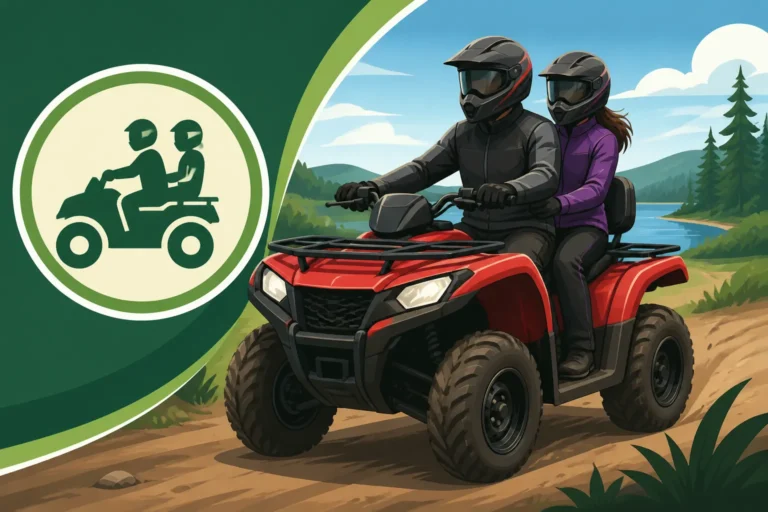
- Passengers: Not all ATVs are designed for passengers. Single-rider ATVs are exactly that – for one rider only. If you want to carry a passenger, your ATV must be specifically designed and manufactured for two people, often called a "two-up" or "tandem" ATV, with a designated seat and footrests for the passenger. Side-by-sides (UTVs) are generally designed for multiple occupants and come with seat belts. Always adhere to the manufacturer's recommendations for occupant capacity.
- Age Limits: To operate an ORV on a public road in Ontario, the operator must be at least 16 years old and hold the appropriate driver's licence (G2 or M2). There are also age guidelines for passengers, especially children. While a child might be able to ride as a passenger on private property, road rules can be stricter. For specific age requirements for operators on roads, consult [Ontario ATV Minimum Age on a Road]. If you're considering bringing a younger passenger, understanding [Can a Child Ride Passenger on an Ontario Road?] is essential.
Respecting the Rules and Community
Every time an ORV is operated illegally, unsafely, or disrespectfully on public roads, it jeopardizes the hard-won access for all riders.
- Noise and Emissions: While you need a proper muffler to be road-legal, it's also about being a good neighbour. Excessive noise, especially in residential areas, can quickly turn public opinion against ORV access. Ensure your machine is well-maintained and not emitting excessive pollutants.
- Private Property: The rules for road use do NOT give you permission to ride across private property to get to a trail or another road. Always respect private property boundaries and obtain explicit permission from landowners before venturing onto their land. Trespassing is illegal and damages the reputation of all riders.
- Trail Ethics: If you're using roads to connect to trails, remember that the same trail etiquette applies. Stay on marked trails, "tread lightly," and be mindful of other trail users (hikers, cyclists, horseback riders, snowmobilers in winter).
- Accessories: While companies like SuperATV provide fantastic gear to enhance your off-road experience – from heavy-duty winches to robust suspension kits – always consider how these might interact with road-legal requirements. For instance, extremely aggressive tires or lift kits that significantly alter your machine's centre of gravity or width might impact its suitability or legality for road use, even if they're perfect for the backcountry. Always ensure any modifications are compliant with provincial and municipal regulations if you intend to use your ORV on roads.
By understanding and adhering to these rules, you're not just protecting yourself from fines; you're helping to ensure that ORV enthusiasts can continue to enjoy the privilege of riding both on and off the fantastic trails Ontario has to offer.
Here's a quick summary of key road-legal requirements for your ATV or UTV in Ontario:
| Requirement | ATV / UTV Operator | ATV / UTV Machine |
|---|---|---|
| Licence | Minimum G2 or M2 | N/A |
| Helmet | Approved motorcycle helmet, securely fastened (driver & passenger) | N/A |
| Insurance | Valid motor vehicle liability insurance, proof carried | Valid motor vehicle liability insurance |
| Registration | N/A | Valid Ontario Vehicle Permit |
| Licence Plate | N/A | Properly displayed ORV plate |
| Headlights | N/A | Functioning high & low beam |
| Tail & Brake Lights | N/A | Functioning red tail & brake lights |
| Mirrors | N/A | At least one (left side), two recommended |
| Horn | N/A | Functioning horn |
| Muffler | N/A | Functioning muffler, no excessive noise |
| Brakes | N/A | Functioning braking system |
| Tires | N/A | Suitable for highway use, good condition |
| Width/Weight | N/A | Must meet provincial maximums (especially for UTVs) |
| Passengers | N/A | Only on designated "two-up" machines (ATV), with seatbelts (UTV) |
| Age | Minimum 16 years old to operate on roads | N/A |
| Road Access | Check local municipal by-laws (Opt-in system) | Only on roads designated by municipal by-law |
| Speed Limit | 20 km/h (posted <= 50 km/h); 50 km/h (posted > 50 km/h) | N/A |
| Highways | N/A | No 400-series highways; provincial highways generally closed |
Disclaimer
This article is for general informational purposes only and does not constitute professional advice. Laws, prices and regulations vary by location and change over time. Consult a qualified professional for guidance on your specific situation.