The $5,000 Fine for Riding Uninsured in Ontario
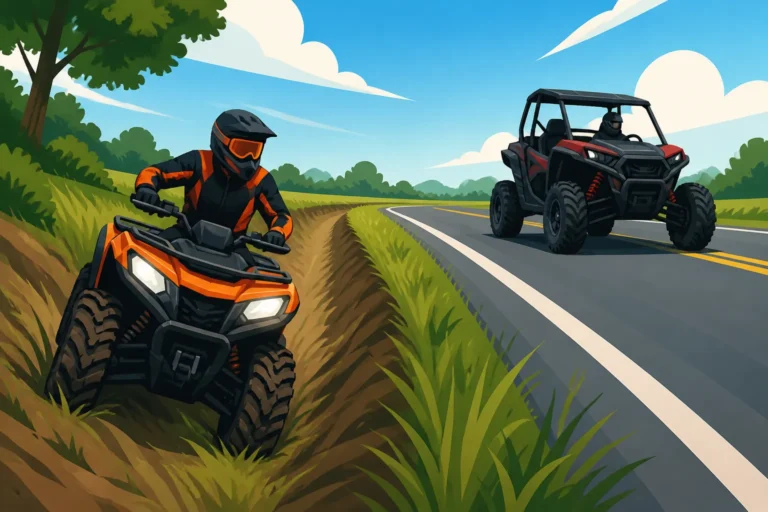
It’s a scenario no ATV or UTV rider wants to face: you’re out enjoying the beautiful Ontario trails or perhaps just a quick jaunt down a permissible municipal road, only to be stopped by an officer. And then comes the dreaded question about your insurance. If you can’t produce proof of valid coverage, you could be staring down a minimum $5,000 fine, a penalty that can instantly turn a day of fun into a nightmare. This guide will walk you through why insurance is absolutely mandatory in Ontario for your off-road vehicle and, more importantly, how to ensure you're always properly covered to avoid this financially crippling situation.
The Harsh Reality: Ontario's Stiff Penalties for Uninsured ORV Riding
Let's be brutally honest: nobody likes getting a ticket. But an uninsured ORV ticket in Ontario isn't just a minor inconvenience or a slap on the wrist. It's a significant financial blow that can have long-lasting repercussions far beyond the initial fine. We're talking about a mandatory minimum $5,000 fine, and that's just the starting point. It's not a discretionary amount where an officer can give you a break; it's what the law mandates.
Imagine planning a fantastic weekend trip, maybe up to the Haliburton network or exploring some of the incredible trails in Algoma Country, and then having that entire budget (and then some) wiped out by a single mistake. This isn't just about paying a penalty; it's about protecting your financial stability and your ability to continue enjoying the sport you love. The government is serious about ensuring all motor vehicles, including ATVs and UTVs, are properly insured, and the penalties reflect that unwavering stance.
What the $5,000 Fine Really Means for Your Wallet
A $5,000 fine is a huge sum for most people, equivalent to a significant chunk of a new machine's purchase price, or months of groceries, or a down payment on a new vehicle. It’s not just a number on a piece of paper; it’s money out of your pocket, money that could have gone to trail permits, new SuperATV accessories to upgrade your machine, or even a fantastic family vacation. This is a minimum fine, too, meaning in certain circumstances or with aggravating factors, it could be even higher.
Beyond the immediate financial hit, consider the ripple effect. An uninsured driving conviction can significantly impact your future insurance rates, not just for your ORV, but potentially for your car, truck, or motorcycle as well. Insurers see this as a major red flag, indicating a high-risk individual. This could mean much higher premiums for years to come, effectively punishing you repeatedly for that single lapse in judgment. It could also affect your ability to get insurance at all, leaving you in a very difficult position.
Furthermore, don't forget the administrative fees and court costs that often accompany such a hefty fine. These can add hundreds more to your bill. It’s a costly lesson, and one that is entirely avoidable with proper planning and adherence to the law. Always remember that riding uninsured isn't just gambling with your safety; it's gambling with your finances, and the house almost always wins.
The Immediate Consequences: Roadside Stops and Vehicle Seizure
The fine itself is just one piece of the puzzle. When an officer pulls you over and determines your ORV is uninsured, the consequences are immediate and severe. Your ORV can be seized on the spot. This means your machine, whether it's a nimble sport quad or a robust side-by-side, will be loaded onto a tow truck and impounded. You'll be left stranded, likely far from home, with no way to retrieve your machine until the legal process unfolds.
The costs associated with impoundment quickly add up. You'll be responsible for the towing fees, which can be substantial depending on the distance, and daily storage fees for every day your ORV sits in the impound lot. These charges can easily run into the hundreds, if not thousands, of dollars, accumulating rapidly. All of this is on top of the initial fine, creating an even larger financial burden. This isn't just an abstract penalty; it's a very real disruption to your life and a significant blow to your finances. This is why having your [Carrying an Insurance Card on a Ride] handy is so crucial.
Not only do you lose your machine temporarily, but you also lose precious riding time. Your planned adventure is over, and your ORV will remain out of commission until you've sorted out the legal issues, paid the fines, and proven you have valid insurance. The inconvenience and frustration are immense, far outweighing the perceived cost savings of skipping insurance. It's a clear message from the province: [Riding an Unregistered ATV in Ontario] or an uninsured one carries serious, immediate repercussions.
Why Insurance Isn't Optional: Understanding Ontario's ORV Laws
Unlike some recreational activities, operating an Off-Road Vehicle (ORV) in Ontario isn't a free-for-all. It's regulated under the Off-Road Vehicles Act, and a key component of that regulation is mandatory insurance. This isn't just about protecting yourself; it's fundamentally about protecting others. In the unfortunate event of an accident, a serious injury, or property damage, the financial liabilities can be staggering. Without insurance, you would be personally responsible for these costs, which could lead to bankruptcy.
The legal framework is designed to ensure that if an incident occurs, innocent parties who are injured or whose property is damaged have a means of recourse and compensation. This makes the trails and roads safer for everyone. When you register your ORV in Ontario, you are implicitly agreeing to adhere to these rules, and mandatory insurance is at the top of the list. It’s a condition of being allowed to operate your machine, whether on your own property (with some exceptions for farm use) or on public land and permitted roads. This is a core part of [Ontario's Mandatory ORV Insurance].
The Motor Vehicle Liability Policy: What It Covers
When we talk about mandatory ORV insurance in Ontario, we are primarily referring to a Motor Vehicle Liability Policy. This isn't just a basic agreement; it's a comprehensive form of coverage designed to protect you from the financial fallout if you are found legally responsible for causing an accident. This specific type of policy is exactly [The Motor Vehicle Liability Policy Ontario Wants]. It's crucial to understand what this policy does, and just as importantly, what it might not.
At its core, liability insurance covers:
- Bodily Injury: If you cause an accident that results in injury or death to another person, your liability coverage will pay for their medical expenses, rehabilitation, lost income, and pain and suffering, up to the policy limits. These costs can easily run into the millions, making robust coverage essential.
- Property Damage: If you cause an accident that damages someone else's property—whether it's another ORV, a fence, a parked car, or even a building—your liability insurance will cover the repair or replacement costs.
It's vital to note that while basic liability insurance is mandatory, it typically does not cover damage to your own ATV or UTV, nor does it cover your own medical expenses if you are injured in an accident you cause. For that, you would need additional coverage options like collision, comprehensive, and accident benefits, which are often available as add-ons to your primary policy. Discussing these options with your insurance provider is critical to ensure you have a full understanding of your coverage. For example, if you've added rugged SuperATV skid plates to your UTV, you'll want to ensure your own damage is covered.
Insurance for Both On-Road and Off-Road Adventures
A common misconception among some riders is that insurance is only required if you plan to ride your ATV or UTV on public roads. This is absolutely not the case in Ontario. The requirement for a valid Motor Vehicle Liability Policy applies whether you're navigating the intricate trails of the OFATV network, exploring Crown Land, or venturing onto a municipal road that has been opened for ORV use. The province's Off-Road Vehicles Act doesn't differentiate based on where you ride; it differentiates based on the operation of the vehicle.
So, whether your machine is a dedicated trail beast that never sees pavement or a versatile side-by-side that you occasionally take on approved roads in communities like Kirkland Lake or Greater Napanee, it needs to be insured. This is especially important for those who frequent multi-use trails where you might encounter hikers, cyclists, or even other ORV users. An incident with any of these can lead to significant liability. This also ties into [Insurance and Ontario ORV Registration] – the two go hand-in-hand.
Even if you primarily ride on private property, such as your own cottage land or a friend's farm, having insurance is a smart move. While the mandatory aspect might technically apply differently in certain very specific, controlled private land scenarios, the risk of an accident remains. Many homeowner policies explicitly exclude motor vehicles, including ORVs, leaving you exposed. Always assume that your ORV needs to be properly insured, regardless of its primary stomping ground. Don't leave yourself exposed thinking you're exempt just because you're "off-road."
How to Ensure You're Fully Covered and Avoid the Headache
The good news is that avoiding the $5,000 fine and all the associated headaches is completely within your control. It comes down to proactive steps: securing the right insurance, understanding your policy, and always having proof of coverage on hand. It's not just about compliance; it's about peace of mind. Knowing you're protected allows you to fully enjoy your rides without the lurking worry of financial ruin if something goes wrong.
This also extends to understanding specific situations, such as asking your insurer [Does Your ATV Policy Cover Riding on Club Trails?]. Many trail systems require proof of insurance, and having the right coverage ensures you're welcomed on these networks. Taking the time to properly set up your insurance is an investment in your riding freedom and financial security.
Finding the Right Policy and Provider
Navigating the world of insurance can sometimes feel a bit overwhelming, but it doesn't have to be. The first step is to seek out insurance providers who specialize in, or at least have a strong understanding of, off-road vehicles. Not all standard auto insurers are equally adept at ORV policies, and some might not even offer them. Look for brokers or companies that explicitly advertise [Ontario ATV Insurance Requirements] or ORV coverage.
When you're shopping for a policy, be prepared to provide detailed information about your ATV or UTV, including its make, model, year, engine size, and any significant modifications. Also, be transparent about how and where you intend to ride. Do you stick to private land? Are you a regular on the OFATV trails? Do you plan to ride on municipal roads? All of these factors can influence your premium and the type of coverage you need. Don't forget to ask about options beyond basic liability, such as collision, comprehensive, and accident benefits, especially if you have a valuable machine or frequently ride in challenging terrain.
Here's a quick comparison of what different coverage levels might offer:
| Feature | Basic Liability (Mandatory) | Comprehensive (Optional) | Collision (Optional) | Accident Benefits (Optional) |
|---|---|---|---|---|
| Covers Damage to Others | Yes | No | No | No |
| Covers Injury to Others | Yes | No | No | No |
| Covers Damage to Your ORV | No | Yes (Theft, Vandalism, Fire, Weather) | Yes (Accidents with other vehicles/objects) | No |
| Covers Injury to You | No | No | No | Yes (Medical, Rehab, Lost Income) |
| Primary Purpose | Protects you from liability for others' damages/injuries | Protects your ORV from non-collision damage | Protects your ORV from collision damage | Protects you/your passengers after an accident |
Remember to compare quotes from several providers. [Ontario ATV Insurance Cost] can vary, and what works for one rider might not be the best fit for another. Don't just look at the premium; delve into the deductibles, coverage limits, and any exclusions. It’s always best to be completely honest and thorough with your insurance broker about your riding habits and intentions to ensure you get a policy that truly protects you. This is also the time to communicate any specific concerns you might have, such as [Telling an Insurer Where You Ride].
Proof of Insurance: What to Carry and How to Display It
Having insurance is one thing; being able to prove it at a moment's notice is another. In Ontario, you are legally required to carry proof of valid insurance whenever you are operating your ORV. This typically means having your insurance card with you. This isn't just a suggestion; it's a critical piece of documentation that an officer will ask for if you're stopped. When it comes to [Showing Proof at a Roadside Stop], an expired card, a photocopy that isn't certified, or merely saying "I have insurance at home" will not cut it.
Your insurance card should be current, clearly legible, and contain all the necessary details: your name, policy number, effective dates, and information about your insured ORV. It's smart to keep your physical card in a waterproof pouch or a secure compartment on your ORV to protect it from the elements. Some riders even take a photo of their insurance card on their phone as a backup, though a physical card is generally preferred. For side-by-sides, many aftermarket dashboards or storage solutions, including those from SuperATV, offer secure places to keep important documents dry and safe.
Make it a habit to check the expiry date on your insurance card annually. Set reminders in your phone or mark your calendar to renew your policy well in advance of its expiration. An expired policy, even if it's just by a day, is the same as having no insurance at all in the eyes of the law, and the penalties will be just as severe. Don't let a simple oversight lead to a massive fine. This commitment to carrying and [Carrying an Insurance Card on a Ride] is your best defense against the heavy fines.
Disclaimer
This article is for general informational purposes only and does not constitute professional advice. Laws, prices and regulations vary by location and change over time. Consult a qualified professional for guidance on your specific situation.