Ontario ATV Rules on a Municipal Road
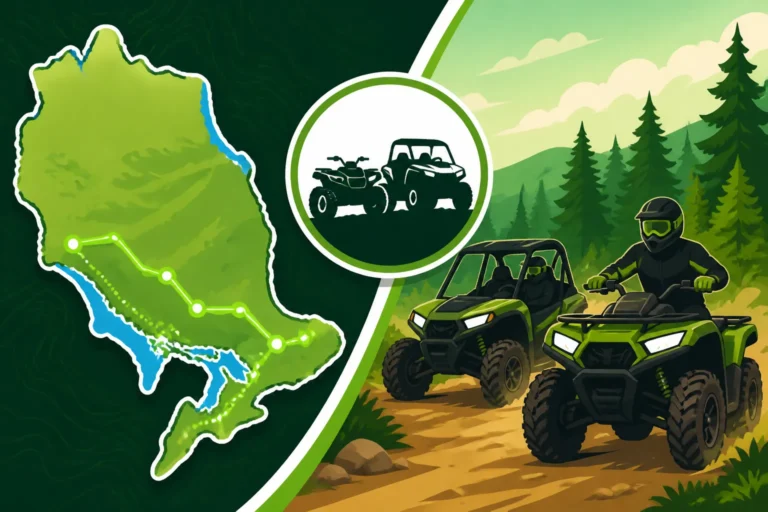
It can feel incredibly frustrating trying to figure out if you can legally ride your ATV or UTV on the municipal roads here in Ontario. One minute you’re enjoying a fantastic trail, the next you hit a paved section and wonder if you’re breaking the law, or if the next township even allows it. This guide is here to clear up that confusion, breaking down the provincial regulations and local bylaws so you can ride with confidence and stay safe.
The Nuance of "Street Legal" in Ontario
The term "street legal" for an ATV or UTV in Ontario isn't as straightforward as it is for your car or truck. Many riders assume that once they've registered their machine and slapped a plate on it, they're good to go anywhere. Oh, how we wish it were that simple! The reality is far more layered, often leading to confusion and, unfortunately, unnecessary fines for folks just trying to enjoy their ride. It's a system that truly tests your patience, making you feel like you need a law degree just to get from point A to point B.
Why It's Not a Simple Yes or No
When you think about taking your ATV or UTV onto a municipal road, the first thing that probably pops into your head is a simple "yes" or "no." But Ontario's Off-Road Vehicles Act, while a provincial piece of legislation, gives a lot of power to individual municipalities. This means that what's perfectly fine in one town might get you a hefty ticket just a few kilometres down the road in the next. It’s not just about having a [The Ontario Vehicle Permit Explained] and a licence plate; it's about a patchwork of local rules that can change dramatically from one community to another. This inconsistent approach is a major headache for riders, especially those who plan long-distance routes that traverse multiple townships.
The core of the issue lies in the fact that while the province sets out how an ORV can be operated on a road (e.g., equipment, licensing), it generally leaves the decision of whether those roads are open to the local municipal council. Imagine planning a multi-day trip and needing to consult a dozen different municipal websites just to map out your route – it’s a lot to ask of someone who just wants to enjoy the outdoors. This division of power means that simply being registered and insured for off-road use doesn't automatically grant you access to every paved surface. You need to meet provincial standards and be in a municipality that has passed a by-law allowing ORV use on its roads.
This grey area often leads to frustration among riders who see cars, trucks, and even farm equipment using these same roads without issue. We just want to get to the next trail section, grab some gas, or get to a local eatery to support the small businesses that welcome us. The lack of a unified provincial "go-ahead" for all municipal roads forces riders into a constant state of vigilance, often having to pull over and check their phone for local by-laws, which, let's be honest, can really dampen the spirit of an adventure. It really makes you wonder why something so seemingly simple has to be so complicated, doesn't it?
Provincial Requirements for Road Use
Even if a municipal road is open to ORVs, your machine and your riding credentials still need to meet a specific set of provincial standards. These aren't suggestions; they're legal requirements designed to ensure your safety and the safety of others on the road. Think of it like this: your car needs working lights and turn signals to be on the highway, and your ORV is no different when it leaves the trail. Many of these items are things you might not even think about for pure off-road riding, but they become absolutely critical once you're sharing space with other vehicles.
First and foremost, your ORV must be properly equipped. This means having working headlights and tail lights (which must be on), functional brake lights, a horn or other warning device, and a muffler that isn't excessively loud ([Ontario ATV Muffler Rules]). You'll also need at least one mirror that provides a clear view of the rear. Many aftermarket accessories, like those from SuperATV, offer great options for adding compliant mirrors, turn signals, and robust lighting kits that can help you meet these provincial standards. Beyond the machine itself, you absolutely need valid [Insurance and Ontario ORV Registration] for your ORV. Without both your permit and proof of insurance, you’re looking at serious fines, even if you’re riding on an open road.
From a rider's perspective, you'll need the right licence. If you're operating an ATV or UTV on a municipal road, you'll generally need a valid G2 or M2 licence at minimum. A G1 or M1 learner's permit typically isn't sufficient for road operation ([Ontario's G2 and M2 Licence Requirement]). There are also minimum age requirements for operating ORVs on roads, which generally means you must be 16 years old. This is different from the off-road age limits, so it's a critical distinction to remember. Always carry your licence, your ORV permit, and proof of insurance with you when you ride on roads; an officer will certainly ask for them during a roadside stop.
Understanding the Vehicle Classes (ATV vs. ROV)
Ontario law distinguishes between different types of off-road vehicles, and these distinctions can impact where and how you can ride them on municipal roads. While many of us lump all quads and side-by-sides under the "ATV" umbrella in casual conversation, the legal definitions are important. This distinction becomes especially critical when it comes to width restrictions and seating configurations for road use, directly affecting what type of machine you can legally take from the trail to the pavement.
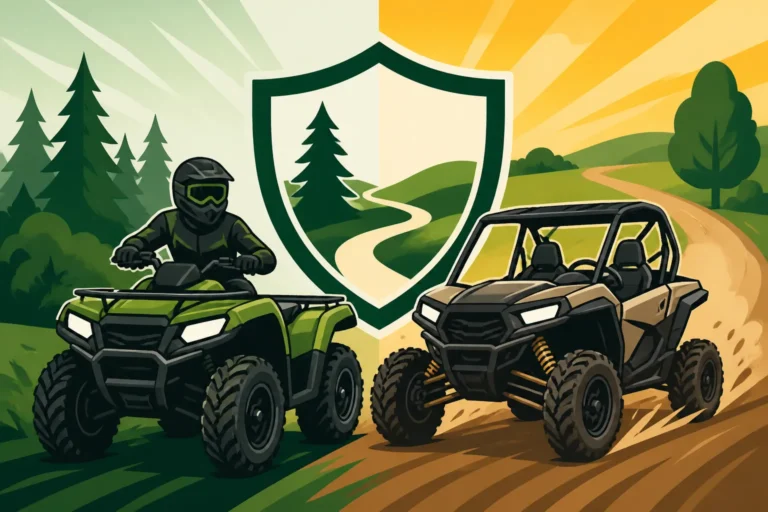
An "ATV" in Ontario law refers to a single-rider machine or one designed for a driver and a single passenger, typically straddled. These are your traditional quad bikes. An "ROV," or Recreational Off-Highway Vehicle, is generally what we call a UTV or side-by-side. These machines typically have a steering wheel, foot pedals, and bucket or bench seats, often accommodating multiple passengers side-by-side. The key difference here, for road use, often boils down to size, weight, and how passengers are carried. For example, there's a specific [Ontario ATV Width Limit for Road Use] of 2.03 metres for ORVs to be road-legal, which some wider UTVs might exceed.
The distinctions matter because certain rules, particularly around passengers and width, are applied based on these classes. For instance, while a two-up ATV can carry a passenger, a single-rider ATV cannot legally carry anyone but the operator on a road. ROVs (UTVs) are designed for multiple occupants, and as such, generally permit passengers as long as they are properly seated and belted ([Ontario UTV Road Rules]). If you've modified your machine, ensure those changes don't push it beyond the legal dimensions. SuperATV, for example, makes various suspension and lift kits, and while they enhance off-road performance, you'd need to double-check their impact on overall width if you plan on road use. It’s all about knowing your machine and the regulations that apply to its specific classification.
How Municipalities Open Their Roads to ORVs
This is where things get truly local and, for many riders, truly perplexing. The province sets the framework, but it's the individual municipal councils that hold the keys to their roads. Without a specific by-law in place from the municipality, those roads remain off-limits to ORVs, regardless of your machine's equipment or your impeccable licence. This is why you can be riding legally on a road in one township, cross an invisible boundary, and suddenly find yourself in violation without even realizing it.
The Power of the Municipal By-law
Under the Off-Road Vehicles Act, Ontario municipalities have the authority to pass by-laws that allow ORVs on their roads. This isn't a mandate; it's an option. This means that a township or city council has to actively decide to open their roads, and that decision is usually made after public consultations, safety reviews, and local debate. They're weighing the economic benefits of ORV tourism against concerns about noise, safety, and wear and tear on roads. This process means that by-laws aren't just magically appearing; they are a direct reflection of local community priorities and concerns.
For riders, this translates into a highly inconsistent landscape. You might find some rural townships enthusiastically embracing ORVs as a way to boost local businesses, integrating their road network directly into vast trail systems. [How an Ontario Municipality Opts In] often involves a detailed process, including public meetings where residents can voice their opinions. Conversely, some municipalities, particularly more urban or densely populated areas, might choose to keep their roads entirely closed to ORVs due to congestion or resident complaints. This variability is why relying on word-of-mouth or assuming consistency across a region can be a risky gamble.
The frustration is completely understandable. You’ve invested in your machine, you’ve registered it, insured it, and made sure it has all the right lights and mirrors. Then you encounter a "No ORV" sign that forces a lengthy detour or brings your road journey to a complete halt, all because the local council hasn't passed the right piece of paper. It creates a disjointed riding experience that could be so much smoother if there was a more unified approach. It’s a constant reminder that for ORV riders, local governance plays a huge role in our recreational freedom.
Common Restrictions in Municipal By-laws
When a municipality does decide to open its roads to ORVs, they rarely throw the gates wide open without any limits. Most by-laws come with a list of specific restrictions designed to manage traffic, minimize impact, and ensure public safety. These aren't just arbitrary rules; they're often based on traffic studies, residential density, and the overall character of the community. Understanding these common restrictions is crucial, as violating them can lead to the same fines as riding on a completely closed road.
One of the most universal restrictions you’ll encounter relates to speed. Provincial law dictates that on roads with a posted speed limit of 50 km/h or less, ORVs can travel at a maximum of 20 km/h. On roads with a posted speed limit greater than 50 km/h, ORVs are limited to 50 km/h ([Ontario ATV Speed Limit on Roads]). These speed limits are often much lower than the posted limit for cars, requiring a slower, more deliberate pace. Beyond speed, many municipal by-laws also specify the types of roads that are open. Often, major arterial roads or provincial highways (like the 400-series highways; see [Why the 401 Is Never an Option]) are explicitly excluded, even if side roads are open.
Another common restriction involves the time of day. Many by-laws limit ORV operation on roads to "dawn to dusk" hours, prohibiting night riding. This is primarily a safety measure, as ORVs can be harder to see at night, even with proper lighting. Some municipalities might also have seasonal restrictions, for example, closing roads to ORVs during spring thaw to protect road integrity, or during specific times when school buses are active. The golden rule here is to always assume restrictions exist and to actively seek out the by-law for the specific municipality you plan to ride in. These rules are put in place for a reason, and respecting them is key to maintaining positive relationships with local communities and ensuring continued access for riders.
Examples of Open Municipalities and How to Check
It can feel a bit like a treasure hunt trying to figure out which municipalities have actually opened their roads. Fortunately, many forward-thinking communities across Ontario have indeed passed by-laws to welcome ORV riders, often recognizing the significant economic boost that trail tourism can bring to local businesses. These communities understand that a continuous trail system, even if it incorporates road sections, enhances the overall riding experience and attracts visitors.
Take, for example, communities like [Greater Napanee By-law 2022-0062], [Kirkland Lake's Streets to the Trailhead], or those in Middlesex Centre or Strong Township. These municipalities have proactively established rules that allow ORVs on certain roads, often to connect trail segments or provide access to amenities like gas stations, restaurants, and lodging. These are great examples of how local councils can support the ORV community. However, it's vital to remember that each by-law is unique, specifying which roads are open, which are closed, and what hours or seasonal restrictions apply.
So, how do you find this crucial information? The best and most reliable method is to go directly to the source: the municipal government's official website. Look for sections related to by-laws, transportation, or recreation. Many municipalities will have a specific "Off-Road Vehicle By-law" clearly listed. If you can't find it online, don't hesitate to call the municipal clerk's office; they are usually very helpful in pointing you to the right document. Another excellent resource is the Ontario Federation of ATV Clubs (OFATV), as their member clubs often have detailed maps and information about which roads are open in their riding areas. The QuadON app is also a fantastic tool for this. Always make it a habit to [Checking a Township's ORV By-law] before you head out, especially if you're exploring a new area. It might take a few minutes of planning, but it's infinitely better than facing an unexpected fine.
Riding Safely and Responsibly on Ontario Roads
Riding an ORV on a municipal road isn't the same as riding on a secluded trail. You're now sharing the space with cars, trucks, cyclists, and pedestrians, and that requires a heightened sense of awareness and adherence to safety protocols. It's about being predictable, visible, and respectful of other road users, ensuring that our presence on the roads is a positive one.
Required Safety Gear and Passenger Rules
Your safety gear isn't just a suggestion when you hit the pavement; it's a non-negotiable requirement. Just like motorcycle riders, ORV operators and passengers on Ontario roads must wear an approved helmet. And it's not just any helmet; it must be one that meets recognized safety standards and is properly secured with the chin strap. [Ontario ATV Helmet Law] is very clear on this. For example, a novelty helmet might look cool, but if it doesn't meet DOT or Snell standards, it won't pass muster with law enforcement. This seemingly simple rule is absolutely critical for protecting yourself in the event of an incident.
Passenger rules are another area where confusion often arises. If you're riding a single-rider ATV, meaning it's only designed for one person, you cannot legally carry a passenger on a municipal road ([Ontario ATV Passenger Rules]). Period. Even if your friend can "squeeze on," it's not allowed. For ATVs designed for two riders (often called "two-up" or "tandem" ATVs), you can carry a passenger, provided they are seated properly and the machine is rated for two occupants. [Carrying a Passenger on a Two-Up Quad in Ontario] means ensuring they have appropriate footrests and handholds.
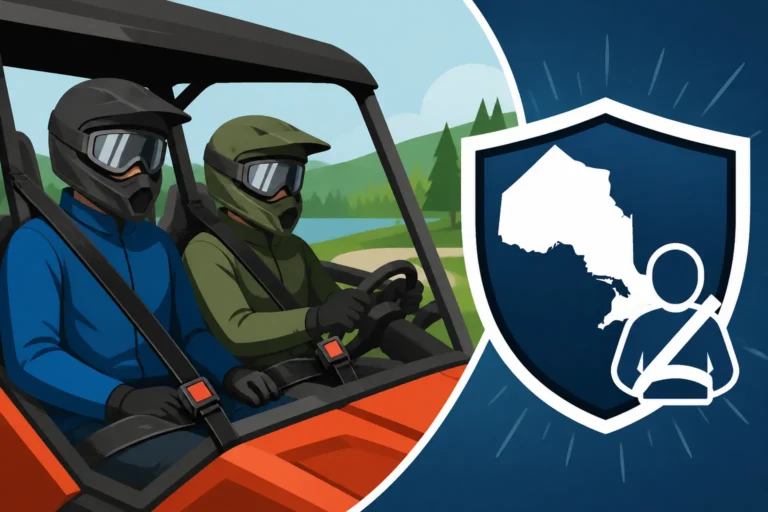
When it comes to UTVs (ROVs), the rules are a bit different because of their design. These machines come with multiple seats, and passengers are generally allowed as long as there's a designated seating position for them. Crucially, all occupants in a UTV must wear seat belts if the vehicle is equipped with them, which most UTVs are ([Ontario ATV Seat Belt Rules]). This aligns more closely with car passenger safety rules. The bottom line is to always ensure your passengers are secured, meet any age restrictions, and are riding on a machine designed for their presence. Safety is paramount, and these rules are there to protect everyone on board.
Where You Can (and Can't) Ride on the Road
Understanding where you can ride on an open municipal road is just as important as knowing if you can ride there. You can't just weave wherever you please like you might on a wide-open trail. When you're on a municipal road, you're expected to operate your ORV in a manner similar to other vehicles, but with some specific restrictions tailored to ORVs. This means staying in the appropriate lane, being mindful of traffic, and recognizing areas that are strictly off-limits.
Generally, ORVs are expected to ride on the travelled portion of the roadway, just like a car. However, some municipal by-laws or provincial regulations might allow ORVs to use the shoulder or a specific portion of the paved surface where it’s safe to do so. For example, [Ontario ATV Rules for Riding a Shoulder] or [Ontario ATV Rules for Riding a Ditch] might outline specific conditions or prohibit it altogether, so always check the local by-law. What is almost universally prohibited, however, is riding on sidewalks, bike paths, or through parks that aren't specifically designated for ORV use. These areas are for pedestrians and cyclists, and ORVs simply don't belong there.
Crossing major highways, particularly provincial highways that are not otherwise open to ORVs, is another crucial point. You cannot ride along these highways, but you may be permitted to cross them at an intersection where it's safe and legal to do so, typically to connect two open municipal road or trail sections. [Ontario ATV Rules for Crossing a Highway] means stopping, looking both ways, and proceeding when clear and safe. Never assume that because a small section of a county road is open, you can then ride onto an adjacent provincial highway. These are significant arteries of traffic, and ORVs are typically not allowed. Always plan your route to minimize interaction with high-speed or heavily trafficked routes, and prioritize your safety above all else.
Enforcement and Consequences
Compliance with ORV road rules isn't just about avoiding a ticket; it's about contributing to the safety of all road users and maintaining the privilege of access for the entire ORV community. Law enforcement takes these regulations seriously, and a roadside stop can quickly reveal any deficiencies in your paperwork, equipment, or riding conduct. Ignoring these rules puts yourself and others at risk, and can lead to severe repercussions.
When an officer pulls you over, they'll be checking a few key things. First and foremost, they'll ask for your driver's licence, your ORV permit, and proof of insurance. Without these, you're immediately in violation. [What an Ontario Officer Checks Roadside] also includes inspecting your machine for the required safety equipment: working lights, a horn, mirrors, and a compliant muffler. They’ll also be observing your riding behaviour and ensuring you’re adhering to speed limits and passenger rules. If you’re riding an unregistered machine, or one that’s uninsured, the fines can be incredibly steep. [Ontario Fines for No ATV Insurance] can be thousands of dollars, and [Riding an Unregistered ATV in Ontario] also carries significant penalties.
It’s not just about monetary fines, either. Violations can lead to your machine being impounded, and repeated infractions could jeopardize your driving privileges. That’s why it’s absolutely paramount to always carry your [The Ontario Vehicle Permit Explained] and your [Carrying an Insurance Card on a Ride] with you. A photocopy of your permit and insurance card might suffice for presentation, but having the originals or readily accessible digital copies is always best. Don't risk a fun day out turning into a very expensive and frustrating ordeal. By being prepared and riding legally, you're not only protecting yourself but also advocating for the responsible use of ORVs on Ontario's roads.
Equipping Your ORV for the Road
Just like you wouldn't take a race car on public streets without adding turn signals and a horn, your off-road machine needs specific modifications to be road-legal in Ontario. These aren't just cosmetic add-ons; they are functional requirements designed to make your ORV visible, controllable, and predictable to other drivers and pedestrians. Skimping on these essential upgrades isn't just risky, it's illegal.
Essential Lighting and Signalling
When you're out on the trails, a good set of headlights gets you through the dark, and a tail light simply marks your presence. But on a municipal road, your lighting system needs to be far more comprehensive and communicative. You're sharing the road with vehicles that expect to see brake lights and turn signals, and your ORV must provide the same visual cues. Being seen and indicating your intentions are paramount to safety when mingling with regular traffic.
Your ORV must be equipped with working headlights that are on when riding on roads, as well as a functional tail light that is visible from the rear. Crucially, you need working brake lights that illuminate when you apply the brakes, just like a car. Beyond these, turn signals are typically required for road use in Ontario ([Ontario ATV Lighting Requirements]). Many stock ATVs and UTVs might have basic lighting, but often lack integrated turn signals. This is where aftermarket solutions come in handy. Companies like SuperATV offer excellent turn signal kits that are designed for easy installation and meet regulatory standards, allowing you to clearly indicate your turns and lane changes to other drivers.
Investing in high-quality, road-compliant lighting isn't just about avoiding a ticket; it's about ensuring your safety, especially during dawn, dusk, or adverse weather conditions. Brighter, more visible lights, and clear turn signals dramatically reduce the chances of another driver not seeing you or misinterpreting your intentions. Consider this an essential safety upgrade, not just a legal one. When you’re riding on the road, you want to stand out for being safe and legal, not for being hard to spot.
Mirrors, Horn, and Muffler
Beyond lights and signals, a few other key pieces of equipment are mandatory for road legality, each serving a critical function in road safety and courtesy. These items are often overlooked by purely off-road riders, but they become non-negotiable once you venture onto paved surfaces. They are about awareness, communication, and minimizing disturbance to other road users and residents.
First up, mirrors. You need at least one mirror that allows you to see clearly behind you ([Ontario ATV Mirror Requirements]). While many UTVs come with a rear-view mirror, some ATVs might only have handlebar-mounted mirrors as optional accessories. If your machine doesn't have one, or if it's too small to be truly effective, you'll need to add one. SuperATV, for instance, offers a range of robust and adjustable mirrors that can withstand off-road abuse while still providing the necessary visibility for road use. A clear view of traffic approaching from behind is a fundamental safety requirement.
Next, a horn or other audible warning device is mandatory. This isn't just for sounding off at friends; it's a crucial safety device for alerting pedestrians, cyclists, or other drivers to your presence. A quick, sharp blast can prevent an accident. Finally, your muffler. While you might enjoy the roar of an open exhaust on the trail, it's a different story in residential areas. Your ORV must have a muffler that keeps exhaust noise within acceptable limits ([Ontario ATV Muffler Rules]). Excessive noise is not only illegal but can also lead to complaints from residents, potentially jeopardizing future ORV access to municipal roads. Ensuring your muffler is in good working order and not overly loud is a matter of both legal compliance and community relations.
Tires and Other Considerations
While tires aren't often explicitly legislated for ORVs on roads in the same way they are for cars, it's a critical practical consideration. Most off-road tires are designed for maximum traction in mud, dirt, and rocks, featuring aggressive treads and soft compounds. While fantastic off-pavement, these can wear quickly, create excessive road noise, and provide less grip on hard, paved surfaces, especially when wet. This is a safety consideration you should definitely think about.
Some riders who frequently transition between trail and road might opt for a more "all-terrain" style tire that offers a better compromise between off-road capability and on-road manners. While not a legal requirement, choosing tires with a less aggressive tread can improve handling, reduce wear, and enhance safety on asphalt. It’s about making a sensible choice for the type of riding you do most often.
Beyond tires, consider other small details that enhance your road-worthiness. Reflective tape can improve side visibility, especially if your machine is dark-coloured. Ensure your licence plate is securely mounted and clean ([Ontario ORV Plates and Where They Mount]), as a mud-covered plate can lead to questions from law enforcement. Keeping your ORV permit and insurance in a waterproof holder ([Keeping Your ORV Permit Dry on a Wet Ride]) is also a smart move. All these seemingly minor details contribute to a safer, more compliant, and ultimately more enjoyable experience when riding your ORV on Ontario's municipal roads.
Table: Key Differences – Provincial vs. Municipal ORV Road Rules
| Feature | Provincial Regulations (Off-Road Vehicles Act) | Municipal By-laws (Local Ordinances) |
|---|---|---|
| Basic Road Access | Generally allows municipalities to open roads to ORVs. | Determines if specific roads within their jurisdiction are open. |
| Required Equipment | Mandates lights, brakes, mirrors, horn, muffler, plate. | Typically defers to provincial standards for equipment. |
| Licence/Insurance | Mandates minimum G2/M2 licence, valid ORV permit, and insurance. | Does not typically set separate licence/insurance requirements. |
| Speed Limits | Sets maximum speeds for ORVs on open roads (e.g., 20/50 km/h zones). | May reiterate or specify these provincial speed limits. |
| Road Types | Defines ORV classes (ATV, ROV) and general width/weight limits. | Designates which specific roads are open/closed (e.g., no 400-series). |
| Operational Hours | Generally no specific provincial hours for road use (unless specified). | Often imposes "dawn to dusk" or other time restrictions. |
| Passenger Rules | Dictates single-rider vs. two-up ATV, UTV seatbelt use, age limits. | Generally defers to provincial rules on passengers. |
| Checking Status | Universal for all ORVs statewide (e.g., equipment checks, licence). | Requires checking each individual municipality's by-law. |
Disclaimer
This article is for general informational purposes only and does not constitute professional advice. Laws, prices and regulations vary by location and change over time. Consult a qualified professional for guidance on your specific situation.