Ontario ATV Speed Limit on Roads
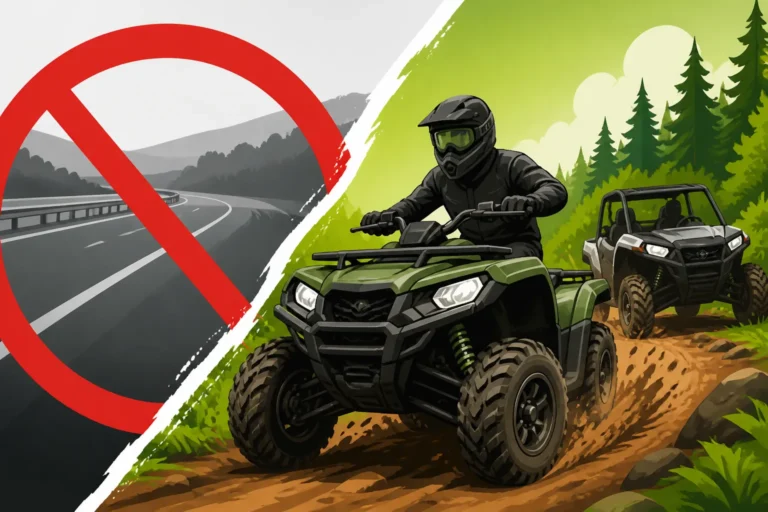
It can feel incredibly frustrating to want to hit the road on your ATV or side-by-side in Ontario, only to be met with a confusing maze of rules, especially when it comes to something as fundamental as speed limits. You've heard whispers of different speeds for different roads, and it leaves you wondering if you'll accidentally get ticketed for going too fast – or too slow! This guide is here to untangle the specifics of Ontario's ATV and UTV speed limits on municipal roads, helping you understand where and how fast you can legally ride.
The Basics of Road Riding in Ontario: More Than Just Speed
Before we even dive into specific numbers, it’s crucial to understand that getting your off-road vehicle onto an Ontario road isn't just about how fast you can go. It's a comprehensive set of requirements, with speed being just one piece of the puzzle. The province has put systems in place to allow ORVs on many municipal roads, but these systems come with conditions designed for safety and to integrate these vehicles into the existing traffic flow. Thinking about road riding means considering your machine, the local by-laws, and your own preparedness.
Understanding Ontario's ORV Classes and Why They Matter for Roads
Ontario categorizes off-road vehicles (ORVs) into different classes, and these classifications directly influence where and how you can ride on public roads. It's not a one-size-fits-all situation, and understanding your specific machine's class is the first step toward legal road use. The primary categories we're talking about are "ATVs" (All-Terrain Vehicles) and "ROVs" (Recreational Off-Highway Vehicles), which commonly include side-by-sides or UTVs.
ATVs, often single-rider quads or two-up models, have specific rules regarding passenger capacity and weight. ROVs, on the other hand, are typically side-by-sides with bench or bucket seats and a steering wheel, and they often come with different width and weight restrictions for road use. For instance, the maximum width for an ORV to be permitted on a road in Ontario is generally capped at 2.03 metres, which is about 80 inches. This means if you've kitted out your UTV with extra-wide SuperATV suspension components, you'll need to double-check that measurement before heading out. [Ontario ATV Width Limit for Road Use] is a good resource if you're unsure about your machine's dimensions. These classifications dictate everything from required safety equipment to, yes, the speed limits you’ll encounter. It’s essential to know if your machine falls under the ATV or ROV definition to ensure you’re compliant with all the rules.
The Importance of Municipal By-laws and Open Roads
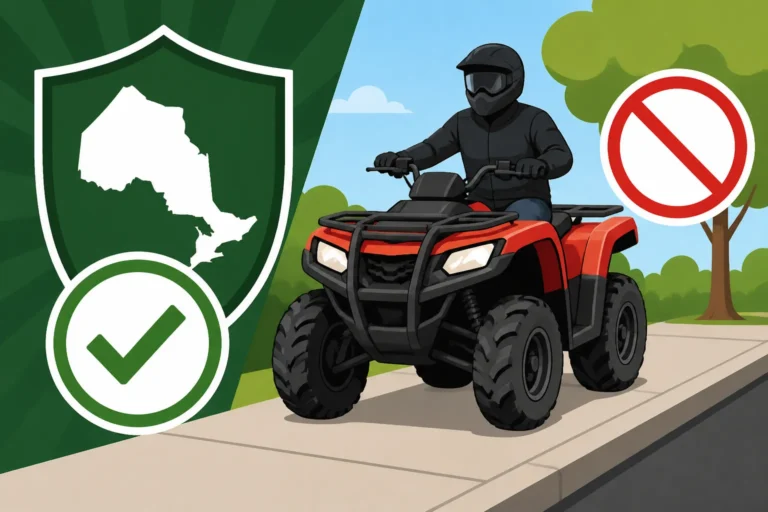
Here’s where things get a bit granular: just because a road exists in Ontario doesn't automatically mean you can ride your ATV or UTV on it. The provincial framework allows municipalities the authority to pass by-laws that permit ORV use on their roads. This creates a patchwork quilt of access across the province. You might be able to legally ride on a municipal road in one township, travel a few kilometres, and suddenly find yourself in a different municipality where ORV use on roads is entirely prohibited.
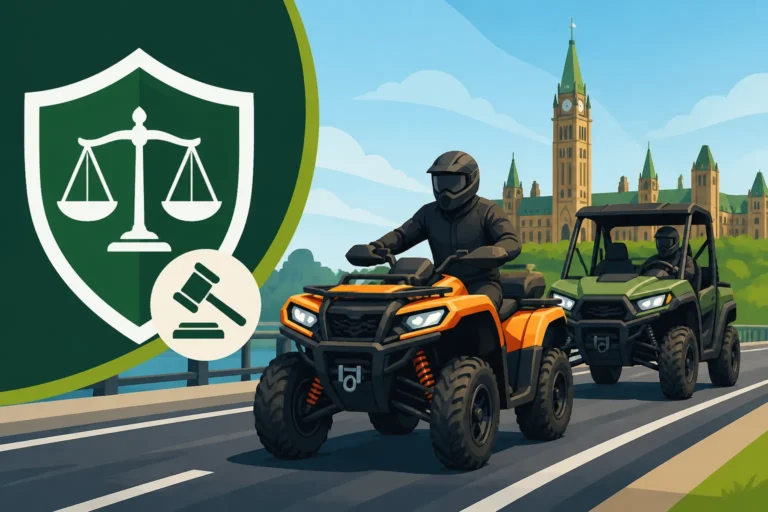
This can be incredibly confusing for riders, especially when planning longer trips that cross municipal boundaries. It's not enough to assume; you must verify the local by-laws for every area you plan to ride through. Many municipalities have their ORV by-laws posted on their websites, or you can often call their municipal office for clarification. Neglecting this step can lead to fines, even if you’re otherwise following the rules of the road. Understanding [How an Ontario Municipality Opens a Road] is key to navigating this aspect of road-legal riding. This localized control means that while provincial regulations set the maximum allowable speeds, it’s the local by-law that first grants you the privilege of being on that road at all.
Deciphering Ontario's ATV Speed Limits
Now, let's get to the heart of the matter: how fast can you actually go? Ontario's regulations are quite specific about the speed limits for ATVs and UTVs on municipal roads, and they are directly tied to the posted speed limit for that particular road. This isn't about how fast your machine can go, but how fast it's allowed to go when sharing the asphalt with other vehicles. These limits are in place for everyone's safety, acknowledging that ORVs handle differently than cars and trucks on paved surfaces.
The 20 km/h Rule: When and Where It Applies
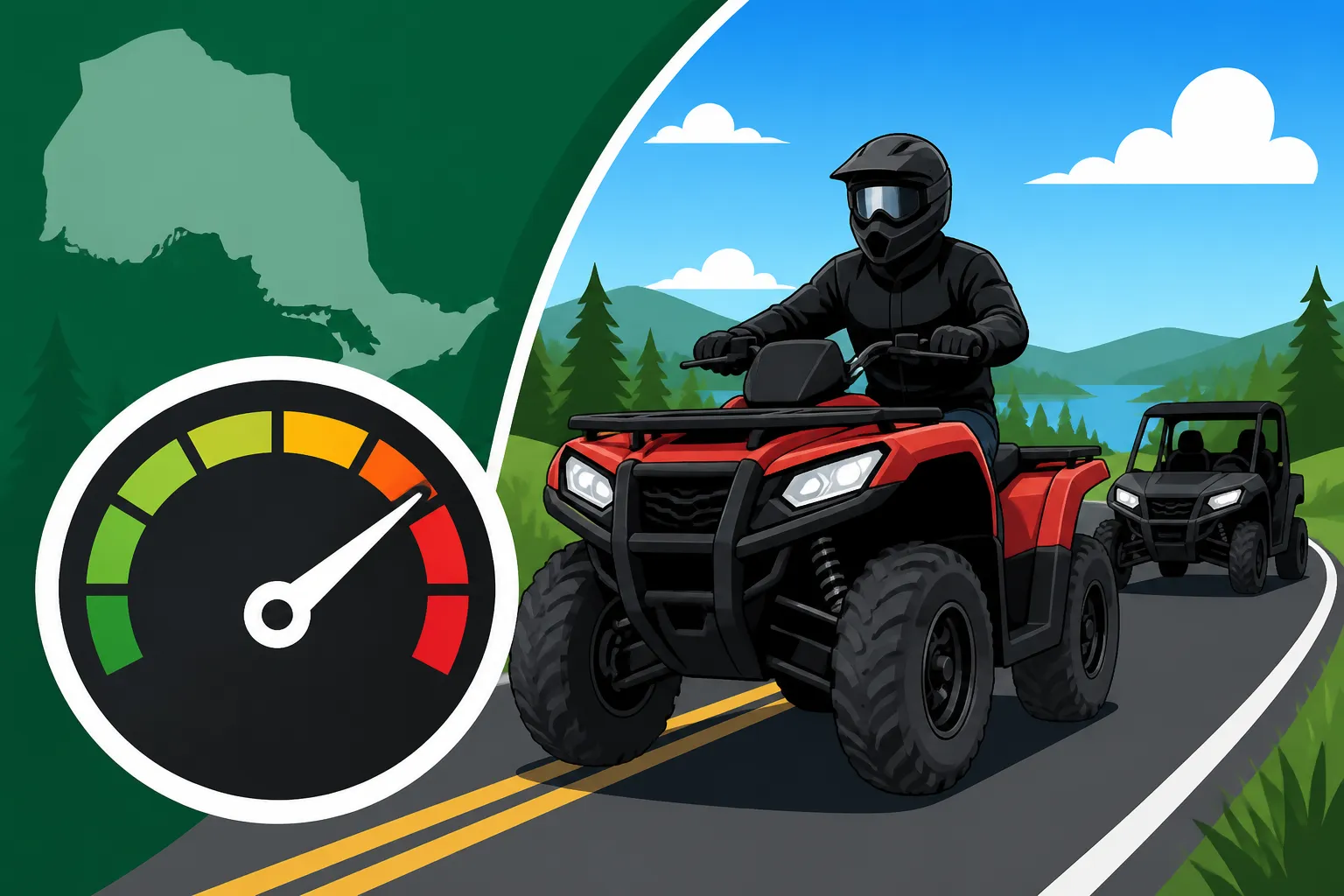
The first speed limit you need to commit to memory is 20 kilometres per hour. This applies when you are riding on a municipal road where the posted speed limit for other vehicles is 50 km/h or less. Think of residential streets, quiet country lanes, or roads leading into small villages. Even if the sign says 50 km/h for cars, your ATV or UTV is capped at a maximum of 20 km/h.
This lower speed limit often surprises riders, especially those accustomed to faster off-road trails. The rationale is simple: these roads often have more intersections, driveways, pedestrians, and cyclists. Operating at a slower speed provides a greater margin of safety, allowing ORV riders more time to react to unexpected hazards and making the presence of these vehicles less disruptive to other road users. It’s about careful, controlled integration into the community. So, if you're cruising down a small-town main street where the limit is 40 km/h, you should be sticking to 20 km/h or below.
The 50 km/h Rule: Navigating Higher Posted Limits
The second speed limit is 50 kilometres per hour. This comes into play when you are riding on a municipal road where the posted speed limit for other vehicles is greater than 50 km/h. This means if you're on a rural road where cars can go 80 km/h, your ATV or UTV is still limited to a maximum of 50 km/h.
It’s easy to get confused here and think you can go the posted speed limit if it's above 50 km/h. But no, your ORV has its own cap. This limit acknowledges that while these roads might have less residential traffic, they are still public thoroughfares. Keeping the ORV speed capped helps maintain a safety buffer between the ORV and faster-moving traffic. It’s also a recognition that ORVs, especially ATVs with their high centre of gravity and knobby tires, are not designed for high-speed highway travel. You’ll find this rule applicable on many rural secondary roads, often used to connect trail systems or access property. You might be interested in reading [Ontario ATV Speed Limit on Roads] for further clarification on these specific limits.
Why These Limits Exist: Safety and Integration
These distinct speed limits aren't arbitrary; they are rooted in a commitment to safety for all road users, including ORV riders, pedestrians, cyclists, and occupants of other vehicles. Off-road vehicles handle differently on paved surfaces than they do on dirt trails. Their suspension, tires, and steering are optimized for uneven terrain, not smooth asphalt. High speeds on pavement can lead to instability, longer braking distances, and reduced control, especially in emergency situations.
The goal of the regulations, including speed limits, is to allow ORV users the convenience of accessing roads where necessary (to connect trails, reach amenities, or get to private property) while minimizing potential risks. By capping speeds, the province aims to:
- Reduce Accident Severity: Lower speeds mean less kinetic energy in the event of a collision, reducing the likelihood of serious injury.
- Improve Rider Control: Slower speeds allow riders more time to react to hazards, maintain balance, and navigate turns safely on pavement.
- Enhance Visibility: At slower speeds, other drivers have more time to see and react to an ORV, which might have a smaller profile than a car. Many riders opt for bright flags or additional lighting from brands like SuperATV to maximize their visibility.
- Minimize Community Impact: On lower-speed roads, 20 km/h helps reduce noise and disruption in residential areas, making ORV integration more palatable for communities.
These rules are about more than just avoiding a ticket; they're about ensuring everyone can share Ontario's roads safely and harmoniously.
| Posted Road Speed Limit (for other vehicles) | Maximum ORV Speed Limit | Common Scenarios |
|---|---|---|
| 50 km/h or less | 20 km/h | Residential streets, quiet country lanes, village roads |
| Greater than 50 km/h | 50 km/h | Rural roads, secondary highways where ORVs are permitted by by-law |
Essential Requirements Beyond Speed for Road-Legal Riding
Understanding speed limits is fundamental, but it’s only one piece of the puzzle for legal road use in Ontario. There are several other critical requirements that every ATV and UTV rider must meet to be compliant with the law when riding on designated municipal roads. Neglecting any of these can lead to fines, impoundment, or worse, put you and others at risk. It’s about ensuring your machine is properly equipped and you, as the operator, are properly licensed and prepared.
Equipment and Licensing: What You Need to Be Legal
First and foremost, your ORV needs to be equipped to meet basic road safety standards. This isn't just about looking good; it's about being visible and controllable. You'll need working headlights and taillights, ideally with a brake light, to signal your presence and intentions. Mirrors are crucial for seeing what's behind you, just like in a car. A proper muffler is necessary to keep noise within acceptable limits – nobody wants a roaring machine disrupting their peaceful community. Beyond the machine itself, you, the rider, have obligations.
You must wear an approved motorcycle helmet, fastened securely. This isn't optional, even for short jaunts. [Approved Motorcycle Helmets in Ontario] outlines the specific requirements. Furthermore, you need a valid driver's license. For ATVs and UTVs on roads, this generally means at least a G2 or an M2 license. A G1 or M1 learner's permit is usually not sufficient for road riding on an ORV. And let's not forget insurance: you absolutely must have valid motor vehicle liability insurance. Carrying [Ontario ATV Insurance Requirements] is not just a good idea; it's the law, even if you’re only riding on trails or private property. Make sure your policy covers road use if you plan on taking your machine onto municipal roads.
Carrying Your Paperwork: Don't Get Caught Without It
Imagine being pulled over and having to explain that your registration is "at home" or your insurance card is "in the other jacket." It's a scenario no one wants, and it's easily avoidable. When riding your ATV or UTV on any public land, including designated roads, you are legally required to carry specific documents. This includes your [Ontario Vehicle Permit Explained], which is your registration for the machine, and proof of your valid motor vehicle liability insurance.
It's a good practice to keep these documents in a waterproof bag or container, perhaps in a secure storage box on your machine. Mud, rain, and spray can quickly turn paper documents into illegible pulp. While some officers might accept a clear digital copy of your insurance on your phone, it’s always safest to have the physical documents or a true copy. Don't risk a fine for not having your papers in order. Think of it as your passport for adventure – you wouldn't travel without it, so don't ride without your ORV's essential documents.
Practical Tips for a Safe and Enjoyable Road Ride
Riding your ATV or UTV on Ontario roads can be a fantastic way to connect trails, access scenic areas, or simply enjoy a different kind of ride. However, doing so safely and enjoyably requires more than just knowing the rules; it requires thoughtful planning and responsible conduct. As veteran riders, we know that preparation makes all the difference, transforming a potentially stressful situation into a smooth and pleasant experience.
Planning Your Route: Checking By-laws and Conditions
Never assume a road is open to ORVs. Before every road ride, especially if you’re venturing into a new area, take the time to plan your route meticulously. This means checking the by-laws of every single municipality you intend to traverse. Many townships now have excellent mapping tools or dedicated sections on their websites detailing their ORV access rules. Organizations like the Ontario Federation of ATV Clubs (OFATV) often provide resources and maps that highlight open roads. The QuadON app can also be a valuable tool for identifying designated trails and connecting roads.
Consider the time of year and day. Some municipalities might have seasonal restrictions or specific hours for ORV use on roads. For instance, some areas close roads to ORVs during spring thaw to prevent damage. [Township Roads That Close to ATVs Every Spring] is a great resource to understand this further. Check road conditions, especially after heavy rain or snow, as these can affect visibility and traction. A well-planned route ensures you stay legal, avoid closed sections, and make the most of your riding time.
Riding Responsibly: Sharing the Road with Others
Once you're out there, remember you are sharing the road with a diverse group of users: cars, trucks, cyclists, pedestrians, and even horse-drawn buggies in some rural areas. Your responsibility as an ORV rider extends to being a good ambassador for the sport.
- Be Predictable: Use hand signals or turn signals if your machine is equipped. Maintain a consistent speed (within the legal limit, of course).
- Maintain Distance: Give plenty of space to other vehicles, especially when passing or stopping.
- Yield to Traffic: While you have rights on open roads, always be prepared to yield and allow faster traffic to pass safely when appropriate.
- Minimize Impact: Try to reduce noise pollution where possible, and avoid unnecessary engine revving. Be mindful of dust on gravel roads, especially near homes.
- Stay Alert: Roads present different hazards than trails. Watch for potholes, debris, and distracted drivers. Equip your machine with visible flags, and consider brighter LED lights, perhaps from SuperATV, to ensure you're seen.
- Lead by Example: Your actions reflect on all ORV riders. By riding courteously and safely, you help foster a positive image for our community and support continued access to roads and trails.
Riding responsibly is not just about following the letter of the law; it's about embodying the spirit of community and mutual respect on our shared roadways.
Disclaimer
This article is for general informational purposes only and does not constitute professional advice. Laws, prices and regulations vary by location and change over time. Consult a qualified professional for guidance on your specific situation.