Ontario ATV Rules for a Single-Rider Machine
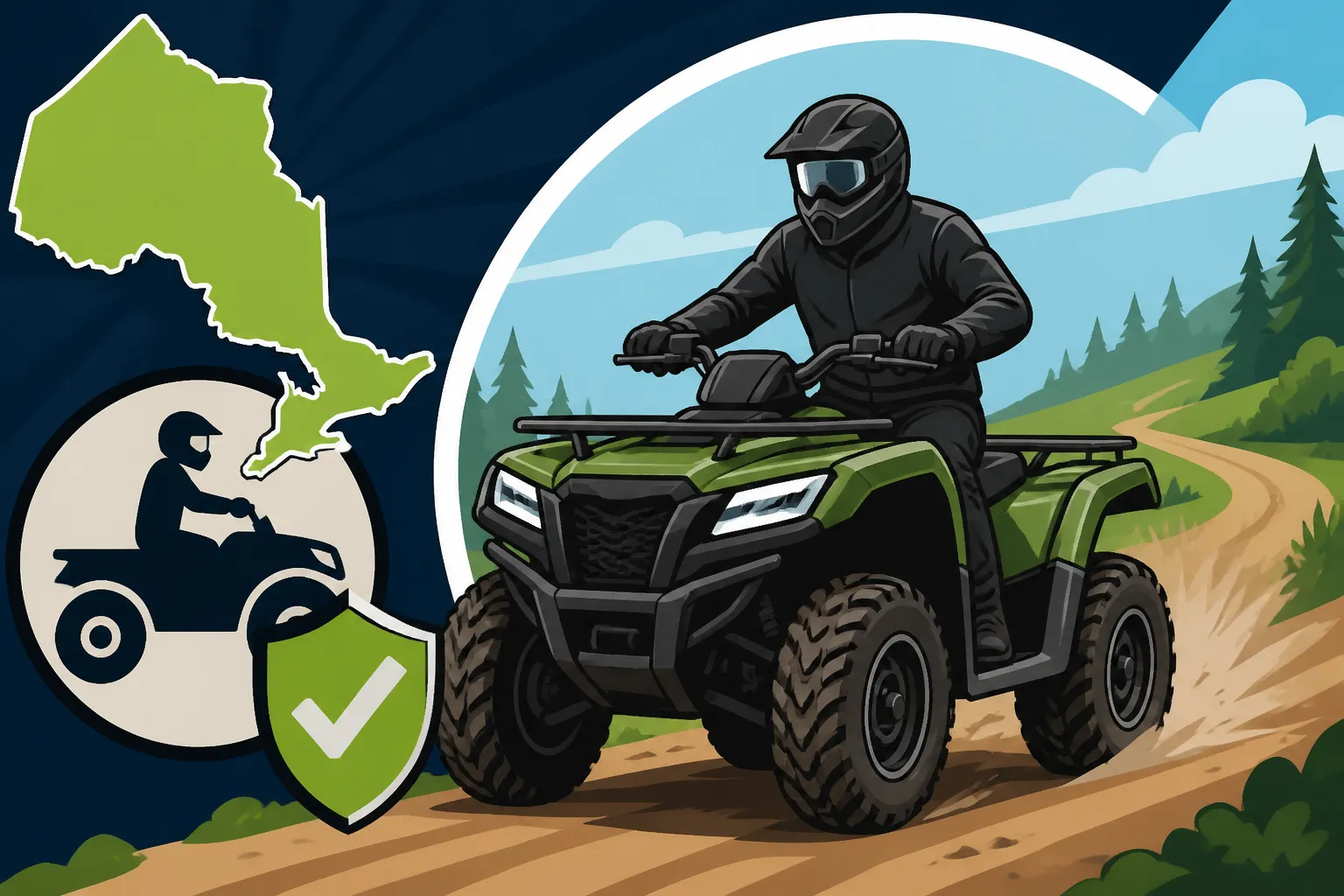
It can be incredibly frustrating to hit the open road or a scenic trail on your ATV, only to realize you've misunderstood the rules about carrying a passenger. Many riders assume that if there's a small space behind them, or if they're just going a short distance, it's fine to double up. However, when it comes to single-rider ATVs in Ontario, the rules are far more stringent than many realize, particularly on public roads. This guide will cut through the confusion and lay out exactly what you need to know about operating a single-rider ATV, keeping you compliant and, most importantly, safe.
Understanding What "Single-Rider" Truly Means in Ontario
When we talk about an ATV being "single-rider," it's not just a suggestion; it's a fundamental aspect of the machine's design and legal classification in Ontario. This distinction has profound implications for how and where you can operate your quad, especially if you ever consider bringing along a passenger.
The Manufacturer's Design and Intent
Every ATV that rolls off the assembly line is designed with a specific purpose and capacity in mind. Manufacturers invest significant resources in engineering these machines to handle particular loads, weight distribution, and rider configurations. A single-rider ATV, by its very nature, is engineered for one person: the operator. This means everything from the suspension tuning and chassis balance to the seating position and footpeg placement is optimized for a single individual. Trying to accommodate a second person can drastically alter these dynamics, making the machine unstable and much harder to control.
Think about the physical layout of your ATV. Does it have a long, extended seat designed to comfortably accommodate two adults? Are there passenger footrests, or merely footwells for the operator? If the seat is short and there are no dedicated handholds or footrests for a passenger, the manufacturer clearly intended it for solo use. Even a slight increase in weight distribution to the rear, especially with an untrained passenger, can lead to dangerous situations, particularly on uneven terrain or during quick maneuvers. This design intent is not just about comfort; it's deeply rooted in safety and stability.
Legal Definitions Under Ontario's Off-Road Vehicles Act
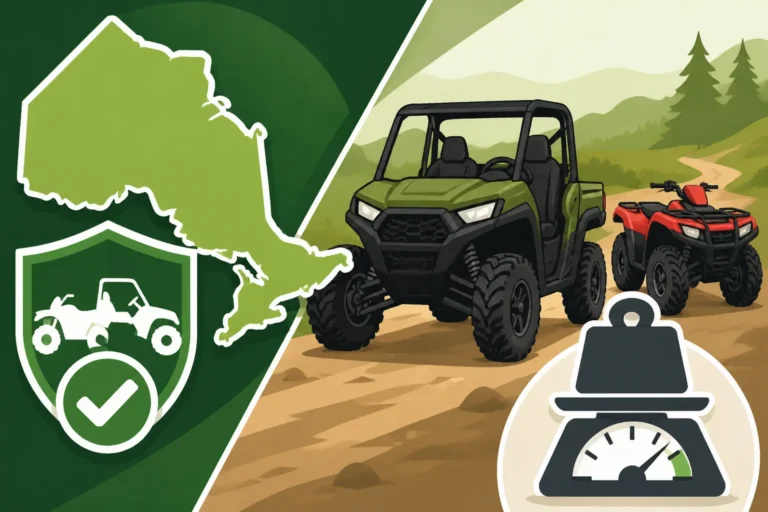
Ontario's legal framework for off-road vehicles (ORVs), primarily governed by the Off-Road Vehicles Act, takes the manufacturer's design intent very seriously. The Act defines an ATV as a three-wheeled or four-wheeled motor vehicle, other than a motor-assisted bicycle, designed for off-road use, and that has a gross vehicle weight rating of 450 kilograms or less and a maximum width of 1.35 metres. Crucially, the regulations within this Act, specifically Ontario Regulation 316/03, go further to address seating capacity.
For a machine to legally carry a passenger, it must be "designed and manufactured by the original equipment manufacturer to carry a driver and at least one passenger." This is where the concept of a "designated seating position" comes into play. If your ATV does not have a clearly defined, permanent, and factory-installed seat, backrest, and footrests for a second person, it is legally considered a single-rider machine. Attempting to modify a single-rider ATV to carry a passenger, such as by adding a bolt-on seat extender, does not automatically make it legal for two riders on public lands or roads. Such modifications might even invalidate your insurance or lead to fines, as they circumvent the safety standards the original design adhered to. It's a clear distinction: if the factory didn't build it for two, Ontario law largely treats it as a one-person machine, particularly concerning public road use. You can read more about how these machines are classified in [The ATV Class Under Ontario Regulation 316/03].
The Strict Rules for Single-Rider ATVs on Ontario Roads
Riding your ATV on designated municipal roads in Ontario offers incredible freedom and access to trails, but it comes with a strict set of rules. For single-rider machines, these regulations are particularly critical to understand, as violations can lead to serious fines, insurance issues, and, most importantly, safety hazards.
No Passengers Allowed on Public Roads
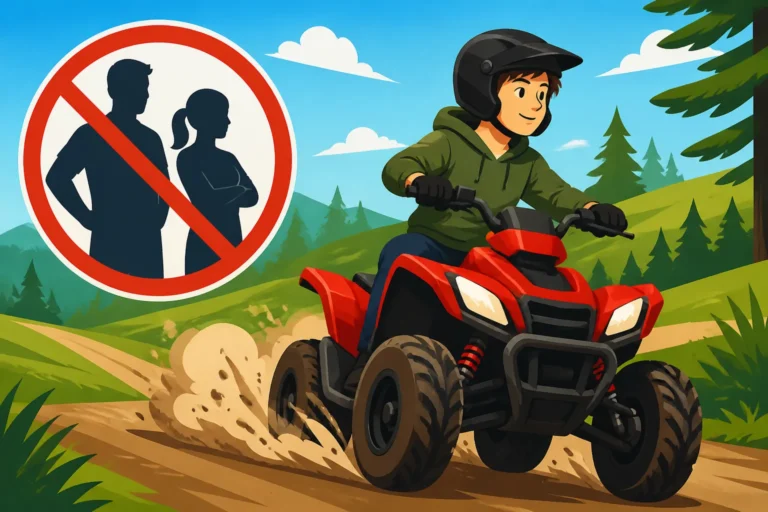
This is the golden rule for single-rider ATVs on any road or highway where ORVs are permitted in Ontario: absolutely no passengers are allowed. Your ATV is certified and designed for one operator, and that's the only person who should be on it when you're using public roadways. This isn't just a technicality; it's a fundamental safety principle. Single-rider ATVs are not built to safely accommodate the weight distribution, balance, and stability demands of two people. Adding a passenger, especially one without proper riding experience, can make the ATV much harder to steer, brake, and control, dramatically increasing the risk of a rollover or collision.
Imagine trying to navigate a sharp corner or an emergency stop with an extra 100-150 pounds shifting around behind you – it compromises the machine's center of gravity and your ability to react swiftly. Police officers are well-versed in these regulations, and if you're caught with a passenger on a single-rider ATV on an open road, you can expect a fine. Beyond the legal consequences, consider the moral implications: you are putting your passenger at significant risk on a machine not designed for their safety. To fully understand these critical regulations, you might want to review [Ontario ATV Passenger Rules].
Essential Road-Legal Equipment for Any ATV
Before any ATV, single-rider or otherwise, can legally venture onto an open road in Ontario, it must be properly equipped. This isn't optional; it's a mandatory checklist designed to ensure your visibility and ability to signal to other traffic. You'll need working headlights, taillights, and brake lights to be seen by others, especially in low light conditions. A horn is essential for warning pedestrians or other vehicles. Two mirrors, typically one on each side, are also required to provide you with a clear view of traffic behind you. And, of course, your ATV must have an effective muffler system to keep noise levels within legal limits.
Many standard ATVs might not come from the factory with all of these road-legal accessories, especially mirrors or proper turn signals. This is where aftermarket solutions come into play. Companies like SuperATV offer a range of products, from universal mirrors to complete street-legal kits, that can help you adapt your machine to meet Ontario's requirements. These kits often include turn signals, a horn, and other necessary components to ensure you're compliant. Just remember that installing aftermarket parts should always be done carefully, ensuring they are securely mounted and fully functional before you hit the pavement. For a full rundown of what you need, check out [Equipment Ontario Requires on a Road-Legal ORV].
Licensing, Insurance, and Helmet Requirements
Operating an ATV on a public road in Ontario isn't as simple as just having the right equipment; you also need to meet specific personal requirements. First and foremost, you must hold a valid driver's licence. For ATVs, this typically means at least a G2 class licence or an M2 class motorcycle licence. A G1 or M1 learner's permit is generally not sufficient for road use, as it comes with strict conditions that often prohibit driving on specific roads or at certain times, or require a supervisor. This ensures that anyone operating an ORV on a public road has demonstrated a basic level of driving competency. Learn more about these requirements in [The Licence Ontario Requires on a Road].
Next up is insurance, which is absolutely mandatory. Just like cars, all ATVs operating on public roads in Ontario must be covered by a motor vehicle liability policy. This insurance protects you and others in the event of an accident. You must carry proof of this insurance with you whenever you're riding, as law enforcement officers will certainly ask for it during a roadside stop. Riding uninsured on a public road can lead to hefty fines and serious legal repercussions. For comprehensive details on this, refer to [Ontario ATV Insurance Requirement].
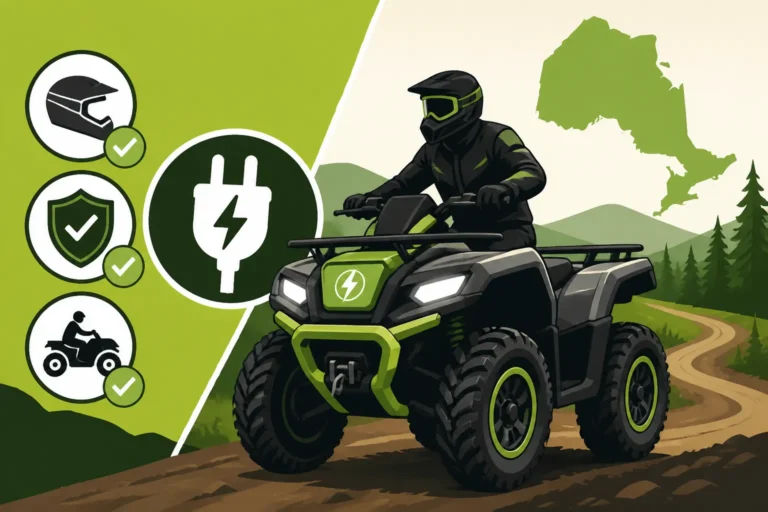
Finally, the helmet rule is non-negotiable. Whether you're on a public road, a managed trail, or even some private properties, anyone operating or riding an ATV in Ontario must wear an approved motorcycle helmet. This isn't just any helmet; it needs to meet recognized safety standards and be properly fastened with the chin strap. This rule is in place for your protection, as head injuries are among the most severe in ATV accidents. Don't skimp on safety; always wear an approved helmet. Find out more about specific helmet standards at [Ontario ATV Helmet Law].
Where Single-Rider Rules Differ: Off-Road and Private Property
While the rules for single-rider ATVs on Ontario roads are crystal clear, the landscape changes slightly when you venture off the pavement onto designated trails, Crown Land, or your own private property. Understanding these distinctions is crucial for responsible riding and avoiding unnecessary trouble.
Riding on Trails and Crown Land
When you're riding on sanctioned club trails, such as those maintained by organizations under the OFATV (Ontario Federation of ATV Clubs) umbrella, or exploring vast tracts of Crown Land, the core definition of your single-rider ATV doesn't change – it's still designed for one person. However, the immediate enforcement context can feel a little different compared to a bustling municipal road. On club trails, the emphasis is often on maintaining the safety and integrity of the trail system. While carrying a passenger on a single-rider machine is technically against the spirit of safe operation and could violate some club rules or insurance policies, enforcement might vary depending on the specific trail authority or the presence of patrollers. It's always best practice to adhere to the manufacturer's design and ride solo on a single-rider quad, even off-road, to maintain stability and control.
For Crown Land, which often falls under Ontario's "free use" policy for ORVs, the rules can feel even more relaxed. However, "free use" doesn't mean "anything goes." While explicit prohibitions against a passenger on a single-rider ATV might not be as frequently enforced as on municipal roads, the underlying safety principles remain. Riding on Crown Land can involve challenging terrain, and the risks of an accident are magnified with an improperly carried passenger. Furthermore, while a trail permit isn't usually required on Crown Land itself, you may need one to access Crown Land via a club trail or specific designated routes. Always check local bylaws and regulations, especially if the Crown Land borders a municipality or a conservation area. You can learn more about this in [Do You Need a Trail Permit on Ontario Crown Land?]. For details on how trail permits work, see [Ontario ATV Trail Permits Explained].
The Private Property Exception
This is generally where the rules for single-rider ATVs become the most flexible, but "flexible" doesn't mean "risk-free." If you are riding your single-rider ATV solely on your own private property, or on private land with the express permission of the landowner, many of the provincial regulations concerning passengers, helmets, and even some equipment requirements for road use often don't apply. This means that, legally, you could carry a passenger on your single-rider machine within the confines of private land.
However, just because it's legal doesn't make it advisable or safe. The physical limitations and handling characteristics of a single-rider ATV don't change just because you're off public roads. The risks of instability, loss of control, and injury due to improper weight distribution remain very real. For instance, while a helmet might not be legally mandated on your own farm, it's still an incredibly wise piece of safety gear to wear. If you have children riding on private property, supervision rules still apply, and teaching them safe practices, including riding only one per machine if it's a single-rider, is paramount. Insurance implications are also critical: your private property insurance might not cover an ATV accident, or your ATV policy might have exclusions for carrying passengers on a single-rider machine, even on private land. Always prioritize safety over convenience. Delve deeper into these regulations with [Ontario ATV Rules for Riding Private Property] and [Riding Unsupervised on Your Own Property].
Navigating the Grey Areas and Staying Safe
It's easy to look for loopholes or think, "just this once," when it comes to riding rules, especially with a friend eager to join the adventure. However, for single-rider ATVs in Ontario, understanding and respecting the limitations is not just about avoiding fines; it's about making responsible choices that protect everyone involved.
The Risks of Carrying a Passenger Illegally
Ignoring the "single-rider" designation, particularly on public roads, opens up a Pandora's box of risks. Firstly, there's the immediate danger of an accident. Single-rider ATVs are simply not engineered to maintain stability and balance with an additional person. The added weight, especially when it's shifting with the passenger's movements, can make the machine unpredictable. This leads to increased stopping distances, compromised steering, and a much higher likelihood of a rollover or loss of control, particularly on uneven terrain, during turns, or at higher speeds. Your ability to react quickly and safely to unforeseen obstacles is severely hampered.
Beyond the physical danger, the legal and financial consequences are steep. If you're caught with a passenger on a single-rider ATV on a municipal road, you're looking at significant fines. Even more critical, carrying an unauthorized passenger can void your insurance coverage in the event of an accident. Imagine the devastating scenario: an accident occurs, your passenger is injured, and your insurance company refuses to cover the medical expenses or liability claims because you were operating the machine outside of its intended design and legal parameters. This could lead to massive out-of-pocket costs and lifelong financial burdens. There could also be demerit points against your driver's licence. The momentary convenience or fun of sharing a ride simply isn't worth these profound risks.
When a Two-Up or UTV is the Right Choice
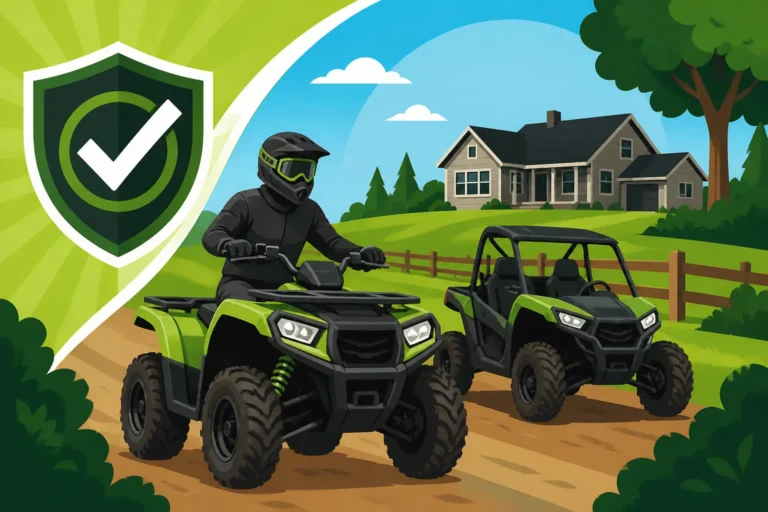
If riding with a passenger is a regular desire or need for you, then a single-rider ATV is simply the wrong tool for the job. Ontario's regulations and common sense strongly point towards investing in a machine specifically designed for multiple occupants. The primary alternatives are a "two-up" ATV or a Utility Terrain Vehicle (UTV), often referred to as a side-by-side.
A two-up ATV (also known as a touring ATV) is purpose-built to carry a driver and one passenger. These machines feature an extended frame, a longer, more comfortable seat with a dedicated backrest, and proper handholds and footrests for the passenger. The suspension and chassis are engineered to handle the increased weight and different center of gravity with two people on board, providing a much safer and more stable riding experience.
UTVs or side-by-sides are another excellent option for those who want to ride with companions. These vehicles typically offer bench seating or individual bucket seats for two, three, or even four passengers, similar to a car. They come equipped with roll-over protection structures (ROPS) and seat belts, significantly enhancing passenger safety. UTVs also have superior cargo capacity and comfort, making them ideal for family outings, hunting, or working on larger properties. Many SuperATV accessories cater specifically to UTVs, offering upgrades for everything from windshields to winches, further enhancing their versatility and safety. These machines, while subject to their own specific road-legal requirements, are the correct choice if you plan on bringing along passengers. You can explore the specific rules for these machines by checking out [Ontario UTV Road Rules] and [Ontario Side-by-Side Road Rules], and also consider [Ontario ATV Width Limit for Road Use] for road-specific details.
Here's a quick comparison to help visualize the differences:
| Feature | Single-Rider ATV | Two-Up ATV | UTV (Side-by-Side) |
|---|---|---|---|
| Passenger Capacity | One (driver only) | Two (driver + one passenger) | Two or more (driver + passengers) |
| Seating Arrangement | Short, single saddle seat | Extended saddle seat with backrest | Bench or bucket seats |
| Passenger Amenities | None (no dedicated footrests/handholds) | Dedicated footrests and handholds | Seat belts, footwells, grab handles |
| Stability with Passenger | Poor, compromises balance | Good (designed for two) | Excellent (designed for multiple) |
| Road Legality w/ Passenger | Illegal on public roads | Legal on designated roads | Legal on designated roads |
| Safety Features | Basic off-road | Enhanced for two riders | ROPS, seat belts, full enclosure |
| Typical Use Case | Solo trail riding, sport | Touring, longer rides with partner | Utility, family, group recreation |
In summary, while your single-rider ATV is a fantastic machine for solo adventures, its limitations regarding passengers on public roads are clear and enforced for a reason: safety. If sharing the ride is important to you, investing in a purpose-built two-up ATV or a UTV is the only truly safe and legal path forward.
Disclaimer
This article is for general informational purposes only and does not constitute professional advice. Laws, prices and regulations vary by location and change over time. Consult a qualified professional for guidance on your specific situation.