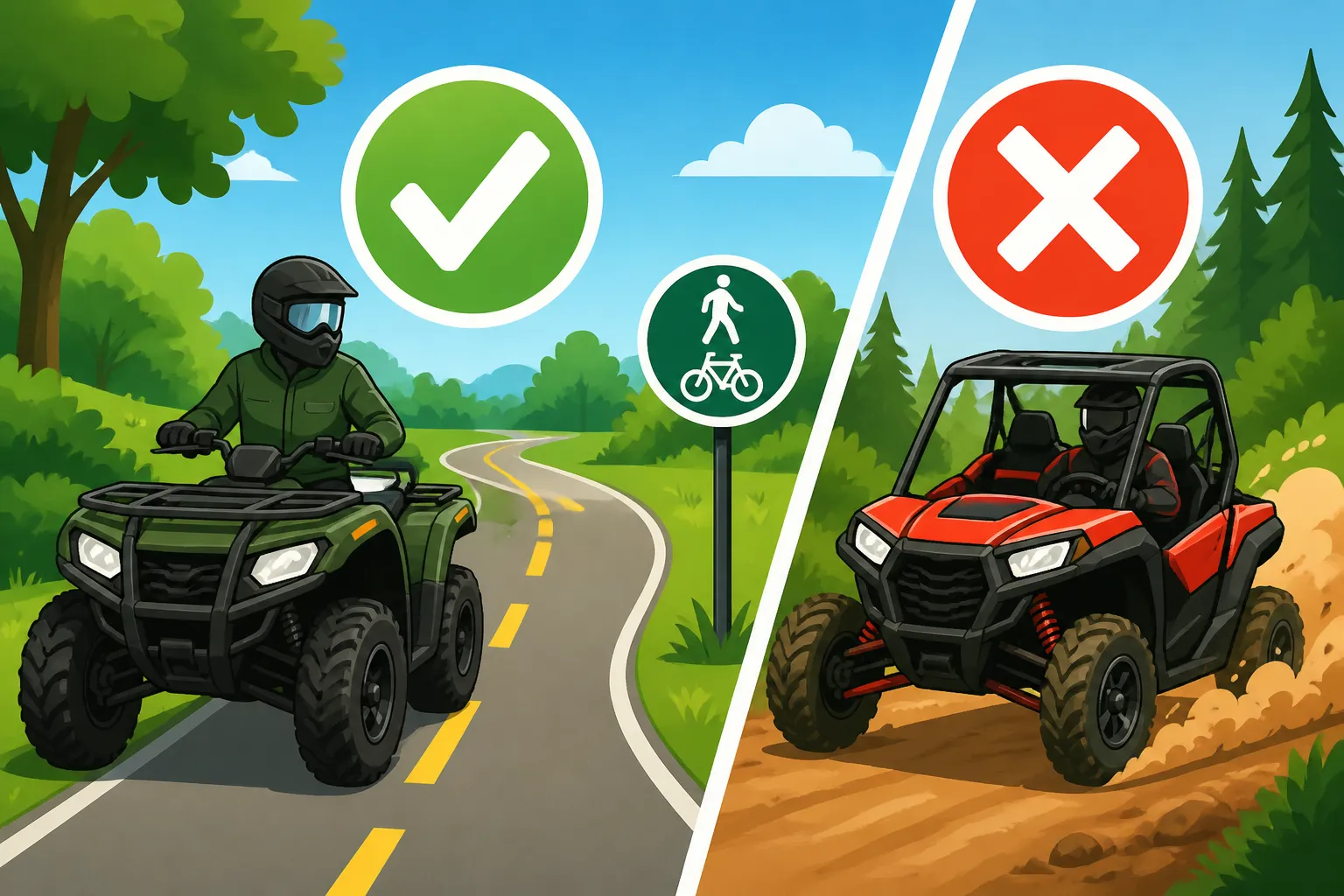
Ontario ATV Rules for Riding a Bike Path
It's a beautiful day, you've got your ATV or UTV gleaming, and you're looking for a smooth, scenic ride. You spot a paved bike path winding through the trees, seemingly perfect, and the thought crosses your mind: "Can I just hop on there for a bit?" It's a common question, born from the desire to explore, but the answer isn't as simple as just finding a clear path. This guide will dive deep into why riding your ATV or UTV on a bike path in Ontario is generally a no-go, the legal ramifications, and where you can legally and safely enjoy your machine.
The Strict Truth About ATVs and Bike Paths in Ontario
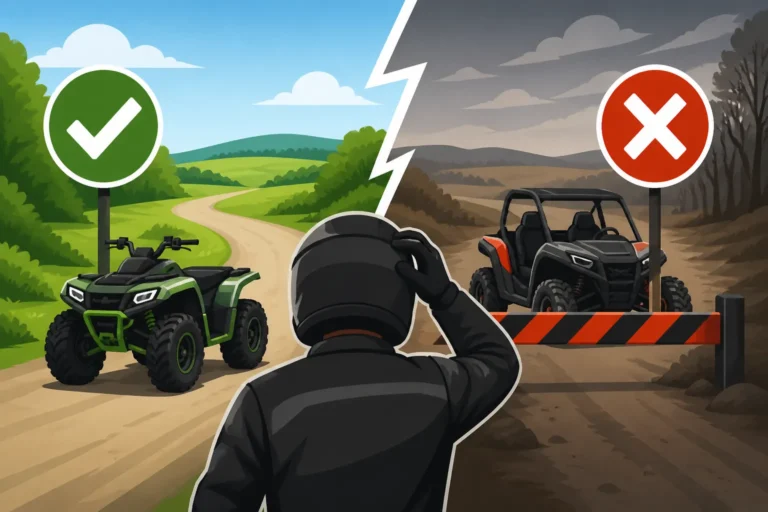
Let's cut right to the chase: using an ATV or UTV on a designated bike path in Ontario is almost universally prohibited. While it might seem like an inviting, well-maintained surface, these paths are designed and legislated for very specific types of users, and off-road vehicles like ours simply don't fit the bill. It's not just about a sign you might miss; it's deeply rooted in safety, infrastructure, and the intent behind these pathways.
Defining "Bike Path" Versus Other Trails
When we talk about "bike paths" in Ontario, we're typically referring to paved or sometimes finely crushed gravel trails specifically established for bicycles and pedestrians. These are often found within urban areas, connecting parks, residential zones, or running alongside roads. Their primary purpose is to provide a safe, separated space for non-motorized travel, offering an alternative to busy streets or rougher terrain. You'll often see clear signage indicating "cyclists and pedestrians only," and sometimes even specific rules about dog walking or rollerblading.
It's really important to distinguish these from other types of trails you might encounter in Ontario. Multi-use trails, for example, might allow different user groups, but generally, if they are designed for ATVs or UTVs, they will be explicitly signed as such, usually as part of an organized club trail network. Then there are rail trails, which are old railway lines converted into recreational paths; while some sections might be open to ORVs, many are not, especially those close to communities or managed by conservation authorities that restrict motorized access. And, of course, there's Crown land, which offers a vast expanse of potential riding, but even there, specific rules apply. Understanding these distinctions is crucial because assuming a trail is open to your ORV just because it looks like a path is a recipe for trouble.
The Letter of the Law: ORV Act and Municipal By-laws
The overarching legislation governing off-road vehicles in Ontario is [The Off-Road Vehicles Act and Ontario Riders]. This Act sets out the definitions for different types of ORVs, their equipment requirements, and general rules for their operation. Crucially, it dictates where ORVs are permitted to be operated. While the ORVA allows for ORVs on certain highways (municipal roads), this permission is heavily qualified and subject to specific conditions, including municipal by-laws.
When it comes to bike paths, the ORVA does not grant a general right of access. Instead, most bike paths fall under municipal jurisdiction, and local by-laws almost universally prohibit motorized vehicles from using them. These by-laws are in place to protect the safety of pedestrians and cyclists, preserve the path's integrity, and maintain the quiet enjoyment of these recreational spaces. A municipality might open certain sections of its roads to ORVs, as discussed in [Ontario Municipalities That Allow ATVs on Roads], but this never extends to bike paths. In fact, you'll find by-laws explicitly stating that ATVs and UTVs are not allowed on sidewalks, park pathways, or bike trails. If you're unsure about a specific path, the best course of action is always to check with the local municipality or assume it's off-limits unless explicitly signed otherwise for ORVs.
Why the Prohibition? Safety, Design, and Intent
The restrictions on ATVs and UTVs on bike paths aren't arbitrary. They stem from very real concerns about safety, the fundamental design of these paths, and the original intent behind their creation. It’s about creating harmony between different types of users and ensuring everyone can enjoy their recreation safely and appropriately.
Safety Concerns for Vulnerable Users
Imagine a quiet Sunday afternoon on a bike path. You have families with young children learning to ride, leisurely walkers, joggers, and serious cyclists enjoying the fresh air. These users are typically moving at relatively low speeds, are often absorbed in conversation or the scenery, and critically, are not expecting a motorized vehicle to come whizzing by. ATVs and UTVs, even at low speeds, possess significant weight, power, and noise levels that are incompatible with such environments.
The sheer size difference is a major factor. A UTV, even a compact one, takes up much more space than a bicycle or a person walking. The noise can be startling and disruptive, potentially causing accidents if a cyclist swerves unexpectedly. The speed differential between an ORV and a bicycle or pedestrian is also immense. Even at 20 km/h, an ATV is moving significantly faster than most cyclists, and much, much faster than a pedestrian. This speed, combined with limited sightlines on winding paths, creates a dangerous scenario where reaction time is severely reduced, putting vulnerable users at extreme risk.
Design Limitations of Bike Paths
Bike paths are simply not built to withstand the demands of off-road vehicles. They are typically constructed with lighter materials, often asphalt or fine gravel, meant for bicycles and foot traffic. The weight of an ATV or UTV, especially a larger side-by-side that might be equipped with robust accessories like SuperATV heavy-duty suspension components, can quickly degrade these surfaces. Tires designed for off-road traction, even at low pressure, can chew up asphalt or displace gravel, creating unsafe conditions for the cyclists and pedestrians who are the intended users.
Furthermore, bike paths often feature narrow sections, sharp turns, and sometimes even bollards or gates designed to prevent larger vehicles from entering. These design elements are perfectly suited for bikes and pedestrians but pose a significant hazard for ORVs. Attempting to navigate such features in an ATV or UTV can lead to loss of control, damage to the machine, and severe injury. The infrastructure simply isn't there to safely accommodate the width, weight, and turning radius of an ORV.
Protecting the Experience and Environment
Beyond the physical safety and infrastructure concerns, there's the element of preserving the intended recreational experience. Bike paths are cherished by many for their tranquility, their connection to nature, and the opportunity for quiet exercise. The presence of ATVs and UTVs introduces noise, fumes, and a general sense of industrial intrusion that fundamentally alters this experience. It can be jarring for someone enjoying a peaceful walk to suddenly encounter the rumble of an engine.
Environmentally, allowing ORVs on bike paths could lead to unintended consequences. While ORV manufacturers and accessory companies like SuperATV are conscious of environmental impact in their designs, the sheer nature of off-road vehicle use, when not in appropriate areas, can cause erosion, disturb wildlife, and compact sensitive soils. These paths are often situated in areas with delicate ecosystems or close to water bodies, where motorized disturbance is undesirable. Maintaining the ecological integrity of these recreational corridors is another key reason for the prohibition.
The Consequences of Unauthorized Riding
Deciding to ignore the rules and take your ATV or UTV onto a bike path might seem like a small transgression, but the reality is that it carries significant legal, financial, and community-related repercussions. It's simply not worth the risk.
Fines, Impoundment, and Other Penalties
If you're caught operating your ATV or UTV on a prohibited bike path, you're looking at more than just a stern warning. Police and municipal by-law enforcement officers have the authority to issue substantial fines. These fines can be for operating an ORV in a prohibited area, but also for other related infractions, such as not having the proper [Ontario ATV Insurance Requirements], lacking a valid [The Ontario Vehicle Permit Explained], or not displaying your plate correctly, even if it's securely mounted with a quality bracket from a brand like SuperATV.
In severe cases, your vehicle could be impounded, leading to towing fees, storage fees, and the hassle of retrieving your machine. This could quickly add up to hundreds, if not thousands, of dollars. Moreover, repeated offenses or particularly egregious behavior could lead to more severe penalties, including potential driving record points or even a temporary suspension of your driving privileges, depending on the nature of the charge. It's a heavy price to pay for a few minutes of unauthorized riding.
Insurance Implications
Operating an ORV legally is a prerequisite for your insurance policy to be valid. If you have an accident while riding your ATV or UTV on a bike path, which is a prohibited area, your insurance company could deny any claims. This means you would be personally liable for any damages to your vehicle, any medical expenses for injuries to yourself, and critically, any damages or injuries caused to third parties.
Imagine hitting a cyclist or a pedestrian on a bike path. The medical costs, property damage, and potential lawsuits could be financially devastating, far outweighing the cost of any legitimate trail permit or the inconvenience of trailering to an approved riding area. Always ensure your [Ontario ATV Insurance Requirements] are met, and understand that riding outside of legal parameters can render your coverage null and void.
Community Relations and Trail Access
Beyond the legal and financial consequences, riding illegally on bike paths has a broader negative impact on the entire ATV and UTV riding community. When incidents occur, or when ORVs are spotted where they shouldn't be, it generates negative publicity and reinforces stereotypes about irresponsible riders. This perception makes it much harder for organized riding clubs and federations to advocate for new [Ontario ATV Trails] or to maintain access to existing ones.
Every time an ORV is seen on a bike path, it strengthens the argument for stricter regulations and further restrictions on all off-road vehicle use, even for those riders who diligently follow the rules. Responsible riding is crucial for the long-term health and growth of our sport in Ontario. By respecting designated areas, we contribute positively to community relations and ensure future generations have places to ride.
Finding Legal and Enjoyable Riding Opportunities in Ontario
So, if bike paths are out, where can you legally and safely enjoy your ATV or UTV in Ontario? The good news is that Ontario offers a fantastic array of options for responsible riders, from dedicated trail networks to permissible municipal roads and vast stretches of Crown land.
Embracing Ontario's Extensive Trail Networks
The absolute best way to experience legal and enjoyable ATV and UTV riding in Ontario is by joining one of the many organized clubs under the Ontario Federation of ATV Clubs (OFATV). These clubs maintain thousands of kilometres of signed, managed trails across the province, specifically designed for off-road vehicles. When you purchase an [Ontario ATV Trail Permits Explained], a significant portion of that fee goes directly back to the clubs for trail maintenance, insurance, and land-use agreements, ensuring the trails remain open and safe for all.
Areas like the Voyageur Multi-Use Trail System (VMUTS) in Mattawa, the Eastern Ontario Trails Alliance (EOTA), or the Haliburton ATV Association (HATVA) networks offer hundreds of kilometres of diverse terrain, from gentle forest paths to challenging rocky climbs. These trails are patrolled, mapped, and regularly maintained, offering a much safer and more fulfilling experience than trying to sneak onto a bike path. They also often connect to local communities, allowing riders to access fuel, food, and lodging, contributing to local economies.
Navigating Municipal Roads and Crown Land
While bike paths are a no-go, some [Ontario Municipalities That Allow ATVs on Roads] have passed by-laws permitting ORVs on specific municipal roads. It's absolutely critical to research these by-laws meticulously, as rules vary widely from township to township. You'll need to know which roads are open, what the speed limits are (often 20 km/h or 50 km/h), and any time-of-day restrictions. Always carry your [The Ontario Vehicle Permit Explained], proof of insurance, and a valid driver's licence. Remember, riding on the shoulder or in the ditch of a provincial highway (like the 400-series, or major King's Highways) is generally prohibited, even if municipal roads in the area are open.
[Riding Crown Land in Ontario] offers another incredible opportunity, especially in the vast northern and central parts of the province. Generally, Crown land is open to ORV use for recreational purposes, but there are important exceptions and rules. You cannot ride on Crown land that is leased or under a permit, within provincial parks or conservation reserves, or where posted signage prohibits access. Always practice Leave No Trace principles, respect wildlife, and be prepared for remote conditions. Using GPS and carrying emergency communication devices are highly recommended when venturing onto Crown land.
Equipping for Legitimate Trail Riding
Once you've identified your legal riding spots, make sure your machine is ready for the adventure. Equipping your ATV or UTV properly enhances safety, comfort, and capability. For serious trail riding, especially in rugged Ontario terrain, you might consider upgrades like heavier-duty skid plates to protect vital components, or a winch, which is invaluable for self-recovery or helping a buddy out of a sticky situation. Many riders also invest in aftermarket tires designed for improved traction on mud, rocks, and uneven surfaces.
Companies like SuperATV offer a wide range of aftermarket parts and accessories designed to enhance your machine's performance and durability for legitimate off-road use. From upgraded axles and suspension components that can handle the toughest trails, to windshields and roofs for UTVs that protect against the elements, these products are built for the challenges of dedicated off-road riding, not for cruising on a paved bike path. Always ensure any modifications comply with Ontario's ORV regulations regarding vehicle dimensions, lighting, and noise. Prepare your machine for the conditions you'll actually encounter on sanctioned trails, not on pathways meant for bicycles.
| Path/Trail Type | Primary Users | ATVs/UTVs Allowed? | Typical Surface | Key Consideration for ORVs |
|---|---|---|---|---|
| Bike Path | Bicycles, Pedestrians | NO | Paved, fine gravel | Explicitly prohibited by municipal by-laws, unsafe for ORVs |
| Sidewalk | Pedestrians | NO | Paved | Illegal and extremely dangerous |
| Designated ORV Trail | ATVs, UTVs | YES | Varies (dirt, rock, mud) | Requires [Ontario ATV Trail Permits Explained] and club membership |
| Municipal Road (select) | Vehicles, ATVs/UTVs (if by-law allows) | YES (conditional) | Paved | Check specific municipal by-laws, speed limits apply |
| Crown Land (select) | Varied (hunters, campers, ORVs) | YES (conditional) | Natural terrain | Respect restrictions (no provincial parks), Leave No Trace |
| Rail Trail (select) | Varied (often cyclists, pedestrians) | SOMETIMES | Gravel, packed earth | Varies by section/management; check local signage carefully |
Ultimately, while the desire to explore new paths is understandable, respecting the rules for bike paths is crucial. It’s about more than just avoiding a ticket; it’s about safety, responsible recreation, and preserving the positive image of the off-road riding community in Ontario. Embrace the incredible legal riding opportunities that are available, and always ride smart and ride safe!
Disclaimer
This article is for general informational purposes only and does not constitute professional advice. Laws, prices and regulations vary by location and change over time. Consult a qualified professional for guidance on your specific situation.