Why One Township Road Is Open and the Next Closed
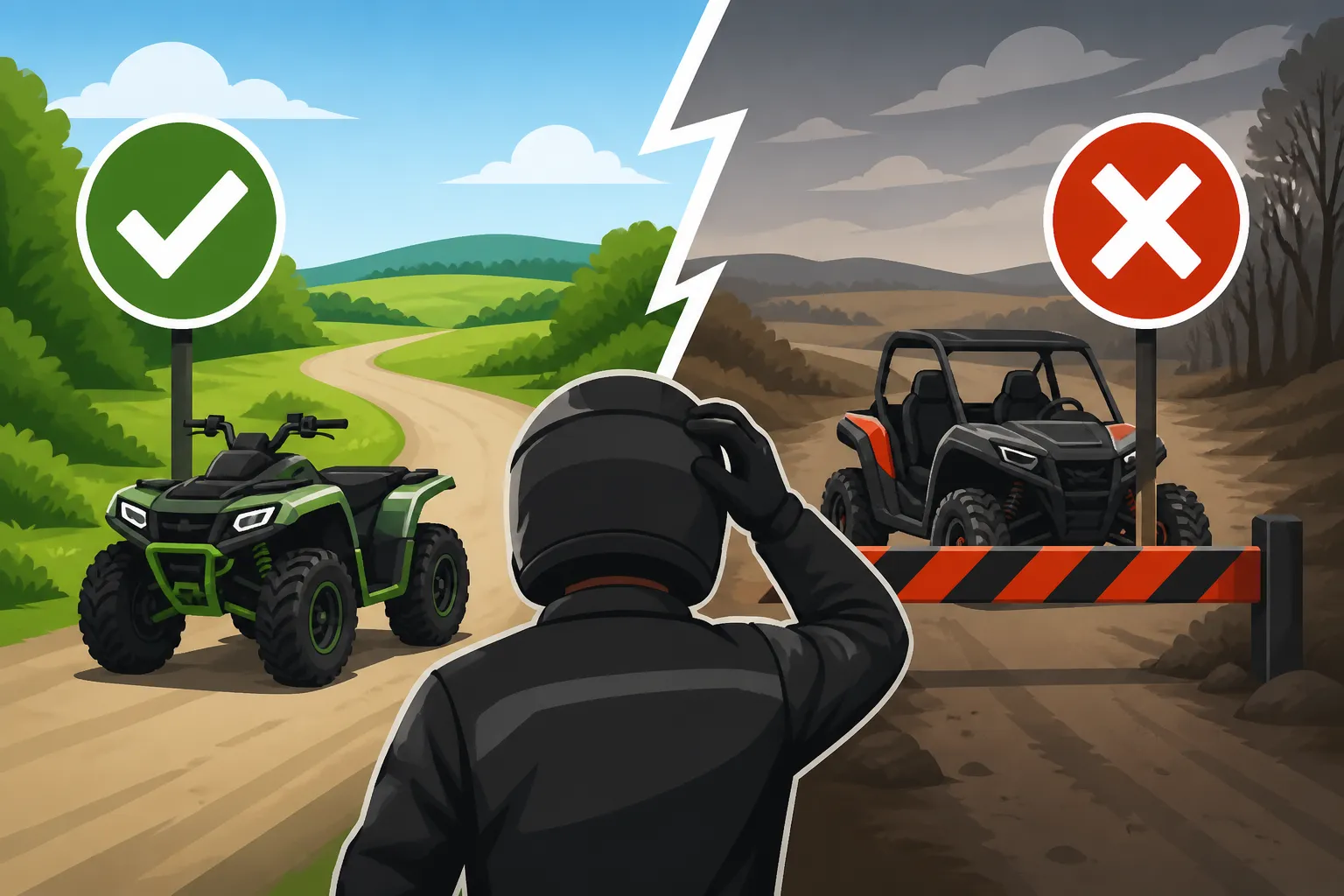
It's incredibly frustrating, isn't it? You're out for a ride, enjoying the trails, and suddenly you hit a municipal boundary where the rules seem to change on a dime. One township's roads are open, beckoning you onward, while the very next one slams the door shut, forcing you to turn around or find an alternate route. This guide is here to untangle that knot of confusion, explaining why these seemingly arbitrary borders exist and what factors lead some local roads to welcome your ATV or UTV, while others remain steadfastly closed.
Understanding the Legal Landscape: Provincial Framework vs. Local Control
The first thing to understand about ATV and UTV access on municipal roads in Ontario is that it's a two-tiered system. The province sets the overarching framework, but the actual decision-making power for local roads rests squarely with individual municipalities. It's not a province-wide "all open" or "all closed" decree, which often leads to the patchwork of rules we experience on the ground.
The Role of the Off-Road Vehicles Act
Ontario's provincial legislation, primarily the [The Off-Road Vehicles Act and Ontario Riders], sets the foundational rules for off-road vehicles. This act defines what an ORV is, outlines general operating requirements, and specifies conditions under which ORVs may be allowed on highways (which includes municipal roads). Crucially, the provincial act provides the permission for municipalities to pass bylaws that allow ORVs on their roads. Without this provincial enabling legislation, municipalities wouldn't even have the authority to consider opening their roads.
It's a bit like the provincial government saying, "You can serve pie at your town's dinner," but leaving it up to each town council to decide if they want pie, what kind of pie, and when they'll serve it. The province provides the recipe book, but the local cooks make the final menu choices. This is why, when you cross from one township to another, you might encounter drastically different rules regarding road access for your off-road machine.
The Power of Municipal Bylaws
This is where the rubber meets the road, quite literally. Each city, town, or township in Ontario has the authority to create its own bylaws to regulate ORV use within its borders, specifically on roads under its jurisdiction. These bylaws are the local laws that either open or close roads to ATVs and UTVs. They can specify which roads are open, what times of day ORVs can operate, speed limits, and other conditions that might go above and beyond the provincial baseline requirements, such as requiring [Equipment Ontario Requires on a Road-Legal ORV].
It's not uncommon to find that one municipality has a progressive bylaw allowing ORVs on many of its roads, perhaps to connect trails or boost local tourism, while its neighbour has a very restrictive bylaw, or no bylaw at all, which effectively keeps ORVs off their municipal roads. This is the primary reason you encounter that baffling inconsistency from one community to the next. They each have their own local government, with their own priorities and concerns, making independent decisions.
How Municipalities Decide: The Bylaw Process
The process a municipality goes through to open or close roads to ORVs isn't just a snap decision by a single councillor. It's usually a structured, sometimes lengthy, process involving public input and careful consideration. Understanding this process can help riders who wish to advocate for more open roads in their area.
Initiating the Conversation
Often, the conversation about opening roads to ORVs starts with a request or a petition from local residents, an ATV/UTV club, or even a local business association seeing the economic potential of trail tourism. Sometimes, a forward-thinking councillor might champion the idea, recognizing the growing popularity of the sport and the need for better trail connectivity. This initial spark is crucial; councils rarely act on their own without some kind of community impetus.
This is often the stage where preliminary discussions happen, where staff might be asked to research existing bylaws in other municipalities or gather initial public sentiment. It's a fact-finding mission to see if there's enough support and justification to move forward with a formal bylaw proposal. An ORV club, like one affiliated with the OFATV, might present a comprehensive proposal, highlighting economic benefits and safe riding practices.
Public Consultation and Debate
Before a bylaw can be passed, municipalities are generally required to engage in some form of public consultation. This might involve public meetings, online surveys, or opportunities for residents to submit written comments. This stage is absolutely critical, as it's where the various perspectives – from enthusiastic riders to concerned residents – are heard.
During these consultations, you'll hear arguments for and against opening roads. Riders will often highlight the economic benefits of increased tourism, the need for safe routes to connect trails, and their right to access recreational opportunities. Opponents, on the other hand, might raise concerns about noise, dust, safety for pedestrians and other vehicles, environmental impact, and potential property damage. It's a lively debate, and the outcome often depends on which side presents the most compelling case and has the most organized support. This is also where you might hear discussions about [Ontario ATV Speed Limit on Roads] or [Ontario ATV Passenger Rules].
Crafting and Passing the Bylaw
Once public input has been gathered and considered, municipal staff or a designated committee will draft a proposed bylaw. This draft will often specify which roads are to be opened (often secondary roads, not major arteries), what times of day ORVs are permitted, designated speed limits, and other operational rules. It might also address requirements such as [Ontario ATV Insurance Requirement] or [Ontario ATV Helmet Law].
The draft bylaw then goes through several readings and votes by the municipal council. This is a formal legislative process, and it can be amended during these stages based on further discussion or new information. If it passes all required readings, it officially becomes law within that municipality. This is why it's so important to [Checking a Township's ORV By-law] before you ride, as the specifics can vary wildly.
Why Some Roads Open and Others Stay Closed: Key Considerations
The decision to open or close municipal roads to ORVs is complex, with councils weighing a multitude of factors. It's rarely a simple "yes" or "no" but rather a nuanced judgment call based on local conditions and priorities.
Connecting Trails and Boosting Tourism
One of the strongest arguments for opening roads is to create seamless trail networks. Many trails, especially in rural Ontario, are fragmented by municipal roads or private land. Allowing ORVs to legally use certain road sections can connect these gaps, turning several disconnected short trails into one long, appealing route. This direct access from communities to trail systems can be a massive draw for recreational riders.
For many smaller towns, this isn't just about recreation; it's about economic survival. ATV and UTV riders are tourists who buy fuel, grab lunch, stay in motels, and shop at local stores. Opening roads can literally put these towns on the map for riders, bringing in much-needed revenue. Municipalities that actively promote themselves as "trail towns" often have very accommodating bylaws. The goal is to encourage visitors to spend their money locally, and opening roads is a key part of that strategy.
Safety Concerns and Public Nuisance
On the flip side, safety is often the biggest concern raised by residents and councillors who oppose opening roads. There are worries about collisions between ORVs and cars, bicycles, or pedestrians. Noise pollution, especially in residential areas, is another frequently cited issue. Nobody wants their quiet neighbourhood suddenly filled with the roar of engines, especially if they haven't explicitly chosen to live next to a trail.
Concerns about dust, particularly on gravel roads, and the potential for environmental damage (like rutting shoulders or disturbing natural habitats) are also factors. Councils have a responsibility to ensure public safety and maintain the quality of life for all residents. If these concerns outweigh the perceived benefits, a municipality is likely to keep its roads closed, especially if they haven't seen an organized, well-reasoned plan from local riders. This is where advocating for responsible riding and equipping machines with appropriate accessories, perhaps from manufacturers like SuperATV, that minimize noise or improve visibility could help address some concerns.
Road Classifications and Infrastructure
Not all roads are created equal, and a municipality will consider the classification and condition of its roads. Major arterial roads with high traffic volumes are almost never considered for ORV access due to safety concerns. Instead, focus often falls on secondary roads, concession roads, or unassumed road allowances where traffic is lighter.
The physical infrastructure of the road also plays a role. Are the shoulders wide enough? Is there adequate signage? Some roads simply aren't designed to safely accommodate ORV traffic alongside cars. Municipalities might also be wary of the potential for increased wear and tear on their roads, especially gravel ones, and the associated maintenance costs. They also need to consider [Ontario ATV Width Limit for Road Use] for different vehicle classes.
| Factor | Description | Impact on Bylaw Decision |
|---|---|---|
| Trail Connectivity | Does opening specific roads create vital links between existing trail networks, making longer, more appealing routes possible? | Positive: Strong incentive for municipalities seeking to become "trail towns" or enhance regional tourism. |
| Economic Impact | Will allowing ORVs on roads bring in tourism dollars through fuel sales, restaurants, accommodation, and retail? | Positive: Significant motivator for communities looking to boost local economies. |
| Public Safety | Are there concerns about collisions with cars, cyclists, or pedestrians? How will increased ORV traffic affect road safety? | Negative/Cautious: A primary concern; can lead to restrictions (e.g., speed limits, specific roads only) or outright refusal. |
| Noise & Dust | Will ORV traffic create unacceptable noise levels in residential areas or generate excessive dust on gravel roads? | Negative/Cautious: Often leads to restrictions (e.g., operating hours, residential street closures) or opposition from residents. |
| Resident Support/Opposition | What is the overall sentiment of the community? Are there organized groups advocating for or against ORV access? | Crucial: Strong, organized support can drive a bylaw; strong opposition can halt it. |
| Road Classification | Are the proposed roads major arteries, collector roads, or low-volume concession roads? | Influential: Major roads are usually excluded; secondary/low-volume roads are more likely candidates. |
| Enforcement Capacity | Does the local police or bylaw enforcement have the resources to ensure compliance with ORV rules on roads? | Consideration: Lack of enforcement capacity can lead to reluctance to open roads, fearing uncontrolled riding. |
| Existing Infrastructure | Are roads suitable for mixed-use? Are there specific safety features (e.g., shoulders, sightlines) or environmental sensitivities? | Consideration: May lead to specific road exclusions or requirements for ORVs. |
Advocating for Open Roads: Your Role as a Rider
Feeling frustrated by closed roads? You don't have to just accept it. As a responsible ORV enthusiast, you have a powerful voice in shaping local policy. Many of the success stories for open roads across Ontario began with proactive riders and clubs engaging with their local municipal government.
Joining or Forming a Local ORV Club
This is perhaps the single most effective step you can take. A collective voice is always louder and more influential than an individual one. Local ATV/UTV clubs, often affiliated with the Ontario Federation of ATV Clubs (OFATV), are organized, have resources, and can present a united front to municipal councils. They understand the intricacies of local politics and often have established relationships with community leaders.
Clubs can gather data on economic impact, present well-researched proposals, and even help educate riders on responsible conduct. They are also often involved in trail maintenance and community service, which builds goodwill with the municipality. If you're passionate about expanding riding opportunities, find your local club or consider starting one. This collective effort is how many municipalities get convinced to pass bylaws like [Greater Napanee By-law 2022-0062] or [Middlesex Centre By-law 2021-010].
Engaging with Your Municipal Council
Don't be a stranger to your local council. Attend public meetings, especially those where ORV bylaws are being discussed. Write letters, send emails, or even request a meeting with your local councillor. Be prepared to present a thoughtful, well-reasoned argument, focusing on the benefits to the community (tourism, recreation, trail connectivity) and how potential concerns (safety, noise) can be mitigated.
When you engage, be respectful and constructive. Avoid aggressive or demanding tones, as this can be counterproductive. Highlight your commitment to responsible riding, emphasize safety, and demonstrate that you are a positive contributor to the community. Propose specific solutions rather than just airing grievances. For example, if safety is a concern, explain how using proper lighting, mirrors, and maybe even adding an aftermarket horn from a brand like SuperATV can significantly improve road safety. [Asking a Council to Open a Road] is a fundamental right.
Educating Yourself and Others
Knowledge is power. Understand the provincial [Ontario ATV Rules on a Municipal Road] and the specific requirements for your ORV, such as the appropriate licence ([Ontario's G2 and M2 Licence Requirement]) and mandatory insurance ([Ontario's Mandatory ORV Insurance]). By being a responsible rider who adheres to all regulations, you become an ambassador for the sport.
Educate fellow riders on the importance of staying on designated routes, respecting speed limits, and being courteous to other road users. When a municipality sees that riders are responsible and informed, they are much more likely to consider opening more roads. Conversely, a few irresponsible riders can quickly spoil it for everyone, leading to stricter enforcement or the closure of previously open roads. Knowing about [Ontario ATV Plate Placement Rules] and similar details shows you're serious.
Understanding the Trade-offs
Finally, recognize that opening roads often involves trade-offs. A municipality might open certain roads but implement strict operating hours, specific speed limits, or restrict access to particular types of ORVs (e.g., allowing ATVs but not UTVs on some roads, or vice versa, based on [Ontario ATV Rules for a Side-by-Side Under 1,000cc] vs. larger machines). Be prepared to accept reasonable restrictions if it means gaining access where there was none before. It's about finding a balance that works for both riders and the wider community.
Remember, the goal isn't just to get roads open; it's to foster a sustainable and positive relationship between the ORV community and local residents. By being proactive, organized, and responsible, you can help transform those frustrating "closed" signs into welcoming "open" routes for everyone to enjoy the vast beauty of Ontario.
Disclaimer
This article is for general informational purposes only and does not constitute professional advice. Laws, prices and regulations vary by location and change over time. Consult a qualified professional for guidance on your specific situation.