A Machine Just Over 2.03 Metres Wide
Oh, the sheer frustration of getting your beloved machine ready for a ride, whether it's on a municipal road or heading to a trail, only to discover it's just a hair over a critical legal dimension. It’s enough to make you throw your hands up! Many Ontario ATV and UTV riders grapple with this exact issue when their otherwise perfect off-road vehicle barely exceeds the province’s 2.03-metre width limit, leading to confusion and potential legal headaches. This guide will meticulously break down what that specific width means for you as a rider in Ontario, why it matters, and what your options are.
Understanding Ontario's Width Regulations for ORVs on Roads
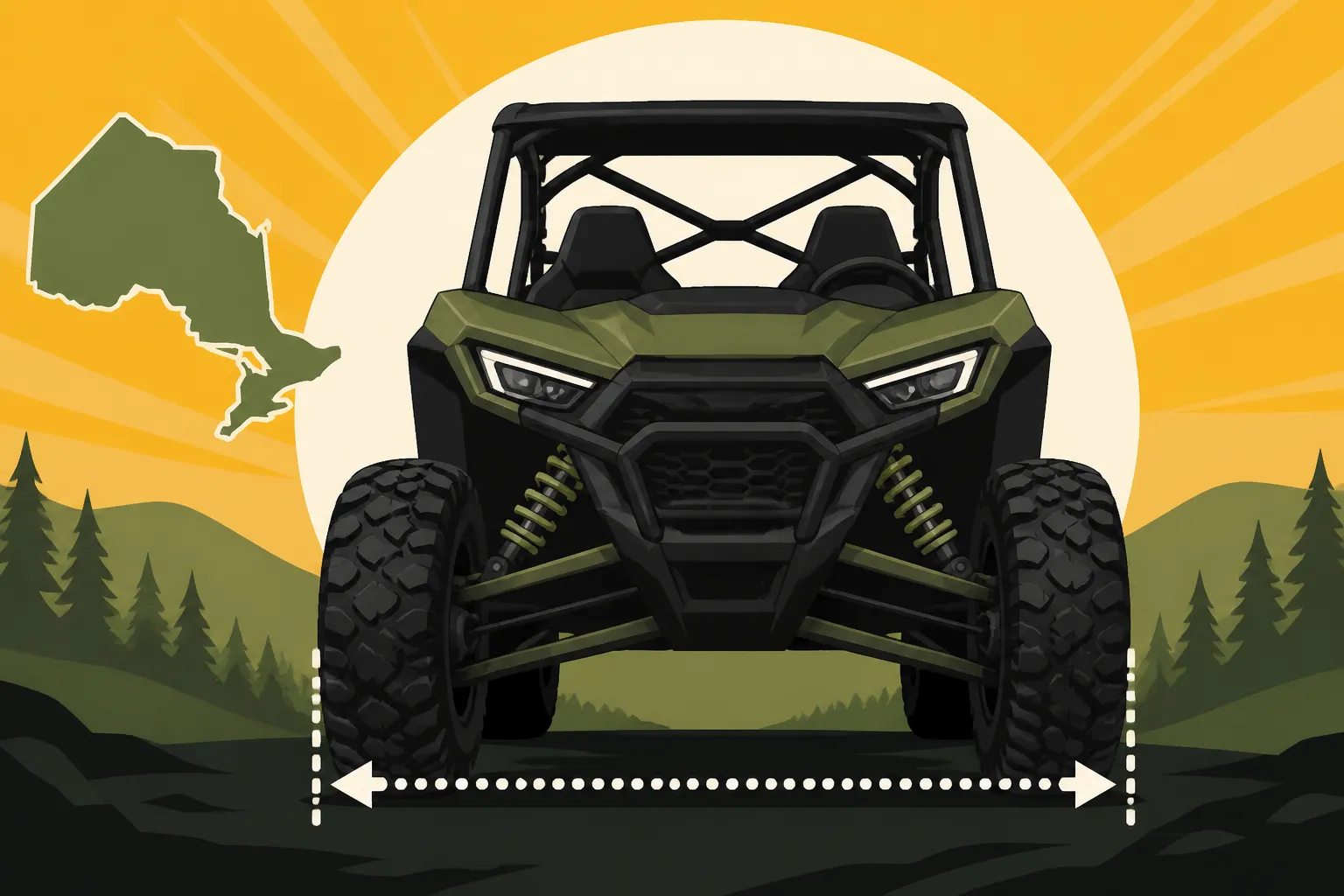
Let's get straight to the heart of the matter: Ontario has specific rules about how wide your off-road vehicle (ORV) can be if you plan to operate it on municipal roads that have been opened to ORV traffic. The key piece of legislation here is Ontario Regulation 316/03, under the Off-Road Vehicles Act. This regulation, in part, defines different classes of ORVs and sets out the conditions for their use, including dimensional limits. For many side-by-sides (UTVs) and even some highly modified ATVs, the 2.03-metre (or roughly 80-inch) width limit is a constant source of head-scratching and concern.
This limit isn't arbitrary; it's rooted in safety and the practicalities of sharing public roadways. Municipal roads are designed for a range of vehicles, from compact cars to large trucks, and introducing wider ORVs can create challenges for sightlines, passing clearances, and general traffic flow. Imagine navigating a tight rural road, already shared with cyclists and pedestrians, when an excessively wide ORV comes around a blind corner. The regulation aims to ensure that ORVs, when they do operate on these roads, do so in a manner that minimizes risk to all road users. This is a common point of contention for riders who see their UTVs as perfectly safe, but the law has a line drawn for a reason.
The frustration is absolutely real for many riders. Perhaps you’ve invested in a fantastic machine, maybe even added some aftermarket components like wider tires or suspension arms from a company like SuperATV that enhance its stability and off-road performance, only to find these modifications push you just beyond the legal limit for road use. It feels unfair when your machine is just over, especially if it's only by a few centimetres. However, in the eyes of the law, "just over" is still "over," and that distinction carries significant weight when it comes to enforcement and your ability to legally use those designated municipal roads. We dive deeper into this specific rule in our article on [Why Width Is Capped at 2.03 Metres].
The Legal Implications of Exceeding the Width Limit
So, what happens if your machine is just a few centimetres wider than the 2.03-metre provincial limit and you decide to ride it on an opened municipal road anyway? The consequences can be significant, ranging from substantial fines to serious insurance problems in the event of an accident. When a machine exceeds the prescribed width, it technically falls outside the legal definition of an "Off-Road Vehicle" as permitted for road use under Regulation 316/03. This means that even if a municipality has passed a by-law to open its roads to ORVs, your specific machine might not qualify for that privilege.
Operating a vehicle on a public road that doesn't meet the legal requirements can be akin to driving an unregistered or uninsurable vehicle. If an officer pulls you over and measures your machine, or if its excessive width is simply obvious, you could face charges for operating a non-compliant vehicle. These fines can be steep, and the disruption to your ride, including potentially having your machine towed, is a major hassle nobody wants. Beyond the immediate legal penalties, think about the worst-case scenario: an accident. Your insurance policy is underwritten based on your machine meeting legal operating conditions. If your ORV is found to be non-compliant due to its width, your insurance provider could deny coverage, leaving you personally liable for damages, injuries, and legal costs. This is a terrifying prospect and highlights why understanding these dimensions is so crucial. If you're wondering about the financial repercussions of non-compliance, our article on [Riding an Unregistered ATV in Ontario] can give you a clearer picture.
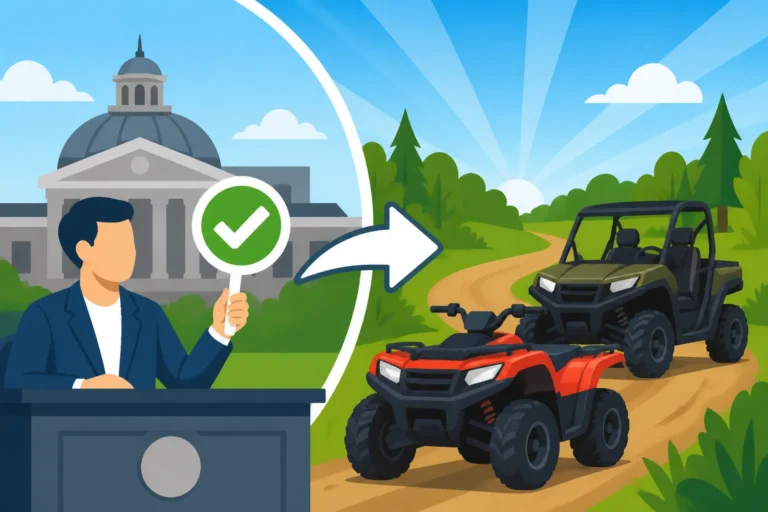
The challenge here is that municipalities have the power to "opt in" and open certain roads to ORVs, but they cannot unilaterally change the provincial definitions of what constitutes a legal ORV for road use. Their by-laws operate within the framework of the provincial Off-Road Vehicles Act. So, while they can designate where ORVs can ride, they cannot override what an ORV is defined as for those specific purposes. This means that even if a town is incredibly ORV-friendly, their enthusiasm doesn't exempt you from provincial dimensional limits. It's a nuanced point that often catches riders off guard, leading to genuine confusion when they've done their homework on local by-laws but missed a critical provincial detail.
Measuring Your Machine Accurately
Before you even think about hitting those municipal roads, taking accurate measurements of your ORV is absolutely essential. Many riders assume their machine is compliant, only to discover later that a slightly wider tire, a different offset wheel, or even a specific suspension setup has pushed them past the 2.03-metre mark. The key is to measure the widest point of your machine, perpendicular to its direction of travel. This typically means the outside edge of your tires, but be mindful of any protruding fenders, brush guards, or other accessories that might extend further. Mirrors are generally excluded from this measurement, as they are often flexible and designed to fold in.
It's not just about the factory specifications. Many riders customize their machines for better performance or aesthetics. Lift kits, for instance, can sometimes change geometry and subtly affect effective width. Aftermarket wheels often come with different offsets that can push your tires out further, even with the same tire size. And of course, specialized track systems, while fantastic for winter riding, almost certainly push you well beyond the legal width. Products from manufacturers like SuperATV, known for their extensive range of aftermarket parts, can significantly alter a machine's dimensions. While these parts are often designed for improved off-road capability and durability, it's vital to re-measure after any such installation if road legality is a concern.
When you're measuring, do so on a level surface, with the machine in its normal operating stance. Don't eyeball it; use a proper measuring tape or, even better, a long, rigid straight edge or a pair of large carpenter's squares to ensure you're getting the absolute widest point. A difference of an inch or two might seem negligible, but it can be the difference between legal compliance and an unwelcome interaction with law enforcement. Take your time, measure twice, and don't hesitate to consult your owner's manual for factory specs as a baseline, always remembering to factor in any modifications you’ve made. For a comprehensive guide on this, check out our post [Measuring Your Machine Before a Road Ride].
Options for Riders with Over-Width Machines
So, you've measured your pride and joy, and it turns out your UTV or heavily modified ATV is indeed just over the 2.03-metre mark. Now what? Don't despair! While road-legal operation on municipal roads might be off the table, you still have several avenues to explore, depending on your riding priorities. It's about adjusting your expectations and understanding the boundaries that the law sets, even if they feel a bit restrictive for your particular machine. This situation is far from ideal, but acknowledging it is the first step to finding a solution.
Stick to the Trails and Private Property
For many riders whose machines exceed the provincial width limit for road use, the most straightforward and safest option is to embrace trail riding and stick to private property. Ontario boasts an incredible network of managed trails, often overseen by clubs under the Ontario Federation of ATV Clubs (OFATV). These trails are designed for off-road vehicles of various sizes and are typically not subject to the same strict width limitations as public roads. While there might be specific gate or bridge widths on certain trails, the 2.03-metre rule is primarily for road access, not trail use.
Similarly, if you're fortunate enough to own private land, or have permission to ride on a friend's or family member's property, these width restrictions don't apply. You can enjoy your wider machine to its full potential without worrying about provincial road regulations. Many ORV enthusiasts primarily use their machines for work around a farm or cottage, or for accessing remote hunting and fishing spots on private land, and for them, the road width limit is less of a concern. This is where your wider, more stable machine, perhaps outfitted with robust accessories from SuperATV, can truly shine without legal encumbrances. For ideas on where to ride, consult [Where to Ride an ATV in Ontario] and [Ontario's OFATV Trail Network]. You can also explore [Ontario Rules for Riding Crown Land], though specific rules and restrictions apply there too, depending on the area.
This path requires you to trailer your ORV to trailheads or to your private property, rather than riding it there on public roads. While this might add an extra step to your adventures, it ensures you remain compliant and avoids the stress and potential penalties associated with operating an over-width vehicle illegally on municipal thoroughfares. It's a shift in mindset, perhaps, but it allows you to continue enjoying your machine where it's legally permitted and designed to perform best.
Adjustments, Modifications, or a Different Machine
If road access is absolutely critical to your riding experience and your machine is just slightly over the 2.03-metre limit, you might explore whether any adjustments or modifications can bring it into compliance. This is often easier said than done, and for many, it might not even be feasible. Can you remove wheel spacers? Are there alternative wheels with a different offset that would pull the tires in without compromising safety or performance? Sometimes, simply changing tires to a narrower profile, or even a different brand that runs slightly less wide, could make the difference. However, be extremely cautious with any modifications that alter your machine's stance, as stability and handling can be significantly affected, potentially making it less safe to ride.
For those machines that are significantly over the limit, or where modifications are either too costly, too complex, or would compromise the machine's intended use, the harsh reality might be considering a different machine altogether. This is a tough pill to swallow, especially if you love your current ORV. However, if your primary goal is to use municipal roads to connect trails or access amenities, and your current machine simply doesn't fit the legal definition, then a narrower ATV or a UTV specifically designed to meet the 2.03-metre threshold might be your only practical solution. It's a financial commitment, for sure, but it guarantees peace of mind and legal compliance.
Before making any drastic decisions, it's wise to consult with a reputable ORV dealer or a mechanic specializing in these vehicles. They might be able to offer insights into possible, safe modifications or advise you on models that are known to easily meet Ontario’s road-use width requirements. They can also help you understand the long-term implications of any changes you make to your machine, ensuring that you're not just solving one problem but potentially creating others.
Navigating Municipalities and Enforcement
Even if your local municipality has enthusiastically opened its roads to ORVs, that doesn't mean all machines are welcome, especially if they exceed the provincial width limit. This is a common point of misunderstanding and a source of frustration for riders. Municipal by-laws are powerful, but they operate within the confines of provincial legislation, specifically the Off-Road Vehicles Act and its associated regulations. While a by-law can designate which roads are open and when ORVs can use them, it cannot redefine what constitutes a legal "Off-Road Vehicle" for that purpose.
What this means in practice is that if your machine is over 2.03 metres wide, it simply does not fit the provincial definition of an ORV that can legally use those municipal roads, regardless of what the local by-law says about opening the roads. The by-law facilitates the use of compliant ORVs, it doesn't expand the definition of compliance. This is a critical distinction and one that can lead to confusion if riders only focus on the local by-law without understanding the underlying provincial framework. Our guide on [How an Ontario Municipality Opts In] provides more context on this process.
Consider the various classes of ORVs in Ontario and their typical width ranges. While many ATVs easily fall within the limit, some larger Multi-purpose Off-road Vehicles (MPVs) and many Recreational Off-road Vehicles (ROVs), which often include side-by-sides, can push or exceed that 2.03-metre mark.
Here's a simplified look at how different ORV classes relate to width for road use:
| ORV Class (Ontario) | General Description | Typical Width Range (Approx.) | Road Use Implications (Width) |
|---|---|---|---|
| ATV | All-Terrain Vehicle (single rider) | Up to 1.35 meters (53 inches) | Generally well within the 2.03m limit. |
| MPV | Multi-purpose Off-road Vehicle (e.g., some utility UTVs) | 1.5 to 1.7 meters (59-67 inches) | Generally within limit, but always check specific model specs. |
| ROV | Recreational Off-road Vehicle (e.g., sport UTVs) | 1.5 to 2.0 meters (59-79 inches) | Can be very close to, or exceed, the limit. Critical check needed. |
| Machine > 2.03m | Any ORV exceeding 2.03m (80 inches) | Over 2.03 meters (80 inches) | NOT Permitted for road use on municipal roads. |
This table clearly illustrates that as you move towards wider utility and recreational machines, the risk of exceeding the limit for road use increases significantly.
The Challenge of Enforcement and Interpretation
When an Ontario Provincial Police (OPP) officer or municipal by-law enforcement officer stops an ORV on a municipal road, they are tasked with enforcing both the local by-law and the provincial Off-Road Vehicles Act. If your machine is visibly or measurably wider than 2.03 metres, it immediately raises a red flag because it technically falls outside the provincial definition of an ORV permitted on that road. An officer isn't going to interpret "just over" as "close enough." The law is quite clear on this specific dimension.
This can be a truly challenging situation for both riders and officers. Riders often genuinely believe they are compliant because they've confirmed the road is "open" for ORVs, not realizing their specific machine category or dimensions are the issue. Officers, on the other hand, are enforcing a legal definition. The grey area that many riders hope for simply doesn't exist when it comes to specific dimensional limits like width. It's a hard line, and crossing it means you're non-compliant. Our article on [What an Ontario Officer Checks Roadside] can give you a better idea of what to expect during a stop.
It's also worth noting that while accessories from brands like SuperATV can be fantastic for customizing your ride, some of their wider A-arms, wheel spacers, or larger tire setups are designed primarily for off-road performance and ruggedness. If road legality is a goal, every single modification needs to be considered through the lens of those provincial dimensions. It's a classic example of needing to balance performance desires with legal requirements, and sometimes, those two things are in direct conflict, forcing a choice.
Advocating for Wider Machine Inclusion (Long-Term View)
If you believe that the 2.03-metre width limit is overly restrictive for modern ORVs, especially larger UTVs that are becoming increasingly popular, there is a path for advocacy. Change to provincial legislation is a slow process, but it does happen, and it typically begins with organized efforts from rider groups and associations. Organizations like the Ontario Federation of ATV Clubs (OFATV) represent the collective voice of riders to the provincial government and can lobby for amendments to the Off-Road Vehicles Act and its regulations.
This advocacy usually involves presenting data on modern ORV design, safety features, and the economic benefits that ORV tourism brings to rural communities. It’s about building a strong, evidence-based case for why certain rules might need updating to reflect the evolution of the machines and the needs of the riding community. This isn't a quick fix; legislative changes can take years to go from proposal to implementation. However, if enough riders feel passionately about this issue, and the safety data supports a re-evaluation, then it’s a process worth engaging in.
In the meantime, staying informed, adhering to current regulations, and supporting your local ORV clubs and provincial federations are the best ways to contribute to the future of riding in Ontario. They are the ones at the forefront, engaging with government officials and working to improve conditions for all riders. Understanding [The Off-Road Vehicles Act and Ontario Riders] is a great start to grasp the existing framework before advocating for changes. Remember, collective action is far more effective than individual frustration when it comes to legislative reform.
Disclaimer
This article is for general informational purposes only and does not constitute professional advice. Laws, prices and regulations vary by location and change over time. Consult a qualified professional for guidance on your specific situation.