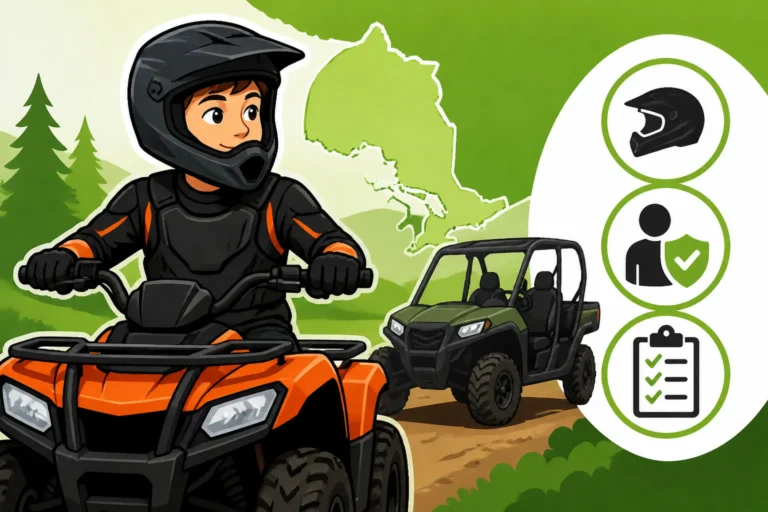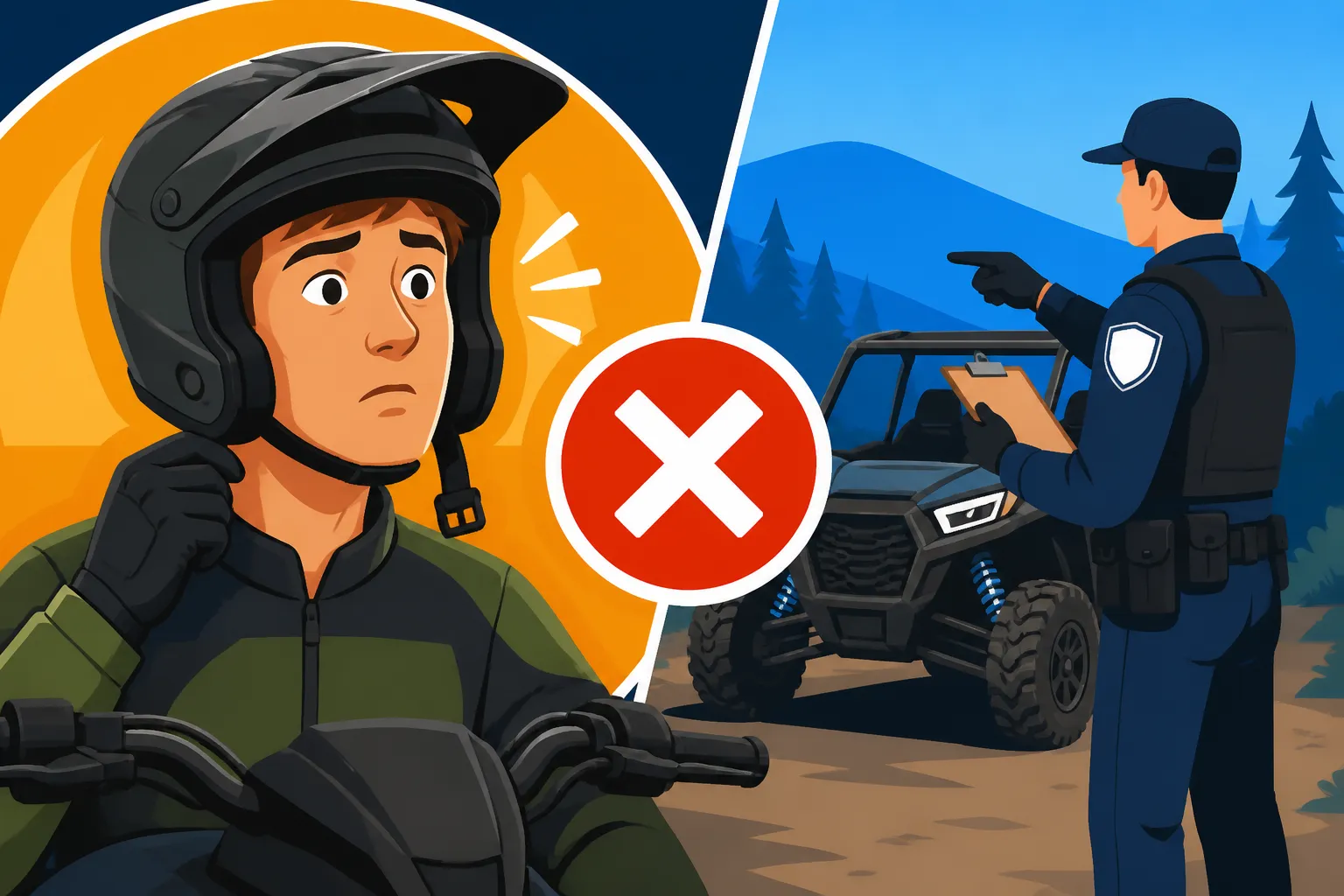
Can You Be Ticketed for an Undone Chin Strap?
It's a question that often pops into our heads when we're just hopping on the ATV for a quick rip down the laneway or across a field: "Do I really need to do up this chin strap for such a short distance?" The truth is, that seemingly minor oversight can land you in hot water with law enforcement in Ontario, and more importantly, put your safety at serious risk. This guide will walk you through the specifics of Ontario's helmet laws, why that chin strap is so crucial, and what could happen if you're caught riding with it undone.
The Law on Helmets and Chin Straps in Ontario
Riding an ATV or UTV in Ontario comes with a set of responsibilities, especially concerning safety gear. While most riders understand that a helmet is mandatory, the specific requirement for how that helmet must be secured sometimes gets overlooked, leading to avoidable tickets and potentially severe injury.
What the Regulation Says About Securement
Ontario Regulation 316/03, which falls under the Off-Road Vehicles Act, is quite clear about helmet use. It stipulates that an ORV rider and any passenger must wear an "approved helmet" that is "securely fastened." Now, what does "securely fastened" actually mean in the eyes of the law and, more practically, an enforcement officer? It means exactly what it sounds like: the chin strap must be done up, snug, and holding the helmet firmly in place on your head. It's not enough for the helmet to simply be resting on your head, or for the strap to be dangling. The intent of the law is that the helmet should stay on your head, providing protection, should an incident occur. A common misconception is that if the helmet is just on your head, you're good. But if an officer can easily pull it off your head, or if it's clear it would fly off in a minor tip-over, it's not securely fastened.
This rule applies whether you're riding on private land, Crown land, or those municipal roads that are [Ontario Municipalities That Allow ATVs on Roads]. There's no exception for a "short ride" or "just going to the mailbox." The moment you put that machine in motion, the helmet needs to be on and correctly secured.
Why Securement Matters Beyond the Ticket
Let's be brutally honest: getting a ticket for an undone chin strap is a pain, but it's nothing compared to the potential consequences of not having your helmet properly secured in an accident. A helmet can only protect you if it stays on your head. If your chin strap isn't fastened, even in a minor tumble, your helmet can easily fly off, leaving your head completely exposed at the very moment you need protection most. Imagine hitting a branch, taking a spill, or even just having to swerve sharply to avoid an obstacle. Without that strap, your helmet becomes a projectile, not a protector.
Beyond the immediate injury risk, there's also the mental peace of mind. Knowing your gear is properly donned means you can focus on the trail or road ahead, reacting to conditions without the subconscious worry of an unsecured helmet. Many riders invest in high-quality helmets, sometimes even adding accessories from brands like SuperATV for comfort or communication, but all that investment is nullified if the helmet isn't secured. It’s like buying a state-of-the-art car with airbags and then refusing to wear a seatbelt. The safety features are there, but they can't do their job if they're not engaged. This is precisely why the law is so specific about [Chin Straps and Ontario Enforcement].
The Officer's Discretion and Roadside Checks
When an Ontario Provincial Police (OPP) officer, or any other authorized law enforcement official, pulls you over for an ORV check, they're looking for several things. Your helmet's securement is high on that list. They won't just glance at it; they'll likely ask you to demonstrate that it's properly fitted and fastened. An officer might give the helmet a gentle tug to see if it moves freely or if they can easily remove it. If it’s loose, or if the strap is hanging, you’ve likely failed the test.
While an officer does have some discretion, especially in borderline cases or if you immediately rectify the situation, the law itself is quite black and white. If the helmet isn't securely fastened, it's a violation. They aren't looking to "catch" you, but rather to ensure safety compliance. During a [What an Ontario Officer Checks Roadside], they are assessing overall safety, and an unsecured helmet is a clear red flag that could indicate a lack of attention to other safety protocols. The best approach is to simply have it done up correctly every single time, leaving no room for doubt or discretion.
The Consequences of Non-Compliance
So, you've been caught with an undone chin strap. What exactly are you looking at? The repercussions extend beyond a simple "slap on the wrist" and can involve fines, impacts on your driving record, and severe complications if you're involved in an accident.
The Fine for an Unsecured Helmet
In Ontario, riding an ORV without an approved helmet securely fastened can result in a significant fine. While the exact amount can vary and is subject to change, it's typically a set fine under the Off-Road Vehicles Act. We're talking about hundreds of dollars, not just a small administrative fee. This isn't a parking ticket; it's a moving violation with serious safety implications.
Consider this: you might have just spent hundreds or even thousands on your ATV or UTV, not to mention a good quality helmet. To then incur a substantial fine because you neglected to clip a buckle seems almost ironic. Many riders focus on [Ontario ATV Registration Fines] for unregistered machines, but fines for safety equipment violations are equally important and just as strictly enforced. That quick, convenient moment of leaving the strap loose can easily become an expensive lesson learned.
Points and Insurance Implications
While the Off-Road Vehicles Act operates somewhat distinctly from the Highway Traffic Act, accumulating fines and convictions under ORV laws can still have indirect impacts on your broader driving record and, crucially, your insurance premiums. Although an ORV conviction might not directly add demerit points to your G or M licence in the same way a car speeding ticket would, repeat offenses or serious infractions can flag you as a higher risk.
Your insurance company, which provides your [Ontario ATV Insurance Requirement] or [The Motor Vehicle Liability Policy Ontario Wants], certainly cares about your safety record. If they see multiple convictions for safety violations, even on an ORV, they might re-evaluate your policy at renewal time. This could mean higher premiums for your ATV/UTV insurance, and potentially even for your automobile insurance, as you're seen as a less responsible operator overall. It's a long-term consequence that often isn't considered when a rider thinks about that quick, unsecured ride.
Here's a quick look at how various factors play into your road-legal riding:
| Aspect | Requirement | Potential Consequence of Non-Compliance |
|---|---|---|
| Helmet Securement | Approved helmet, securely fastened chin strap | Significant fine, increased injury risk, insurance impact |
| Helmet Type | Approved motorcycle helmet (DOT, Snell, ECE) | Fine for non-approved helmet, severe injury |
| Licence | Minimum G2 or M2 for road use | Fine, possible impoundment, insurance issues |
| Insurance | Mandatory liability insurance | Huge fines ($5,000+), impoundment |
| Registration/Plate | Valid ORV permit & plate displayed | Fine, impoundment |
| Road Equipment | Lights, brakes, mirrors, muffler, etc. | Fine for unsafe vehicle |
| Speed Limits | 20 km/h or 50 km/h depending on road | Speeding ticket, reckless driving charges |
What Happens if You're in an Accident
This is where the rubber meets the road, or more accurately, where the unbuckled chin strap meets disaster. If you're involved in an accident while riding your ATV or UTV with an unsecured helmet, the consequences can be catastrophic. First and foremost, the risk of serious head injury or fatality skyrockets. If your helmet comes off on impact, it's essentially useless. The helmet is your primary defense against brain injury, and without it, you're incredibly vulnerable.
Secondly, there can be legal and financial ramifications. If a police investigation determines that your injuries were exacerbated because your helmet was not properly secured, it could impact any insurance claim you or your family might make. The insurer could argue that you contributed to your own injuries by not following safety regulations, potentially reducing or even denying payouts. In some cases, if you were found grossly negligent, it could even open the door to further legal complications. The small discomfort of a snug chin strap pales in comparison to the lifelong burden of a preventable head injury or the legal fallout that can ensue. For peace of mind and protection, make sure your helmet is always properly secured, whether you’re on the trails or riding a municipal road under [Ontario ATV Rules on a Municipal Road].
Ensuring Your Helmet is Always Road-Ready
Now that we understand the gravity of the situation, let's talk about how to make sure you're always riding safely and legally. It's about developing good habits and performing regular checks, much like you would for any other critical component of your machine.
Proper Helmet Fit and Adjustment
A helmet that's too loose or too tight won't protect you effectively, even if the chin strap is done up. A properly fitting helmet should be snug all around your head without any pressure points. It shouldn't shift easily when you move your head side to side or up and down. To check the fit, put the helmet on, do up the chin strap, and try to rotate the helmet from side to side and front to back. Your skin should move with the helmet; if the helmet slides around independently, it's too big.
Once the helmet fits, the chin strap itself needs careful adjustment. It should be snug under your chin, but not uncomfortably tight, and it should certainly not be loose enough to allow the helmet to rotate forward or backward easily. The buckle should be securely latched, and any excess strap should be tucked away or secured to prevent flapping, which can be distracting and annoying, especially if you're using aftermarket communication systems. For some helmets, especially those designed for aggressive off-road riding, the retention system can be quite advanced, but the principle remains the same: secure and snug. You want a helmet that is [Approved Motorcycle Helmets in Ontario] and fitted correctly.
Pre-Ride Checks and Habits
Developing a routine is your best defense against an undone chin strap or any other safety oversight. Before every single ride, even if it’s just a quick jaunt, make it a habit to perform a quick safety check. This should include:
- Helmet Check: Put it on, ensure it fits snugly, and most importantly, buckle that chin strap. Give it a gentle tug to confirm it's secure.
- Machine Check: Are the tires properly inflated? Do the brakes work? Are your lights functional, especially if you're riding in conditions that require them or plan to be on roads?
- Gear Check: Are your gloves on? Eye protection (goggles or visor) clear and down? Are you wearing appropriate riding boots and protective clothing?
Making these checks automatic can save you from a ticket and, more importantly, from an injury. It’s also a great practice to teach anyone else who rides with you, especially younger riders. Think of it like checking your mirrors before changing lanes; it becomes second nature. This diligence is key, whether you’re heading out on a vast network of trails or simply crossing a side road that’s [Ontario Highways Open to ATVs].
Maintaining Your Helmet and Strap
Helmets aren't indestructible, and neither are their straps. Over time, buckles can wear, straps can fray, and padding can compress. Regular inspection and maintenance are vital to ensure your helmet continues to offer maximum protection.
- Inspect the Strap: Periodically check the chin strap for any signs of wear, cuts, or fraying. Ensure the buckle mechanism engages smoothly and holds securely. If you notice any damage, it might be time to replace the helmet or, if possible and safe, the strap itself (though this is often not recommended without professional assessment).
- Cleanliness: Keep your helmet clean, inside and out. Dirt and grime can get into the buckle mechanism and compromise its function. Use mild soap and water for cleaning, and always follow the manufacturer's recommendations.
- Storage: Store your helmet in a cool, dry place, away from direct sunlight or extreme temperatures, which can degrade materials over time. Avoid dropping your helmet, as even seemingly minor impacts can compromise its structural integrity.
Some aftermarket parts manufacturers, like SuperATV, offer various accessories for ORVs, including lighting, windshields, and protective gear, but when it comes to helmets, always stick to approved safety equipment and follow the manufacturer's guidelines for care and replacement. A well-maintained helmet is a reliable helmet, and that secure chin strap is the final, crucial link in its protective chain. Always prioritize the longevity and effectiveness of your safety gear.
Disclaimer
This article is for general informational purposes only and does not constitute professional advice. Laws, prices and regulations vary by location and change over time. Consult a qualified professional for guidance on your specific situation.