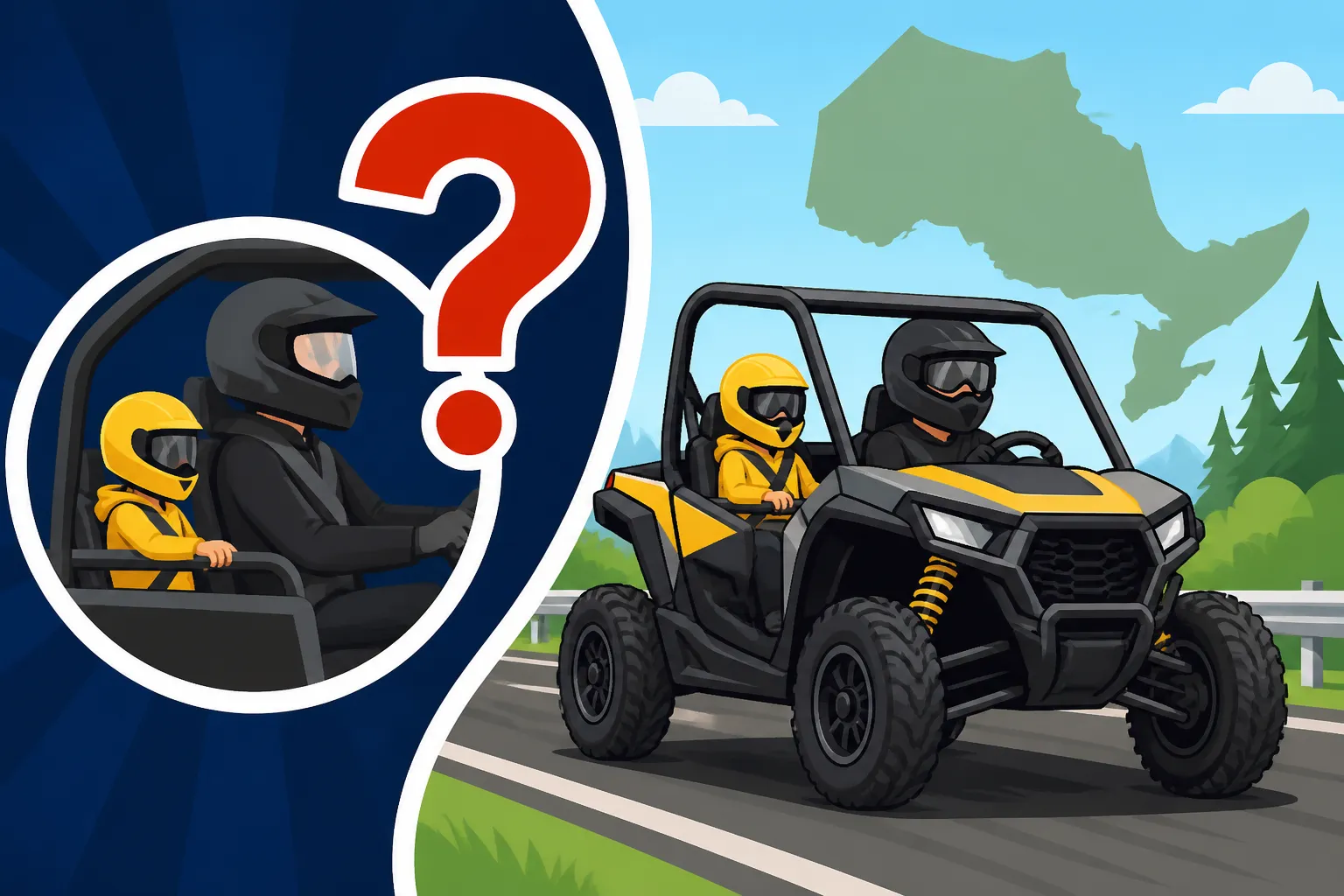
Can a Child Ride Passenger on an Ontario Road?
One of the most common questions I hear from fellow riders, especially those with young families, is about taking their kids along for an adventure. There's nothing quite like sharing the thrill of the trail or a scenic backroad cruise with your little ones. However, when it comes to riding an ATV or UTV with a child passenger on an actual Ontario road, the rules aren't always straightforward and can lead to a lot of confusion and even frustration. This guide is here to clear up those ambiguities, helping you understand exactly what Ontario law says about carrying child passengers on off-road vehicles on public roads, ensuring both their safety and your peace of mind.
Understanding Ontario's ORV Classifications and Passenger Rules
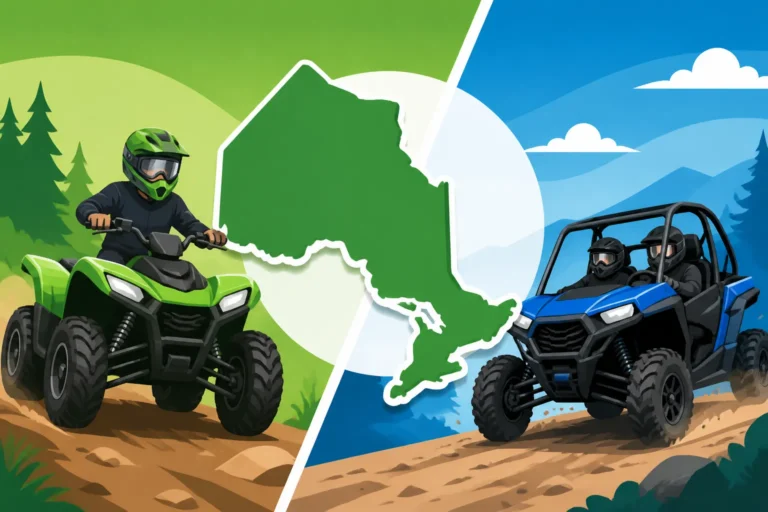
Before we can even talk about whether a child can be a passenger, we first need to get a firm grasp on what type of off-road vehicle (ORV) you're riding, because Ontario's rules are very specific about this. An ATV is treated differently than a UTV or side-by-side, and these distinctions are absolutely critical when you're considering taking to a municipal road with a passenger, particularly a child. The province has three main categories for off-road vehicles: All-Terrain Vehicles (ATVs), Recreational Off-Highway Vehicles (ROVs), and Off-Road Motorcycles (ORMs), though the latter rarely carries passengers. The rules for carrying passengers on public roads vary significantly between ATVs and ROVs.
All-Terrain Vehicle (ATV) Passenger Rules on Roads
When it comes to traditional ATVs, the law is quite strict, and for good reason. Most ATVs are designed for a single rider, with the rider straddling the machine like a motorcycle. If your ATV is specifically designed and manufactured with a designated passenger seat – often referred to as a "two-up" ATV – then, and only then, can you carry a passenger. Even then, the passenger must be able to securely reach the footrests and hold onto the handholds. For a child, this often means they need to be of a certain height and size.
The provincial regulations make it clear that a single-rider ATV cannot carry a passenger on a public road, full stop. Trying to squeeze a child on behind you on a machine not built for it is not only illegal but incredibly dangerous. These machines aren't balanced for extra weight in an undesignated spot, and a sudden bump or turn could easily dislodge a small child. This is a common point of confusion, as many riders might informally carry a child on trails or private property, but [Ontario ATV Passenger Rules] are very different when you're on a paved or gravel road that's part of the public road network. It’s also worth noting that the driver must hold the appropriate licence. [The Licence Ontario Requires on a Road] is typically a minimum of a G2 or M2 for the driver.
Recreational Off-Highway Vehicle (ROV) Passenger Rules on Roads
Recreational Off-Highway Vehicles, more commonly known as UTVs or side-by-sides, operate under a different set of rules that are generally more accommodating for passengers. This is primarily because ROVs are designed with multiple seating positions, often side-by-side (hence the name) and resemble small cars, complete with roll-over protection structures (ROPS) and seat belts. Because they are built from the factory to carry passengers, the main considerations shift from "can it carry a passenger?" to "what are the age and safety requirements for that passenger?"
For an ROV, as long as there is a designated seating position with a seat belt, a passenger can occupy that seat. This makes them a much more practical choice for family outings on permitted roads. Brands like SuperATV offer a wide range of accessories for UTVs, from enhanced seat harnesses to roof systems, that can contribute to a safer and more comfortable ride for all occupants. The important thing is that the child must be able to properly use the provided seat belt and be seated upright. You'll find that [Ontario UTV Road Rules] and [Ontario Side-by-Side Road Rules] are much more aligned with general vehicle passenger rules in this regard, emphasizing the use of safety restraints.
Age and Equipment Requirements for Child Passengers on Ontario Roads
Once you've figured out if your ORV can legally carry a passenger on an Ontario road, the next layer of regulation involves the child passenger themselves. It's not just about having a seat; it's about whether the child is old enough, adequately equipped, and properly restrained to ride safely and legally. This is where many parents can become frustrated, as what might be permissible in one scenario (say, on your own private land) is absolutely not allowed on a public road.
Minimum Age for ORV Passengers on Roads
Ontario law specifies minimum ages for operating ORVs, but it also has implications for passengers. While there isn't a strict "minimum age to be a passenger" explicitly stated for all ORVs on roads, the general safety guidelines and equipment requirements effectively set one. For ATVs, if your machine is a two-up, the child must be able to securely place their feet on the footrests and grasp the handholds. This typically means a child needs to be old enough and tall enough to meet these physical requirements, which usually isn't possible for very young children. There is no specific age like [Ontario's Off-Road Minimum Age of Twelve] which applies to operators, but practical limitations apply.
For ROVs, the situation is different due to the nature of their seating and restraints. A child passenger in an ROV must be able to use the seat belt provided correctly. If the child is too small for the seat belt to fit properly, they cannot legally or safely ride in that designated seat on a public road. This means that booster seats or child restraint systems, while common in cars, are not explicitly legislated for ORVs, but the spirit of the law requires proper restraint. You'll need to consider if the existing ROV seat belt provides a snug and safe fit for your child, just as you would in a regular car.
Mandatory Safety Equipment for Child Passengers
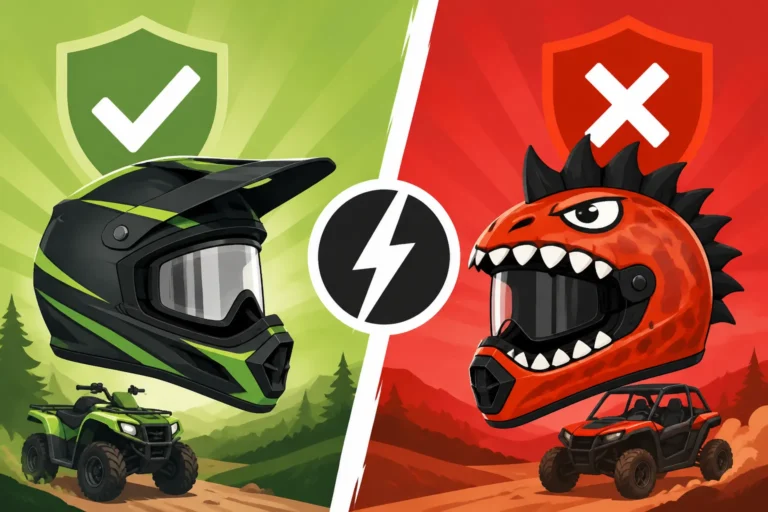
Just like the driver, any passenger on an ORV, including a child, must wear an approved motorcycle helmet when riding on an Ontario road. This is non-negotiable and a critical safety measure. The helmet must be properly fitted, securely fastened with the chin strap, and meet safety standards. There is no exemption for children, regardless of age, when riding on a public road. [Ontario ATV Helmet Law for Passengers] is very clear: everyone needs a helmet. You can learn more about what constitutes an approved helmet in [Approved Motorcycle Helmets in Ontario].
Beyond the helmet, proper attire is always recommended for ORV riding, even for passengers. This includes sturdy footwear that covers the ankles, long pants, and long sleeves to protect against brush, debris, and potential scrapes in the event of an incident. While not legally mandated in the same way a helmet is, it's a common-sense safety measure that I always recommend, especially for kids who might be more susceptible to injury. Ensuring a child is comfortable and protected also makes for a much more enjoyable experience.
The Driver's Responsibilities and Road Safety Considerations
As the driver, the responsibility for the safety of your child passenger, and for adhering to all legal requirements, falls squarely on your shoulders. It’s not just about knowing the rules; it’s about applying them with a strong sense of caution and common sense. Road riding with an ORV, especially with a child, demands a heightened level of awareness and defensive driving. Ontario's roads are shared spaces, and the dynamics of an ORV are very different from a standard car or truck.
Ensuring Proper Restraint and Seating
For ATVs designed for two riders, ensure your child can comfortably reach the footrests and firmly grasp the handholds. If they can’t, they’re not ready to be a passenger on a public road. It’s not enough for them to just "sort of" hold on; they need to be secure. For ROVs, always ensure the child is properly buckled into the seat belt. If the belt doesn't fit snugly across their chest and lap, they are not safely restrained. [Buckling Up in a Side-by-Side] is just as important as it is in a car, and potentially more so given the varied terrain an ROV might encounter, even on a road. Modifications or aftermarket seating, like those offered by SuperATV, might be considered, but always ensure they comply with provincial regulations and do not compromise the original safety features of the vehicle.
It’s crucial to remember that a "single-rider machine" means just that. Don't be tempted to carry a child on your lap or squeezed onto the seat behind you if your ATV isn't explicitly designed for a passenger. The risks far outweigh any convenience, and an officer would certainly issue a fine for [Riding an Unregistered ATV in Ontario] or, more relevant here, for improper passenger conveyance.
General Road Safety Best Practices with Children
Beyond the legal requirements, there are many practical considerations for ensuring a safe and enjoyable experience for your child passenger on Ontario roads.
- Communication: Keep an open line of communication with your child. Explain what's happening, point out landmarks, and check in to make sure they're comfortable and not getting too cold, hot, or tired. A distracted or uncomfortable child can become a safety hazard.
- Reduced Speed: Even if the posted limit is higher, consider driving at a reduced speed when carrying a child, especially on gravel or uneven roads. This gives you more reaction time and provides a smoother ride for your passenger.
- Avoid Busy Roads: Stick to less-travelled municipal roads and avoid busy main thoroughfares or highways, where ORV use is often restricted anyway. [Ontario Highways Closed to ORVs] will mean you can't be there, but even permitted county roads can be busy. Plan your route to minimize exposure to heavy traffic.
- Frequent Breaks: Children, especially younger ones, can get restless quickly. Plan for frequent stops to stretch legs, grab a snack, or just take a breather. This also allows you to check on their helmet fit and overall comfort.
- Awareness of Other Vehicles: ORVs are often smaller and less visible than other vehicles on the road. Be extra vigilant at intersections, when making turns, and when sharing the road with larger vehicles. Always assume other drivers might not see you. [Ontario ATV Rules on a Municipal Road] require the same defensive driving as any other vehicle.
Navigating Municipal By-laws and Exceptions
One of the trickiest aspects of riding ORVs on roads in Ontario is the patchwork nature of municipal by-laws. While the provincial Off-Road Vehicles Act sets the overarching framework, individual municipalities have the authority to open or close their roads to ORVs. This means that whether you can even ride on a particular road, let alone with a child passenger, depends on the specific by-laws of that town or county.
Checking Local By-laws for Passenger Provisions
Before you embark on any road ride with a child passenger, it is absolutely essential to check the current by-laws of every municipality you plan to traverse. A road might be open in one township, but the moment you cross into the next, it could be closed, or have different restrictions. While the provincial law dictates the general rules for passengers, a municipal by-law might implicitly affect how and where you can carry a child by either permitting or restricting ORV access altogether.
Many municipalities, like those listed in [Greater Napanee By-law 2022-0062] or [Middlesex Centre By-law 2021-010], detail which roads are open and under what conditions. These conditions generally apply to all riders and passengers. You'll want to specifically look for any clauses related to vehicle types (ATV vs. ROV) and passenger provisions. If a by-law is silent on passenger age but permits ROV use, the provincial rules about seat belt use for children would still apply.
Where You Can and Cannot Ride with a Child Passenger
The reality is that carrying a child passenger on an ORV on public roads in Ontario is largely limited to ROVs (side-by-sides) equipped with proper seat belts and roll-over protection, and only on municipal roads that have been explicitly opened by local by-law.
- Permitted Roads: These are typically lower-speed, less-travelled municipal roads where the local council has passed a by-law allowing ORV use. On these roads, if your ROV is designed for passengers and your child is safely buckled, they can generally ride.
- Restricted Roads: Provincial highways, 400-series highways, and many busier regional roads are almost universally closed to ORVs. You will not be able to ride here with or without a passenger. Trying to cross these highways often has its own set of specific rules, as detailed in [Ontario ATV Rules for Crossing a Highway].
- Private Property: Rules for passengers, including children, on private property are generally less restrictive, depending entirely on the landowner's permissions. However, this guide focuses specifically on public roads, where different laws apply.
- Club Trails: Many organized club trails, like those operated by the OFATV, have their own rules regarding passengers, especially for younger riders. These are typically not considered "public roads" in the same legal sense, but it’s always wise to consult the specific club’s regulations if you plan to use their network.
In summary, while the dream of taking your child on an ATV adventure on Ontario roads is possible, it's really confined to side-by-sides (ROVs) on specific municipal roads, with strict adherence to helmet laws and proper child restraint. Always prioritize safety and legal compliance to ensure a positive experience for everyone involved.
| Feature | All-Terrain Vehicle (ATV) | Recreational Off-Highway Vehicle (ROV/UTV/Side-by-Side) |
|---|---|---|
| Designed for Passengers | Only specific "two-up" models designed from factory. | Generally designed for multiple passengers with designated seats. |
| Seating/Restraint | Passenger must sit behind driver, reach footrests, hold handholds. | Passengers sit side-by-side, use seat belts. |
| Child Passenger | Possible on two-up ATVs if child meets physical requirements (height to reach footrests, grasp handholds). | Possible if child can be properly restrained by seat belt. |
| Helmet Requirement | Mandatory for driver and all passengers on public roads. | Mandatory for driver and all passengers on public roads. |
| Roll-Over Protection | Not typically present. | Standard feature (ROPS). |
| Primary Road Use | Limited to specific municipal roads by by-law. | More commonly permitted on specific municipal roads by by-law. |
Disclaimer
This article is for general informational purposes only and does not constitute professional advice. Laws, prices and regulations vary by location and change over time. Consult a qualified professional for guidance on your specific situation.