Ontario ATV Minimum Age Off-Road
It's a common dilemma for parents and guardians across Ontario: you have an ATV or UTV, your child is eager to learn, and you want to know what the rules are for letting them ride off-road. The confusion often comes from balancing a child's enthusiasm with the crucial need for safety and legal compliance. This guide will thoroughly break down the minimum age requirements for off-road ATV riding in Ontario, helping you understand the regulations for everything from private property to public trails.
Understanding Ontario's Off-Road Vehicle Act and Age Limits
Navigating the rules around ATV riding, especially when it involves younger operators, can feel like a maze. Ontario's Off-Road Vehicles Act (ORVA) is the primary piece of legislation governing off-road vehicles (ORVs) like ATVs, UTVs, and dirt bikes, and it sets out specific age requirements for operation. It's designed to protect riders, other trail users, and the environment, ensuring that those operating these powerful machines have a baseline level of maturity and supervision.
The Twelve-Year-Old Rule: Supervised Riding
For many parents, this is the most critical rule to understand: in Ontario, a person must be at least 12 years old to operate an ORV off-road. However, this isn't a free pass for a 12-year-old to hit the trails solo. The Act specifies that riders aged 12 to 15 years inclusive must be under the direct supervision of an adult who is at least 16 years old. This adult supervisor must also hold a valid driver's licence (at least a G2 or M2 level, or an equivalent out-of-province licence). This rule applies broadly to most off-road riding scenarios, including designated trails, Crown Land, and other shared off-road areas.
The "direct supervision" aspect is crucial. It means the adult supervisor needs to be close enough to the young rider to observe their actions, communicate with them, and intervene if necessary. They aren't meant to be miles away at a campsite while the child explores. The intention is to have an experienced, licensed adult immediately available to provide guidance, assess risks, and ensure the young rider is operating safely and responsibly. This often means riding on a separate ORV behind or alongside the young operator, maintaining visual contact and proximity. You can learn more about specific rules for young riders in [Ontario ATV Rules for a Twelve-Year-Old].
This age requirement and the need for supervision are fundamental to preventing accidents and fostering good riding habits from a young age. It acknowledges that while a 12-year-old might have the physical ability to control an ATV, they often lack the judgment, experience, and hazard perception skills of an adult. The supervisor acts as a mentor, teaching proper trail etiquette, environmental awareness, and how to react to unexpected situations. The consequences for non-compliance can be serious, including significant fines for both the young operator and the supervising adult, underscoring the importance of adhering to these regulations.
Exceptions and Nuances: Private Property and Under 12
While the 12-year-old supervised rule covers most public and shared off-road areas, there are specific exceptions, particularly concerning private property. The Off-Road Vehicles Act primarily governs the operation of ORVs on public lands, roads, and designated trails. When it comes to riding on private property that you own, or for which you have explicit permission from the landowner, the age restrictions regarding supervision are somewhat relaxed. This means that a child under 12, or a 12-15-year-old without direct adult supervision, might be permitted to ride on their own private land.
However, "might be permitted" is a critical distinction. While the ORVA's supervision rules may not apply in the same strict sense on completely private land, this does not absolve parents or guardians of their responsibility for the child's safety. Insurance policies often have their own stipulations regarding age and supervision, and any accident could lead to serious liability issues if proper precautions weren't taken. Even on private land, common sense and safety dictate that children, especially those under 12, should be closely monitored, and any machine they operate should be appropriate for their size and skill level. [Riding Unsupervised on Your Own Property] provides further context on this specific scenario.
For children under 12 years old, the provincial regulations are even more stringent for public access. Essentially, they are not legally permitted to operate an ORV on public trails, Crown Land, or any other areas covered by the ORVA, even with supervision. Any riding for this age group should be strictly confined to secure private property, always under vigilant adult supervision, and with careful consideration for the child's abilities and the machine's specifications. The spirit of the law emphasizes that these powerful vehicles are not toys and require a certain level of physical and cognitive development for safe operation, irrespective of where they are being ridden.
Training, Safety, and Parental Responsibilities
Beyond the legal minimum age, there's a world of responsibility that comes with introducing younger riders to the sport. It's not just about ticking a box; it's about instilling a culture of safety and respect for the machine and the environment. This means considering training, appropriate gear, and consistent parental oversight.
The Importance of Rider Training
While Ontario does not mandate a formal rider training course for off-road ORV operators, regardless of age, it is overwhelmingly recommended, especially for younger riders. Think of it like swimming lessons or learning to ride a bicycle – while not legally required, the benefits are immense for safety and skill development. A proper training course goes far beyond just operating the throttle and brakes; it teaches crucial safety concepts, risk assessment, and proper riding techniques that can prevent accidents and build confidence.
Courses like the Canada Safety Council's Ready To RideON program, which is specifically designed for ORV safety, cover essential topics such as pre-ride inspections, reading terrain, navigating obstacles, emergency stopping, and understanding machine limitations. These are invaluable skills for any rider, but particularly for young, impressionable operators who are still developing their judgment. An investment in training for a young rider is an investment in their long-term safety and enjoyment of the sport. It provides a structured environment where they can learn correct habits from certified instructors, rather than picking up potentially unsafe practices on their own. You can explore the details of these courses, including costs, at [Ontario ATV Safety Course Cost] and [Ready To RideON and Its Six Modules].
For parents supervising riders aged 12-15, understanding these safety principles themselves is equally important. The supervisor isn't just a warm body; they should be capable of demonstrating proper techniques, identifying dangerous situations, and reinforcing safe riding practices. This proactive approach ensures that when a young rider eventually becomes old enough to ride unsupervised, they do so with a solid foundation of knowledge and respect for the machine and the trails. It's about empowering them with skills, not just letting them loose.
Choosing the Right Machine and Gear
One of the biggest mistakes parents can make is putting a young rider on a machine that's too big or too powerful for them. This isn't just about comfort; it's a major safety hazard. ATVs and UTVs come in a wide range of sizes, engine displacements, and weights, and matching the machine to the rider's age, size, and experience level is paramount. Many manufacturers offer youth-specific models with smaller engines, lighter frames, and adjustable throttles to limit speed. These machines are designed with younger riders in mind, making them easier to control and less intimidating.
Beyond the machine itself, proper safety gear is non-negotiable. This isn't just a suggestion; it's a requirement under the ORVA for all riders, regardless of age, when operating on public lands or prescribed areas. This includes:
- An approved motorcycle helmet: This is the single most important piece of safety gear. It must be a helmet specifically designed for motorsports, meeting safety standards, and securely fastened.
- Eye protection: Goggles or a helmet with a face shield are essential to protect against dust, debris, insects, and branches.
- Sturdy footwear: Over-the-ankle boots are crucial for protecting feet and ankles from impacts and burns.
- Gloves: Provide grip, reduce vibration, and protect hands from scrapes and blisters.
- Long pants and long-sleeved shirt: Protect skin from abrasions, sun, and minor impacts.
For those of legal age operating larger machines, or for parents looking to enhance the safety and durability of their family's ORVs, considering aftermarket parts can be a good idea. Companies, like SuperATV, offer a range of protective accessories such as heavy-duty bumpers, skid plates, and brush guards. While these aren't directly related to a child's age, they can contribute to the overall robustness and safety of the machine, which then benefits everyone who uses it, including young, supervised riders. Such additions provide an extra layer of protection for the machine and its occupants, which is always a wise investment.
Practical Scenarios and Common Questions
The world of off-road riding in Ontario is diverse, with various types of terrain and legal frameworks. Understanding how the minimum age rules apply in different scenarios can prevent misunderstandings and ensure a safe, enjoyable experience for everyone.
Riding on Organized Trails vs. Crown Land
When it comes to where a young rider can operate an ATV off-road, the type of land makes a difference, though the core age and supervision rules remain largely consistent for public access areas. Organized trails, managed by clubs affiliated with the Ontario Federation of ATV Clubs (OFATV), require riders to possess a valid trail permit. These clubs maintain the trails, provide signage, and often have their own rules in addition to provincial regulations. For these trails, the 12-to-15-year-old supervised rule is in full effect. A 12-year-old can ride, but only with a licensed adult supervisor. Trail patrols often check for permits and adherence to safety rules, including age and supervision. Details about permits are available at [Ontario ATV Trail Permits Explained].
Crown Land, which is public land managed by the provincial government, operates under a "free use" policy for ORVs in many areas, meaning a specific trail permit isn't always required. However, the provincial regulations, including the minimum age of 12 and the supervision requirement for those under 16, still apply. Not all Crown Land is open to ORVs, and there may be specific restrictions in certain areas (e.g., near residential zones, conservation areas, or ecologically sensitive sites). It's crucial to know the specific regulations for the Crown Land area you plan to visit. Resources like [Riding Crown Land in Ontario] can help clarify permissible areas. The general rule of thumb is that if it's not your private property, expect the ORVA's age and supervision rules to be enforced.
The key takeaway is consistency: unless you are on genuinely private property where the landowner has granted permission and you are aware of your liability, the 12-year-old minimum age with adult supervision (for those under 16) is the standard across Ontario's off-road landscape. Disregarding these rules can lead to fines and, more importantly, put young riders at unnecessary risk.
What an Officer Looks For
When an Ontario Provincial Police (OPP) officer or other enforcement official encounters an ORV with a young operator off-road, they will be checking for several key compliance points. First and foremost, they'll verify the operator's age. If the rider appears to be under 16, they will then assess whether appropriate adult supervision is present. This means confirming that the supervisor is at least 16 years old, holds a valid driver's licence, and is actively and directly supervising the young rider. The officer isn't just looking for an adult in the vicinity; they're looking for evidence of active oversight.
Beyond age and supervision, officers will also check for proper safety gear, particularly an approved helmet, eye protection, and appropriate footwear. They'll also verify that the ORV itself is properly registered with a valid [Ontario ORV Plates and Where They Mount] and that the rider carries proof of ownership and insurance, even for off-road use. While the insurance requirement isn't directly tied to age, it's part of the overall legal framework for operating an ORV responsibly. Failure to meet any of these requirements can lead to fines for both the young operator (if they are old enough to be charged) and the supervising adult, or the owner of the vehicle.
The fines for operating an ORV without proper registration, insurance, or for operating underage or unsupervised can be substantial. For instance, allowing an unsupervised minor to operate an ORV can result in significant penalties for the adult. It's not uncommon for fines to range into the hundreds or even thousands of dollars, depending on the specific infraction. The objective of enforcement is not just punishment, but to deter unsafe practices and ensure everyone's safety on and off the trails.
Moving from Off-Road to On-Road Riding
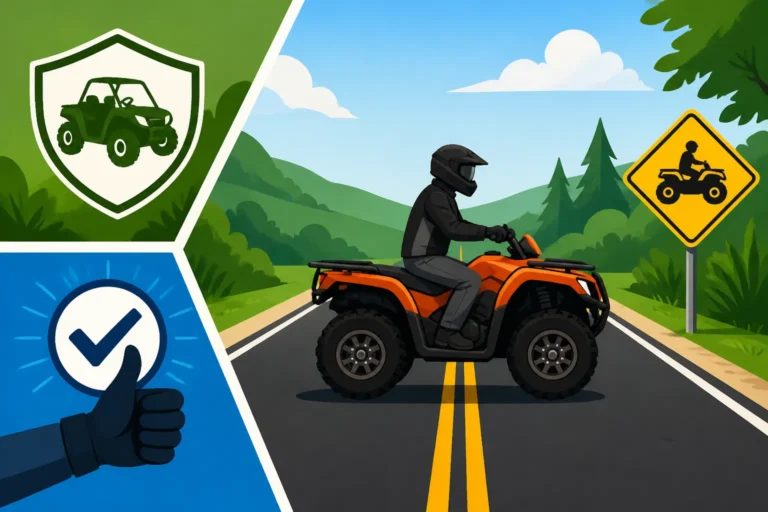
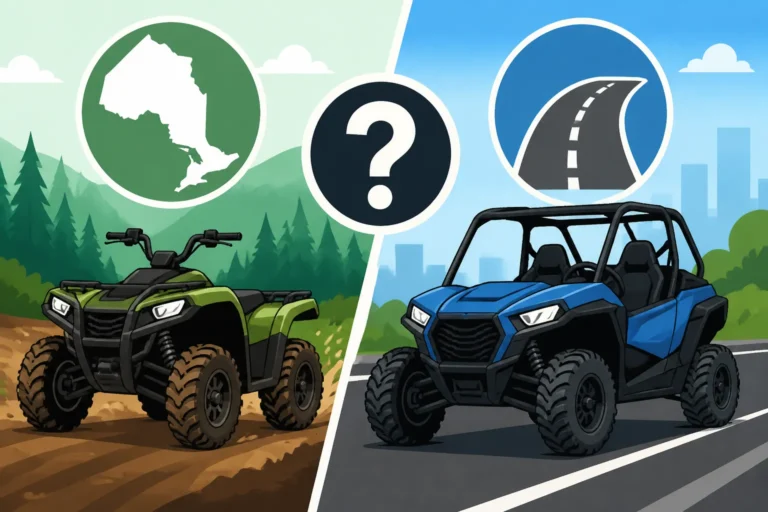
It's absolutely vital to understand that the minimum age requirements for off-road ATV riding are distinctly different from the rules for operating ATVs on public roads in Ontario. Many municipalities in Ontario have opened certain roads to ORV use, but this comes with a much stricter set of regulations that mirror those for regular motor vehicles. The jump from off-road to on-road involves a significant increase in legal requirements, and you cannot simply transition a young rider from a private field to a public road.
For instance, to operate an ORV on a public road where it's permitted, the operator must hold at least a G2 or M2 level driver's licence. This means the rider must be at least 16 years old, have passed the necessary driving tests, and completed the graduated licensing process for cars (G2) or motorcycles (M2). The age 12-15 supervised riding rule for off-road does not apply to public roads. If a 12-year-old is caught operating an ATV on a public road, even with an adult supervisor, it is a serious offence.
Furthermore, on-road ORV operation has additional equipment requirements, such as working headlights, taillights, brake lights, mirrors, and often a horn, which may not be necessary for purely off-road use. It's a completely different legal landscape. If your goal is for your child to eventually ride on public roads, you need to be aware that the journey involves meeting the same age and licensing requirements as any other driver. You can find comprehensive details about these rules at [Ontario ATV Minimum Age on a Road]. Understanding this distinction is crucial to avoid serious legal trouble and to ensure the safety of your child and other road users.
Minimum Age Requirements for ATV Operation in Ontario
Here's a quick reference table summarizing the minimum age requirements for ATV operation in different scenarios in Ontario. Remember that "supervised" means direct supervision by a licensed adult aged 16 or older.
| Riding Location | Minimum Age | Supervision Required? | Licence Required? | Additional Notes |
|---|---|---|---|---|
| Private Property (Owned) | No formal | Recommended (especially <12) | No | Parental responsibility and insurance liability are key. Machine must be appropriate for rider's size/skill. |
| Private Property (Permit) | 12 | Yes (for 12-15 years) | No | Adhere to landowner's rules. Provincial ORVA rules apply if property is accessible to public. |
| Designated OFATV Trails | 12 | Yes (for 12-15 years) | No (supervisor needs G2/M2) | Rider needs trail permit. Supervisor must be 16+ and licensed. |
| Crown Land | 12 | Yes (for 12-15 years) | No (supervisor needs G2/M2) | Supervisor must be 16+ and licensed. Check for specific Crown Land restrictions. |
| Public Roads (Permitted) | 16 | No (as operator, but passenger rules apply) | Yes (G2/M2 or higher) | Strict rules apply (licence, insurance, registration, specific equipment). |
| Off-Road (<12 years) | Not Permitted | N/A | N/A | Strictly prohibited on public trails, Crown Land, or public roads. Only on secure private property with supervision. |
This table provides a quick overview, but always refer to the full regulations and ensure you understand all aspects of the [Ontario Supervision Rules for Minors].
Disclaimer
This article is for general informational purposes only and does not constitute professional advice. Laws, prices and regulations vary by location and change over time. Consult a qualified professional for guidance on your specific situation.