Carrying Permit and Insurance Together
It's happened to all of us at one point or another: you're out on the trails, enjoying the freedom of your ATV or side-by-side, and suddenly, you see those flashing lights in your rearview. Your heart sinks. You instantly start to pat down your pockets, wondering if you remembered to grab your wallet, let alone your ORV permit and insurance card. That moment of panic, wondering if you're about to face a hefty fine or worse, is a scenario no rider wants to experience. This guide is here to walk you through exactly what documents you need to carry when riding your ATV or UTV in Ontario, and how best to keep them safe, sound, and easily accessible, so you can focus on the ride, not the worry.
Why Carrying Your ORV Documents is Absolutely Non-Negotiable in Ontario
Riding an ATV or UTV in Ontario isn't just about having a machine and a passion for the outdoors; it's also about adhering to the rules and regulations that keep everyone safe and accountable. One of the most fundamental requirements is having your necessary paperwork readily available whenever you're operating your off-road vehicle. This isn't just a suggestion; it's a legal obligation under [The Off-Road Vehicles Act and Ontario Riders].
Think of it this way: your ORV permit is essentially your vehicle's passport. It proves that your machine is legally registered in Ontario, that you've paid the necessary fees, and that it's linked to you as the owner. Without it, an officer has no way of confirming your ownership or that the machine is legitimate. This is particularly crucial for preventing theft and ensuring all vehicles on public land or designated trails are properly accounted for. It's a quick check that helps authorities maintain order and safety across the vast network of trails and roads that ORVs are permitted on.
Similarly, your proof of insurance is your safety net, not just for you, but for everyone else. Ontario has mandatory ATV insurance requirements, primarily focused on liability. If you're involved in an accident, whether it's a minor fender-bender on a trail or something more serious that involves another person or property, your insurance is there to cover potential damages and injuries. An officer checking your documents wants to ensure that, should an unforeseen incident occur, there's a mechanism in place to address the fallout. Riding uninsured can lead to incredibly severe financial penalties and legal headaches, making proof of insurance just as vital as the permit itself.
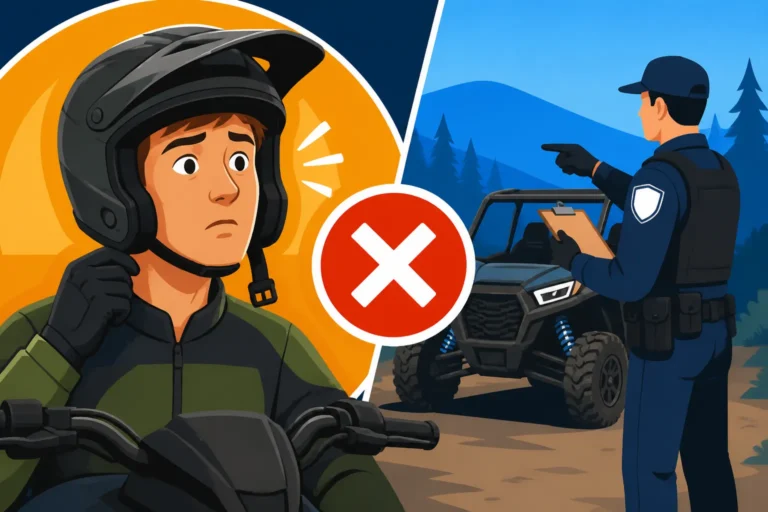
When an officer pulls you over, whether for a routine check or after observing a potential infraction, they are looking for immediate confirmation that you and your machine are compliant. Having your documents at hand streamlines this process, allowing you to demonstrate your adherence to the law quickly and respectfully. Fumbling around, or worse, admitting you don't have them, can turn a simple stop into a prolonged and potentially costly encounter. It's a matter of preparedness and respect for the regulations designed to keep the ORV community a safe and responsible one.
What Documents You Absolutely Need to Carry While Riding
Navigating Ontario's ORV regulations can feel like a bit of a maze sometimes, but when it comes to the documents you need to carry, it boils down to three core items. These aren't just good ideas; they are legal necessities that you must have on your person or readily accessible on your machine whenever you're operating your ATV or UTV.
Your Ontario ORV Permit
This is the official document that proves your off-road vehicle is registered with the province. It's similar to the vehicle portion of an ownership document for a car or truck, but specifically for ORVs. The permit will show details about your specific machine, such as the Vehicle Identification Number (VIN), make, model, and the date it was registered. Crucially, it also lists the name of the registered owner.
When you're out on the trails or riding legally on an open road, law enforcement needs to be able to verify this information quickly. The permit acts as that official confirmation. While you might be tempted to just carry a photocopy, it’s important to understand the nuance. The law generally requires you to carry the original permit or a true copy. What constitutes a "true copy" can sometimes be debated, but generally, a clear, legible photocopy that you can present is usually acceptable for [Carrying the Permit or a True Copy]. However, having the original is always the safest bet, securely stored to prevent damage or loss. If an officer asks to see your permit and you can't produce it, it can lead to frustrating delays and potentially a ticket for [Riding an Unregistered ATV in Ontario], even if your machine is, in fact, registered.
Proof of Valid ORV Insurance
Just like driving a car, operating an off-road vehicle in Ontario requires you to have valid insurance. Specifically, you need to carry proof of a Motor Vehicle Liability Policy. This insurance protects you financially in case you cause an accident that results in injury to others or damage to their property. It's about ensuring that everyone on the trails or roads is covered in the event of an unforeseen incident.
Your insurance provider will issue you an insurance card or a binder, which serves as your official proof of coverage. This card typically shows your policy number, the effective dates of your coverage, and information about the insured vehicle. It's paramount that this document is current and legible. An expired card, or one that's so water-damaged it's unreadable, won't cut it during a roadside check. Law enforcement officers are vigilant about checking for valid insurance, especially given the potential for serious accidents involving ATVs and UTVs. The penalties for not having valid insurance are significant, often involving substantial fines, so don't take this lightly. For more details on what's required, you might want to read up on [Ontario ATV Insurance Requirements].
Your Valid Driver's Licence
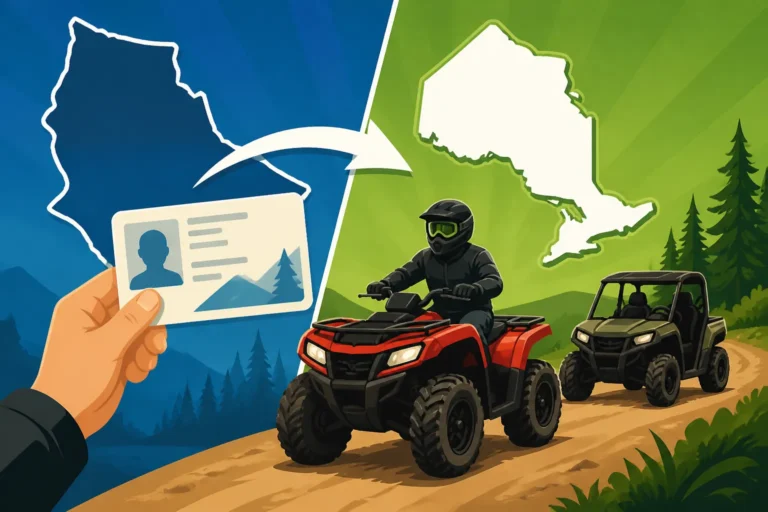
Even though you're riding an off-road vehicle, if you're operating it on any public highway, road allowance, or even crossing a paved road, you absolutely need to have a valid driver's licence. For most ORV operation on roads in Ontario, a minimum of a G2 (for cars) or M2 (for motorcycles) class licence is required. If you're riding purely on private property or designated off-road trails (where no public road access is permitted), some exceptions might apply, especially for younger riders under supervision, but generally, if you're interacting with public spaces, your licence is a must.
Your licence proves that you are legally authorized and qualified to operate a motorized vehicle. It identifies you as the operator and confirms you have met the necessary age and training requirements. Officers will ask for this to verify your identity and ensure you're legally permitted to be behind the handlebars. Just like with your ORV permit and insurance, failing to produce a valid licence when asked can lead to fines and other legal repercussions. Always ensure your licence is not expired and is carried with you.
Table: Essential ORV Documents in Ontario
| Document | Purpose | Legal Requirement | Where to Keep It |
|---|---|---|---|
| Ontario ORV Permit | Proof of vehicle registration & ownership | Mandatory (original or true copy) | On your person, in a waterproof bag on the ORV |
| Proof of ORV Insurance | Proof of liability coverage (e.g., insurance card) | Mandatory | On your person, in a waterproof bag on the ORV |
| Valid Driver's Licence | Proof of operator's legal authorization & identity | Mandatory (if operating on public roads/land) | On your person, easily accessible |
| OFATV Trail Permit | Access to organized club trails (if applicable) | Mandatory for club trails (display sticker, carry card) | Displayed on ORV, carry card for proof of purchase |
Practical Solutions for Keeping Your Documents Safe and Accessible
Alright, so we know what to carry. Now, how do we carry it without ending up with soggy, illegible paper or, worse, losing everything out on a bumpy trail? The key is finding a balance between accessibility and protection. No one wants to stop every time they hit a puddle to check if their permit is still dry, nor do you want to dig through a muddy pack for five minutes when an officer asks for your papers.
Waterproofing is Your Best Friend
Ontario weather is notoriously unpredictable. One moment it's sunny, the next you're riding through a downpour or splashing through a deep puddle. Water is the enemy of paper documents.
- Zip-top bags within a wallet: For your licence and insurance card, a small, heavy-duty zip-top bag (like a freezer bag) can go inside your wallet. It's a simple, inexpensive solution that offers a surprising amount of protection against rain and sweat.
- Dedicated waterproof pouches: These are fantastic. You can find small, durable, fully submersible pouches designed for phones or documents. Many come with lanyards so you can wear them around your neck or strap them securely inside a jacket pocket. Some are clear, allowing you to quickly verify the contents without opening them.
- Hard cases for ORVs: If your machine has a small storage compartment, consider a compact, watertight hard case. Companies like SuperATV offer a range of cargo boxes and storage solutions that are designed to be weather-resistant and rugged, perfect for keeping important papers safe. You could even get a smaller, dry box that fits inside a larger storage compartment. This is especially useful for the original ORV permit which you might not want to carry on your person for every ride.
Physical vs. Digital Copies – Know the Rules
While many of us carry everything on our smartphones these days, it's crucial to understand Ontario's stance on digital documents for ORVs. While some provinces or situations might accept a digital copy of your insurance card on your phone, it's generally recommended, and often legally required, to have physical copies of your ORV permit and insurance. If your phone runs out of battery, gets wet, or is damaged, you're out of luck. It's best to [Does a Photocopy of the Permit Satisfy an Officer?] if you don't have the original, but a digital image is often not considered sufficient. Always have the physical documents.
However, a digital backup isn't a bad idea for your own records. Having a clear photo of your permit and insurance card stored on your phone or in the cloud can be a lifesaver if the physical documents are lost or stolen after the fact. Just don't rely on it as your primary means of proof during a roadside stop.
Smart Storage Solutions on Your Machine
Your ATV or UTV likely has some built-in storage, and if not, there are countless aftermarket options.
- Saddlebags or fender bags: These are great for ATVs. Look for waterproof or water-resistant options. Keep your documents in a separate, smaller dry bag within the saddlebag to double up on protection.
- Under-seat storage: Many UTVs and some ATVs have compartments under the seat. These are often somewhat protected from the elements but adding a dry bag or hard case here is still a good idea.
- Cargo boxes: For UTVs especially, a sturdy, lockable cargo box in the bed can be invaluable. Many are designed to be highly weatherproof. A quality cargo box from a brand like SuperATV can provide excellent protection for all your gear, including a secure spot for your documents. Ensure your document storage is easily accessible without having to unload half your gear.
The goal is to protect your documents from the elements and from being lost, while also ensuring they are quickly retrievable when an officer asks for them. A little foresight here can save you a lot of hassle and potential fines down the trail. Remember, [Keeping Your ORV Permit Dry on a Wet Ride] is essential for its longevity and readability.
What Happens if You Don't Have Your Documents When Asked
Imagine the scenario: you're enjoying a fantastic ride through the Haliburton trails, when you come across an Ontario Provincial Police (OPP) officer conducting a routine check. They wave you over, and politely ask for your ORV permit, proof of insurance, and driver's licence. You start patting your pockets, checking your gear, only to realize with a sinking feeling that you left them on the kitchen table. Now what?
Firstly, honesty is usually the best policy. Trying to bluff or evade the officer will almost certainly make the situation worse. Explain calmly that you believe you have the documents but do not have them on your person or in your machine at that moment.
However, the reality is that not having the required documents in your possession can lead to immediate consequences. The Off-Road Vehicles Act, and other related regulations, are quite clear on the requirement to produce these documents upon request.
- Fines: The most common outcome is a monetary fine. These aren't just a slap on the wrist. Fines for operating an ORV without a valid permit or without proof of insurance can be substantial, often in the hundreds of dollars for each infraction. If you're missing all three documents (permit, insurance, licence), those fines can quickly add up, turning a fun day into a very expensive one. You might be interested in reading about [Ontario ATV Registration Fines] to understand the potential costs.
- Delay and inconvenience: Even if you avoid a direct fine, not having your documents will undoubtedly prolong the stop. The officer will need to take extra steps to verify your registration and insurance, which means a longer delay for you, and potentially for other riders behind you. This can involve calling dispatch, running VINs, and confirming details, all of which take time away from your ride.
- Ordered to cease operation: In some cases, an officer may order you to stop operating your ORV until you can produce the required documents. This could mean leaving your machine parked at the side of the trail or road until someone can bring you the papers, or even having to trailer it home.
- Vehicle impoundment: This is a more severe, but very real, consequence, especially if there are doubts about ownership, registration, or if you're found to be operating without insurance. Officers have the authority to impound a vehicle if they deem it necessary, for instance, if it's found to be unregistered, uninsured, or if the operator cannot be identified or is unlicensed. Getting your ORV back from impound can be a costly and bureaucratic nightmare, involving towing fees, storage fees, and administrative processes.
- Insurance issues: Beyond the immediate legal penalties, riding without proper insurance can have catastrophic financial consequences if you're involved in an accident. Without liability coverage, you would be personally responsible for any damages or injuries you cause. This could lead to lawsuits, wage garnishments, and a long road to financial recovery. The purpose of [Ontario's Mandatory ORV Insurance] is precisely to prevent such situations. When an officer asks for proof and you can't provide it, you're not just facing a fine; you're exposing yourself to immense personal risk.
It's tempting to think "it won't happen to me" or "I'm just going for a quick rip down the road allowance." But regulations are in place for a reason, and law enforcement officers are out there ensuring compliance. Carrying your permit, insurance, and licence together, safely secured, is a small effort that can prevent a lot of stress, inconvenience, and financial hardship. It ensures that when you're asked to provide your documents, you can do so confidently and get back to enjoying your ride. Taking the few seconds to prepare before heading out can make all the difference, preventing a situation like [Showing Proof at a Roadside Stop] from becoming a significant problem.
Disclaimer
This article is for general informational purposes only and does not constitute professional advice. Laws, prices and regulations vary by location and change over time. Consult a qualified professional for guidance on your specific situation.