Riding With an Expired Insurance Card in Ontario
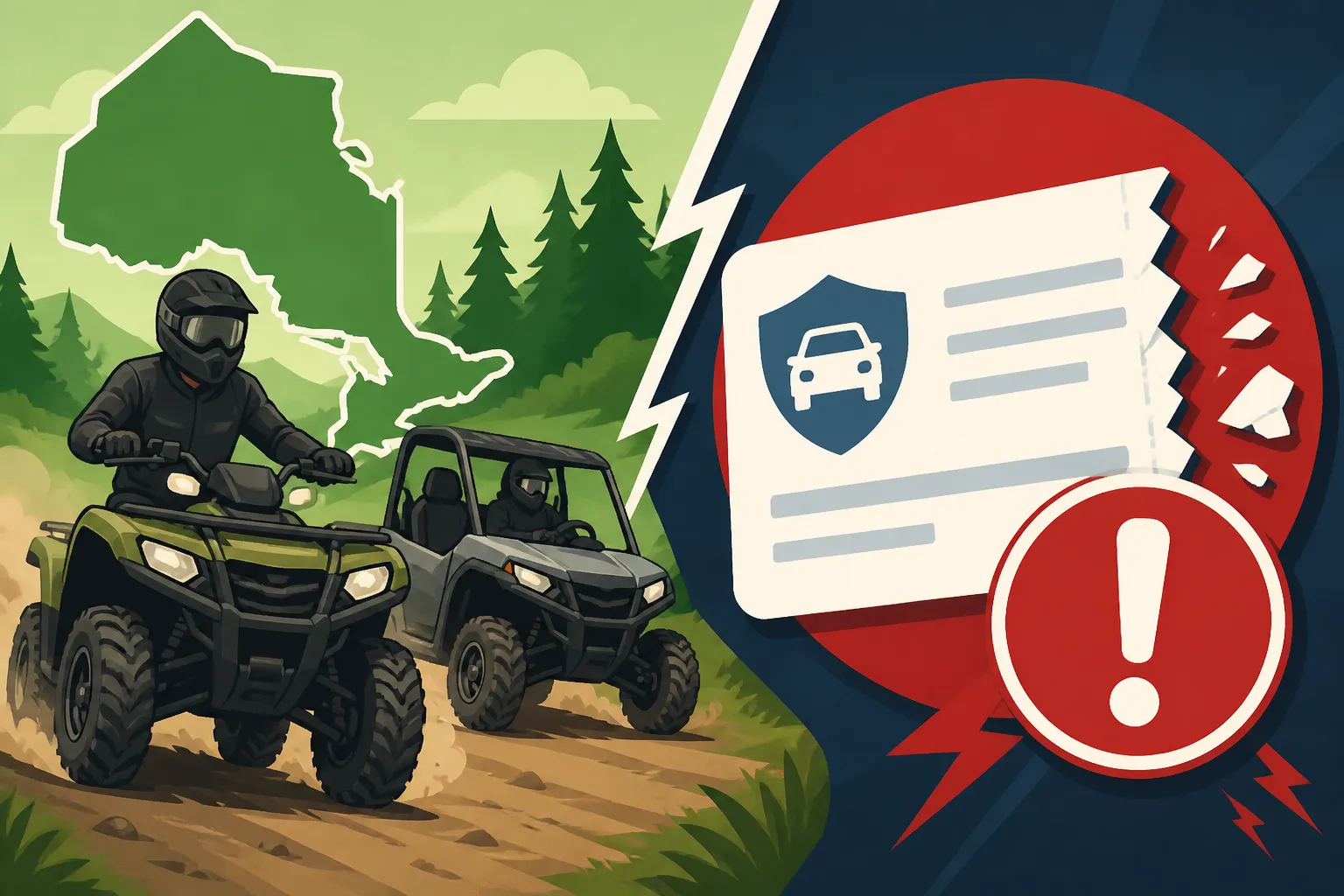
It's an all too common scenario: you’re geared up, your quad is gassed, and you’re just about to head out for a fantastic day on the trails or perhaps a quick run down a permitted road allowance, when a nagging thought creeps in. "Did I renew that insurance policy?" Or worse, you get stopped at a roadside check, reach for your documents, and suddenly realize your insurance card is past its expiry date. This guide is here to walk you through the very real and often severe implications of riding an ATV or UTV in Ontario with an expired insurance card and how to avoid this stressful situation altogether.
The Cold Hard Reality of Lapsed Coverage
Let's face it, life gets busy. Between work, family, and maintaining your off-road machine, keeping track of every single renewal date can feel like a full-time job. Many riders don't intentionally let their insurance lapse; it often happens due to an oversight, a change in mailing address, or simply forgetting to update payment information. However, regardless of the reason, riding an ATV or UTV in Ontario without valid, up-to-date insurance coverage isn't just a minor administrative hiccup; it's a serious offence with significant repercussions.
Think of your insurance card as your golden ticket to legal riding. It's not just a piece of paper; it's proof that you have the mandatory liability coverage required by law. Ontario mandates that all off-road vehicles (ORVs), including ATVs, UTVs, and dirt bikes, must be insured under a motor vehicle liability policy, even when riding on private property. This isn't just about protecting yourself; it's fundamentally about protecting others in case of an accident. When that card expires, so does your legal protection, leaving you completely exposed.
Why Ontario Demands Active ORV Insurance
The requirement for active ORV insurance stems from the potential for serious accidents and injuries that can occur when operating these powerful machines. Imagine a scenario where you're on a trail and, through no fault of your own, another rider collides with you. If they are uninsured, you could be left with mounting medical bills, repair costs for your beloved machine, and no recourse for compensation. The provincial government has put these measures in place to ensure that anyone operating an ORV has the financial backing to cover potential damages or injuries they might cause to another person or their property.
It's not just about collisions on a trail. What if you're crossing a municipal road where ORVs are permitted, and you accidentally veer off, damaging someone's fence or even a parked car? Without valid insurance, every single penny of that repair bill, and potentially any legal fees, would fall squarely on your shoulders. It's a heavy burden, and one that most people simply aren't prepared for. This is why having your [Motor Vehicle Liability Policy Ontario Wants] is so crucial.
The Myth of "Just Riding on My Own Land"
A common misconception among ORV owners is that if they only ride on their own private property, they don't need insurance. This couldn't be further from the truth in Ontario. The [Ontario ATV Insurance Requirement] applies regardless of where you operate your machine. Whether you're tearing up your back forty, exploring a managed trail system, or crossing a designated road, that insurance policy must be active and your card must be valid.
Even on private land, accidents can happen. A visitor could be injured, or you could cause damage to your own property that you wish was covered. While your homeowner's insurance might offer some limited protection, it's rarely comprehensive enough to cover ORV-specific liabilities. The explicit requirement from the province means that any time your wheels are turning, that insurance needs to be in force. Ignoring this can lead to uncomfortable conversations with law enforcement, even if you’re just puttering around your woodlot.
The Immediate Consequences of Being Caught Uninsured
Being caught riding with an expired insurance card isn't just a slap on the wrist. It carries immediate and significant legal and financial penalties that can disrupt your life and empty your wallet. Police officers and Ministry of Transportation enforcement officers are well-versed in checking for proper ORV documentation, and an expired insurance card will immediately flag your machine as uninsured.
When you're stopped, the officer will ask for your [Carrying an Insurance Card on a Ride] and your ORV permit. If the insurance card is expired, they will treat your situation as if you have no insurance at all. There’s no grace period, no "I forgot" excuse that will spare you from the legal fallout. The system is designed to be clear: if it's expired, it's invalid.
Facing Steep Fines and Legal Trouble
The most immediate consequence is a substantial fine. In Ontario, the penalties for riding an uninsured ORV are not trivial. We’re talking about a significant financial hit that far outweighs the cost of renewing your policy. The minimum fine alone can be thousands of dollars for a first offence, and subsequent offences can see those figures climb even higher, along with potential licence suspensions. This isn't just pocket change; it's serious money that could be much better spent on new accessories for your machine, perhaps some heavy-duty protection from SuperATV, or even another great riding trip.
Beyond the fines, you could face legal proceedings. Operating an uninsured vehicle is a provincial offence, and depending on the circumstances, it can lead to court appearances and a criminal record in some cases, especially if an accident occurred. This isn't the kind of adventure you want to write home about. Having a conviction on your record for an insurance-related offence can impact more than just your ability to ride; it can affect your employment, your ability to secure loans, and your future insurance rates for all your vehicles. [The $5,000 Fine for Riding Uninsured in Ontario] is just the starting point, and it can escalate quickly.
Impoundment and Further Costs
To add insult to injury, your ORV could be impounded on the spot. If an officer determines you're riding uninsured, they have the authority to seize your machine. This means your day of riding is abruptly over, and you'll be left figuring out how to get home. The costs don't stop there. You'll be responsible for towing fees to the impound lot, and then daily storage fees until you can prove that you have valid insurance, pay all outstanding fines, and retrieve your machine.
The process of getting your ORV back from impound can be lengthy and frustrating, adding even more stress and expense to an already bad situation. Imagine your machine sitting in a lot, exposed to the elements, while you jump through hoops to resolve the issue. It's a scenario no rider wants to experience, and it's a stark reminder of why [Insurance That Lapsed Over Winter] is a particularly risky oversight when spring riding season rolls around.
How to Ensure Your Insurance Stays Current
Preventing a lapsed insurance policy is far easier and less stressful than dealing with the aftermath of being caught uninsured. It really boils down to proactive management and staying on top of your renewal dates. A little bit of effort now can save you a world of trouble later.
Many insurance companies have systems in place to help you stay current, and it’s worth taking advantage of them. You’re paying for the coverage, so ensure you’re getting the most out of your policy by keeping it active and valid.
Setting Up Reminders and Automatic Renewals
One of the simplest ways to avoid a lapse is to set up multiple reminders. Most insurance companies will send you a renewal notice by mail or email several weeks before your policy expires. Don't let these notices get lost in the shuffle! Mark the date in your calendar, set a reminder on your phone, or even put a sticky note on your ORV keys. The key is to make it impossible to forget.
Even better, inquire about automatic renewal options with your insurance provider. Many companies allow you to set up automatic payments from your bank account or credit card, ensuring your policy renews seamlessly without you having to lift a finger. This is often the most foolproof method for busy individuals. Just remember to keep your payment information up to date, especially if a credit card expires or a bank account changes.
Choosing the Right Policy and Broker
Sometimes, policies lapse because riders are unhappy with their current coverage or find the renewal process cumbersome. This is a good opportunity to re-evaluate your insurance needs. Is your current policy adequate for how you ride? Are you getting the best rate? Working with a knowledgeable insurance broker specializing in ORVs can make a huge difference. They can help you navigate the complexities of different policies, ensure you have sufficient coverage, and make the renewal process smoother.
A good broker can help you find competitive rates and sometimes even offer discounts for bundling policies or completing rider safety courses. They understand the nuances of [Ontario ATV Insurance Requirements] and can ensure you’re always compliant. Don’t hesitate to shop around or ask questions; it’s your peace of mind and financial security on the line. Ensuring your machine is in top-notch condition, perhaps with quality aftermarket parts from SuperATV, can indirectly speak to your responsible ownership, but it’s the active policy that truly protects you.
What to Look for on Your Insurance Card
Knowing how to read your insurance card seems obvious, but a quick glance isn't always enough. You need to clearly identify the "effective date" and the "expiry date" of your policy. These dates dictate the period during which your coverage is active. If your current riding date falls outside of these parameters, your card is effectively expired.
You should also ensure that the vehicle information (make, model, VIN) on the card accurately matches your ORV's details. Any discrepancies could cause issues during a roadside stop, even if your policy is technically active. Always carry your most current insurance card, whether it's the physical copy or an acceptable digital format, as required by law. [Showing Proof at a Roadside Stop] means having the correct, unexpired document readily available.
What to Do If You Realize Your Insurance Has Lapsed
Discovering your insurance has lapsed can be a moment of pure panic, but it's important to act calmly and decisively. The worst thing you can do is ignore it or, even more dangerously, decide to ride anyway, hoping you won't get caught. That's a gamble you simply cannot afford to take in Ontario.
The good news is that lapsing is usually fixable, though there might be a minor penalty or an adjustment to your premium depending on how long it's been. The key is to address it immediately and correctly.
Immediate Steps to Take
The very first thing you need to do is stop riding immediately. If you're out on a trail or road and realize your card is expired, pull over safely and figure out how to get your ORV transported home without operating it further. Do not attempt to ride it, even for a short distance.
Next, contact your insurance provider or broker as soon as possible. Explain the situation honestly. They will guide you through the process of reinstating your policy or purchasing a new one. Be prepared for a few questions about why it lapsed and confirm all your personal and vehicle details are up to date. They might also advise you on whether there are any penalties or changes to your premium for the lapse. Don't wait; every day your policy is lapsed is a day you are legally uninsured and at risk. If you've previously had [Insurance That Lapsed Over Winter], your provider might have specific procedures for re-activating for the spring season.
Understanding Potential Repercussions on Future Coverage
A lapse in insurance, even a short one, can sometimes have an impact on your future premiums. Insurance companies assess risk, and a history of lapsed coverage can signal a higher risk profile. This might result in slightly higher rates when you reinstate your policy or seek new coverage. It's often not a drastic increase for a first-time lapse, but it's another reason to avoid it if possible.
It's also worth noting that some insurers might have a waiting period before your coverage becomes active again after a lapse, especially if it was for an extended period. This means you might not be able to hit the trails the very day you pay for reinstatement. Always confirm the exact date and time your new or reinstated policy becomes effective before you attempt to ride your ORV again. This ensures you're never riding unprotected. To keep your machine reliable and reduce claims, consider high-quality components from companies like SuperATV as part of your overall risk management strategy.
Here’s a quick overview of what to do and what not to do regarding your ORV insurance:
| Action | Recommended Action | What NOT to Do |
|---|---|---|
| Checking Expiry | Regularly check your insurance card's expiry date (monthly or quarterly). | Assume it's valid just because you paid your last bill. |
| Receiving Renewal Notice | Act on renewal notices immediately; confirm details and payment. | Ignore renewal notices or assume they're just junk mail. |
| Payment Method | Set up automatic payments or calendar reminders for manual payments. | Rely solely on memory for payment due dates. |
| If Lapsed (Discovery) | Stop riding immediately, contact your insurer to reinstate or purchase new policy. | Continue riding, hoping you won't get caught or cause an accident. |
| New Card | Carry the most current, valid insurance card (physical or approved digital). | Carry an expired card, a photocopy of an expired card, or no card at all. |
| Broker Consultation | Speak with an ORV-specialized insurance broker for best rates and advice. | Settle for the cheapest, least comprehensive policy without understanding coverage. |
Remember, your enjoyment of Ontario's fantastic ORV opportunities should never come at the expense of safety and legal compliance. Staying on top of your insurance means you can ride with confidence, knowing you're protected and playing by the rules. Enjoy the trails, but always do so responsibly!
Disclaimer
This article is for general informational purposes only and does not constitute professional advice. Laws, prices and regulations vary by location and change over time. Consult a qualified professional for guidance on your specific situation.