Showing Proof at a Roadside Stop
It's happened to every off-road enthusiast, or at least we've all imagined it: you're out on a great ride, cruising an open municipal road on your ATV or UTV, when suddenly those flashing lights appear behind you. Your heart might do a little flip-flop as you wonder, "Do I have everything I need? Am I even supposed to be here?" This guide is here to ease that worry, walking you through precisely what documents and information you need to have on hand and how to handle a roadside stop with confidence in Ontario.
The Essential Documents You MUST Carry
Being prepared is half the battle when you're stopped by an officer. You don't want to be fumbling through a muddy backpack or digging under a seat while the officer waits patiently (or not so patiently). Knowing exactly what's required and having it readily accessible can make all the difference for a quick, respectful, and hassle-free interaction.
Your Ontario ORV Permit
This is arguably the most fundamental piece of paperwork for your machine. Think of it like your vehicle's birth certificate and registration rolled into one. It proves that your ATV or UTV is properly registered with the province and legally allowed on public trails and designated roads.
When an officer asks for your permit, they're looking to confirm that the machine you're operating matches the one registered to you or the person who lent it to you. This permit contains vital information such as the vehicle identification number (VIN), make, model, year, and the name and address of the registered owner. It also shows the date of registration. While it's a "one-time" registration for ORVs in Ontario, meaning no annual renewal fees, that initial permit is what makes your machine legal. You can learn more about its specifics by reading [The Ontario Vehicle Permit Explained].
Now, about carrying it: traditionally, riders always kept the physical permit card with them. It was often laminated or tucked into a waterproof bag to protect it from the elements. However, in our increasingly digital world, many wonder if a photo on their phone is sufficient. While carrying the original document is always the safest bet, current regulations often allow for a true copy. This means a clear, legible photocopy is generally accepted, and some officers may even accept a digital image. However, it’s crucial to ensure the digital image is easily readable and accessible, as a dead phone battery or poor signal could leave you in a bind. Always have a backup plan, whether it’s a physical copy in a waterproof pouch or ensuring your device is fully charged. When deciding whether to keep the original or a copy on your person, consider how well you can protect the original from damage or loss while riding. Many choose a durable, waterproof pouch that can be securely stowed on the machine or on their person. For a deeper dive into this, check out [Carrying the Permit or a True Copy] and [Does a Photocopy of the Permit Satisfy an Officer?].
Proof of Insurance
Beyond registration, having valid insurance is not just a good idea for protecting your investment and yourself; it's a legal requirement in Ontario for operating an ORV, especially if you're riding on public roads or trails managed by organized clubs. This isn't just a suggestion; it's mandatory.
The police officer will specifically be looking for a valid motor vehicle liability insurance card. This card proves that you have the minimum required third-party liability coverage, which protects you if you cause an accident resulting in injury or damage to another person or their property. Without this, you could face significant fines and penalties. [Ontario's Mandatory ORV Insurance] lays out the full details of this critical requirement.
Just like with your permit, having a physical copy of your insurance card is the traditional and most universally accepted method. Keep it with your ORV permit in a secure, waterproof location. Most insurance companies now also provide digital proof of insurance, which can be stored on your smartphone. While these are generally accepted, the same caveats apply: ensure your phone is charged, the image is clear, and you can easily access it. It’s important to remember that the specific policy they're looking for is [The Motor Vehicle Liability Policy Ontario Wants], which is designed to cover off-road vehicles. Make sure your policy clearly states it covers your specific ATV or UTV and that you know your policy number and expiry date by heart, just in case. Regardless of whether you carry a physical card or a digital one, having readily available proof is non-negotiable. You’ll want to review [Carrying an Insurance Card on a Ride] for more guidance on this.
Your Valid Driver's Licence
Operating any motorized vehicle on an Ontario public road, including an ATV or UTV in designated areas, requires a valid driver's licence. This isn't just about proving you can drive; it's about ensuring you've met the minimum legal age and competency requirements for operating a motor vehicle.
For most riders, a valid G2 or G-class licence will suffice. If you hold a motorcycle licence (M2 or M-class), that's also perfectly acceptable. The officer will check the validity of your licence, your photo, and that you are the person identified on the card. They're looking to ensure you're not driving under suspension or without the proper endorsements. [The Licence Ontario Requires on a Road] outlines all the acceptable licence classes for ORV operation on roads. A common question among newer riders or those just getting into the sport is whether a G1 learner's permit is sufficient. The short answer, and a critical point to remember, is no. A G1 licence alone is not enough to legally operate an ATV or UTV on a public road in Ontario, even if accompanied by a fully licensed driver. You need at least a G2 or M2. If you're wondering about the specifics, check out [Can You Ride an ATV in Ontario With a G1?].
For visitors or new residents, an out-of-province or out-of-country licence might be accepted for a limited period, provided it's valid in its jurisdiction. However, if you're becoming a permanent resident of Ontario, there are specific timelines within which you'll need to obtain an Ontario driver's licence. Always have your physical licence readily available and consider keeping it separate from your other ORV documents to minimize the risk of losing everything at once. This ensures that you can quickly and clearly demonstrate your legal eligibility to operate the vehicle.
Understanding What an Officer Looks For
When an officer pulls you over, they're not just checking your papers. They're also doing a quick assessment of your machine, its condition, and how you're operating it. Being aware of their protocol and what catches their eye can help you navigate the situation smoothly.
The Roadside Stop Protocol
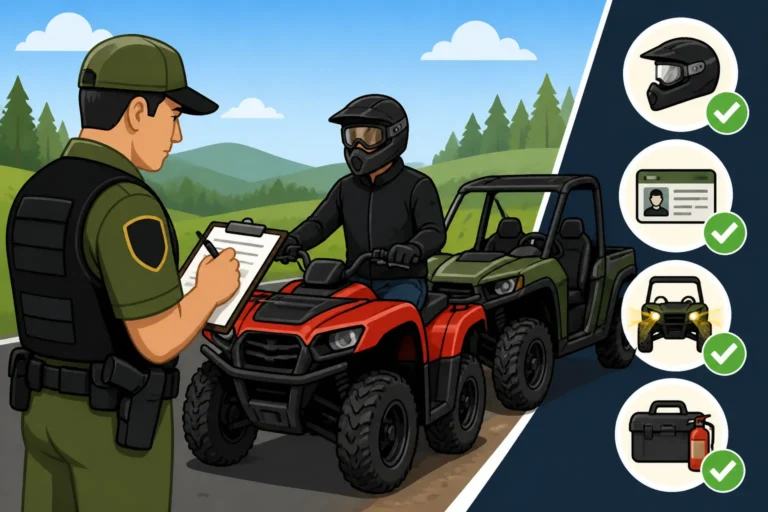
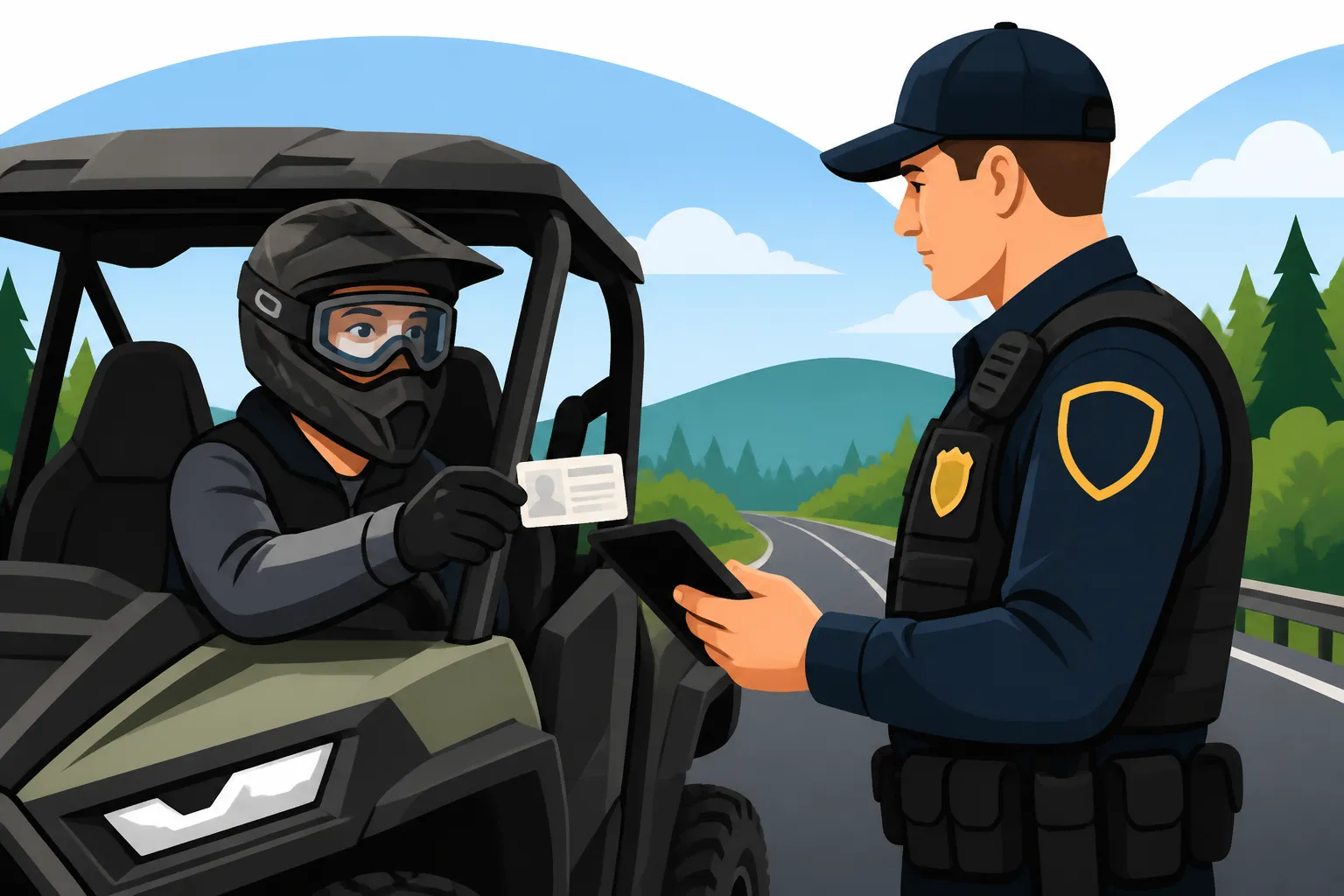
When you see those flashing lights, the first and most important thing to do is remain calm and signal safely to pull over to the side of the road, preferably in a spot that's safe for both you and the officer. Turn off your engine and, if you're riding a side-by-side, keep your hands visible on the steering wheel. If you're on a quad, keep your hands on the handlebars. Remove your helmet only when instructed or if the officer approaches and initiates conversation.
The officer will typically approach your vehicle, introduce themselves, and state the reason for the stop. This could be anything from a routine document check to an observed traffic infraction or even just a friendly reminder about ORV regulations in the area. They will then ask for your driver's licence, vehicle permit, and proof of insurance. Present these documents clearly and calmly. Avoid making sudden movements or fumbling around excessively, as this can be misinterpreted. Answer their questions honestly and respectfully. If you're unsure about something, it's okay to say so. The goal is to facilitate a professional and efficient interaction. Remember, cooperation goes a long way.
Verifying Your Machine's Road-Legality
Once the documents are in order, the officer might do a quick visual inspection of your ATV or UTV, especially if you're on a municipal road. They're checking to ensure your machine meets the basic equipment requirements for road use in Ontario. This includes working headlights, tail lights, brake lights, and functioning turn signals if they were factory-installed. They'll also look for a proper muffler to ensure noise levels are within limits. Mirrors are crucial for road visibility, and while a single mirror is often the minimum, many riders prefer two for enhanced safety. If you've modified your machine, ensure these modifications don't violate road-legal standards. For instance, aftermarket parts from companies like SuperATV can significantly enhance your ORV's capabilities and appearance, but you must ensure any road-facing components such as mirrors, turn signals, and light kits comply with Ontario's Highway Traffic Act when riding on pavement.
Crucially, they'll also consider the class of your ORV. Ontario differentiates between ATVs, ROVs (like side-by-sides), and off-road motorcycles, each with specific rules for road access. For example, [Ontario UTV Road Rules] stipulate specific weight and width limits for side-by-sides on public roads, such as the [Ontario ATV Width Limit for Road Use] which caps most ORVs at 2.03 metres. If your machine is significantly wider or heavier than the legal limits, even if you have all your papers, you could still be in violation. Understanding [Equipment Ontario Requires on a Road-Legal ORV] is vital before you even leave your driveway. Always check your machine's specifications against provincial regulations to avoid any unpleasant surprises.
Confirming Your Trail Permit (if applicable)
While your provincial ORV permit (registration) and insurance are essential for road use, a separate trail permit is often required if you're riding on sanctioned club trails. This is a common point of confusion for riders. Your ORV permit (registration) allows your machine to exist and be operated; your trail permit allows you to access specific trail systems maintained by groups like the OFATV (Ontario Federation of ATV Clubs).
An officer, especially if you're near a known trail system or on a road that leads directly to one, might inquire about your trail permit. This is more common with Conservation Officers or Provincial Park wardens, but a municipal police officer could also ask. If you're riding on a club trail without a valid permit, you could be subject to fines or asked to leave the trail. These permits are typically annual stickers that are clearly displayed on your machine, usually on the front fender or windshield. [Ontario ATV Trail Permits Explained] provides a comprehensive overview of how these permits work and why they're important. For a visual guide, you can refer to [What an OFATV Trail Permit Sticker Looks Like] to know exactly what the officer is looking for. It's a clear distinction: provincial registration is for legal operation; a trail permit is for legal access to specific private or managed trails.
Common Roadside Scenarios and How to Handle Them
Even the most prepared rider can encounter unexpected situations. Knowing how to react can prevent a minor inconvenience from becoming a major headache.
When You Forget Your Papers
It happens to the best of us. You're in a hurry, grab your helmet, and completely forget your wallet or your insurance card back at the cottage. When an officer pulls you over and asks for your documents, and you realize they're not there, be honest and upfront. Explain the situation calmly.
The consequences can vary. For a forgotten licence or insurance slip, an officer might issue you a "produce document" notice, giving you a set amount of time (often 24 to 48 hours) to present the missing document at a police station or ServiceOntario centre to avoid a full ticket. However, if you cannot prove ownership (no permit) or insurance, the situation becomes more serious. Operating an ORV without valid insurance carries substantial fines in Ontario, which can be thousands of dollars, and your machine could even be impounded. [Riding an Unregistered ATV in Ontario] highlights the severe penalties associated with not having the proper documentation. This is why having at least a clear photocopy or a digital image readily available, even if you left the original, is so crucial. Always aim to have your papers, or at least a readily verifiable copy, on your person or securely mounted on your machine.
Dealing with Equipment Infractions
During a roadside stop, an officer might notice that one of your headlights is out, your mirrors are cracked, or your muffler seems unusually loud. These are common equipment infractions.
For minor issues, like a burnt-out bulb, an officer might issue a warning or a "fix-it" ticket, giving you a grace period to repair the problem and present proof of repair. For more serious issues, such as an excessively loud exhaust that clearly violates noise bylaws or missing essential safety equipment like mirrors for road use, you might receive an immediate ticket. If you're using aftermarket parts, ensure they are designed for compliance. For instance, if you're replacing a stock exhaust with something louder, you need to be aware of local noise ordinances. Likewise, if a mirror breaks, replacing it with a robust, off-road-specific mirror from a reputable brand like SuperATV can prevent future issues and ensure you remain compliant and safe. Always perform a pre-ride check of your lights, brakes, horn, and mirrors to catch any obvious issues before you hit the road. Addressing these small problems proactively can save you a ticket and ensure a safer ride for everyone.
Out-of-Province Riders
If you're visiting Ontario from another province or the United States and plan to ride your ORV, the rules can be a bit tricky. Many visitors assume their home province or state's registration and insurance automatically transfer. While there is often some level of reciprocity for licensing and insurance, registration is a different beast.
Generally, visitors from other Canadian provinces can ride in Ontario for a limited time, provided their ORV is properly registered and insured in their home province. However, the exact duration varies, and some provinces have specific agreements or lack thereof. For example, [Ontario Rules for an Out-of-Province Machine] details what you need to know. For American riders, the situation is more complex. While your U.S. licence and insurance might be recognized, bringing an ORV from the United States for recreational use often involves specific importation and registration requirements if you plan to keep it in Ontario for an extended period. For short visits, you typically need to ensure your machine is legally registered and insured in your home state, and you must adhere to all Ontario's operating and equipment rules. This means ensuring your machine has the required lights, mirrors, and a muffler that meets Ontario standards. Don't assume your home rules apply. Always check Ontario's specific regulations for visiting riders before you travel. You can also look at [Bringing a Michigan Quad Across the Border to Ride] for a specific example of cross-border considerations.
Tips for a Smooth Roadside Interaction
A positive roadside interaction often comes down to preparation, politeness, and knowing your responsibilities. These simple tips can significantly reduce stress and help ensure you're quickly back on the trail.
Preparation is Key
Before every ride that takes you onto public roads or into areas where you might encounter law enforcement, take a few moments to prepare. First, organize all your essential documents: your valid driver's licence, your Ontario ORV permit, and your proof of insurance. Place them in a waterproof, easily accessible pouch or container. Many riders prefer to keep these documents in a small, dedicated bag that's either on their person or securely attached to the machine, rather than in a deep backpack or under a hard-to-reach seat.
Beyond documents, perform a quick visual inspection of your machine. Check that all your lights are working, your tires are properly inflated, and your mirrors are clean and intact. If you have a trail permit, ensure it's properly displayed. A little bit of proactive maintenance and organization can save you a lot of hassle. Consider printing a spare copy of your permit and insurance card to keep in a different location, just in case. Knowing exactly where your papers are and being able to produce them quickly demonstrates responsibility and respect, which can set a positive tone for the entire interaction.
Know Your Rights and Responsibilities
When an officer stops you, you have both rights and responsibilities. Your primary responsibility is to stop safely, provide your documents when asked, and answer questions truthfully. You have the right to know why you've been stopped and the right to remain silent if you believe your answer could incriminate you, though refusing to answer basic identification questions can lead to further issues.
Always remain calm and polite. A respectful attitude can de-escalate any tension and often leads to a more positive outcome. Avoid arguing or becoming confrontational. If you disagree with an officer's assessment or a ticket, address it through the proper legal channels later, not during the roadside stop. The goal of the stop is to ensure compliance and safety, and treating the officer with respect helps achieve that goal efficiently for everyone involved. Remember, you're representing the entire ORV community, and a positive interaction contributes to a better public perception of our sport.
After the Stop
What happens after the officer drives away depends entirely on the outcome of your stop. If you received a warning, consider it a learning experience. Double-check your documents and equipment more diligently next time. If you received a "produce document" notice, make sure you present the missing documents at the designated location within the given timeframe to avoid further penalties.
If you were issued a ticket, carefully read and understand the infraction. You have options: you can pay the fine, or you can dispute it in court. If you choose to dispute, make sure you understand the process and your legal rights. Learning from any mistakes or oversights is crucial. Perhaps you discovered your side-by-side was just a little too wide for that specific municipal road, or your insurance card had expired. Use the experience to ensure you're fully compliant and better prepared for all future rides. The more knowledgeable and prepared we are as riders, the safer and more enjoyable the sport becomes for everyone in Ontario.
| Document Type | Purpose | Where to Keep It | What the Officer Checks For |
|---|---|---|---|
| ORV Permit | Proof of provincial registration and ownership | Waterproof pouch on person/machine, or clear digital image | VIN, owner's name, make/model, valid registration |
| Proof of Insurance | Mandatory third-party liability coverage | Waterproof pouch on person/machine, or clear digital image | Policy number, expiry date, coverage for ORV |
| Driver's Licence | Valid qualification to operate a motor vehicle | On your person (e.g., wallet) | Validity, photo ID, G2/M2 minimum endorsement |
| Trail Permit | Access to OFATV/club-managed trails (if applicable) | Displayed sticker on machine | Expiry date, correct club/federation for trail |
| Machine Equipment | Compliance with road-legal requirements (lights, mirrors, muffler) | Mounted on ORV | Functioning lights, proper mirrors, legal muffler, width/weight compliance |
Disclaimer
This article is for general informational purposes only and does not constitute professional advice. Laws, prices and regulations vary by location and change over time. Consult a qualified professional for guidance on your specific situation.