Where the Ditch Ends and the Yard Begins
It's incredibly frustrating for many ATV and UTV riders in Ontario when they're out enjoying a ride, only to be left scratching their heads about where they can actually go, especially when it comes to ditches. The line between what's considered public land, a municipal road allowance, or someone's private yard can feel invisible, leading to anxiety about trespassing or breaking the law. This comprehensive guide is here to clear up that confusion, helping you understand the legal boundaries and practical considerations of riding your off-road vehicle near and within ditches in Ontario.
Understanding Ontario's "Ditch" and Road Allowance
When we talk about riding in a ditch, it's not always as simple as seeing a low-lying area beside a road. In Ontario, the legal definition and practical implications of what constitutes a "ditch" are tied very closely to the concept of the "road allowance." Many riders mistakenly believe that if it's not paved, it's fair game, but that's often far from the truth.
What Constitutes a Ditch?
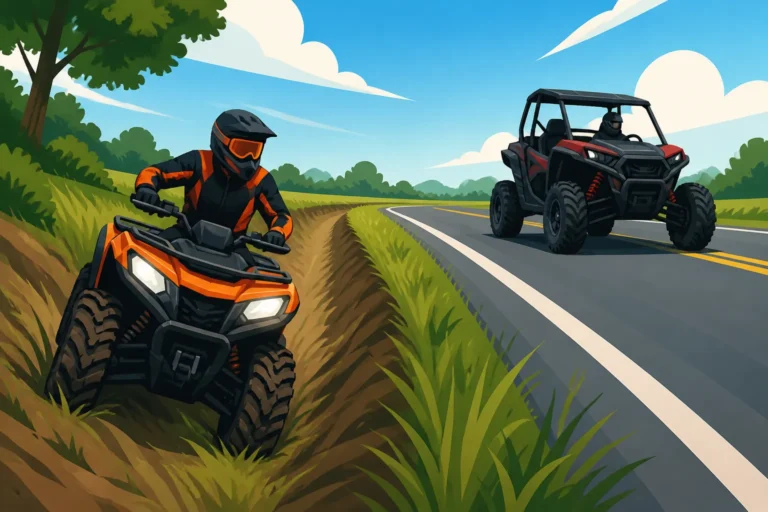
Physically, a ditch is usually an excavated channel alongside a road, designed to manage water runoff. It prevents flooding on the road surface and directs water away from adjacent properties. From a rider's perspective, it often looks like an inviting, unpaved strip that could offer a connection between trails or a shortcut. However, legally, a ditch typically falls within what's known as the municipal "road allowance." This allowance is not just the paved or gravel part of the road where vehicles drive; it's a much wider strip of land that includes the travelled portion, shoulders, sidewalks (if any), and yes, the ditches. The municipality or province owns this entire strip, not just the part you drive on in your car.
The frustration comes from the fact that these ditches might appear to be unmaintained, forgotten strips of land. You might see other activities happening there, like walking or cycling, and assume your ATV or UTV is equally welcome. But the regulations for off-road vehicles are specific and often much stricter than those for pedestrians or bicycles. It's not just about the physical depression in the ground; it's about the legal ownership and designation of that piece of land, and how the [Off-Road Vehicles Act and Ontario Riders] applies to it.
The Road Allowance: More Than Just the Pavement
Think of the road allowance as a corridor of land, often much wider than the visible road itself, that is dedicated to public travel infrastructure. In rural areas, these allowances can be quite broad, extending many metres on either side of the paved or gravel surface. For example, a typical concession road might have a 66-foot (20-metre) wide road allowance, even if only a narrow strip in the middle is maintained for vehicle traffic. The ditches, the grassy shoulders, and sometimes even sections of treeline are all part of this allowance.
The critical point here is that while the municipality owns the road allowance, it doesn't automatically mean you have the right to ride your ATV or UTV on every part of it. The use of the road allowance by off-road vehicles is governed by both provincial legislation (like the Off-Road Vehicles Act and sections of the Highway Traffic Act) and, crucially, by local municipal by-laws. This is where the complexity truly sets in because what's permissible in one township might be strictly prohibited in the next. Without clear signage or easily accessible information, it’s a constant guessing game for riders trying to avoid unintended trespass or fines. This is a common pain point we hear from riders all the time – that lack of consistent rules makes planning a trip a real headache.
Navigating Property Lines and Trespass Concerns
One of the biggest anxieties for ATV and UTV riders is the fear of trespassing. It's not always obvious where private property begins, especially in rural settings where fences might be absent or old and overgrown. Understanding these boundaries is crucial for a stress-free ride.
How to Identify Property Boundaries
In an ideal world, every property line would be clearly marked with a fence or survey pins. But we live in reality, and often, the only true way to know a property boundary is through a legal survey. Most of us don't carry survey maps on our rides, and that's where the challenge lies. General indicators like a sudden change in vegetation, a newly mowed lawn, or even subtle changes in land use can sometimes hint at a property line, but these are not definitive.
The assumption that the ditch always belongs to the road allowance, and that beyond the ditch is private land, is a good general rule of thumb, but it’s not infallible. Sometimes, due to historical grants or specific property configurations, a landowner's property might extend into the ditch or even to the edge of the paved road. This is rare, but it highlights why relying solely on visual cues can be risky. When in doubt, it’s always best to assume the land is private until you have definitive proof otherwise. Utilizing apps with property overlay maps can sometimes help, but these are not always legally binding and should be treated as guides, not gospel. Remember, ignorance of property lines is generally not considered a valid defense for trespassing.
The Concept of Trespass for Riders
Trespassing, in simple terms, is entering or remaining on someone else's property without their express permission. For ATV and UTV riders, this is a significant concern because many trails or riding areas might border private land, and an accidental veer off course can lead to trouble. The [Ontario ATV Trespass Rules] are clear: if a property is marked with "No Trespassing" signs, or if you're directly told to leave, you must comply. Even if there are no signs, if the property is enclosed or cultivated, it's generally understood to be private.
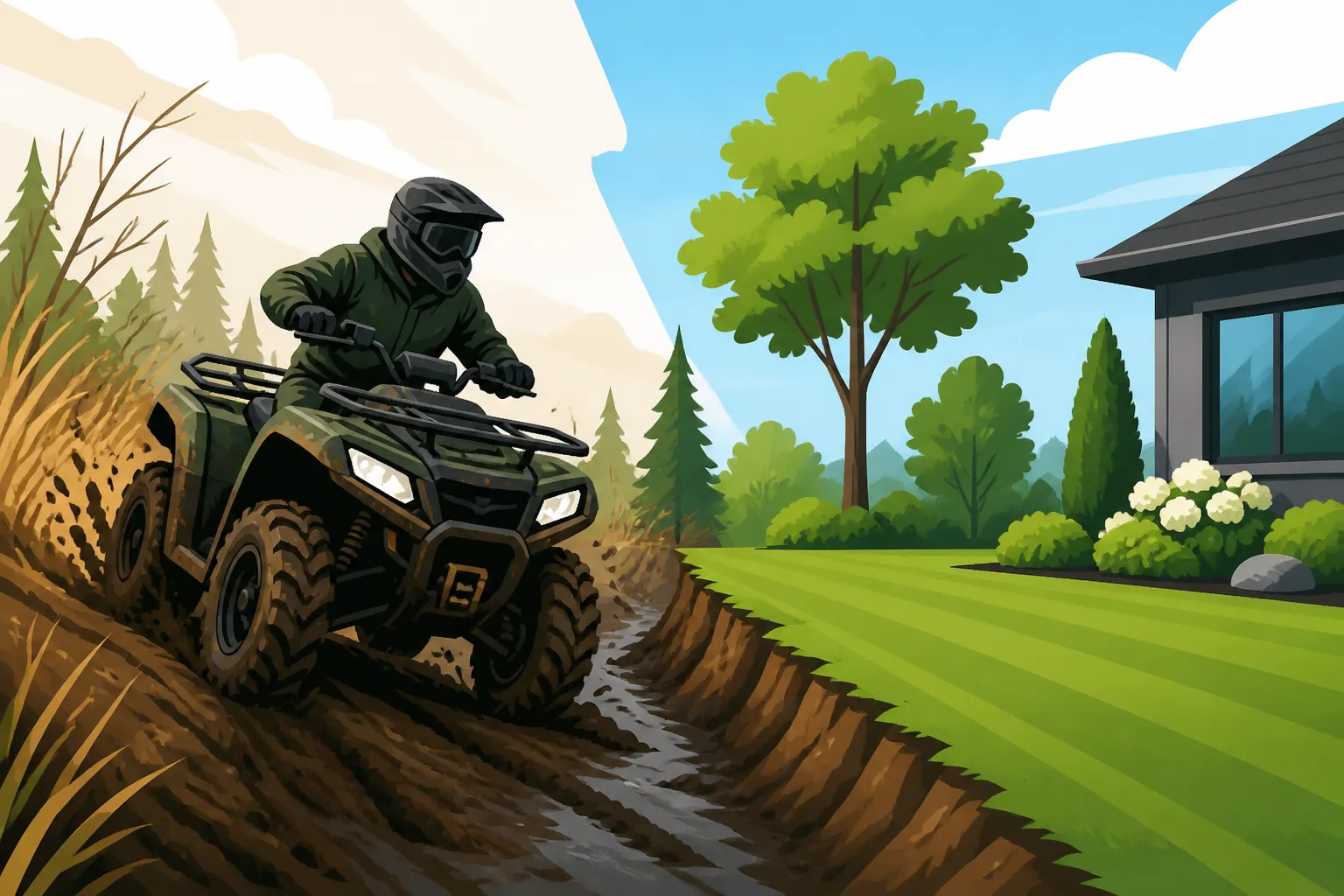
What does this mean for the ditch and yard? If you're riding in a ditch that is part of a municipal road allowance, you're on public land (though your right to ride there is still subject to by-laws). However, the moment you cross out of that road allowance and onto someone's front lawn, cultivated field, or wooded area, you are trespassing. This is where the distinction "where the ditch ends and the yard begins" becomes absolutely paramount. A landowner has the right to ask you to leave, and if you refuse, they can contact the authorities. Incidents of trespass can lead to significant fines, and in some cases, even legal action for property damage. It’s a situation no rider wants to be in, and it often creates animosity between landowners and the riding community, which hurts everyone in the long run.
The Legal Landscape of Ditch Riding in Ontario
Riding an ATV or UTV in Ontario isn't just about throwing your leg over the seat and hitting the throttle. There's a complex web of provincial and municipal laws that dictate where and how you can ride, especially when it comes to areas like ditches. Many riders feel caught between conflicting information or vague rules, leading to understandable confusion.
Provincial Regulations on Ditch Use
At the provincial level, the primary legislation governing off-road vehicles is the Off-Road Vehicles Act (ORVA). This act outlines the basic rules for operating ATVs, UTVs, and other ORVs on certain types of land, including portions of highways and municipal roads where allowed. Generally, the ORVA permits ORVs to use the shoulder of a highway (which could include a ditch if it's considered part of the shoulder) only if the municipality has passed a by-law allowing it, or if it falls under specific exemptions, such as crossing a highway.
Furthermore, the Highway Traffic Act (HTA) also comes into play when an ORV is operated on any part of a highway, including the road allowance and ditches. For example, the HTA mandates that any vehicle operating on a highway must be insured and registered. So, even if you are riding in a ditch that is legally permitted, your machine still needs to be properly registered and plated, and you need to carry valid insurance. You'd also need the appropriate [Ontario ATV Licence Requirements], often a G2 or M2 licence, to ride on a road allowance. The provincial rules often set the baseline, but municipalities have the power to add more specific or restrictive rules. This layered approach is a major source of frustration for riders trying to navigate the system.
Municipal By-laws: The Local Layer
This is where things get really localized and, frankly, often confusing for riders. While the province sets the overarching framework, individual municipalities in Ontario have the authority to pass by-laws that dictate where and how ORVs can be operated within their own boundaries. This means that [Where the Ditch Ends and the Yard Begins] can vary significantly from one township or county to the next.
A municipal by-law can:
- Permit ditch riding: Some municipalities have by-laws that explicitly allow ORVs to ride on certain road allowances, including ditches, often with specific conditions (e.g., speed limits, hours of operation, seasons).
- Prohibit ditch riding: Other municipalities may have by-laws that explicitly forbid ORV use on any part of the road allowance, outside of direct crossing.
- Specify routes: Some by-laws might designate specific roads or sections of road allowances, including ditches, as legal routes to connect to trails or access services.
The challenge for riders is that these by-laws are not always widely publicized or easy to find. You might be riding legally in one municipality, cross an invisible line into the next, and suddenly be in violation of a completely different set of rules. It’s absolutely essential to check the by-laws of any municipality you plan to ride in. Many riders rely on local clubs or municipal websites to gather this information, but it requires proactive effort. This patchwork of rules underscores why joining local ATV clubs and staying informed is so vital for riders in Ontario.
When Ditch Riding is Permitted
Despite the complexities, there are situations where ditch riding or using the road allowance shoulder is permitted for ATVs and UTVs in Ontario:
- Direct Crossing of a Highway: The ORVA generally allows an ORV to cross a public highway (including the ditch and shoulder areas) at a right angle, provided it's done safely and at the closest point to an intersection or where visibility is clear. You can't just ride down the ditch to get to your crossing point; it's meant to be a direct, perpendicular movement.
- Specific Municipal By-laws: As discussed, if a municipality has passed a by-law specifically allowing ORV use on certain road allowances or ditches, then it's permitted under those conditions. These by-laws often come with stipulations, such as [Ontario ATV Speed Limit on Roads], specific times of day, or certain seasons. Some municipalities, like Greater Napanee or Middlesex Centre, have by-laws that outline specific roads or types of road allowances where ORVs can operate. Always check the specific by-law for the area you are riding in.
- Access to Private Property: In some cases, a by-law might allow ORV use on a road allowance (including a ditch) for the sole purpose of accessing a rider's private property from the road, provided there is no other reasonable means of access. This is usually a very specific exception.
- Connecting to Designated Trails: In areas where municipal roads are "open" to ORVs, ditches can sometimes form part of the legal route to connect to official trail systems. However, this is always at the discretion of the municipality and must be explicitly permitted in their by-law.
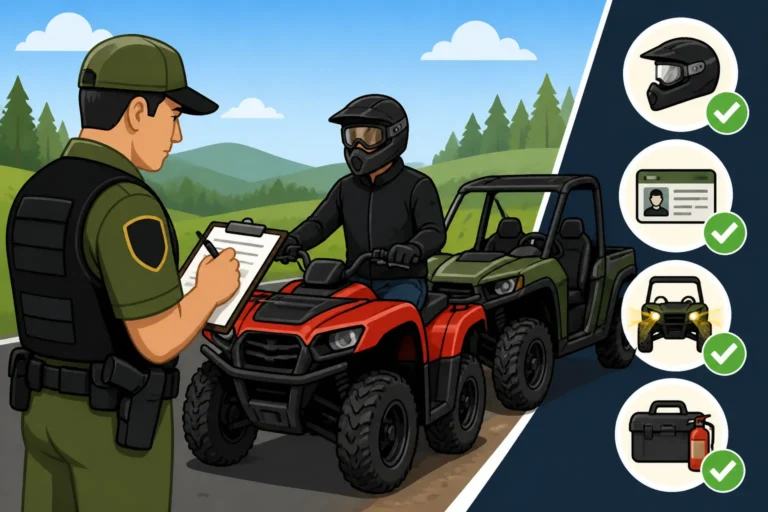
It's important to reiterate that even when permitted, all other ORV regulations still apply: your machine must be registered, insured, and properly equipped (lights, muffler, etc.). You must wear an approved helmet, carry your [Ontario ATV Permit Cost] and insurance card, and hold the correct driver's licence. Riding a ditch is not a loophole to bypass safety or legal requirements. Having good visibility is key, especially if you're navigating ditches at dusk, and a good light bar, perhaps from a brand like SuperATV, can make all the difference in seeing potential hazards or being seen by others.
Practical Strategies for Responsible Ditch Riding
Given the often-murky waters of ditch riding in Ontario, it's vital for riders to adopt practical strategies that prioritize safety, legality, and good relations with landowners. There's nothing worse than having your fun cut short by a fine or a confrontation, and a bit of preparation goes a long way.
Knowing Before You Go: Research is Your Best Friend
The single most important piece of advice for anyone considering riding near or in ditches is to do your homework. Don't just assume. This means:
- Check Municipal By-laws: Before you even load your machine, identify the specific municipality (or municipalities) you'll be riding in and check their official by-laws regarding off-road vehicles. Many municipalities now publish these on their websites. Look for terms like "Off-Road Vehicle By-law," "Highway Traffic By-law," or "Road Use By-law." This is the only definitive way to know what's allowed.
- Consult Local ATV Clubs: Ontario has a fantastic network of ATV clubs, many of which are part of the OFATV (Ontario Federation of ATV Clubs). These clubs often have up-to-date information on local regulations, open routes, and areas where ditch riding might be permitted to connect to trails. They are a treasure trove of local knowledge and can tell you about specific nuances, like [Riding Through Kirkland Lake to a Trail] or which roads are part of the [Eastern Ontario Trails Alliance Pass].
- Utilize Mapping Apps: While not legal documents, some mapping apps offer property line overlays. These can be helpful visual aids, but always remember they are not definitive legal surveys. They can, however, give you a better sense of where private land likely begins relative to the road allowance and ditch.
- Look for Signage: When you're on the ground, always pay attention to signs. "No Trespassing" or "Private Property" signs are non-negotiable. Similarly, some municipalities might post signs indicating where ORV use is permitted or prohibited on road allowances.
Without this upfront research, you're essentially riding blind, and that's a recipe for trouble. Being prepared means you can focus on the ride itself, not on worrying about who owns the next patch of grass.
Respecting Landowners and Building Good Relationships
The "ditch ends and the yard begins" for a landowner much earlier than for a rider. From a landowner's perspective, their property often starts right at the edge of the maintained roadway, and any vehicle in the ditch adjacent to their home might feel like an intrusion. The relationship between riders and landowners is critical for the long-term viability of trail riding, and accidental trespass or perceived disrespect can quickly sour that relationship.
- Assume Private: If you're unsure, always assume the land beyond the travelled portion of the road, including the ditch, is private property. This cautious approach will save you a lot of grief.
- Stay on Marked Routes: Stick to clearly marked trails and areas that are explicitly open to ORVs. If a route isn't marked as an official trail or a designated road allowance for ORV use, it's best to avoid it.
- Be Mindful of Noise and Dust: Even when riding legally in a ditch that's part of an open road allowance, be conscious of the impact you're having on nearby residents. Excessive noise, dust, or speed can be perceived as disrespectful and lead to complaints, which in turn can lead to tighter restrictions on ORV use. Keeping your machine well-maintained, including its muffler, is part of being a good neighbour.
- Polite Communication: If you find yourself accidentally on private land, or if a landowner approaches you, be polite and apologetic. Explain that you were unsure of the boundary and immediately turn around and leave. A friendly interaction can prevent a heated confrontation. For example, if you need to access a property, asking permission first is always the best approach.
By showing respect and responsibility, you help build a positive image for the entire riding community, making it more likely that municipalities and landowners will be open to ORV use in the future.
Safety First: Hazards in the Ditch
Beyond the legal and social considerations, riding in ditches presents unique safety hazards that every rider should be aware of. While the terrain might look invitingly soft, it can hide dangers.
- Hidden Obstacles: Ditches are often where debris from plows, storms, or yard clearings ends up. Rocks, branches, old fences, construction waste, and even forgotten agricultural equipment can be hidden beneath grass or snow. A robust skid plate, perhaps from a brand like SuperATV, can offer critical protection for your machine's underside, but it won't prevent a nasty spill if you hit something unexpectedly.
- Steep Slopes and Drop-offs: Ditches can have surprisingly steep sides or sudden drop-offs into culverts or waterways. These can be difficult to see, especially at speed or in low light, and can easily cause a rollover or loss of control.
- Water and Mud: Ditches are designed to collect water, meaning they can become extremely muddy, soft, or even filled with standing water, even when the surrounding ground is dry. These conditions can quickly bog down your machine, make steering difficult, and increase the risk of getting stuck or losing traction.
- Limited Visibility: Riding in a ditch can put you below the sightline of drivers on the main road, especially at intersections or when pulling out. Always assume drivers cannot see you and take extra precautions, such as slowing down and making eye contact, before entering a roadway or crossing. Enhanced lighting, like additional LED pods, can significantly improve your visibility to others.
When riding in ditches, whether legally permitted or just crossing, always reduce your speed, stay alert, and wear all your safety gear, including an approved [Ontario ATV Helmet Law]. Prioritizing safety not only protects you but also minimizes the risk of incidents that could further restrict ORV access.
Summary of Ditch Riding Rules and Best Practices
To help clarify the often-confusing rules surrounding ditch riding in Ontario, here's a quick reference table summarizing where you might find yourself and the general rules that apply. Remember, this is a simplified overview, and always check specific municipal by-laws.
| Area Type | Typical Legal Status for ORVs | Key Considerations for Riders |
|---|---|---|
| Paved Road/Travelled Way | Generally Prohibited for continuous riding, unless explicitly opened by municipal by-law (e.g., [Ontario ATV Rules on a Municipal Road]). Allowed for direct crossing. | If allowed by by-law, strict speed limits (often 20 km/h or 50 km/h), insurance, registration, and appropriate licence (G2/M2) are mandatory. Always ride single file on the far right. |
| Shoulder/Ditch (Road Allowance) | Varies greatly by municipality. Permitted only if a municipal by-law explicitly allows it. Also allowed for direct crossing of a highway. | Requires prior research of municipal by-laws. All provincial ORV requirements (registration, insurance, licence, helmet, etc.) still apply. Watch for hidden hazards, respect nearby property, and be mindful of noise/dust. |
| Private Property | Prohibited without express permission from the landowner. | Absolutely do not ride without permission. Trespassing can lead to fines, confrontation, and legal action. Always assume land is private if not clearly marked as public or a designated trail. This is [Ontario ATV Trespass Rules] in action. |
| Crown Land | Generally Permitted under "free use" policy, but with significant restrictions and exceptions. | [Riding Crown Land in Ontario] is allowed, but often restricted to specific areas, or may have seasonal closures. No riding in Provincial Parks or Conservation Areas. Respect environmental regulations and fire bans. Always check with local MNRF (Ministry of Natural Resources and Forestry) offices if unsure about specific areas. |
| Designated OFATV Trails | Permitted with a valid OFATV trail permit. | These are the best places to ride! They are maintained and signed. A [The OFATV Permit and What It Costs in Ontario] is required. Respect trail etiquette, speed limits, and any specific rules of the trail club. |
The boundary where the ditch ends and the yard begins is rarely a clear-cut line in Ontario, and the rules surrounding it are equally complex. For off-road vehicle enthusiasts, this means a significant responsibility to be informed, prepared, and respectful. By understanding the nuances of road allowances, provincial acts, and municipal by-laws, and by prioritizing safety and good community relations, you can enjoy your ATV or UTV rides with confidence, knowing you're riding legally and responsibly. Happy trails, and ride safe!
Disclaimer
This article is for general informational purposes only and does not constitute professional advice. Laws, prices and regulations vary by location and change over time. Consult a qualified professional for guidance on your specific situation.