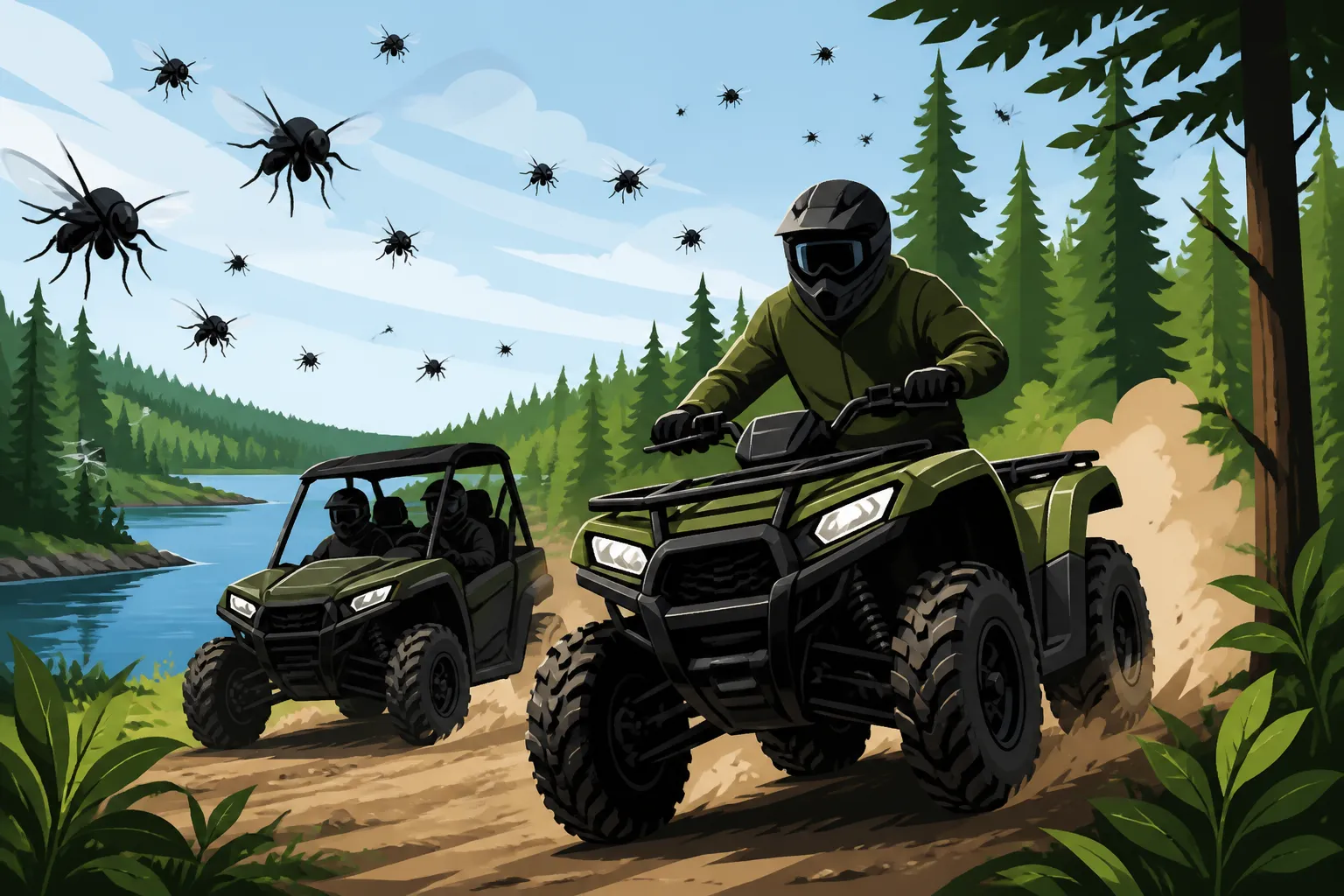
Riding Through Blackfly Season in June
June rides in Ontario can be beautiful, but blackflies can turn a quiet trail stop into a miserable scramble for sleeves, gloves, and a place to hide. The right clothing, repellent, timing, and ride plan make a real difference. This guide explains how to prepare, where the bugs tend to be worst, and how to stay comfortable without letting a nuisance spoil the trip.
Why June Can Be a Difficult Month for Ontario Trail Riding
Blackfly activity changes with the weather and location
Blackfly season does not begin and end on one neat date across Ontario. Activity varies with local weather, elevation, nearby moving water, and the timing of spring conditions. A trail in a shaded, damp area may feel very different from an open, breezy section only a short distance away. Northern routes and wooded corridors can remain buggy when sunnier or more exposed areas feel manageable.
That variation makes broad claims such as “the bugs are gone by mid-June” unreliable for planning. A cool spell may slow activity, while warm, humid weather can make a ride feel much less comfortable. Recent rain and changing trail conditions can also affect the overall experience, even when they do not tell you exactly how many flies you will encounter. For a broader seasonal overview, see Ontario Riding in Blackfly Season.
It helps to treat June as a month when biting insects are possible rather than assuming a particular weekend will be bug-free. Check recent local reports from the club that maintains your route, and ask a nearby business or trail contact what conditions have been like. The same approach is useful for general trail readiness: Ontario Trail Conditions Before You Ride and Ontario Trail Closures to Check First can help you build a more complete pre-ride check.
Trail stops often feel worse than moving sections
When you are moving, airflow can make insects less noticeable. The difference becomes obvious when the group stops to check a map, sort out a route, take a photo, or let a slower rider catch up. A few minutes beside a still, shaded trail can feel much longer if people are unprepared.
This is why a good June ride plan includes more than choosing a destination. Decide where you can safely pull over, how you will communicate a stop, and what each rider should have within easy reach. Avoid stopping in a narrow or poorly visible section just because it is buggy; a safe place to pull over matters more than finding the perfect spot out of the insects.
If one rider needs extra time to adjust clothing or apply repellent, make the stop deliberate. Choose a suitable pull-off, let the group know what is happening, and keep machines positioned safely. A hurried, uncomfortable stop in the middle of a trail can create its own problems, especially when riders are distracted and trying to swat insects at the same time.
What to Wear and Pack for a Buggy Ride
Cover exposed skin without compromising safe riding
Lightweight, long-sleeved clothing and long pants can reduce exposed skin, while a head net can be useful when blackflies are particularly persistent. A fine-mesh net that fits over your helmet or hat can protect your face and neck, but make sure it does not interfere with your helmet fit, vision, chin strap, or ability to operate the machine safely. Try it on before the ride rather than discovering at the trailhead that it fogs your glasses or shifts into your sightline.
Gloves, a high collar, and a way to cover the back of your neck help close the gaps insects often find. Check the area around your cuffs and collar, where uncovered skin can be easy to miss. If you wear glasses, try your head net with them in advance so the combination stays comfortable and gives you a clear view.
Clothing needs to work for the whole ride, not just for insects. A breathable base layer and a wind-resistant outer layer can help you adjust to changing temperatures, while riding gear still needs to provide appropriate protection. Do not remove safety equipment or loosen protective clothing to cool down or deal with bugs. On a side-by-side, screens or mesh accessories should never obstruct visibility or interfere with occupant protection.
Use repellent carefully and bring it where you can reach it
Choose an insect repellent suited to your needs and follow its label, including directions about where and how to apply it. Products containing ingredients such as DEET or picaridin are commonly used, but individual products have different instructions and age guidance. Apply them only as directed. Do not put a skin repellent in your eyes or mouth, and wash treated skin when the label recommends doing so.
Permethrin products intended for clothing are a separate category: follow the product instructions closely and do not apply them to skin unless the label specifically says that is appropriate. If you use sunscreen as well, follow both product labels for application order and reapplication. A small bottle stored somewhere accessible is more practical than one buried under tools or tied-down luggage.
Pack spare gloves, a lightweight layer, a head net, drinking water, and a small bag for used or wet items. Consider carrying wipes or a cloth for cleaning glasses, but avoid using anything that leaves residue on lenses or reduces visibility. A compact kit can spare the group an unnecessary early return when one rider realizes halfway through the route that their usual clothing leaves their ears or neck exposed.
| Ride condition | Useful preparation | Practical reminder |
|---|---|---|
| Bugs are noticeable at the staging area | Long sleeves, gloves, and a head net | Check that the net does not affect vision or helmet fit |
| The route includes frequent stops | Keep repellent and spare layers accessible | Choose safe pull-offs before stopping |
| Weather may change | Bring an adjustable outer layer and water | Avoid overheating under heavy, poorly ventilated clothing |
| Riding in a group | Agree on a regrouping plan | Make stops in safe, visible places |
| Exploring an unfamiliar area | Review local trail information and coverage | Do not rely on one app as the sole source of access information |
Plan Your Route Around Comfort and Conditions
Choose a route that gives your group options
For a June outing, a flexible loop can be more comfortable than committing to a long out-and-back route with no easy way to shorten it. Choose a ride that matches the least experienced or least comfortable person in the group. That way, if the insects are intense or the weather changes, the group can adjust without leaving anyone behind.
Before setting out, check the local club’s trail notices and confirm that the route is open. Spring conditions can affect surfaces and access, and club schedules are not identical across the province. Seasonal closures and opening periods are explained in Ontario Riding Seasons and Club Closures. For route planning, Ontario ATV Trail Maps can help you think about navigation, while local club information should guide decisions about current access.
Apps can be useful for organizing a route, but coverage and map detail vary by area. If you use onX Offroad, check whether it has reliable, relevant coverage for the specific Ontario riding area you plan to visit, and compare it with the local club’s information. Do not assume an app’s displayed route is open to motorized use or that it reflects a temporary closure.
Prepare for navigation gaps and changing plans
Download or save the information you will need before leaving a reliable connection. In remote areas, mobile reception may be limited, and a map that depends on a live signal may not be enough. Carry a backup way to understand your route, such as an offline map or the club’s printed or saved trail information, and make sure at least one other rider knows the plan.
onX Offroad may be one part of your planning setup if its map coverage suits your destination, but treat it as a navigation aid rather than permission to ride. Confirm trail access through the relevant club or land manager, and check posted signs along the way. If a route is unclear, closed, or appears to cross land where access is uncertain, do not assume that a line on a screen settles the question.
A little preparation also helps when the group needs to change course. Agree on a turnaround point, regrouping locations, and what to do if riders become separated. Keep your phone or GPS device protected and accessible, and tell someone who is not riding where you expect to go and when you plan to return. For help choosing a broader riding area, Ontario’s Northern Trail Towns offers another starting point for exploring destinations and trail communities.
Ride Comfortably Without Letting Bugs Distract You
Keep stops short, safe, and purposeful
A quick stop is often easier to manage than an unplanned break that stretches on while everyone searches through bags. Before the ride, decide how your group will signal a stop and where it is safe to pull over. When you do stop, deal with the practical task first: check the route, help the rider who needs assistance, and get moving again when it is safe.
Avoid swatting at insects while operating an ATV or UTV. Distraction can affect steering, braking, and awareness of other riders. If a bug gets inside a helmet or clothing, slow down and stop somewhere safe rather than trying to fix the problem while moving. The group should wait in a safe location, not block the trail or crowd a blind corner.
A rider who is overwhelmed by insects may need to turn back, change layers, or take a longer break in a sheltered place. Treat that as a normal adjustment, not a reason to pressure someone into continuing. A good ride is one the group can complete safely and enjoyably, even if that means choosing a shorter loop.
Adjust expectations for children and newer riders
Young riders and people new to trail riding may find a buggy stop especially frustrating. They may not be used to wearing a head net, managing repellent, or staying patient while a group sorts out navigation. A short practice outing close to the staging area can help everyone learn what clothing works before committing to a longer day.
Set realistic expectations before leaving. Explain that the group may encounter insects, that everyone should keep their hands on the controls while riding, and that you will stop only in safe places. Pack extra water and a spare layer for anyone who is more sensitive to heat or discomfort. If a child cannot see clearly through a net or is having trouble with their helmet, fix the fit before continuing.
For a route that suits a family or a mixed-ability group, look for distance, terrain, and stopping options that match everyone’s experience. Ontario Trails Good for Kids can help with that kind of planning. If the group also wants to understand how riding conditions and trail etiquette change through the season, Ontario Trail Etiquette With Snowmobilers offers useful context for sharing trails respectfully where permitted.
Know when to change the plan
Sometimes the simplest decision is to shorten the ride. If insects are making it difficult for someone to see, operate their machine, or stay focused, stop safely and reassess. A change of clothing or route may help; if it does not, returning to the staging area is a sensible choice. The goal is not to prove that the group can push through every discomfort.
Keep an eye on fatigue and hydration, particularly when riders have added extra layers to cover exposed skin. Heat, thirst, and irritation can make concentration worse. Take breaks in safe locations, drink water, and avoid turning an uncomfortable situation into a rushed ride back.
Before the next outing, note what worked: whether the head net fit well, which clothing stayed comfortable, and where the group would have preferred to stop. That small bit of reflection makes the next June trip easier to plan. Blackflies may be part of the season, but they do not have to dictate the entire day.
Disclaimer
This article is for general informational purposes only and does not constitute professional advice. Laws, prices and regulations vary by location and change over time. Consult a qualified professional for guidance on your specific situation.