When an Ontario Dealer Registers the Quad for You
It can be incredibly confusing when you buy a new ATV or UTV, wondering who's actually responsible for getting it properly registered and plated in Ontario. Many riders assume the dealer handles everything automatically, only to find themselves scrambling at ServiceOntario later. This guide will clarify exactly when an Ontario dealer takes care of your quad's registration for you, and more importantly, when the responsibility falls squarely on your shoulders.
The Dealer's Role in New ATV/UTV Registrations
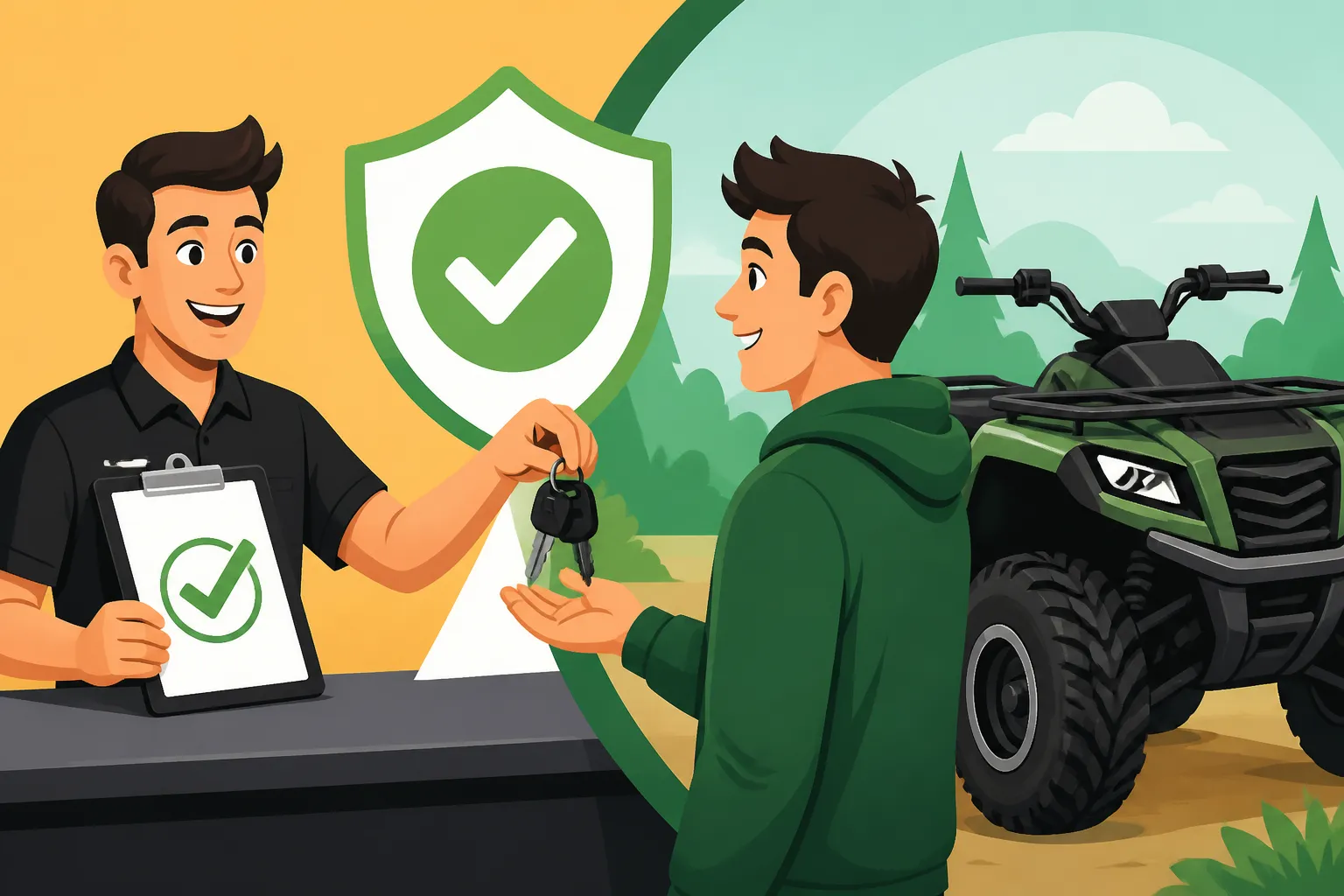
When you walk into a dealership to buy a brand-new, fresh-off-the-crate ATV or UTV, the registration process in Ontario is usually quite streamlined. This isn't just a courtesy; in many cases, it's part of the dealer's legal obligation to ensure the machine is properly entered into the provincial system before it leaves their lot.
When a Dealer Must Handle Registration for You
For any new off-road vehicle sold by a registered dealer in Ontario, the dealer is generally required to process the initial registration. This is a crucial distinction between buying new and buying used. When a new machine is sold, it hasn't existed on Ontario's registration system before. It needs to be issued an Ontario Vehicle Permit and an ORV plate for the very first time. The dealer acts as a ServiceOntario agent in this transaction, ensuring all the necessary paperwork is completed accurately and submitted. This includes the New Vehicle Information Statement (NVIS), which is essentially the birth certificate of your new machine, alongside the bill of sale detailing the purchase price. They also collect the 13 percent Retail Sales Tax (RST) right there at the counter. Imagine the headache if every new buyer had to figure out how to register a vehicle that's never been registered before – the dealer setup makes it far more efficient for everyone.
How the Process Works at the Dealership
So, what does this look like in practice? When you finalize your purchase of a new quad, the dealer will typically gather your personal information (name, address, etc.), confirm the vehicle's details (VIN, make, model), and complete the necessary forms. They'll generate a bill of sale, which you should scrutinize for accuracy, especially the purchase price, as this dictates the RST. They then collect the full payment, including the 13 percent RST on the purchase price, and often the one-time registration fee. This fee covers the cost of issuing your new [Ontario ATV Licence Plate Cost] and the Ontario Vehicle Permit.
Once all the financial transactions are complete, the dealer submits this information electronically or physically to ServiceOntario. You might receive a temporary permit or proof of registration immediately, allowing you to legally operate the vehicle until the official permit and plate arrive. The dealer should then provide you with your permanent [Ontario ORV Plates and Where They Mount] and a printed [The Ontario Vehicle Permit Explained] within a reasonable timeframe. It’s a pretty slick system designed to get you out on the trails with minimal fuss, knowing all the initial legalities are handled. You’ll just need to make sure to mount that new plate securely on your machine.
Why You Still Need to Be Involved Even if They Do Everything
Even though the dealer handles the heavy lifting, it’s still absolutely vital for you, the buyer, to remain actively involved and vigilant. First and foremost, carefully review every piece of paperwork they give you – the bill of sale, the temporary permit, and eventually the permanent permit. Check that your name is spelled correctly, your address is accurate, and the vehicle identification number (VIN) on the documents matches the VIN on your actual ATV or UTV. Errors now can lead to massive headaches down the road.
Secondly, understand what you are receiving. You should get an official Ontario Vehicle Permit and a physical license plate. If there are any delays in receiving these, don't hesitate to follow up with the dealer. While the dealer streamlines the process, the ultimate responsibility for ensuring your vehicle is legally registered for your use falls to you. It's not uncommon for new buyers to have questions about their [Ontario ATV Registration Cost] or [What Ontario's ORV Fee Pays For], so don't be shy about asking your dealer for a full breakdown. Being informed means you're prepared, and that's always a good thing when dealing with legal documents for your pride and joy.
Navigating Used ATV/UTV Purchases from a Dealer
Buying a used ATV or UTV from a dealer introduces a different dynamic to the registration process compared to purchasing a new machine. While a new purchase often sees the dealer handle the full initial registration, a used machine typically requires you, the buyer, to take a more active role in the transfer of ownership.
The Different Scenario for Used Machines
When you purchase a used ATV or UTV from an Ontario dealer, the process is generally more akin to buying from a private seller, though with some added reassurances. Unlike a new machine which has never been registered before, a used machine already has an existing [Ontario Vehicle Permit Explained] and a plate. The dealer's primary responsibility here is to ensure they are selling you a machine with a clear title and providing you with the necessary documentation to transfer that ownership into your name. They are not typically expected to complete the final transfer of ownership at ServiceOntario for you, nor do they collect the Retail Sales Tax (RST) on used machines as they would for new ones.
This distinction is crucial because it means you need to be aware of your own obligations immediately after the purchase. The dealer will sell you the machine, give you the paperwork, and then it's up to you to visit ServiceOntario. It’s a common misconception that the dealer will "re-register" it for you, but for used vehicles, it's a transfer process initiated by the buyer. You’ll need to understand the implications of this, especially regarding [Ontario's Six-Day Registration Deadline] to avoid any penalties for riding an improperly registered machine.
What a Dealer Will Provide for a Used Quad
Even though they won't handle the ServiceOntario visit for you, a reputable dealer will provide you with several essential documents that are absolutely critical for your registration. The most important is a comprehensive bill of sale. This document should clearly state the buyer's and seller's (dealer's) information, the vehicle's make, model, year, and VIN, and the agreed-upon purchase price. A well-drafted bill of sale is your proof of purchase and the basis for calculating your Retail Sales Tax (RST). If you're ever in doubt about what constitutes a proper bill of sale, resources like LawDepot offer templates that can help you understand the necessary components.
Secondly, the dealer must hand over the existing Ontario Vehicle Permit, properly signed by them as the seller (or by the previous owner if the dealer hasn't yet put it into their name). This permit is what you'll use to transfer ownership at ServiceOntario. Without it, you’ll face significant hurdles. They might also provide a safety inspection report if the machine underwent one, or perhaps a service history. Always ensure you get a copy of anything you sign and keep it with your records. This ensures you have all the necessary documentation to prove ownership and complete the transfer process yourself.
Your Responsibilities After Buying a Used Machine from a Dealer
Once you've shaken hands and driven your newly acquired used quad or side-by-side home, your clock starts ticking. In Ontario, you have a strict [Six Days From Purchase in Ontario] to register the machine in your name at a ServiceOntario centre. This isn't just a guideline; it's a legal requirement. Failure to do so can result in fines if you're caught riding an unregistered vehicle.
When you go to ServiceOntario, you'll need to bring the bill of sale provided by the dealer and the original Ontario Vehicle Permit, signed by the seller. You will then pay the 13 percent [Ontario RST on an ATV Purchase] on the purchase price you declared. Unlike a new machine where the dealer collects the RST, for a used machine, you pay it directly to the province at ServiceOntario. This is where the accuracy of your bill of sale becomes paramount. If the purchase price looks suspiciously low compared to the vehicle's market value, ServiceOntario might question it, though [Why ORVs Have No Red Book Value] means they typically rely on the declared price. For clarity and peace of mind, consider using a standardized template like those offered by LawDepot for your bill of sale, ensuring all details are present and accounted for, even if the dealer provides their own. This proactive approach ensures a smooth transfer and keeps you riding legally.
When the Dealer Doesn't Register, and What You Do
While purchasing a new ATV or UTV from a dealership generally means they handle the initial registration, there are several situations where you, the buyer, will need to take the reins entirely. Understanding these scenarios is key to avoiding frustration and ensuring your machine is road-ready, or rather, trail-ready.
Specific Scenarios Where You Handle It Yourself
Beyond used machines bought from a dealer, there are other common situations where you’ll be responsible for the entire registration process. The most obvious is a private sale. If you buy a quad from a friend, a neighbour, or through an online classified ad, the dealer isn't involved at all, and thus, won't handle any part of the registration. Similarly, if you're importing a machine from another province or country, such as [Ontario Rules for an Out-of-Province Machine] or [Ontario Registration for an Imported Machine], you'll be the one to gather the necessary customs and provincial paperwork and present it to ServiceOntario.
Another scenario is a "home-built" machine, or an ORV that has been significantly modified or assembled from parts; these don't come with a standard NVIS from a manufacturer, requiring a specific [Ontario ATV Registration for a Homebuilt Machine] process. Lastly, if you receive an ATV or UTV as a gift or through an inheritance, the dealer is completely out of the picture. Even if the giver originally bought it from a dealer, the transfer process for a gift or inheritance (which might qualify for [Ontario ATV Tax on a Family Gift] or [Ontario ATV Tax on an Estate Transfer]) falls to you. In all these cases, think of ServiceOntario as your direct point of contact, not a middleman.
Gathering Your Own Paperwork for Self-Registration
When the onus is on you to register, the critical first step is to meticulously gather all required documentation. This is where attention to detail really pays off. For any purchase, you'll need the original bill of sale. Make sure it's comprehensive, detailing the buyer and seller information, the VIN, make, model, year, and the full purchase price. If you’re dealing with a private sale, a clear, dated, and signed bill of sale is non-negotiable. Using a template from a reputable source like LawDepot can ensure you don't miss any critical information, preventing potential delays or rejections at ServiceOntario.
If you're registering a used machine, you'll also need the original Ontario Vehicle Permit from the previous owner, with the transfer portion properly filled out and signed. For new machines that somehow ended up without dealer registration (a rare but possible scenario), you'd need the New Vehicle Information Statement (NVIS). In all cases, bring personal identification (like your driver's license) as proof of identity. The more organized you are with your paperwork, the smoother your visit to ServiceOntario will be. This careful preparation is key to [Proving Ownership of an Ontario ATV] and getting your permit issued without a hitch.
The Step-by-Step for Self-Registration
With all your documents in hand, the next step is a visit to your local ServiceOntario centre. It's often a good idea to check their website or call ahead to see if you need an appointment, especially during peak times. When you arrive, present all your gathered paperwork to the clerk. They will review everything, verify your identity, and process the transfer of ownership or the initial registration.
This is also the point where you'll pay the applicable 13 percent Retail Sales Tax (RST), based on the purchase price declared on your bill of sale, if it's a purchase. You'll also pay the one-time ORV registration fee, which includes the cost of your license plate. Once processed, you will be issued a new [Ontario Vehicle Permit Explained] with your name on it as the registered owner, and your physical [Ontario ORV Plates and Where They Mount]. Remember, there's [No Annual Renewal for an Ontario ORV], so this one-time fee and registration process sets you up for the long haul. This methodical approach to [Registering an ORV at a ServiceOntario Centre] ensures you complete all legal requirements and can hit the trails with confidence.
New vs. Used ATV/UTV Dealer Registration Responsibilities
Here's a quick comparison to clarify the different responsibilities based on whether you're buying a new or used off-road vehicle from a dealer in Ontario:
| Feature | New ATV/UTV (from Dealer) | Used ATV/UTV (from Dealer) |
|---|---|---|
| Initial Registration | Dealer must handle first-time registration and plating. | Buyer is responsible for transferring existing registration. |
| Retail Sales Tax (RST) | Dealer collects 13% RST at time of purchase. | Buyer pays 13% RST directly at ServiceOntario. |
| Ontario Vehicle Permit | Dealer issues a new permit in your name. | Dealer provides the previous permit, buyer transfers at ServiceOntario. |
| License Plate | Dealer provides the new ORV plate. | Dealer provides the machine with its existing plate; it stays with the machine. |
| Key Documents | NVIS, Bill of Sale. | Previous Ontario Vehicle Permit, Bill of Sale. |
| ServiceOntario Visit | Generally not required by buyer for initial registration. | Required by buyer to complete ownership transfer within 6 days. |
| Timeliness | Dealer handles immediately upon sale. | Buyer has 6 days from purchase to complete transfer. |
Disclaimer
This article is for general informational purposes only and does not constitute professional advice. Laws, prices and regulations vary by location and change over time. Consult a qualified professional for guidance on your specific situation.