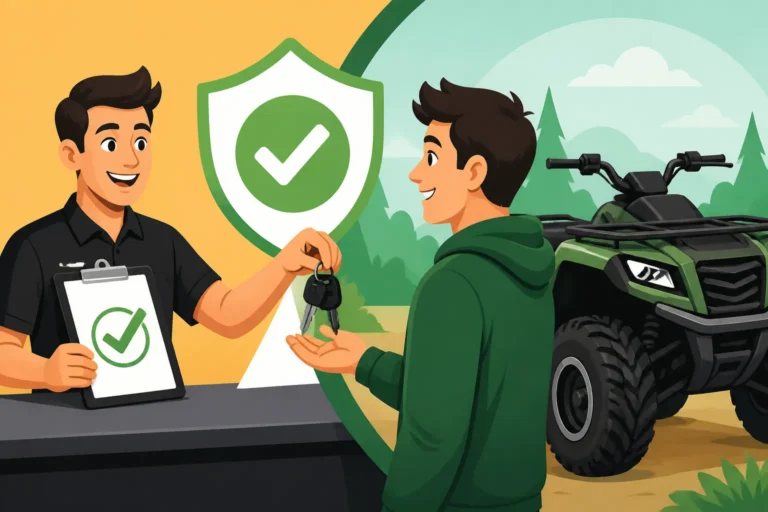
Handing the Permit to a Buyer
So, you've finally found the perfect buyer for your beloved ATV or UTV, or maybe you're the one eagerly anticipating getting your hands on a new-to-you off-road machine in Ontario. But then comes the moment of truth: the paperwork. For many, this is where the excitement turns into a knot of anxiety, especially when it comes to the Ontario Vehicle Permit. It's not always clear exactly what needs to be done, who does what, and what happens if something goes wrong. This guide is here to untangle all that confusion, walking you through the crucial steps of correctly handing over or receiving the Ontario Vehicle Permit so both buyer and seller can complete their transaction smoothly and legally.
Understanding the Ontario Vehicle Permit: Your ORV's Identity Document
Let's get one thing straight right off the bat: the Ontario Vehicle Permit (OVP) isn't just a piece of paper you keep in your wallet. For an ATV or UTV in Ontario, it serves as the official proof of ownership. This is often a point of confusion for folks who might be used to buying cars, which typically have a separate "title" document. With an off-road vehicle here, the permit is the title. Losing it or failing to properly transfer it can turn a simple sale into a major headache for everyone involved.
Why the Permit is So Important for Both Parties
Think of the Ontario Vehicle Permit as your off-road machine's birth certificate and deed rolled into one. For the seller, it's the document that legally proves you're the rightful owner and have the authority to sell it. For the buyer, it's the absolute necessity to register the machine in your own name and get your [Ontario ORV Plates and Where They Mount]. Without a properly signed over permit, you simply cannot complete the registration at ServiceOntario, leaving you with a machine you own in spirit but not on paper.
Imagine this scenario: you've just shelled out a few thousand dollars for a quad, towed it home, and you're ready to head to ServiceOntario, only to realize the seller just gave you the permit and said, "Good luck!" without filling out their part. You're now stuck. You can't register it, and you certainly can't ride it legally. This is why understanding the permit's role is critical from the very start. It’s the single most important document to exchange during the sale of a used ATV or UTV in Ontario. To learn more about this key document, check out [The Ontario Vehicle Permit Explained].
The Permit's Sections: Vehicle Portion and Plate Portion
When you look at an Ontario Vehicle Permit, you'll notice it's typically divided into two main sections. There's the larger "Vehicle Portion," which contains all the specific details about your ATV or UTV: the Vehicle Identification Number (VIN), make, model, year, and colour. It also lists the registered owner's name and address. Then there's the smaller "Plate Portion," which is usually attached and has details about the licence plate number.
For the purpose of selling your off-road vehicle, it's the Vehicle Portion that demands all your attention. This is the part you'll be signing over to the buyer. The Plate Portion, while important for active registration, is less relevant for the transfer of ownership itself, as ORV plates stay with the owner, not the machine, in Ontario.
The Step-by-Step Guide to a Smooth Permit Transfer
Now, let's get down to the nitty-gritty. Whether you're selling or buying, understanding this process will save you a lot of grief. The goal is to fill out the permit completely and accurately at the time of sale.
Seller's Responsibilities: Preparing and Signing Over the Permit
As the seller, you hold the key to a successful transfer. Your primary responsibility is to ensure the permit is correctly prepared and signed.
- Locate the Permit: This might sound obvious, but many people misplace this critical document. Before you even list your machine for sale, make sure you know exactly where your current Ontario Vehicle Permit is. It's often kept with other important papers, insurance documents, or even in a waterproof bag on the machine itself.
- Verify Information: Double-check that all the information on the permit (your name, address, vehicle details) is accurate and up to date. If anything is incorrect, you'll need to update it at ServiceOntario before the sale.
- The Seller's Signature: On the back of the Vehicle Portion of the permit, there's a designated section for the "Seller's Signature." This is where you, the registered owner, will sign your name. It sounds simple, but you'd be surprised how many people forget this crucial step!
- Filling in the Buyer's Information: This is where you handwrite the new owner's details. You'll need their full legal name and current address. Make sure to write clearly and accurately. A mistake here can cause delays for the buyer at ServiceOntario.
- Date of Sale: Crucially, you must fill in the exact date the sale takes place. This is vital for both parties, especially for the buyer, who has a limited window to complete their registration.
- Sale Price: This is another critical field. You must accurately declare the purchase price of the ATV or UTV. This figure will be used by ServiceOntario to calculate the 13% Retail Sales Tax (RST) that the buyer will pay. It's not uncommon for sellers and buyers to be tempted to list a lower price to reduce tax, but ServiceOntario has methods to assess fair market value (even if ORVs don't have a "Red Book" value like cars) and can reject transfers with declared prices that seem unreasonably low. [Retail Sales Tax on an Ontario Private Sale] is a good read on this topic.
- Bill of Sale: While the permit is the official transfer document, a separate bill of sale is highly recommended. It provides an additional record of the transaction, detailing the vehicle, price, date, and "as-is" condition, offering protection for both parties. You can find excellent templates online, and services like LawDepot provide customizable bill of sale forms that cover all the necessary legal bases. Creating one is a straightforward process and offers peace of mind. For more details, see [Ontario ATV Bill of Sale Requirements].
- Copies for Your Records: Before handing the permit over, consider taking a clear photograph or making a photocopy of both sides of the completed permit (especially the signed-over section) and the bill of sale. This serves as your proof that you legally transferred ownership.
Buyer's Responsibilities: Receiving and Verifying the Permit
As the buyer, you need to be vigilant. This is your chance to ensure everything is in order before you drive away with your new machine.
- Inspect the Permit: Carefully examine the Ontario Vehicle Permit the seller presents. Make sure it corresponds to the ATV or UTV you're buying (check the VIN!).
- Verify Seller's Information: Ensure the seller's name on the permit matches their identification. This helps confirm you're dealing with the rightful owner.
- Check for Signatures and Completed Fields: Before you leave, confirm that the seller has:
- Signed the "Seller's Signature" section.
- Clearly written your full name and address.
- Entered the correct date of sale.
- Accurately stated the sale price.
- If any of these are missing or incorrect, politely ask the seller to complete them on the spot. Leaving with an incomplete permit means you'll have to track down the seller again, which can be a real pain.
- Obtain a Bill of Sale: Always ask for and keep a copy of the bill of sale. As mentioned, tools like LawDepot can help sellers generate these, so don't hesitate to suggest it. It's an important supporting document for your records and for ServiceOntario.
- Keep the Permit Safe: Once you have the properly completed permit in your hand, guard it like gold! This is your ticket to legal ownership. You'll need it for your upcoming visit to ServiceOntario.
Here's a quick summary table of responsibilities:
| Party | Action (Before Sale) | Action (At Sale) | Action (After Sale) |
|---|---|---|---|
| Seller | Find & verify current permit, prepare bill of sale template. | Fill out and sign permit, complete bill of sale, provide copies. | Keep records of transaction. |
| Buyer | Verify VIN matches machine, check seller's ID. | Verify permit details, ensure all fields are complete, get bill of sale. | Head to ServiceOntario within six days to register. |
Navigating Common Hiccups When Handing Over the Permit
Even with the best intentions, things can go sideways. Here are some common problems and how to deal with them.
What if the Seller Lost the Permit?
This is a big one. If the seller can't find the original Ontario Vehicle Permit, they must obtain a replacement permit from ServiceOntario before they can sell the machine to you. They will need to pay a small fee for this. As a buyer, never agree to purchase an ATV or UTV without the physical permit in hand, even if the seller promises to "mail it to you later." You'll be unable to register it, and you'll have no legal proof of ownership. If the seller insists, ask them to get the replacement first. For more on this, check out [Proving Ownership of an Ontario ATV].
Incorrect or Missing Information on the Permit
Sometimes, in the haste of a sale, fields are left blank, or information is written incorrectly. For example, the seller might forget to sign, or write the wrong date. If you're the buyer and notice this at the time of sale, insist that the seller corrects it immediately. Once you leave, tracking them down again can be incredibly difficult, and ServiceOntario will likely reject your registration attempt until the errors are fixed. Imagine driving for an hour to ServiceOntario only to be turned away because the seller forgot to write the date!
Declaring a Low Purchase Price
As mentioned earlier, some sellers and buyers might be tempted to declare a lower purchase price than what was actually paid to reduce the amount of [13 Percent RST on an Ontario ATV] the buyer has to pay. ServiceOntario is aware of this practice. While ORVs don't have a "Black Book" or "Red Book" value like cars, ServiceOntario staff are trained to assess the value of the machine. If the declared price seems suspiciously low compared to the machine's apparent condition, age, and typical market value, they can challenge it. They might ask for additional proof of the purchase price or even assess the tax based on what they determine to be the fair market value. It's always best to be honest and avoid potential audits or complications. The tax is paid by the buyer directly to ServiceOntario, not the seller. [Ontario RST Paid at the Counter, Not to the Seller] explains this.
The Seller is Slow to Provide the Permit
Once you've agreed on a sale, some sellers might drag their feet when it comes to completing the permit or even providing it. As a buyer, you need to understand that the clock starts ticking for you the moment of purchase. You have a deadline to meet. Always try to complete the permit transfer as part of the transaction, before any money changes hands or the machine leaves the seller's property. If you're the seller, be prompt and prepared.
What Happens After You Hand It Over: The Buyer's Journey
Once the permit is correctly signed over and you've exchanged hands and goodbyes, the responsibility shifts entirely to the buyer. This is where the six-day deadline comes into play.
The Critical Six-Day Deadline for Buyers
In Ontario, a new owner has six days from the date of purchase to register their newly acquired ATV or UTV at a ServiceOntario centre. This isn't just a suggestion; it's a legal requirement. Missing this deadline can lead to complications and potential fines if you're caught riding an unregistered machine. [Six Days From Purchase in Ontario] emphasizes this crucial timeframe.
What the Buyer Needs to Bring to ServiceOntario
To complete the registration and permit transfer, the buyer will need to bring:
- The properly signed-over Ontario Vehicle Permit: This is the core document.
- A Bill of Sale: Even if not strictly required in all cases, it's highly recommended as supporting documentation, especially if there's any ambiguity on the permit or questions about the sale price. Remember, tools like LawDepot can provide robust templates for this.
- Proof of Insurance: You must have valid insurance for your ATV or UTV. ServiceOntario will require proof of insurance before they complete the registration. You can't just get a plate without it. [Insurance and Ontario ORV Registration] highlights this need.
- Personal Identification: Your driver's licence or other government-issued ID.
- Payment for Retail Sales Tax (RST) and Registration Fee: Be prepared to pay the 13% RST on the declared purchase price (or assessed value) and the one-time registration fee.
Registering the Machine at ServiceOntario
The buyer will take all these documents to a ServiceOntario centre. The staff there will review the paperwork, process the tax and registration fee, and then issue a new Ontario Vehicle Permit in the buyer's name. At the same time, they will issue an Ontario ORV licence plate if the machine doesn't already have one, or if the seller's plate was not transferred. For a detailed breakdown of this process, see [Registering an ORV at a ServiceOntario Centre].
A Seller's Checklist for a Stress-Free Handover
To ensure you, as the seller, have the easiest possible experience, here’s a condensed checklist:
- Before the Buyer Arrives:
- Locate your current Ontario Vehicle Permit.
- Make sure all your personal details on the permit are correct.
- Print out a blank bill of sale (consider a template from LawDepot for a professional touch).
- Clean your ATV/UTV for viewing, but gather the paperwork first!
- When the Sale is Finalized:
- Fill in the buyer's full name and address on the back of the Vehicle Portion of the permit.
- Write the exact date of sale.
- Clearly state the agreed-upon sale price.
- Sign your name in the "Seller's Signature" box.
- Complete the bill of sale with all necessary details.
- Get the buyer to sign the bill of sale.
- Provide the buyer with the original, fully completed permit and a signed copy of the bill of sale.
- Keep a photocopy or photo of both sides of the signed-over permit and your copy of the bill of sale for your records. This is your proof of divestment.
- After the Sale:
- You do not need to notify ServiceOntario directly that you've sold the machine. The buyer's registration process will update the records.
By following these steps, both sellers and buyers can ensure the transfer of an Ontario ATV or UTV permit is straightforward, legal, and stress-free. Happy riding!
Disclaimer
This article is for general informational purposes only and does not constitute professional advice. Laws, prices and regulations vary by location and change over time. Consult a qualified professional for guidance on your specific situation.