Ontario ATV Registration After Moving Provinces
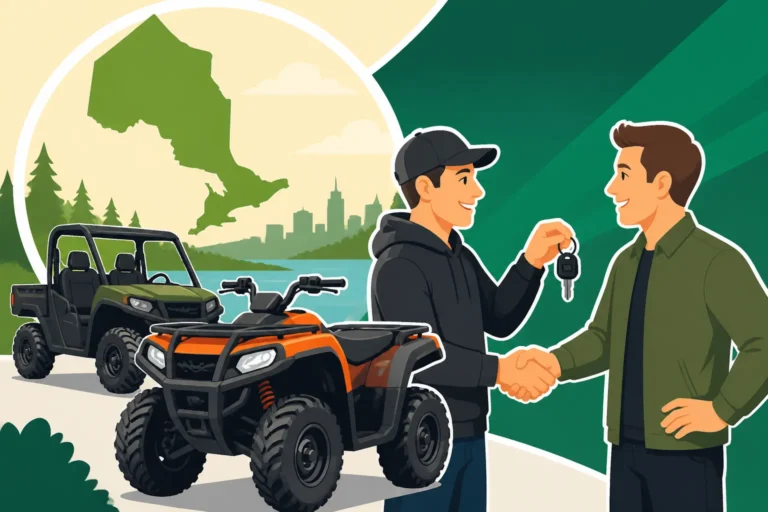
So, you've decided to make Ontario your new home – congratulations! Moving to a new province is a whirlwind of packing, unpacking, and trying to remember where you put the coffee maker. But amidst all that chaos, you might be staring at your beloved ATV or UTV, still sporting its license plate from Manitoba, Quebec, or even further afield, and wondering, "How on earth do I get this thing legally registered here?" It's a common hurdle, and it can feel daunting trying to figure out the local rules when you're still learning your way around. This guide is here to untangle the process for you, walking you through everything you need to know to get your off-road vehicle properly registered in Ontario.
Understanding Ontario's Registration Requirements for New Residents
When you bring your off-road vehicle (ORV) to Ontario from another province, the process isn't exactly the same as buying a brand-new machine here, but it shares many similarities. The key is to understand that Ontario wants your ORV in its system, primarily for identification and to ensure that any future sales are properly tracked.
The "Six Days From Purchase" Rule and How It Applies to You
You might have heard about Ontario's "six days from purchase" rule for registering an ORV. This typically applies when someone buys a machine, whether it's new from a dealer or used from a private seller. However, when you move to Ontario with an ORV you already own, the spirit of this rule still applies: the province expects you to register your machine within a reasonable timeframe of establishing residency. While it's not a "purchase" in the traditional sense, ServiceOntario treats your arrival with an out-of-province machine as an event that triggers the registration requirement.
Think of it this way: the province doesn't want unregistered vehicles floating around indefinitely. The clock essentially starts ticking on your official residency in Ontario. Waiting too long can lead to unnecessary complications or questions if, for example, you get stopped while riding. It's always best to be proactive. Getting your ORV registered quickly ensures you're compliant and ready to hit Ontario's fantastic trails without any worries. You'll find more details on this general requirement in [Ontario's Six-Day Registration Deadline].
Required Documents for Out-of-Province Machines
This is where the rubber meets the road. ServiceOntario needs to confirm a few things: who you are, that you live here now, and that the ORV truly belongs to you. Here's what you'll typically need to bring:
- Proof of Ownership: This is paramount. Ideally, you'll have the original registration or ownership document from your previous province. Some provinces might issue a "title," others a "vehicle permit" or simply a registration certificate. Whatever document officially links you to the machine in your former province is what you need. If you have an original bill of sale from when you first bought the machine, even better. This confirms the chain of ownership.
- Proof of Ontario Residency: This could be your new Ontario driver's license, a utility bill addressed to you at your new Ontario home, or a lease agreement. Something official that shows you are now an Ontario resident.
- Proof of Identity: Your driver's license, passport, or other government-issued ID.
- The ORV itself: While you won't always need to bring the physical machine inside the ServiceOntario centre, they may require a VIN verification, meaning they might need to sight the VIN on the machine itself, or you might have to provide clear photos. It's rare, but be prepared.
Let's imagine you've moved from Quebec. You'd likely have your Quebec ATV registration certificate, possibly an older bill of sale, and your Quebec driver's license (which you'll eventually swap for an Ontario one). Bring all of this. These documents establish your claim to the machine and help the ServiceOntario clerk verify its details. For a deeper dive into what counts as ownership proof, check out [Proving Ownership of an Ontario ATV] and [The Permit Versus a Title in Ontario].
Retail Sales Tax Implications for Relocating ORVs
This is often the part that surprises new residents, and it can be a significant cost if you're not prepared. Ontario charges 13% Retail Sales Tax (RST) on the value of ORVs, and this generally applies even when you move a machine into the province that you already own. Yes, even if you paid sales tax on it in your previous province! Ontario considers this a "first registration" event within its borders, and it wants its share. The tax is calculated on the value of the machine.
However, there's a crucial exemption known as the "settlers relocating to Ontario" exemption. If you are genuinely moving to Ontario to establish permanent residence and you bring your ORV with you for your personal use, you may be exempt from paying the 13% RST again. You'll need to declare that you're relocating and that the vehicle is for your personal use, and you must have owned and registered the ORV in your previous province for a certain period. This exemption is a lifesaver for many, preventing double taxation. Make sure you understand the criteria and are prepared to declare your situation accurately. This is a common point of confusion, and it's worth taking the time to understand it fully. You can read more about this in [Settlers Relocating to Ontario] and [Ontario RST Exemptions for an ATV].
The Step-by-Step Process at ServiceOntario
Registering your out-of-province ORV in Ontario primarily happens at a ServiceOntario centre. It’s not something you can typically do online or by mail, as they need to verify documents and process the transaction in person.
Gathering Your Paperwork Before You Go
Preparation is key to a smooth visit. Before you even think about heading to ServiceOntario, make sure you have everything in order. A checklist can be incredibly helpful:
- Original Ownership Document/Registration Certificate from your previous province.
- Original Bill of Sale (if you have it from when you first purchased the ORV, regardless of where).
- Proof of Ontario Residency (e.g., utility bill, lease agreement, new Ontario driver's license).
- Valid Government-Issued Photo ID (e.g., driver's license, passport).
- Proof of Insurance: While not always required at the moment of registration, it is mandatory to have insurance before you operate the ORV. It’s a good idea to have this sorted out beforehand.
- Method of Payment: For the registration fee and any applicable RST if you don't qualify for an exemption.
If you're missing an older bill of sale or need to create a new one to document the transfer to yourself (though less common when simply moving), a service like LawDepot can provide templates for professional-looking documents. This can be particularly useful if the original paperwork is flimsy or unclear. Ensure that your ORV's Vehicle Identification Number (VIN) is legible on all your documents and matches the actual machine. This will be a critical point of verification. For a comprehensive list of what to bring, refer to [Documents to Bring to the Counter] and [Ontario ATV Registration Paperwork].
Here's a quick reference table for your documents:
| Document Type | What It Is | Why It's Needed | What to Do If Missing (General Advice) |
|---|---|---|---|
| Previous Province Reg. | Your ORV's ownership document from your old province | Proof you owned it there, provides VIN, make, model. | Contact former province's motor vehicle department. |
| Bill of Sale (Original) | Document from when you bought the ORV | Confirms purchase, purchase price, seller, and date. | Provide previous registration; consider a sworn affidavit. |
| Proof of Ontario Residency | Utility bill, lease, Ontario driver's license | Establishes you as a resident of Ontario. | Gather recent mail with your name and new address. |
| Photo ID | Driver's license, passport | Verifies your identity. | Bring other accepted forms of ID. |
| Proof of Insurance | Insurance liability card, policy document | Required for operation on or off-road in Ontario. | Get insured before visiting ServiceOntario. |
What to Expect When You Visit ServiceOntario
Once you have your documents in hand, you'll head to your nearest ServiceOntario centre. You can often book an appointment online, which can save you a lot of waiting time.
When you get to the counter, the clerk will ask for your documents. They'll likely review your previous province's registration and your ID. This is their opportunity to verify the ORV's details (make, model, year, VIN) and ensure that you are the rightful owner. They'll enter your information into the Ontario system. Be prepared for questions about when you moved to Ontario and how long you've owned the machine, especially if you're claiming the "settlers relocating" RST exemption.
The process is generally straightforward for most common ORVs. Unlike cars coming from outside Canada, there isn't typically a mandatory inspection for an ORV moving between Canadian provinces, unless there's an issue with the VIN or other identifying marks that raises a red flag. The ServiceOntario clerk may ask you to confirm the VIN from your documents against the VIN on your actual machine (if you brought it or have clear photos). This is a standard procedure to prevent fraud and ensure accurate record-keeping. The goal is simply to transfer the ownership information from your old province's system into Ontario's. For more details on the process, check out [Registering an ORV at a ServiceOntario Centre].
Receiving Your Ontario ORV Permit and Plate
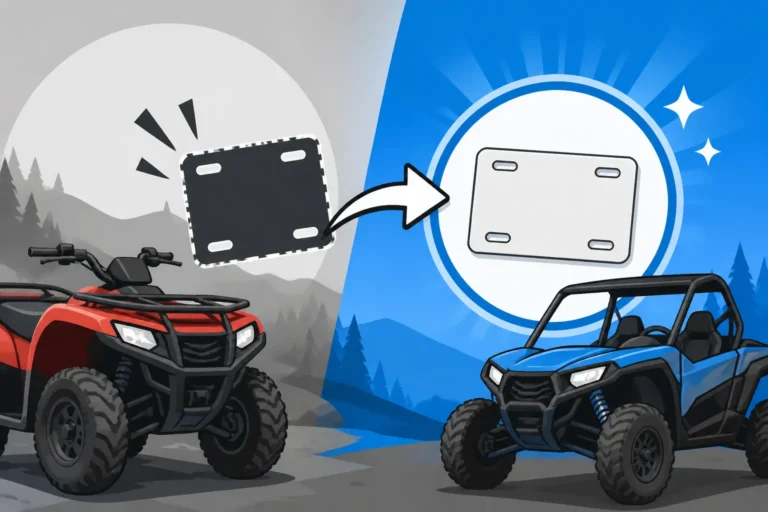
If all your paperwork is in order and you've paid any necessary fees and taxes, the ServiceOntario clerk will issue your new Ontario Off-Road Vehicle Permit and a unique Ontario ORV license plate on the spot.
The permit is a small green or white paper document that serves as your official proof of ownership and registration in Ontario. It will list your name as the owner, the ORV's details, and its unique permit number. This document is incredibly important – it’s essentially the birth certificate for your ORV in Ontario. Always keep it, or a true copy, with you when you're riding. The actual permit itself is explained in more detail in [The Ontario Vehicle Permit Explained].
The license plate will be a standard Ontario ORV plate, usually a smaller, rectangular plate designed for off-road vehicles. The clerk will hand it to you, and it's your responsibility to affix it to your ORV according to provincial regulations. For most quads, this means securely mounting it to the rear of the machine. For three-wheelers, it might go on the front. [Ontario ORV Plates and Where They Mount] provides a good overview of placement rules.
One of the best parts about Ontario ORV registration, especially if you're coming from a province with annual renewals, is this: there is no annual renewal! Once you pay the one-time registration fee and get your plate, it's good for the life of the machine under your ownership. You don't pay again unless you transfer it to a new owner or need a replacement plate. This is a huge relief for many riders! Find out more about this great perk in [No Annual Renewal for an Ontario ORV].
Navigating Potential Hurdles and Special Cases
While the process is generally smooth, sometimes unforeseen circumstances can pop up. Knowing how to handle them can save you a lot of stress.
Dealing with Missing or Incomplete Documentation
What if you moved and somehow lost your old province's registration document or the original bill of sale from years ago? It happens, and it can feel like a major roadblock. Don't panic, but be prepared for a bit more legwork.
Your first step should be to try and obtain a duplicate document from the motor vehicle registry in your previous province. Many provinces can issue a copy of your past registration. If that's not possible or if the records are too old, you might need to prove ownership through other means. This could involve a sworn affidavit (a legal document signed under oath) detailing how and when you acquired the ORV, explaining the missing documents, and confirming your ownership. Services like LawDepot offer templates and guidance for creating legal documents such as affidavits or new bills of sale, which could be helpful in establishing your claim to the machine. You might need to have this notarized, so factor in that extra step and cost. While it's more complicated, ServiceOntario clerks do have procedures for handling these situations; it just requires you to provide as much verifiable information as possible. For more guidance on this specific challenge, consult [Proving You Own a Quad With No Papers].
The VIN Verification Process
The Vehicle Identification Number (VIN) is like your ORV's fingerprint. It's a unique 17-character code that identifies the specific machine. When you register an out-of-province ORV, ServiceOntario will meticulously check the VIN on your documents against what you provide from the machine itself.
If the VIN on your documents doesn't match the ORV, or if the VIN on the machine is corroded, damaged, or otherwise illegible, it will immediately raise a red flag. In such cases, the clerk may not be able to process your registration until the VIN discrepancy is resolved. This could mean needing to have the VIN inspected by a qualified mechanic or even by the police to ensure the machine isn't stolen or illegally modified. Sometimes, they might ask you to bring the machine to a provincial inspection station. It's a rare occurrence for a simple inter-provincial move, but important to be aware of. Before you go, double-check that the VIN on your old registration matches the VIN stamped on your ORV's frame. If you're concerned about a VIN when buying (or moving) a machine, [Ontario ATV VIN Check Before Buying] offers some general advice about its importance.
Insurance Requirements for Ontario ORVs
Here’s a critical point that cannot be overstated: you must have valid insurance for your ORV before you operate it in Ontario, whether on or off-road. While ServiceOntario might not always demand proof of insurance at the exact moment of registration, they can. More importantly, if you ride an uninsured ORV, you face significant fines and penalties.
It's a good idea to contact an insurance broker as soon as you know you're moving to Ontario. They can help you find a policy that covers your ORV for use in this province. Be prepared to provide details about your machine (make, model, year, VIN) and how you plan to use it (e.g., trail riding, farm use). Many general insurance companies or specialized ORV insurers can provide coverage. Having your insurance card ready when you go to ServiceOntario, and always carrying it with you when you ride, is just good practice. Ontario's mandatory insurance rules are covered in detail in [Insurance and Ontario ORV Registration] and [Ontario's Mandatory ORV Insurance].
Costs Associated with Relocating Your ORV
Understanding the financial side of things can help you budget and avoid surprises. There are generally two main costs involved when registering your out-of-province ORV: the one-time registration fee and potential retail sales tax.
The One-Time Registration Fee
This is a straightforward fee that Ontario charges to process your registration and issue your permit and plate. Unlike some other provinces or even other vehicle types in Ontario (like snowmobiles or cars), this is a one-time fee. Once paid, you will not have to pay it again annually. This fee helps cover the administrative costs of the provincial registration system and contributes to the overall management of ORV activities in Ontario. While the exact amount can change, it's a fixed cost per machine. It's one of the benefits of Ontario's ORV registration system. You can learn more about what this fee helps fund in [What Ontario's ORV Fee Pays For].
Potential Retail Sales Tax (RST)
As mentioned earlier, the 13% Ontario Retail Sales Tax (RST) on ORVs is a significant consideration. If you're not eligible for an exemption, you will be required to pay 13% of the declared value of your ORV.
The key here is the "settlers relocating to Ontario" exemption. If you genuinely moved to Ontario and are bringing your personal ORV with you, you should inquire about this exemption at ServiceOntario. You'll need to sign a declaration confirming you've moved to Ontario and that the ORV is for your personal use. Having proof you owned and registered the machine in your previous province (like your old registration document) will be essential to support your claim. It's designed to prevent new residents from being unfairly taxed on an item they already owned and used in another province. This is why thorough documentation from your previous province is so crucial. If you don't qualify for the exemption, the tax will be assessed on the current market value of your ORV. More information on the tax itself can be found in [13 Percent RST on an Ontario ATV] and specific exemptions in [Ontario RST Exemptions for an ATV].
Other Possible Costs
While less common, there might be a few other minor costs depending on your specific situation:
- Affidavit Fees: If you need to prepare a sworn affidavit to prove ownership due to missing documents, there might be a fee for a notary public or commissioner of oaths. Services like LawDepot can provide the template, but the notarization itself is an additional cost.
- Duplicate Document Fees: If you have to pay a fee to your previous province's motor vehicle department to get a copy of your old registration, that's another minor expense.
- Plate Bracket: Your new Ontario plate will need to be securely mounted. If your ORV doesn't have an appropriate bracket or if your old one isn't suitable, you might need to purchase a new one. Details on mounting options are available in [Ontario ATV Plate Bracket Options].
Bringing your ORV to Ontario as a new resident doesn't have to be a headache. By understanding the requirements, gathering your documents, and knowing what to expect at ServiceOntario, you'll have your machine legally registered and ready for all the fantastic riding Ontario has to offer in no time. Welcome to the province, and happy trails!
Disclaimer
This article is for general informational purposes only and does not constitute professional advice. Laws, prices and regulations vary by location and change over time. Consult a qualified professional for guidance on your specific situation.