Three Consecutive Days and No More
A three-day Ontario ATV trail permit can suit a weekend ride, but its short window leaves little room for confusion: the days run consecutively, not whenever you choose to ride. The key is checking which trail system accepts the permit, when its validity begins and ends, and what other requirements still apply to your machine and ride.
What a three-day Ontario trail permit covers
A trail permit is permission to use participating trails under the permit program’s rules. It is not the same as registering your ATV or UTV with the province, and it does not make every road, trail or parcel of land open to riding.
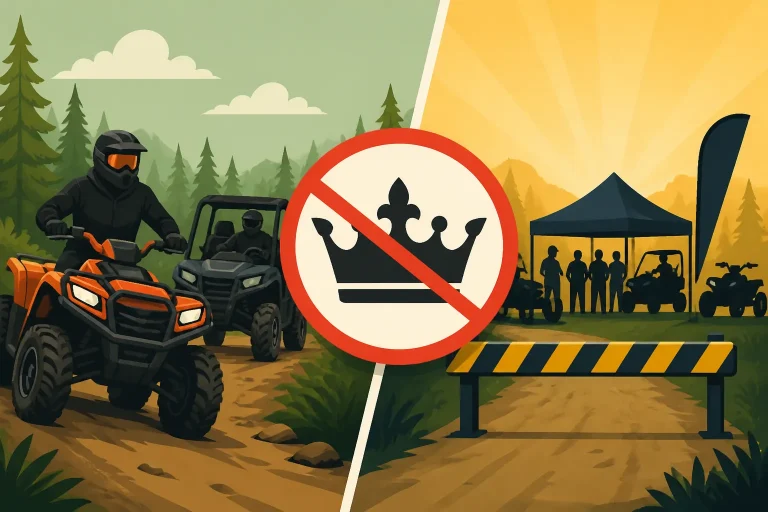
The three-day option is a short-term choice for riders who expect to use eligible trails over a compact period. Its defining limit is the consecutive time window: the days are back-to-back. You cannot use one day now, skip the next, then save the remaining day for later. If your plans include a break or a longer trip, compare the available permit types before buying.
A trail permit also does not replace other obligations. Your machine may need provincial registration, a visible plate, insurance, and any equipment required for the kind of riding you plan to do. A club permit does not authorize riding on a municipal road that is closed to ORVs, and a provincial registration permit is not a trail pass. For the distinction, see Ontario ATV Trail Permits Explained and Registering an ATV in Ontario.
| Your situation | What to check before buying |
|---|---|
| One short weekend on participating club trails | Whether the three-day permit is available and valid for your dates |
| A trip with a rest day in the middle | Whether consecutive validity fits; unused days cannot be saved for later |
| Riding in a particular club area | Whether that club accepts the permit or sells a separate pass |
| Riding between club areas | Whether your permit works in each area along the route |
| Riding public land outside club trails | Whether the land is open to ORVs and whether local restrictions apply |
| Riding a rented or borrowed machine | Who obtains the permit and what proof the operator requires |
The permit’s value depends on where you intend to ride, not just how many days you expect to be out. A short-term permit may be convenient for a defined visit, but it will not necessarily cover a trail network that operates under a separate permit system. Before paying, identify the trail operator for your route and confirm the permit it accepts.
Three days means consecutive days
The practical planning assumption is that the permit covers a continuous three-day period, not three separate ride days. If you plan to ride Saturday and Sunday, that may fit the window. If you plan to ride Saturday, take Sunday off, and ride again the following weekend, a three-day consecutive permit is unlikely to suit the schedule.
Do not assume the validity period begins when you first reach a trail. The purchase or activation process may ask you to select a start date, or it may display a defined validity period. Check the terms shown during purchase and confirm the actual start and expiry dates before completing the transaction. If the start date is unclear, ask the permit seller or relevant trail organization rather than relying on an assumption.
Short-term permits may be offered only during certain sales periods or under specific availability rules. Confirm that the three-day option can be purchased for your planned dates. The availability of a permit type and the rules for using it are separate questions: a pass may be on sale, yet still not be valid for a particular trail or club area.
Check the trail network before you buy
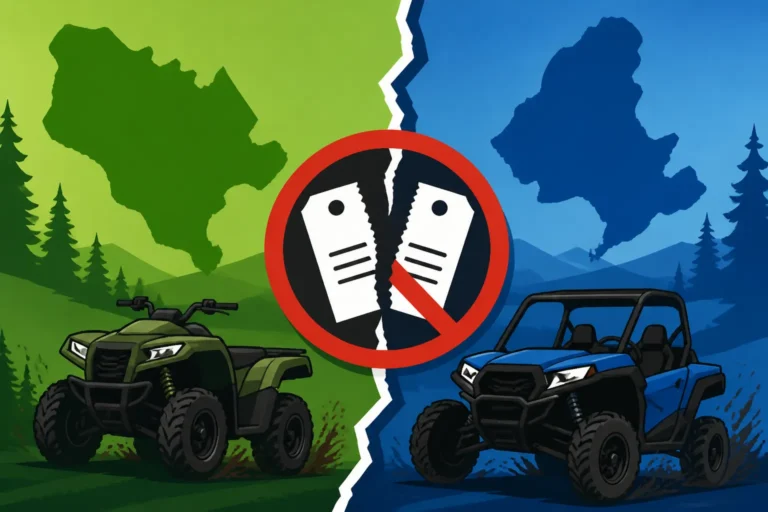
Ontario does not have one universal trail pass that automatically grants access to every organized ATV route. Some trail areas participate in a broader permit network, while other organizations manage their own access and passes. A route can cross from one system into another, so checking only the starting point is not enough.
If you are riding on trails maintained by clubs connected to the Ontario Federation of ATV Clubs, confirm that the pass you are considering is accepted by the club or clubs on your itinerary. For trails operated outside that permit arrangement, check whether a separate pass is required. A map or route description may show a connection between trail areas without meaning that one permit covers both.
Start with a simple route check:
- Mark the trailhead and the full route you expect to ride.
- Identify the club or trail organization responsible for each section.
- Check the permit rules for every organization on the route.
- Confirm that the three-day option is valid in those areas on your planned dates.
- Check for seasonal closures, local restrictions and any required day-use or parking pass.
This matters especially for longer rides that connect several club areas. Does Your Permit Cover the Next Club’s District? explains why crossing a club boundary can affect permit coverage. If your plans include trails managed by the Eastern Ontario Trails Alliance or a Haliburton-area organization, check their separate requirements rather than assuming a general permit is enough. The articles Ontario’s Separate Club Passes, [Why the Eastern Ontario Trails Alliance Sells Its Own Pass] and Why Haliburton Riders Need a HATVA Pass Too cover these distinctions.
A three-day permit also does not by itself establish that a trail is open. Club trails can close because of season, weather, maintenance or other local conditions. Check the trail operator’s current notices shortly before setting out, and again if conditions change during a multi-day trip. The permit grants access only where and when the operator allows riding.
Do not confuse trails with Crown land
Some riders plan to use public land rather than a club trail. Ontario’s Crown land free-use policy is not a substitute for a trail permit, and it does not mean every Crown land road or route is open to ATVs. Land-use restrictions, signs, closures, municipal rules and other requirements can affect access. A permitted route and a legal route are not always the same thing.
Before riding outside an organized trail network, verify the status of the specific land and route. What Free Use Means on Crown Land and Where Crown Land Riding Is Restricted explain why general access language should not be treated as blanket permission. Provincial parks are a separate concern; do not assume a trail permit allows ORV use in a park.
Plan the dates and cost around your actual trip
A three-day permit can be a sensible fit when you have a fixed visit and expect to ride on three consecutive days. It can be a poor fit when the trip is uncertain, the weather may interrupt riding, or you need to spread your outings over a longer period.
Compare the total cost and coverage of the available options for your own itinerary. Do not decide based only on the headline price of one pass. A short-term permit could be economical for a brief ride on a covered network, while a longer-validity pass may be more practical if you expect several trips. If a separate club pass is needed, include that cost too. Prices, sales windows and permit terms can change, so check directly with the relevant permit seller before buying.
| Planning factor | Why it matters |
|---|---|
| Consecutive dates | A three-day window cannot be divided into separate weekends |
| Weather flexibility | A cancelled ride may still use up part of the validity period |
| Trail system coverage | Separate operators may require separate passes |
| Number of machines | Permit terms may depend on the machine, rider or account |
| Sales availability | A short-term option may not be offered for every date or period |
| Other riding costs | Registration, insurance, parking and accommodation are separate from trail access |
A useful comparison is not simply “three days versus a year.” Ask how many days you will actually ride, whether they are consecutive, and which trails you will use. A short-term option is most useful when the answer to all three questions is clear.
If your trip is only two ride days but spans three consecutive calendar days, check the permit’s displayed validity dates. If you intend to ride more than three days, compare the longer-term options before purchasing. The annual permit may make more sense for repeated riding, but its validity and coverage still depend on the terms of the program and the trail systems you plan to visit. See How Long an Ontario Trail Permit Lasts and Ontario ATV Annual Permit Cost for related details, and verify current terms with the permit provider.
Account for every rider and machine
Before buying, check whether the permit is issued for a specific machine, rider, household or other arrangement. Do not assume that one permit can be moved between machines or shared by a group. If more than one ATV or UTV will be on the trail, confirm how the permit rules apply to each machine.
The same check is important when you are visiting with a friend or renting. The machine owner, rental operator or rider may be responsible for obtaining the appropriate pass, depending on the arrangement and the permit’s rules. Ask who will provide proof of coverage before you reach the trailhead. For a visitor riding with a machine owner, Buying a Day Permit for a Friend Visiting Ontario can help clarify the short-term visitor scenario.
Keep the permit proof available in the format accepted by the trail organization. Some programs may require a decal or other display, while others may provide a digital record. Check the specific instructions and do not assume a purchase confirmation alone will satisfy every trail operator. If the seller requires a physical permit display, install or carry it as directed before riding.
What the three-day permit does not replace
A trail permit is only one part of being ready to ride. Registration and trail access serve different purposes. Provincial registration concerns the machine and its permit or plate; a trail pass concerns use of particular organized trails. Neither one automatically supplies the other.
Insurance is another separate requirement. A trail permit does not create an insurance policy, and a registration document is not proof of insurance. Confirm that your policy applies to the machine and the kind of riding planned, and carry proof in the required form. For more, see Ontario ATV Insurance Requirements and Insurance Required Even Off-Road in Ontario.
You also need to follow the rules that apply to the route itself. Road riding is controlled by provincial requirements and municipal bylaws. A road may be open to some ORVs and closed to others, or may have specific restrictions on speed, equipment or operating times. A trail pass does not override those rules. Check Ontario ATV Rules on a Municipal Road if your route uses public roads, and confirm local bylaws for the municipality you will cross.
Other practical checks can prevent a wasted ride:
- Confirm that your machine is eligible for the trail system and that its registration and plate are in order.
- Check the operator’s rules for permit display and proof of purchase.
- Review trail openings and closures for each day of your trip.
- Confirm whether a separate parking or day-use pass is required at the staging area.
- Carry the required registration and insurance documents.
- Make sure every rider understands the route, boundaries and local restrictions.
If an unexpected closure interrupts the trip, do not assume the permit can be extended or transferred. Contact the organization that sold it and ask what its current terms allow. Refunds, date changes or extensions are provider-specific; avoid planning around an exception unless the seller confirms it.
A quick decision process before checkout
Use this sequence before purchasing a three-day pass:
- Write down the actual riding dates. Include the calendar days between the first and last ride, even if you plan to take a day off.
- Map the route. Name the trail areas and organizations responsible for them, rather than relying only on a broad regional label.
- Confirm coverage. Ask each operator whether the three-day permit is accepted on the trails you intend to use.
- Check the validity period. Verify when the permit starts, when it expires, and whether you can choose the start date.
- Compare alternatives. Consider whether a longer-validity permit or separate club pass better matches your trip.
- Check the rest of your requirements. Registration, insurance, road-use rules and parking are not included automatically.
- Save proof and instructions. Keep the confirmation and follow the operator’s directions for displaying or carrying the permit.
If the dates, network and permit terms all line up, the three-day option can be a straightforward way to pay for a short, planned outing. If any of those details are uncertain, pause before checkout. A few minutes spent confirming coverage is easier than arriving at a trail boundary with a pass that does not apply.
The essential rule is simple: treat the three days as one continuous window, and treat trail coverage as specific to the network that accepts the permit. Verify both before you ride. That is the difference between a short-term pass that fits your trip and one that expires before you can use it as intended.
Disclaimer
This article is for general informational purposes only and does not constitute professional advice. Laws, prices and regulations vary by location and change over time. Consult a qualified professional for guidance on your specific situation.