Settlers Relocating to Ontario
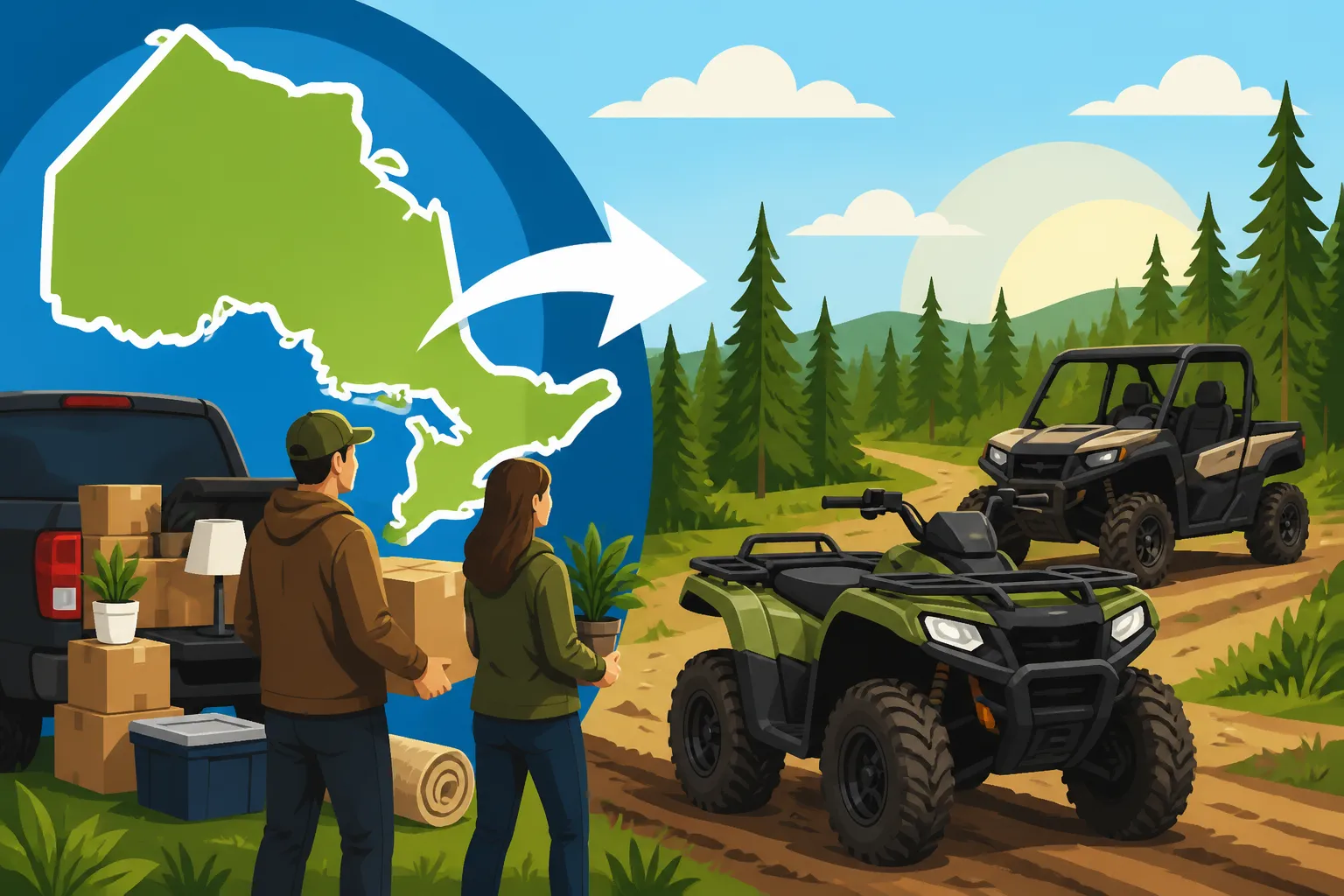
Moving to a new province or even a new country is a huge undertaking, and amidst packing boxes and changing addresses, figuring out how to register your trusty ATV or UTV in your new Ontario home can feel like an unnecessary headache. Many folks arrive assuming their existing paperwork will just transfer over, only to find Ontario has its own unique rules for off-road vehicles. This guide aims to clear up that confusion, walking you through everything you need to know to seamlessly bring your ORV into Ontario's system.
Navigating Ontario's ORV Landscape as a New Resident
Relocating to Ontario means adjusting to a whole new set of rules and regulations, and your off-road vehicle (ORV) is no exception. Whether you've brought your beloved quad from Alberta or your side-by-side from Michigan, the process of getting it legally registered and ready for Ontario trails can feel like navigating a maze. It’s easy to feel overwhelmed, especially when you’re already juggling so many other relocation tasks. You've got enough on your plate without trying to decipher government websites or wait endlessly on hold.
The good news is that while Ontario does have specific requirements, they're manageable once you understand them. The key is to be prepared and gather all the necessary documentation before you head to a ServiceOntario centre. Understanding these initial hurdles can save you a lot of time and frustration down the road.
Initial Hurdles for Out-of-Province Owners
One of the biggest surprises for newcomers is often the sheer difference in how ORVs are registered and titled across various jurisdictions. What might have been a simple registration in your previous province or state could be a more involved process here. For instance, some provinces treat ORVs much like cars with annual renewals and distinct ownership documents, while others have a much looser system. You might be accustomed to a simple sticker or an informal bill of sale, which won't cut it in Ontario.
The primary hurdle often revolves around proving clear ownership and ensuring your machine meets Ontario's definition of an ORV for registration purposes. You'll need to demonstrate not only that you own it, but also that any previous taxes were paid (or that you qualify for an exemption) and that it's not a stolen vehicle. Without the correct paperwork, or if there's any ambiguity in your ownership history, you could face delays or even be turned away.
Why Ontario's System Is Unique
Ontario's ORV registration system operates under the Off-Road Vehicles Act and is notably different from many other provinces and states. For starters, once you register an ORV in Ontario, it’s a one-time registration. There's no annual renewal sticker or fee like you might be used to with a snowmobile or a passenger car. This "register once and you're done" approach is a welcome relief for many riders once they get through the initial setup.
Additionally, Ontario issues an "Ontario Vehicle Permit" for your ORV, which acts as the official ownership document. This isn't a "title" in the same sense that many US states issue, but it serves the same purpose of proving legal ownership. Understanding this distinction is crucial, especially if you're coming from a jurisdiction that uses titles. The permit also includes your ORV plate number, which must be displayed on your machine. For more on this unique system, you can explore [The Permit Versus a Title in Ontario].
Registering Your ORV When Moving From Another Canadian Province
Bringing your ORV from another Canadian province is generally less complicated than importing one from outside the country, but it still requires careful attention to detail. The provincial governments have agreements in place that streamline some aspects, but you still need to prove legal ownership and pay any applicable Retail Sales Tax (RST) in Ontario, unless an exemption applies. It’s a common misconception that because you’ve already paid tax in one province, you won’t owe anything in another, but that’s not always the case.
The key is to approach the process as if you’re "registering a used machine in Ontario," even if you’ve owned it for years. ServiceOntario needs to verify its provenance and bring it into the provincial database. Don't assume anything will automatically transfer; always be prepared to provide robust proof of ownership and the history of the machine.
Understanding the Provincial Transfer Process
When you move to Ontario with an ORV previously registered in another Canadian province, you're essentially performing an "inter-provincial transfer." ServiceOntario needs to confirm that the ORV has a clear history, that you are the rightful owner, and that it hasn't been subject to any liens or outstanding issues in its previous jurisdiction. This often involves providing your old registration documents and, critically, proof of the date you officially became an Ontario resident.
The process typically involves filling out some forms at ServiceOntario, presenting your identification, and providing the necessary documentation for the ORV itself. The goal is to get an [Ontario ORV Plates and Where They Mount] and a new Ontario Vehicle Permit in your name. While the process is fairly standardized, individual ServiceOntario centres might have slightly different ways of handling unique situations, so patience is key.
Necessary Documentation from Your Previous Province
To successfully register your ORV in Ontario after moving from another Canadian province, you’ll need a few key pieces of paperwork. First and foremost, you'll need the original ownership document from your previous province. This might be called a registration, a permit, or a certificate of ownership, depending on where you came from. This document is essential for proving that the ORV was legally registered in your name elsewhere.
You'll also need a valid Bill of Sale if you purchased the machine in your previous province. This helps establish the purchase date and price, which can be relevant for tax purposes. If, by chance, you’ve lost the original bill of sale over the years, you might need to prepare a Statutory Declaration confirming your ownership and how you acquired the machine. This is where resources like LawDepot can be helpful; their platform can assist you in creating legally sound documents like a Bill of Sale or a Statutory Declaration, ensuring you have clear proof of ownership even if your original records are incomplete. Remember to also bring personal identification, such as your Ontario driver's licence or other government-issued ID, and proof of your new Ontario address.
Importing an ORV into Ontario from Outside Canada
Bringing an ORV into Ontario from another country, particularly the United States, adds several layers of complexity due to customs regulations, duties, and differing vehicle standards. This isn't just a matter of changing a plate; it involves official import procedures and ensuring your machine is admissible into Canada before Ontario will even consider registering it. Many riders underestimate the paperwork involved and the potential costs associated with importing a vehicle, leading to frustration at the border or at ServiceOntario.
It’s crucial to understand that the import process needs to be completed thoroughly and correctly before you even think about applying for an Ontario permit. Without proper customs clearance, your ORV cannot be legally registered here. For more specific details, you should consult [Ontario Registration for an Imported Machine].
Customs, Duties, and Import Paperwork
The first and most critical step when importing an ORV into Ontario from outside Canada is navigating the customs process. You'll need to provide documentation to the Canada Border Services Agency (CBSA) at the port of entry. This typically includes the original title or certificate of origin, a bill of sale, and any recall clearance letters if applicable (especially for US-made vehicles). Be prepared to pay any applicable duties, excise taxes, and the federal Goods and Services Tax (GST) at the border. The exact amounts will depend on the ORV's value and where it was manufactured.
It's highly recommended to research the specific requirements of the Registrar of Imported Vehicles (RIV) program well in advance of your move, as some vehicles may require modifications to meet Canadian safety standards. You might also need specific [Customs Paperwork for an Imported Machine] to ensure a smooth transition. Failing to complete the import process correctly can result in significant delays, fines, or even the refusal of your ORV’s entry into the country.
Meeting Ontario's Standards for Registration
Once your ORV has successfully cleared Canadian customs and any RIV requirements, you then face the provincial hurdles of meeting Ontario's registration standards. ServiceOntario will look at the vehicle's documentation to ensure it's suitable for an Ontario permit. This includes verifying the Vehicle Identification Number (VIN) and ensuring it’s not on any stolen vehicle registries. For older or modified machines, you might face additional scrutiny.
While there aren't specific "safety inspections" required for ORV registration in Ontario in the same way there are for some passenger vehicles, the ORV must generally be considered a standard off-road vehicle as defined by the Off-Road Vehicles Act. If your imported machine is highly customized or falls into a grey area of classification, you might need to provide additional information to ServiceOntario to ensure it can be registered as an ATV, UTV, or off-road motorcycle.
The ServiceOntario Visit: What to Bring and Expect
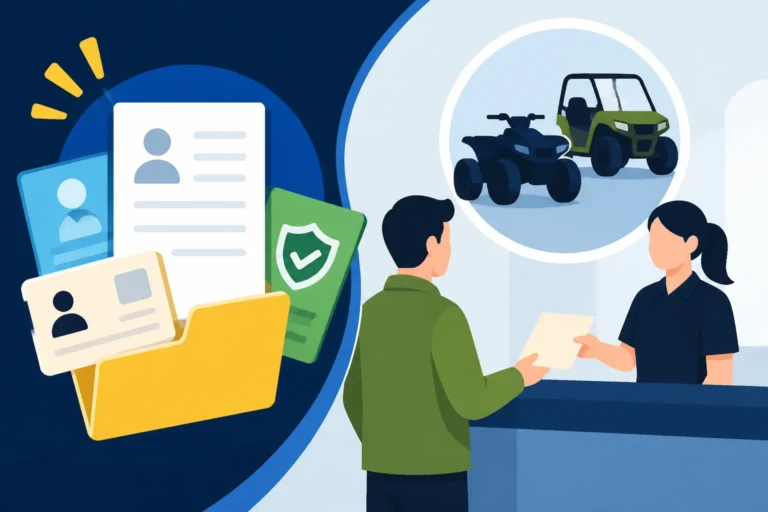
After gathering all your documents and understanding the specific requirements for your situation, the next step is a visit to a ServiceOntario centre. This can be a bit daunting, as you want to ensure you have everything in order to avoid multiple trips. The key to a smooth visit is thorough preparation. Remember, the staff at ServiceOntario are there to process your request based on clear documentation, so making their job easier makes your experience faster.
It's always a good idea to call ahead or check the ServiceOntario website for specific requirements or to book an appointment, especially if you anticipate a complex situation. Don't be shy about asking questions beforehand; it's better to clarify things than to show up unprepared. For a comprehensive overview, see [Ontario ATV Registration Paperwork].
Essential Documents for Any Relocation Scenario
Regardless of whether your ORV is coming from another province or another country, there's a core set of documents you'll need to present at ServiceOntario. First, you'll need personal identification, such as your valid Ontario driver's licence or another form of government-issued photo ID. You'll also need proof of your Ontario residency, like a utility bill or bank statement. These prove you are officially a resident of the province and eligible to register an ORV here.
For the ORV itself, you must have the original ownership document from the previous jurisdiction (e.g., provincial registration, US title). A valid bill of sale, establishing your purchase and the price paid, is also critical. If you've imported the machine, you'll need your CBSA import documentation showing that all duties and taxes were paid and that it cleared customs. Bringing copies of everything, in addition to the originals, is a good habit.
Proving Ownership When Original Papers Are Missing
Life happens, and sometimes original ownership documents or bills of sale get lost over time. This can be a major source of stress for new Ontario residents trying to register their ORV. If you find yourself in this situation, don't despair, but be prepared for a more involved process. ServiceOntario needs absolute proof of ownership to issue a new permit in your name. For additional help, refer to [Proving Ownership of an Ontario ATV].
In cases where the original bill of sale is missing, you may be able to use a sworn Statutory Declaration (also known as an affidavit) to attest to your ownership, how and when you acquired the vehicle, and why the original document is unavailable. This formal legal document, which you can easily prepare using platforms like LawDepot, states under oath that you are the rightful owner. It will need to be signed in front of a Commissioner of Oaths or Notary Public. ServiceOntario will also likely perform a VIN check to ensure the ORV isn't stolen and has no outstanding liens. This process can take longer, so factor that into your timeline.
What Happens at the Counter
When you arrive at the ServiceOntario counter with all your carefully prepared documents, a clerk will review them. They will verify your identity and residency, inspect the ORV's previous ownership papers, and enter the details into their system. They'll also check the VIN against provincial and national databases to ensure there are no red flags. This is the point where they'll confirm if any Retail Sales Tax is due.
Assuming everything is in order, they will process your application, collect any applicable fees (which for an ORV registration is a one-time charge), and then issue you a new [The Ontario Vehicle Permit Explained] along with your Ontario ORV licence plate. The entire process, if all documents are present and correct, can be surprisingly quick. If there are any discrepancies or missing documents, they will inform you of what further steps are needed.
Retail Sales Tax (RST) for Relocating ORV Owners
One of the most common sources of confusion and frustration for people relocating to Ontario with their ORV is the Retail Sales Tax (RST). Many assume that because they paid sales tax in their previous province or country, they won't owe it again in Ontario. Unfortunately, that's not always the case, and the rules around this can be quite specific. Ontario's RST on ORVs is 13%, and it's generally applied to the purchase price, or the ORV's depreciated value if the purchase price is deemed too low.
However, there are specific exemptions for people moving into the province, and understanding these can save you a significant amount of money and prevent an unpleasant surprise at ServiceOntario. It’s definitely worth doing your homework on this one. You can find more details in [Ontario RST When You Move to the Province].
The "Settlers Relocating to Ontario" Exemption
Good news for those moving here: Ontario does offer a "Settlers Exemption" for Retail Sales Tax on vehicles, including ORVs, brought into the province by individuals establishing residency here. To qualify for this exemption, you generally need to meet specific criteria. The ORV must have been owned by you for at least 30 days prior to your move to Ontario, and it must be for your personal use, not for resale. This exemption is designed to avoid double taxation on possessions you genuinely owned and used before becoming an Ontario resident.
You'll typically need to declare that you are a new resident and that you meet these criteria at the ServiceOntario counter. Having proof of your previous residency and the date you established ownership of the ORV (like the original registration from your former province/country and a dated bill of sale) is crucial to demonstrate your eligibility for this exemption.
When You Might Still Owe RST
While the "Settlers Exemption" is a fantastic benefit, there are situations where you might still owe Ontario's 13% RST. The most common scenario is if you owned the ORV for less than 30 days before moving to Ontario. In such a case, the province might view it as a recent acquisition rather than a long-held personal possession being brought into the province, and thus the RST would apply to the purchase price you paid.
Another instance where RST could be levied is if ServiceOntario deems the declared purchase price (if you recently bought it) to be significantly below fair market value, and you don't qualify for a specific exemption like a family gift or inheritance. They have mechanisms to assess the value of an ORV, even if there's no official "Red Book" value for off-road vehicles. Always be transparent and prepared to explain any unusual circumstances related to your ORV's acquisition or transfer.
Beyond Registration: Your Ontario Permit and Plate
Once you've navigated the paperwork, paid any necessary taxes, and successfully registered your ORV, you'll walk out of ServiceOntario with your new Ontario Vehicle Permit and a shiny new licence plate. This is the culmination of the relocation process for your machine, but it's not quite the end of your responsibilities. Understanding what these new documents mean and how Ontario's system works post-registration is vital for legal and enjoyable riding.
This one-time registration is a blessing, but it also means there are no annual reminders to renew, so you need to be aware of what is expected of you as an Ontario ORV owner. For details on what happens next, consult [No Annual Renewal for an Ontario ORV].
Receiving Your Ontario ORV Permit and Plate
The Ontario Vehicle Permit is your official proof of ownership for your ORV. It contains crucial information about your machine, including its make, model, VIN, and most importantly, your new Ontario licence plate number. You must carry this permit, or a true copy of it, whenever you are operating your ORV off your own property. It's often recommended to keep the original in a safe, dry place at home and carry a laminated photocopy on your rides to protect the original from wear and tear or loss. For more information on your new permit, check out [Reading an Ontario ORV Permit].
Your new Ontario ORV licence plate will be issued directly at the ServiceOntario centre. It's a standard-sized plate that needs to be securely mounted on your ORV, typically on the rear for quads and side-by-sides. Make sure it's visible and clean, as mud-covered or obscured plates can attract the attention of law enforcement.
| Scenario | Key Documentation Needed at ServiceOntario | Retail Sales Tax (RST) Implications |
|---|---|---|
| From Another Canadian Province | Previous province's ownership/registration, Bill of Sale (if recent), Proof of Ontario residency, Personal ID. | Settlers Exemption likely applies if owned >30 days before move. Otherwise, 13% RST on declared value. |
| From Outside Canada (e.g., USA) | Original title/certificate of origin, Bill of Sale, CBSA Import Documents (proof of duties/taxes paid), Proof of Ontario residency, Personal ID. | Settlers Exemption likely applies if owned >30 days before move AND all import duties/taxes were already paid. If not, 13% RST may apply. |
| Missing Bill of Sale | Previous ownership/registration, Statutory Declaration (LawDepot can help), Proof of Ontario residency, Personal ID. | Same as above, but ServiceOntario may assess current value for RST if no clear purchase price can be established. |
Understanding Ongoing Requirements (or Lack Thereof)
As mentioned, Ontario's ORV registration is a one-time deal. This means you won't receive annual renewal notices, and there are no yearly fees to keep your registration current. This is a significant advantage, but it also means you need to take personal responsibility for keeping your permit updated if your address or name changes. While the registration itself doesn't expire, the permit information should always reflect your current details.
Beyond registration, remember that all ORVs operated off private property in Ontario require mandatory insurance. This isn't handled at ServiceOntario; you'll need to secure an appropriate policy from an insurance provider. Furthermore, while your ORV is now registered, you still need to adhere to all the rules of the road (if riding where permitted), trail rules (if riding on club trails), and general operating regulations, including minimum age requirements and helmet laws. Getting your ORV properly registered is just the first step to enjoying the vast network of Ontario's trails. Lastly, remember that should you ever need other legal documents for personal or property matters, general legal document providers like LawDepot can be a valuable resource for various templates and forms beyond just ORV-related needs.
Disclaimer
This article is for general informational purposes only and does not constitute professional advice. Laws, prices and regulations vary by location and change over time. Consult a qualified professional for guidance on your specific situation.