Ontario ATV Tax on an Estate Transfer
Navigating the loss of a loved one is an incredibly difficult journey, and when you add the layer of dealing with their estate, especially beloved possessions like an ATV or UTV, it can feel overwhelming. Many people inherit an off-road vehicle in Ontario and immediately worry about what taxes they'll be on the hook for, fearing a hefty Retail Sales Tax (RST) bill on top of their grief. This guide is here to walk you through the specific tax rules and registration process in Ontario when an ATV or UTV is transferred as part of an estate, helping you understand how to manage this often-misunderstood situation.
Understanding Estate Transfers for ATVs and UTVs in Ontario
When someone passes away, their assets, including their ATV or UTV, become part of their estate. This estate then needs to be administered according to their will, or if there's no will, according to Ontario's laws of intestacy. It's a process that often feels complicated, but breaking it down can help alleviate some of the stress.
What Constitutes an Estate Transfer?
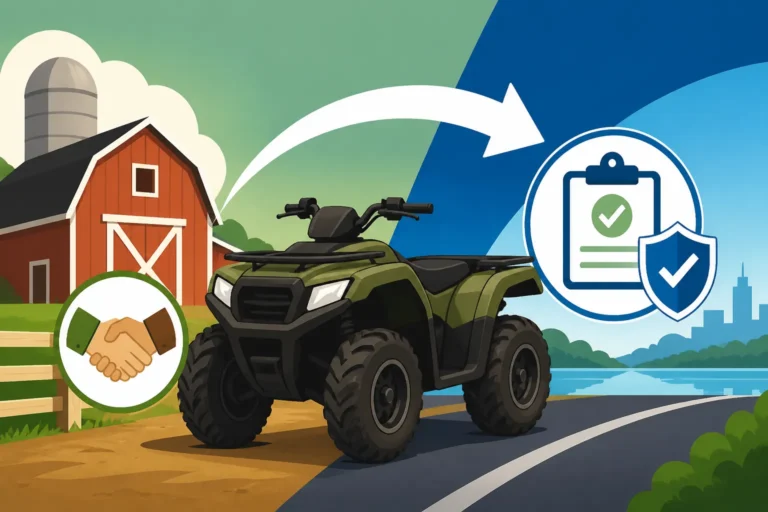
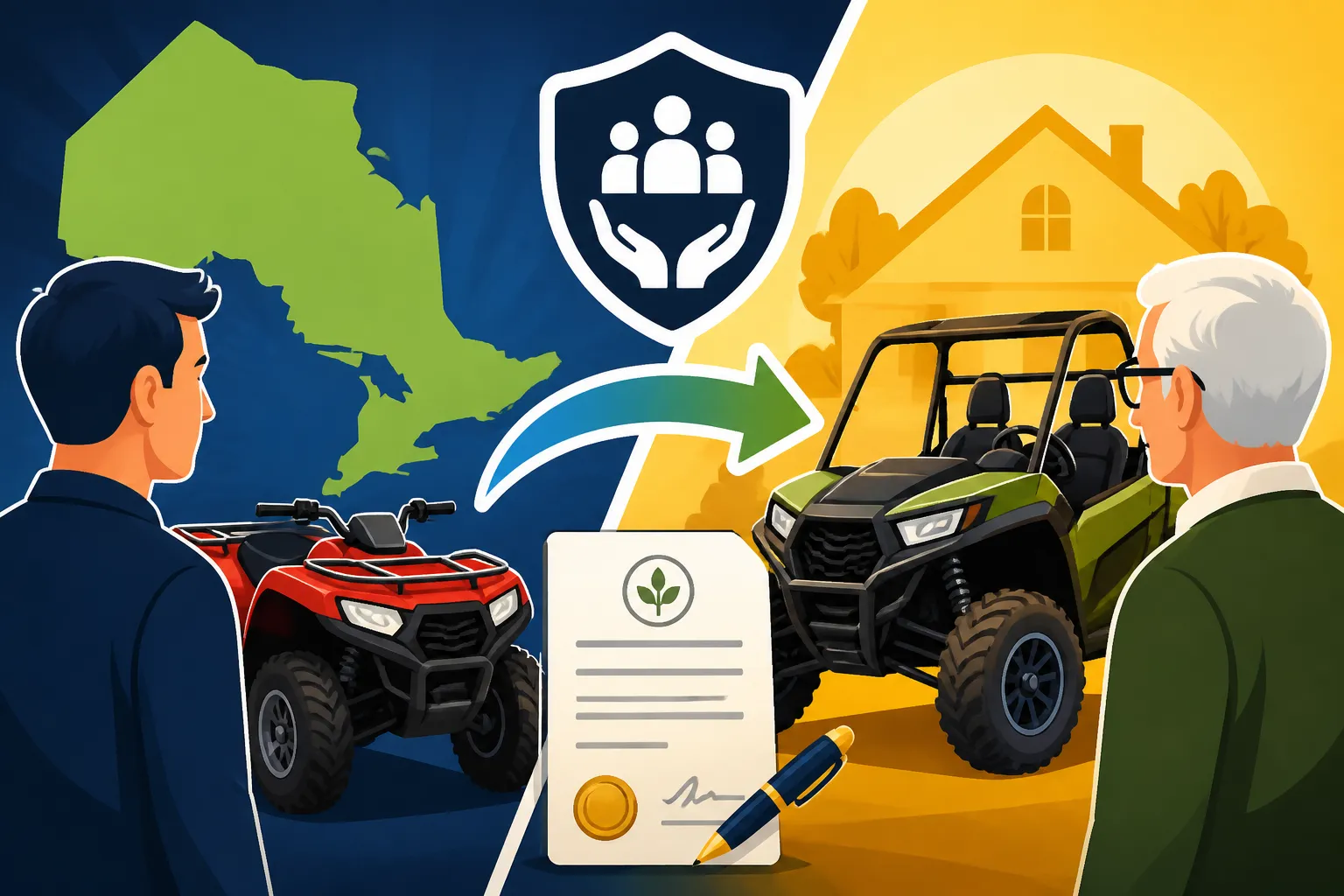
An estate transfer specifically refers to the legal movement of assets from the deceased person's estate to their beneficiaries. For an ATV or UTV, this means the machine is officially changing hands from the name of the person who passed away to the person or people inheriting it. This isn't like a regular sale where money changes hands, which is a crucial distinction when it comes to tax implications. The transfer is a consequence of death, not a commercial transaction.
If the deceased left a valid will, it will typically name an executor who is responsible for carrying out the instructions outlined in the will. The will specifies who inherits the ATV. If there's no will, the situation is called intestacy, and Ontario's Succession Law Reform Act dictates how the estate, including the ATV, is distributed among surviving family members. In such cases, a court will appoint an estate administrator to manage the distribution, which adds another layer of paperwork and time to the process. Whether there's a will or not, the underlying principle for the ATV's transfer remains: it's moving due to a death, not a purchase.
The Role of the Estate Executor or Administrator
The executor (if there's a will) or administrator (if there's no will) plays a pivotal role in this entire process. They are legally responsible for identifying all assets, settling any debts, and distributing the remaining assets according to the will or the law. For an ATV, this means they will be the one gathering the necessary documentation, making declarations, and facilitating the transfer of ownership at ServiceOntario. This is a significant responsibility that requires meticulous attention to detail and a clear understanding of legal requirements.
They need to ensure that the ATV is accounted for within the estate and that its transfer aligns with the deceased's wishes or legal statutes. This includes safeguarding the vehicle, obtaining valuations if necessary, and ultimately, preparing it for its new owner. Without a properly appointed executor or administrator, the transfer of ownership can hit significant roadblocks, delaying the ability of the beneficiary to legally register and ride the machine. They often act as the primary point of contact for ServiceOntario and other administrative bodies during this sensitive time.
Retail Sales Tax (RST) and Estate Transfers: The Exemption You Need to Know
One of the biggest concerns for anyone inheriting an ATV or UTV in Ontario is the potential tax burden. Thankfully, Ontario has a specific exemption designed to ease this load during a difficult time. Understanding this exemption is key to a smooth and tax-free transfer.
Ontario's Estate Transfer Exemption Explained
Good news for those inheriting an off-road vehicle: Ontario offers a specific exemption from Retail Sales Tax (RST) when an ATV or UTV is transferred as part of an estate. This means that if you are inheriting an ATV directly from a deceased person's estate, you generally won't have to pay the 13 percent RST that typically applies to private sales of used vehicles. This is a significant relief, as the RST can be a substantial amount, especially on newer or higher-value machines. The province recognizes that these transfers are not commercial transactions aimed at profit, but rather a necessary part of settling an estate.
This exemption is in place to prevent beneficiaries from being financially burdened during a period of grief. It ensures that the transfer of a personal possession from the deceased to their rightful heir isn't treated the same way as buying a used ATV from a stranger. It's an empathetic approach to a sensitive situation, acknowledging the unique circumstances surrounding an estate transfer. Without this exemption, families would face an additional financial strain at a time when they are already dealing with numerous other responsibilities. You can learn more about this specific relief in our guide on [Ontario's Estate Transfer Exemption].
How to Claim the Exemption
To successfully claim the estate transfer exemption, you'll need to present specific documentation and make a declaration at a ServiceOntario centre. The key is to prove to ServiceOntario that the transfer is genuinely part of an estate settlement and not a disguised sale. Generally, you will need:
- The original [The Ontario Vehicle Permit Explained] in the deceased's name. This is the official ownership document for the ATV or UTV.
- A copy of the death certificate of the deceased owner.
- A copy of the will, if one exists, clearly identifying the beneficiary of the ATV or demonstrating that the executor has the authority to transfer it.
- Letters of Probate or Letters of Administration (if a will exists and is being probated, or if there's no will). These are court documents that officially appoint the executor or administrator and grant them the legal authority to deal with the estate's assets.
- A sworn affidavit or declaration from the executor or administrator, confirming that the transfer is from the estate to the named beneficiary. Sometimes ServiceOntario may have a specific form for this, or you might need a general statutory declaration. Online legal document resources like LawDepot can sometimes provide templates for general affidavits, which you could adapt with legal counsel for specific needs.
When you visit ServiceOntario, you, as the beneficiary, or the executor/administrator on your behalf, will need to complete the transfer paperwork. On the transfer form, there will be a section to declare the reason for the transfer, and you will select the "Estate Transfer" or similar option. Be prepared for ServiceOntario staff to ask for details and review your documents thoroughly to ensure compliance with the exemption requirements. They are trained to scrutinize these transfers to prevent fraudulent claims of exemption for what are truly private sales. Missing even one piece of documentation can lead to delays or, in some cases, the denial of the exemption, forcing you to pay the RST. So, it's crucial to gather everything meticulously before your visit.
The Practical Steps to Registering an Inherited ATV or UTV
Once you understand the tax exemption, the next step is the practical one: getting the ATV or UTV officially registered in the new owner's name. This involves a visit to ServiceOntario and having all your ducks in a row.
Gathering the Necessary Documentation
As mentioned, documentation is paramount for an estate transfer. Beyond the will or letters of administration and the death certificate, the original Ontario Vehicle Permit (the ownership paper) for the ATV or UTV is absolutely non-negotiable. Without it, the process becomes significantly more complicated, potentially requiring statutory declarations or other proofs of ownership. If the permit is lost, the executor or administrator would likely need to apply for a replacement first, which adds time and steps. We cover more on general documentation in [Ontario ATV Registration Paperwork].
If the ATV was jointly owned, the situation can be slightly different. If the joint ownership included "right of survivorship" (common between spouses), the ATV would automatically pass to the surviving owner, simplifying the estate process for that asset. However, you'd still need to update the permit to reflect the single owner status. In all cases, having clear, original documents or certified true copies will make your ServiceOntario visit much smoother. Any ambiguity in the paperwork can lead to frustrating delays, requiring multiple trips or additional legal steps.
The ServiceOntario Visit
With all your documents meticulously gathered, the next step is a trip to your local ServiceOntario centre. It’s always a good idea to bring all original documents, even if you have copies, as they may need to verify them on the spot. Both the executor/administrator (if they are handling the transfer) and the beneficiary (the person who will be the new registered owner) should ideally attend, or at least the beneficiary with proper documentation from the executor. You’ll be filling out specific forms to transfer the vehicle permit. The ServiceOntario staff will guide you through this process, but having your documents organized and ready will speed things up considerably. You can find more general guidance on the process in [Registering an ORV at a ServiceOntario Centre].
When filling out the transfer section of the Ontario Vehicle Permit, ensure the section for "Transfer of Ownership" is completed accurately, with the executor/administrator signing as the "seller" (representing the estate) and the beneficiary signing as the "purchaser" (even though no money is exchanged). Crucially, you will need to clearly indicate that this is an estate transfer to claim the RST exemption. The staff will process the new permit, which will then be issued in the beneficiary's name. This is also the time when the new owner will typically pay the provincial fee for the [Ontario ATV Permit Cost] and any associated plate costs, as these administrative fees are separate from the Retail Sales Tax. Remember, it's not just about transferring ownership, but also ensuring the vehicle is properly registered to the person who will be enjoying it next.
Here’s a quick comparison of documents for typical private sales versus estate transfers:
| Document/Requirement | Standard Private Sale | Estate Transfer |
|---|---|---|
| Ontario Vehicle Permit | Original, signed by seller & buyer | Original, signed by executor/administrator & beneficiary |
| Bill of Sale | Required, signed by seller & buyer | Not typically required if clear will/probate exists; estate declaration may suffice |
| Proof of Identity | Both seller & buyer | Executor/administrator & beneficiary |
| Retail Sales Tax (RST) | 13% of purchase price or wholesale value (whichever is greater) | Exempt (if qualifying as estate transfer) |
| Death Certificate | Not applicable | Required (copy) |
| Will / Probate / Admin | Not applicable | Required (copy of will, or Letters of Probate/Administration) |
| Insurance Proof | Buyer needs before registering | Beneficiary needs before registering and riding |
| Fee for New Permit | Yes, standard fee | Yes, standard fee |
| Declaration for Exemption | Not applicable | Yes, statutory declaration or ServiceOntario form |
Common Challenges and Important Considerations
Even with the exemption in place, estate transfers can present unique challenges. Being aware of these potential hurdles can help you prepare and ensure a smoother process.
Dealing with Lost Documentation
One of the most common frustrations when dealing with an estate is missing paperwork. If the deceased's original [The Ontario Vehicle Permit Explained] for the ATV or UTV cannot be found, the process becomes more complex. The executor or administrator will likely need to apply for a "duplicate" or "replacement" permit before the transfer can occur. This requires proving their authority and the previous ownership, which can involve more declarations or a wait time. Similarly, if the will is missing or was never made, obtaining Letters of Administration from the court can be a lengthy process, as it involves proving kinship and sometimes public notices.
In these situations, it's essential to meticulously document every step and be prepared for potential delays. Statutory declarations, often required when original documents are unavailable, are serious legal statements and must be prepared accurately. For instances where you need to draft specific legal documents, like an affidavit confirming the circumstances of a lost permit, resources like LawDepot can provide templates that, with the guidance of a legal professional, can assist in creating the necessary paperwork. Always remember that ServiceOntario needs clear proof of ownership and the legal right to transfer.
When the ATV or UTV is Part of a Larger Estate
Sometimes, an ATV is just one small piece of a much larger estate that might include real estate, investments, and other vehicles. In these scenarios, the transfer of the ATV might be contingent on other aspects of the estate being settled, or there might be multiple beneficiaries. For example, if the will dictates that the estate's value is to be divided equally among several heirs, and the ATV is a significant asset, its value might need to be assessed, or other assets might need to be liquidated to ensure fair distribution.
If the ATV is to be sold from the estate to a third party (who is not a direct beneficiary), then the estate transfer exemption for RST would not apply to that subsequent sale. In that case, the purchaser would pay RST as per a regular private sale. It's crucial for the executor to understand these nuances to avoid inadvertently creating tax liabilities for the estate or the buyers. This is why having legal counsel oversee the estate administration, especially for complex estates, is highly advisable. They can ensure all assets, including the ATV, are handled correctly and legally, often preventing future complications.
Importance of Accurate Paperwork and Legal Advice
Given the legal complexities and potential tax implications, even with an exemption, maintaining accurate paperwork and seeking legal advice when needed is incredibly important. Errors or omissions in documentation can lead to significant delays, administrative headaches, or even unintended tax bills. For instance, if the transfer isn't clearly declared as an estate transfer, ServiceOntario might automatically apply the RST, which would then require a lengthy refund process.
While this guide aims to clarify the process, every estate is unique. Factors like joint ownership, disputes among beneficiaries, or specific clauses in a will can all impact how an ATV is transferred. Consulting with an estate lawyer or a qualified legal professional, especially for more complicated estates, can provide invaluable guidance, ensuring that all legal requirements are met and that the transfer proceeds as smoothly as possible. They can help draft any necessary statutory declarations, interpret complex wills, or navigate potential disagreements. Remember, the goal is to honour the deceased's wishes and properly transfer the ATV to its new owner without unnecessary stress or financial burden.
Disclaimer
This article is for general informational purposes only and does not constitute professional advice. Laws, prices and regulations vary by location and change over time. Consult a qualified professional for guidance on your specific situation.