Ontario ATV Plate Placement Rules
One of the most common headaches for new and seasoned ATV and UTV owners in Ontario is figuring out exactly where that little piece of metal, your licence plate, is supposed to go. It might seem like a small detail, but getting it wrong can lead to frustrating conversations with law enforcement, fines, and even a spoiled day on the trails. This guide will cut through the confusion and walk you through the precise rules and practical considerations for mounting your ORV plate correctly in Ontario.
The Core Rules for Plate Display in Ontario
Navigating the regulations for off-road vehicles (ORVs) in Ontario can feel like deciphering ancient scrolls sometimes. When it comes to your licence plate, the rules are thankfully pretty straightforward, but there are nuances that can trip up even experienced riders. Let’s dive into what the law actually says and what it means for your specific machine.
Understanding the Off-Road Vehicles Act (ORVA) Requirements
The Off-Road Vehicles Act (ORVA) is the backbone of ORV regulation here in Ontario, and it’s the primary source for understanding plate display. While you won't find a paragraph that says "thou shalt mount thy plate exactly 3.7 inches from the left fender," the Act and its associated regulations clearly dictate where the plate must be affixed and how it must be displayed.
Essentially, the law requires your ORV plate to be "firmly attached" and "exposed to plain view." This means no hiding it under a fender flare, no tucking it behind a muddy tire, and definitely no carrying it in your backpack. The purpose of the plate is identification, and if it can't be seen and read by an officer or another trail user, it's not fulfilling its purpose. For most ORVs, the Act specifies the rear of the vehicle as the primary location for display. This makes sense from a practical standpoint – when you're riding, you're usually being followed, and the rear is the most logical place for identification. Neglecting these basic principles can lead to unwanted attention, so always err on the side of visibility.
Specifics for ATVs (Quads)
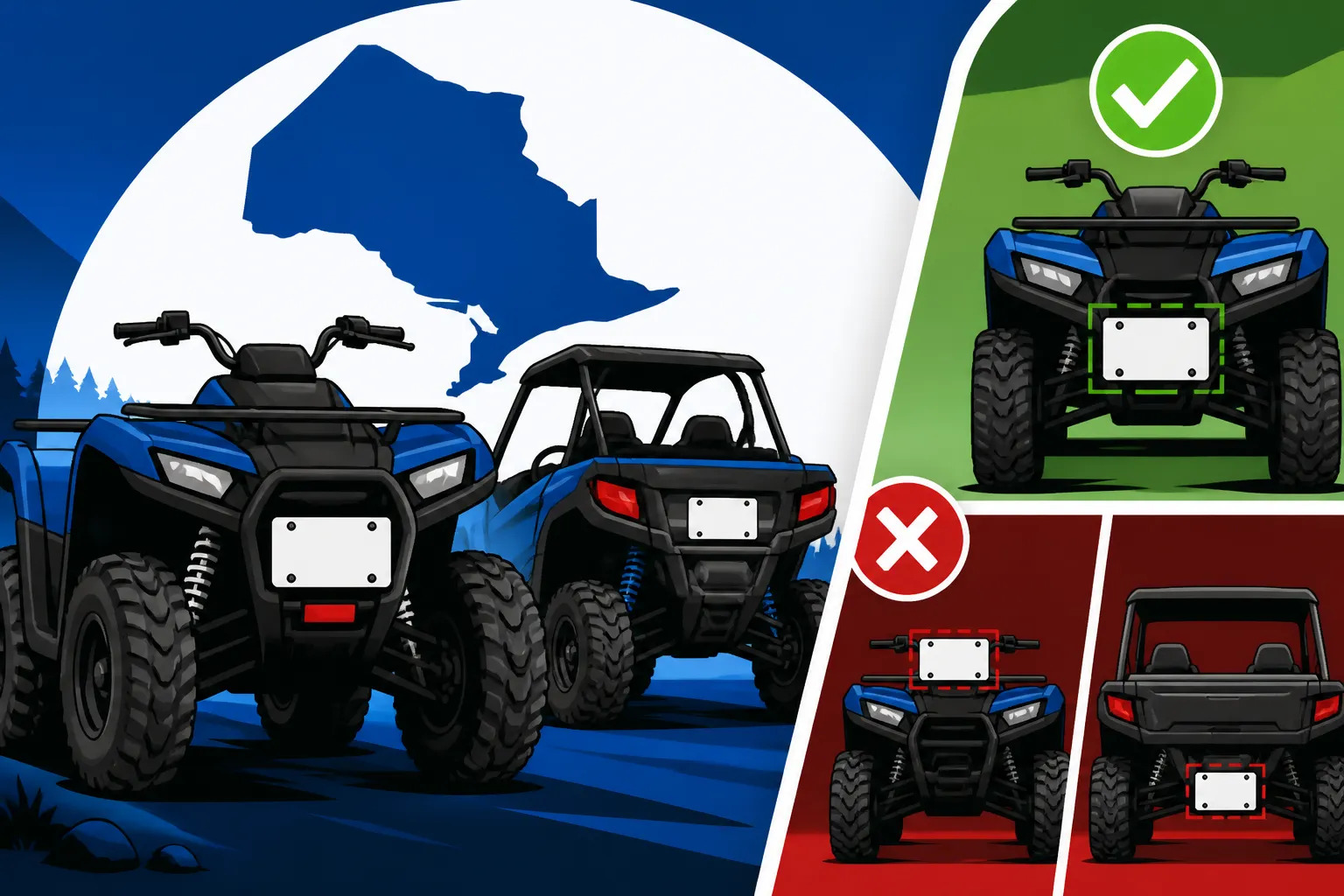
For the vast majority of four-wheeled ATVs, or "quads" as we often call them, the rule is crystal clear: the plate goes on the rear of the machine. This has been the standard for as long as most of us can remember, and for good reason. The rear rack, fender, or bumper typically offers a flat, stable surface where the plate can be securely mounted.
When you think about it, mounting it on the rear makes perfect sense. Imagine riding down a trail – anyone behind you, whether it's another rider, a park warden, or an enforcement officer, needs to be able to see your plate clearly. A plate on the front would often be obscured by the handlebars, the rider's body, or even just the geometry of the machine itself. The rear offers the best chance for unobstructed visibility. Furthermore, mounting it securely is key. These machines vibrate, bounce, and get jostled around constantly. A flimsy mount on the rear can quickly turn into a lost plate, which is a whole other headache. Remember that an ORV plate isn't just decoration; it's your machine's official identity, tied directly to your [Ontario Vehicle Permit Explained] and your registration. For a deeper dive into the exact placement for these machines, check out [Ontario Plates on the Rear of a Quad].
Specifics for UTVs (Side-by-Sides) and Off-Road Motorcycles
UTVs, or side-by-sides, have become incredibly popular, and thankfully, their plate placement generally mirrors that of quads. For a UTV, the licence plate also needs to be displayed prominently on the rear. Most side-by-sides come with a dedicated flat area on the rear bumper, tailgate, or frame specifically designed for a licence plate. This makes mounting relatively straightforward. Given the larger size and often enclosed cabins of UTVs, placing the plate anywhere else would likely obscure it even more than on an ATV.
Off-road motorcycles, commonly known as dirt bikes, also follow the rear-placement rule. Their plates are typically mounted on the rear fender, positioned to be visible from behind. The challenge with dirt bikes can be the smaller fender space and the potential for the plate to get covered in mud or bent during aggressive riding. Riders often use specific fender-mounted plate holders that offer a bit more protection and keep the plate angled for optimal visibility, even after a bit of a mud bath. It's always a good idea to ensure your plate isn't too close to the exhaust pipe where it could get discoloured or damaged by heat, or in a spot where it might be easily snagged by branches or debris. The overarching principle remains: rear, secure, and clearly visible.
Common Scenarios and Placement Challenges
While the basic rules seem simple enough, the real world of ORV riding throws a lot of curveballs. Different machine designs, aftermarket accessories, and historical oddities can make plate placement a bit more complicated than just bolting it on. Let’s tackle some of these common challenges.
Single-Rider ATVs vs. Two-Up Models
When you’re riding a standard single-rider ATV, the rear plate often has a clear, unobstructed path. The rear fender or rack is usually bare, providing an ideal mounting spot. However, when you introduce a two-up ATV, designed to comfortably carry a driver and a passenger, things can get a little tricky. The extended seat for the passenger can sometimes overlap or sit very close to the traditional plate mounting area.
The key here is visibility. If your passenger's legs, body, or any part of the extended seat obscures the licence plate, you're in violation of the rules. Many two-up ATVs have a factory-designated spot that takes the extended seating into account, often lower on the rear fender or on a dedicated bracket below the passenger seat. If your specific model doesn't, you might need an aftermarket bracket to drop the plate down or extend it slightly to ensure it's always in "plain view" from behind. Always check with a passenger on board to confirm the plate isn't blocked. You don't want to explain to a conservation officer why your plate isn't visible when you're out on the trails.
Dealing with Aftermarket Accessories and Modifications
Let's be honest, part of the fun of owning an ORV is customizing it! Whether it’s heavy-duty bumpers, utility cargo racks, winches, or specialized recovery gear, we love to accessorize. But these additions, while incredibly useful, can often interfere with your licence plate’s placement and visibility. For instance, a robust rear bumper designed for protection or towing might cover the factory plate mount. A large cargo box or a chainsaw scabbard strapped to your rear rack could easily obscure the plate from view.
When you add any aftermarket accessory, make it a point to check your plate’s visibility from all angles, especially from directly behind. If an accessory blocks it, you'll need to find an alternative, compliant mounting solution. This might involve:
- Relocating the plate: Installing an aftermarket licence plate bracket that moves the plate to a new, visible spot on the bumper, a lower part of the frame, or even off to the side (as long as it’s still clearly visible from the rear).
- Utilizing quick-release systems: For accessories that are only used occasionally, consider mounts that allow you to quickly remove or reposition them so the plate is visible when needed.
- Integrated solutions: Some aftermarket accessories, particularly rear bumpers, are designed with a dedicated cut-out or mounting area for the licence plate. These are often the best solution.
Remember, the responsibility for visible plate display rests with you. Even if your cool new bumper makes the plate harder to see, it won't be an excuse for an enforcement officer. For ideas on secure mounting, you might find some good options when looking at [Ontario ATV Plate Bracket Options].
The Elusive Front Plate for Three-Wheelers (Trikes)
This is where Ontario's ORV plate rules take a fascinating historical turn. While modern quads, UTVs, and dirt bikes universally require a rear plate, there's an old, often-forgotten stipulation specifically for three-wheeled ATVs (trikes). Under Ontario law, if you own a three-wheeled ATV, its licence plate is actually required to be displayed on the front of the vehicle.
Why the difference? It goes back to the design of these machines. Early three-wheelers often had very little in the way of a rear fender or frame structure that could easily accommodate a plate without it getting into the rear wheel or being completely covered by the rider. The front, however, with its handlebars and often a more open design, provided a clearer spot.
While three-wheelers are far less common on Ontario trails today due to safety concerns and production halts decades ago, if you happen to be the proud owner of a vintage trike, this rule absolutely still applies to you. Finding a suitable, secure spot on the front that doesn't interfere with steering or lighting can be a challenge on older models. You'll need to fabricate or adapt a bracket to ensure it's firmly attached and clearly visible. This specific detail about trikes is important enough to have its own discussion, so you can learn more by reading [Ontario Plates on the Front of a Three-Wheeler] or [Ontario ATV Plate for a Three-Wheeler].
Practical Tips for Secure and Visible Plate Mounting
Getting your plate mounted isn't just about legality; it's about practicality and longevity. The trails are unforgiving, and a poorly mounted plate can quickly become a lost plate, leading to more hassle than it's worth. Let's explore how to make sure your plate stays put and stays visible.
Choosing the Right Bracket and Fasteners
You'd be surprised how often a standard bolt and nut just don't cut it for an ORV plate. Our machines are subjected to intense vibrations, impacts, and exposure to the elements. The last thing you want is for your plate to rattle off somewhere deep in the bush.
- Vibration-resistant fasteners: Opt for lock nuts, nylon-insert nuts, or even self-tapping bolts with a thread locker compound. Regular nuts can back off over time due to constant vibration, leading to a loose or lost plate.
- Reinforced washers: Using large, flat washers on both sides of the plate and the mounting surface helps distribute pressure and prevents the bolts from pulling through the plate holes, especially if the plate gets bent or impacted.
- Robust brackets: While some machines have a built-in plate mount, many riders find they need an aftermarket bracket. Look for brackets made of sturdy metal, not flimsy plastic, that can withstand trail abuse. Some brackets are designed to tuck the plate up and out of the way, or even provide a bit of shock absorption to mitigate vibration. A specific bracket might be necessary to avoid interference from a cargo box or a tow hitch. You can find more detail on options in [Ontario ATV Plate Bracket Options].
- Consider rubber isolators: Placing thin rubber washers or grommets between the plate and the mounting surface can further reduce vibration and prevent metal-on-metal rubbing, which could lead to fatigue and cracking of the plate itself.
Investing a little extra time and a few dollars in proper mounting hardware is a small price to pay to avoid the headache of replacing a lost plate, which can be an unexpected cost, as explored in [What a Replacement Plate Costs in Ontario].
Protecting Your Plate from Damage and Loss
Your ORV plate is surprisingly vulnerable out on the trail. It's often located in a spot susceptible to mud, debris, and even impacts from rollovers or close calls with trees. Proactive protection is far better than reactive replacement.
- Mud flaps or fender extensions: For ATVs and dirt bikes, mud is the perennial enemy. A plate caked in mud is as good as invisible, and you can definitely face a fine for that. Consider adding aftermarket mud flaps or fender extensions to help deflect spray and keep your plate cleaner. This directly addresses concerns like [Can You Be Fined for a Mud-Covered ORV Plate?].
- Strategic placement: While the law dictates "rear" or "front" for trikes, you often have some flexibility within that area. Try to mount your plate in a spot that's somewhat shielded by other parts of the machine, like under a rack but still fully visible, or slightly recessed within a bumper if possible. This minimizes direct exposure to impacts.
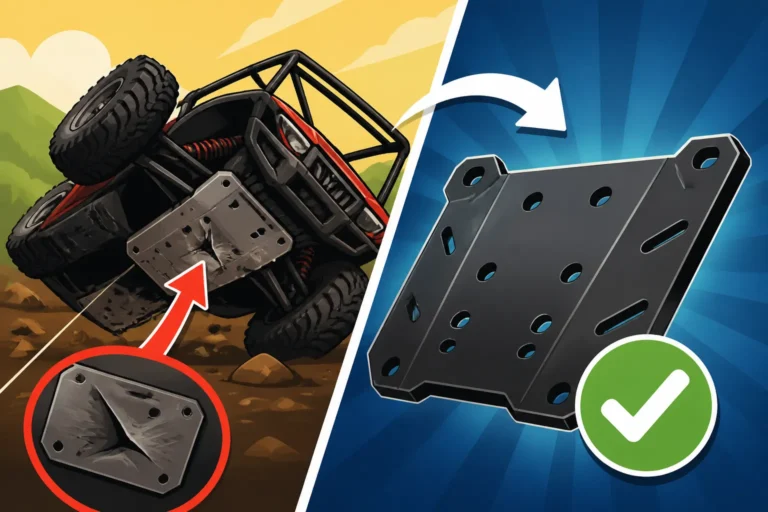
- Reinforce edges: If your plate is mounted in a very exposed position, consider adding a thin, sturdy frame around it. This can prevent the edges from bending or tearing, especially important if you’ve ever had to deal with [Replacing an ORV Plate Bent in a Rollover].
- Regular checks: Make it a habit to check your plate before every ride. Are the fasteners tight? Is the plate bent or damaged? Is it clean? A quick inspection can prevent a lost plate. If you do lose one, knowing what to do is important, so check out [Replacing a Lost Ontario ORV Plate].
Ensuring Compliance During a Ride
The moment of truth for your plate placement often comes during a roadside or trailside stop. Law enforcement officers are trained to look for specific things, and your job as a rider is to ensure your machine meets those expectations.
Before you even leave your staging area, do a quick visual check. Walk around your ORV and confirm:
- Visibility: Can the plate be clearly read from several feet behind (or in front, for trikes)? Is anything obscuring it?
- Cleanliness: Is it free of excessive mud, snow, or debris? If not, give it a quick wipe.
- Security: Is it firmly attached? Give it a gentle wiggle. If it's loose, tighten it before you hit the trail.
- Legibility: Are all the numbers and letters clearly visible and not obscured by damage or fading?
An officer will check for these exact points. Their primary goal is to ensure the machine can be identified. If your plate is pristine, securely mounted, and clearly visible, you’ve done your part. This diligence not only helps you avoid fines but also contributes to the overall safety and accountability on Ontario's trails.
The Link Between Plate Placement, Registration, and Insurance
While we've focused heavily on where and how to mount your ORV plate, it's crucial to remember that the plate is just one piece of a larger puzzle. It's a physical representation of your machine's legal status, inextricably linked to its registration and your insurance coverage. Overlooking these connections can land you in far deeper trouble than a poorly placed plate.
Beyond Just Mounting: The Importance of Proper Registration
A shiny, perfectly mounted licence plate is utterly meaningless if the machine it's attached to isn't properly registered with ServiceOntario. In Ontario, every ORV that operates off private property (and even some on private property, depending on usage) must be registered and display a valid, current licence plate. The process for this, including proving ownership and paying the associated fees, is a fundamental step in being a responsible ORV owner.
Your plate is essentially the public face of your ORV's registration. It tells everyone that your machine has been accounted for by the province. Without proper registration, that plate is just a piece of metal, and riding with it would be akin to driving a car with fake plates – a serious offence. The registration process ensures that there's a clear record of ownership, which is vital for legal reasons, for law enforcement, and for recovering stolen vehicles. If you're new to this, learning about [Registering an ATV in Ontario] is an excellent starting point. And understanding the difference between your physical plate and the paperwork it represents is critical, which is detailed in [The Permit Versus a Title in Ontario]. When you buy or sell a machine, having a clear, legally sound bill of sale is crucial for transferring ownership, and tools like those found on LawDepot can help ensure all details are covered, linking directly to getting that plate properly assigned.
Why Insurance Plays a Role Even in Plate Discussions
It might seem like a stretch to connect plate placement to insurance, but in the world of ORVs, everything is intertwined. In Ontario, it is mandatory to have valid insurance for your off-road vehicle if you plan to ride it anywhere other than your own private property. This includes public trails, Crown land where ORVs are permitted, and any municipal roads where ORV use is allowed. An enforcement officer who stops you for a plate violation (like it being obscured or missing) will almost certainly also ask for proof of your insurance.
Your insurance policy is your financial protection against liability, personal injury, and damage to your machine. Riding without it can result in significant fines and severe financial consequences if an accident occurs. While your plate confirms your registration, your insurance card confirms your compliance with another critical piece of the puzzle for legal operation. Always carry proof of insurance with you when you ride, just as you would carry your [Proving Ownership of an Ontario ATV] or vehicle permit. Proper documentation, perhaps even leveraging resources like LawDepot for custom agreements, helps clarify ownership and insurance details, proving you’re a fully compliant rider. Neglecting your insurance while focusing only on plate placement is a huge oversight. For comprehensive information on this, delve into [Insurance and Ontario ORV Registration].
| ORV Type | Standard Plate Placement | Key Considerations |
|---|---|---|
| ATV (Quad) | Rear | Must be visible, protected from mud/damage |
| UTV (Side-by-Side) | Rear | Often a dedicated mounting spot, ensure visibility |
| Off-Road Motorcycle | Rear | Keep clear of exhaust, fender, and rider movement |
| Three-Wheeler (Trike) | Front | A unique historical requirement, now rare in practice |
Disclaimer
This article is for general informational purposes only and does not constitute professional advice. Laws, prices and regulations vary by location and change over time. Consult a qualified professional for guidance on your specific situation.