Documents to Bring to the Counter
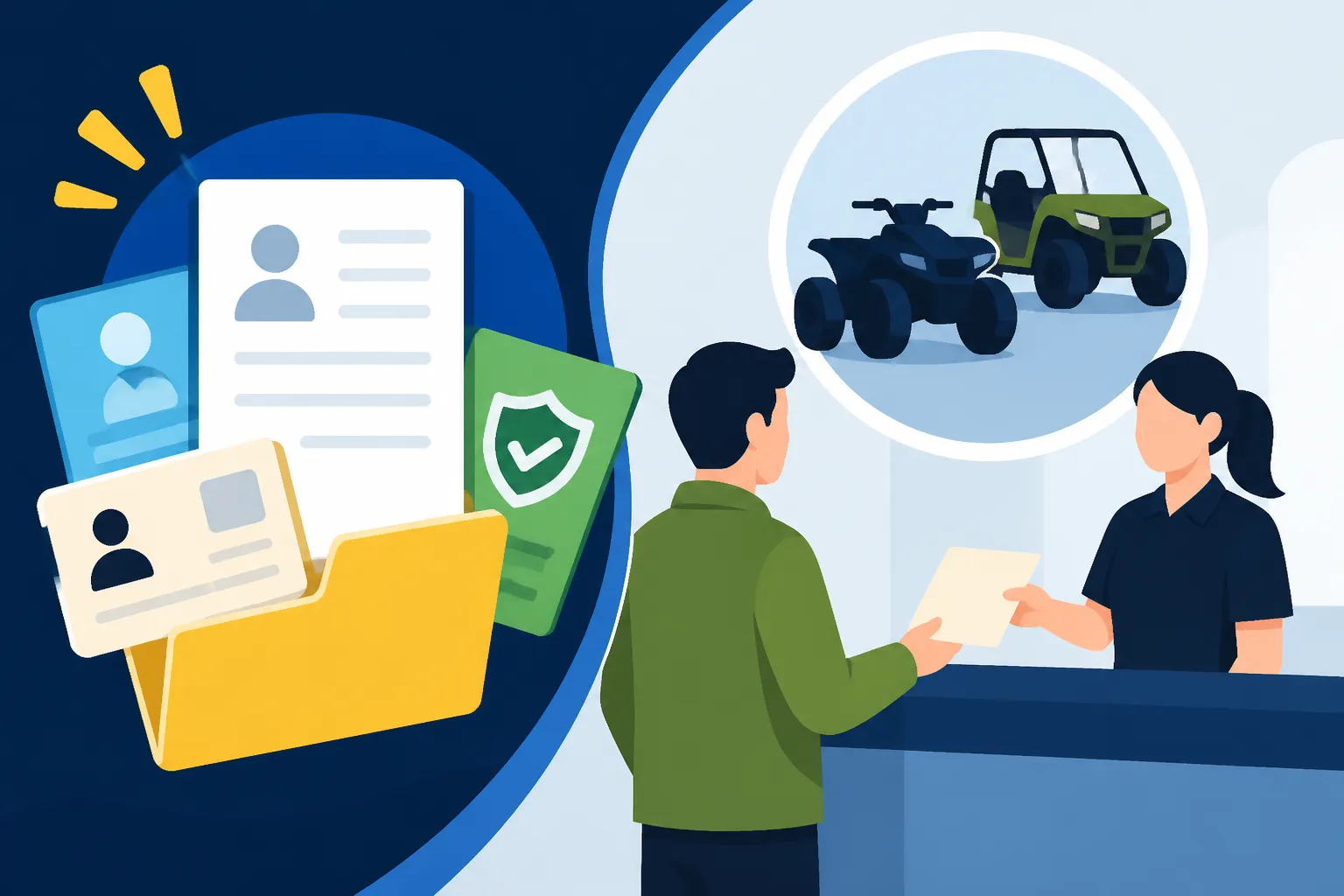
We've all been there: you've finally found the perfect ATV or UTV, the deal is done, and now it's time to make it official at ServiceOntario. But that pit-in-your-stomach feeling creeps in – what documents do you really need to bring to the counter to avoid a frustrating, wasted trip? Getting your off-road vehicle registered and plated in Ontario shouldn't be a bureaucratic nightmare, and this guide is here to walk you through every piece of paperwork you'll need, ensuring a smooth process the first time around.
The Absolute Must-Haves: Core Documents for Registration
When you walk into a ServiceOntario centre to register your shiny new (or new-to-you) ATV or UTV, there are a few foundational documents that are absolutely non-negotiable. Think of these as the pillars of your registration claim; without them, you're pretty much stuck at square one. Getting these right is the key to a hassle-free experience.
Proving Ownership: The Bill of Sale
This is arguably the most critical piece of paper you'll present. The bill of sale isn't just a receipt; it's a legal document that formally transfers ownership from the seller to you. Without a proper, detailed bill of sale, ServiceOntario simply won't have the proof they need to issue you a permit. This document needs to be crystal clear, leaving no room for ambiguity about the transaction.
A robust bill of sale should include the full legal names and addresses of both the buyer and the seller, the date of the sale, and, crucially, the full Vehicle Information Number (VIN) of the ATV or UTV you're registering. It also needs to clearly state the purchase price. Both parties should sign and date it, signifying their agreement to the terms. When you’re buying from a private seller, say, off a local marketplace like Kijiji, drafting a comprehensive bill of sale is entirely your responsibility. Don't rely on a quick scribbled note on a napkin; invest a little time in a proper template. Sites like LawDepot offer excellent, legally sound templates that you can customize to ensure all the necessary details are captured. A well-prepared bill of sale protects both you and the seller. It’s also the primary document used to calculate the 13% Retail Sales Tax (RST) you'll pay on your purchase. You can read more about what needs to be included in [Ontario ATV Bill of Sale Requirements].
The Machine's Identity: Vehicle Information Number (VIN)
Every ATV and UTV has a unique Vehicle Information Number (VIN), a 17-character alphanumeric code that acts as its fingerprint. This number is absolutely vital for registration. It confirms that the machine you're trying to register is indeed the one described on your bill of sale, and it’s how ServiceOntario identifies your specific vehicle within their system. This is a critical step in preventing theft and ensuring accurate records.
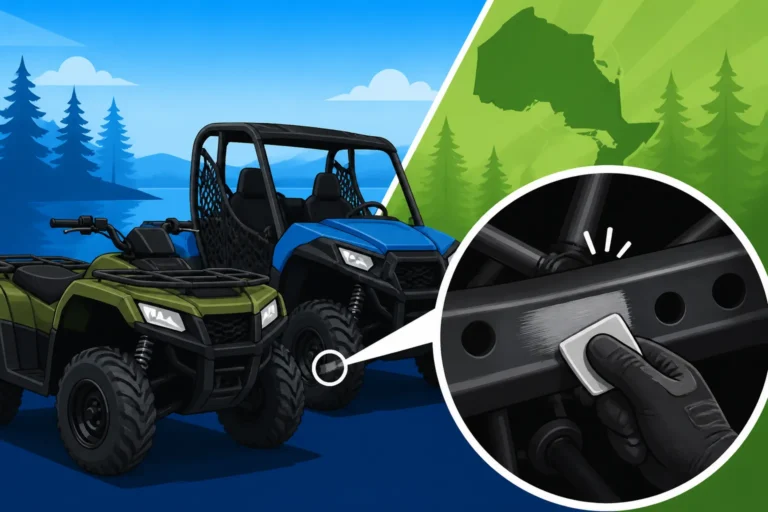
You'll typically find the VIN stamped directly onto the frame of your ATV or UTV. Common locations include the front frame near the handlebars, on one of the frame rails under the seat, or sometimes even on the engine casing itself. Before you even sign a bill of sale, make it a habit to physically locate and verify the VIN on the machine, and then compare it meticulously to the VIN written on the bill of sale. Any discrepancy, no matter how small, can cause major headaches at the ServiceOntario counter. An incorrect VIN can lead to delays, or even a refusal to register, as it raises red flags about ownership legitimacy. Getting this right from the start is paramount, and it's also a crucial step in ensuring you're not buying a stolen machine. Knowing how to verify this information is part of the important [Ontario ATV VIN Check Before Buying] process.
Your Personal Identification
This one might seem obvious, but it’s amazing how often people forget a crucial piece of personal ID. When you register an ORV, you're not just registering a machine; you're registering yourself as the legal owner. ServiceOntario needs to verify who you are and where you live to issue the Ontario Vehicle Permit in your name. This is standard procedure for any vehicle registration and helps maintain the integrity of their records.
You'll need to bring valid government-issued identification. A current Ontario driver's licence is usually the easiest and most universally accepted form, as it contains both your photo and your address. If you don't have a driver's licence, an Ontario Photo Card or a valid passport along with separate proof of address (like a utility bill or bank statement) will generally suffice. Ensure the name on your ID matches the name you want on the vehicle permit exactly. Also, make sure your address is current. If your ID shows an old address, you might need to update it first or bring supplemental proof of your current residence. They need to ensure the permit is issued to the correct individual at the correct location, leaving no doubt about who the responsible owner is. For the comprehensive process, you can also look into [Registering an ORV at a ServiceOntario Centre].
Tackling Specific Scenarios and Missing Documents
Life isn't always a straightforward, dealer-new purchase. Sometimes you're dealing with an older machine, a unique transaction, or some missing paperwork. These scenarios can definitely throw a wrench in the works, but with the right approach and additional documentation, you can still get your ATV or UTV registered. It just takes a little more legwork and preparation.
The Used Machine Blues: What if the Original Permit is Missing?
This is a common frustration, especially when buying older ATVs or UTVs from private sellers. You find a great deal on a used quad, but the seller admits they lost the original Ontario Vehicle Permit years ago. It can feel like hitting a brick wall, but it's not always a deal-breaker. ServiceOntario’s primary concern is establishing clear, unbroken ownership. If the original permit is missing, it just means you have to work a little harder to prove that chain of title.
In these situations, a rock-solid bill of sale becomes even more critical. It must clearly state that the original permit was lost and that the seller is indeed the last registered owner (if they were). Sometimes, ServiceOntario may require an additional document, such as a sworn affidavit of lost ownership from the seller. This is a legal declaration confirming they were the owner, that the permit is indeed lost, and that they are legally transferring the machine to you. Again, resources like LawDepot can provide templates for such affidavits. While it adds an extra step, getting this affidavit can prevent a lot of headaches. It also helps to be prepared for questions about why the permit is missing. Being transparent and having as much documentation as possible is key. This situation is detailed further in [Buying a Quad From a Seller Who Lost the Permit].
Gifts, Inheritances, and Farm Exemptions: Special Paperwork
Not all ATVs or UTVs are bought with cash and a standard bill of sale. Sometimes, you receive one as a gift from a family member, inherit it after a loved one passes, or purchase it specifically for farm use. While these are legitimate transfers, they often require different or additional paperwork to qualify for potential Retail Sales Tax (RST) exemptions. Understanding these special circumstances beforehand can save you from an unexpected tax bill.
For a family gift, you'll need a clear letter of gift or, even better, a sworn affidavit from the donor stating that the ATV/UTV is being transferred to you as a genuine gift, with no money changing hands. This helps ServiceOntario confirm it's not a disguised sale. The [The Family Gift Exemption in Ontario] is a great example of where this applies. If you've inherited a machine, you'll typically need to present the death certificate of the deceased owner, a copy of the will (if applicable), and any executor documents that prove your legal right to the property. This process is covered in more detail in [Ontario's Estate Transfer Exemption]. For machines purchased specifically for farm operations, there are specific forms or declarations you’ll need to complete, affirming that the ORV will be used primarily for farming. This allows you to claim the [The Farm-Use Exemption in Ontario] from RST. Always check with ServiceOntario or their online resources for the exact forms required for these exemptions, as they can change. The more prepared you are with specific documentation, the smoother the process will be.
When You Don't Have a Formal Bill of Sale
This is one of the trickiest situations to navigate, and honestly, it’s best avoided if at all possible. Imagine you bought an old quad from a neighbour years ago with a handshake, or perhaps it’s a vintage machine you’ve been restoring, and the original paperwork is long gone. When you eventually decide to register it, the lack of a formal bill of sale can be a significant hurdle. ServiceOntario relies on official documentation to establish ownership, and a missing or informal bill of sale makes that incredibly difficult.
If you find yourself in this predicament, you'll need to provide as much alternative proof of ownership as possible. This might involve a statutory declaration or an affidavit of ownership, which is a sworn statement detailing how and when you acquired the machine, from whom, and why a formal bill of sale isn't available. This document must be sworn before a Commissioner for Taking Affidavits (often available at ServiceOntario or legal offices). You might also need a detailed written statement from the original seller, if they can be found, outlining the transaction. ServiceOntario might also ask for proof of prior registration or any other document that links you to the machine. While not ideal, these steps are sometimes necessary to bridge the gap in documentation. It emphasizes the importance of always getting a proper bill of sale, even for informal transactions, as discussed in [Registering a Quad With a Handwritten Bill of Sale] or [Ontario ATV Registration Without a Bill of Sale]. It's a much harder road to travel without that fundamental piece of paper.
The Retail Sales Tax (RST) Conundrum: What You Need to Know
Beyond proving ownership, one of the biggest parts of registering an ATV or UTV in Ontario is dealing with the Retail Sales Tax (RST). This 13% provincial tax is applied to most private sales and transfers of off-road vehicles. It’s not something you pay to the seller; rather, it’s collected by ServiceOntario when you go to register the machine. Understanding how it’s calculated and when you might be exempt is crucial for avoiding surprises.
Proving the Purchase Price
The purchase price declared on your bill of sale is the foundation for calculating the 13% RST. It sounds straightforward, right? You paid X amount, so the tax is 13% of X. However, ServiceOntario does have mechanisms in place to ensure that the declared price is realistic and fair. This is to prevent people from artificially lowering the declared price to pay less tax.
If the purchase price on your bill of sale seems unusually low compared to the market value of similar ATVs or UTVs, ServiceOntario might question it. Unlike cars and trucks, ORVs generally don't have a "Red Book" value that ServiceOntario can refer to. This means that if the declared price is suspect, they might use an estimated market value to assess the RST, rather than the price you actually paid. This can be a shock if you genuinely got a great deal from a friend or a distressed seller! So, while you should always declare the actual purchase price, be prepared to explain if it's significantly lower than average. Having a clear, well-documented bill of sale that details the specifics of the transaction can help. The general rules for this tax are outlined in [13 Percent RST on an Ontario ATV], and the potential issues with under-declaring are explored in [Declaring a Low Purchase Price].
Understanding Tax Exemptions
While the 13% RST is generally applied to most ATV and UTV registrations, there are specific circumstances under which you might be exempt from paying it. Knowing these exemptions and having the correct documentation to prove your eligibility can save you a significant amount of money. These exemptions are not automatic; you need to actively claim them and provide the necessary proof at the ServiceOntario counter.
The most common exemptions include transfers between immediate family members (the family gift exemption), transfers through an estate (the estate transfer exemption), or purchases made for primary use in farming operations (the farm-use exemption). Additionally, First Nations purchasers with a valid Status Card may also be exempt from RST when purchasing an ATV or UTV. For each of these, specific forms or declarations are required. For example, a proper gift letter or affidavit for family transfers, official estate documents for inheritances, or specific declarations for farm use will be needed. Without these precise documents, ServiceOntario will charge the RST. Always ensure you have the correct, fully completed paperwork for any exemption you wish to claim. It’s always a good idea to check the official provincial government website for the most up-to-date forms and requirements related to [Ontario RST Exemptions for an ATV] and for [First Nations Purchasers and Ontario RST]. Being prepared with this specific paperwork will ensure you get all the exemptions you're entitled to.
Summary of Documents for Common Scenarios
To help you get ready for your trip to ServiceOntario, here’s a quick overview of the essential documents you'll typically need, depending on your situation. Remember, being over-prepared is always better than being caught off guard!
| Scenario | Essential Documents | Notes |
|---|---|---|
| Standard Purchase | Valid Photo ID (e.g., Driver's Licence) | Must have current address. |
| (From dealer or private) | Original Bill of Sale | Must include buyer/seller info, VIN, purchase price, date, signatures. |
| Proof of Insurance | A current insurance card or policy declaration. | |
| Used Machine, No Permit | Valid Photo ID | Same as above. |
| Comprehensive Bill of Sale | Explicitly state original permit is missing. | |
| Sworn Affidavit of Lost Ownership (from seller) | May be required to confirm seller was last registered owner. Consider using a template from LawDepot. | |
| Proof of VIN (e.g., clear photo, tracing) | To confirm VIN on machine matches documentation. | |
| Family Gift | Valid Photo ID | Same as above. |
| Gift Letter or Sworn Affidavit of Gift (from donor) | Must clearly state no money exchanged hands. | |
| Previous Owner's Permit (if available) | Helps trace ownership, if not lost. | |
| Inherited Machine | Valid Photo ID | Same as above. |
| Death Certificate | Proof of deceased owner. | |
| Will or Letters of Administration/Probate | Legal documents proving your right to the estate. | |
| Previous Owner's Permit (if available) | As above. | |
| Farm Use Purchase | Valid Photo ID | Same as above. |
| (For RST Exemption) | Original Bill of Sale | As above. |
| Specific Farm-Use Exemption Form/Declaration | Available from ServiceOntario or provincial government website. | |
| Proof of Farm Operation (e.g., Farm Business Registration number) | May be requested by ServiceOntario. |
Remember, the staff at ServiceOntario are there to help, but their hands are tied if you don't bring the necessary documents. A little preparation goes a long way in turning what could be a headache into a quick and easy registration process, getting you out on the trails faster!
Disclaimer
This article is for general informational purposes only and does not constitute professional advice. Laws, prices and regulations vary by location and change over time. Consult a qualified professional for guidance on your specific situation.