Roll-Over Protection on an Ontario ROV
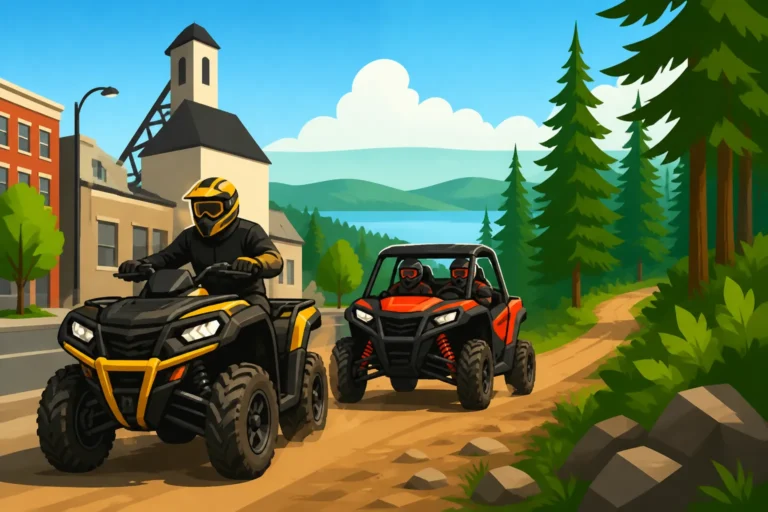
Riding an Off-Road Vehicle (ROV), like a side-by-side or UTV, offers incredible freedom to explore Ontario's vast wilderness and, in some municipalities, even connect trails via public roads. However, the very nature of off-road terrain means that rollovers are a very real and serious concern for riders, and understanding your machine's roll-over protection system (ROPS) is absolutely critical for your safety. This guide will delve deep into what ROPS is, why it's so vital, how it functions, and how you can ensure your protection is always up to par.
Understanding ROVs and Their Design for Rollover Protection
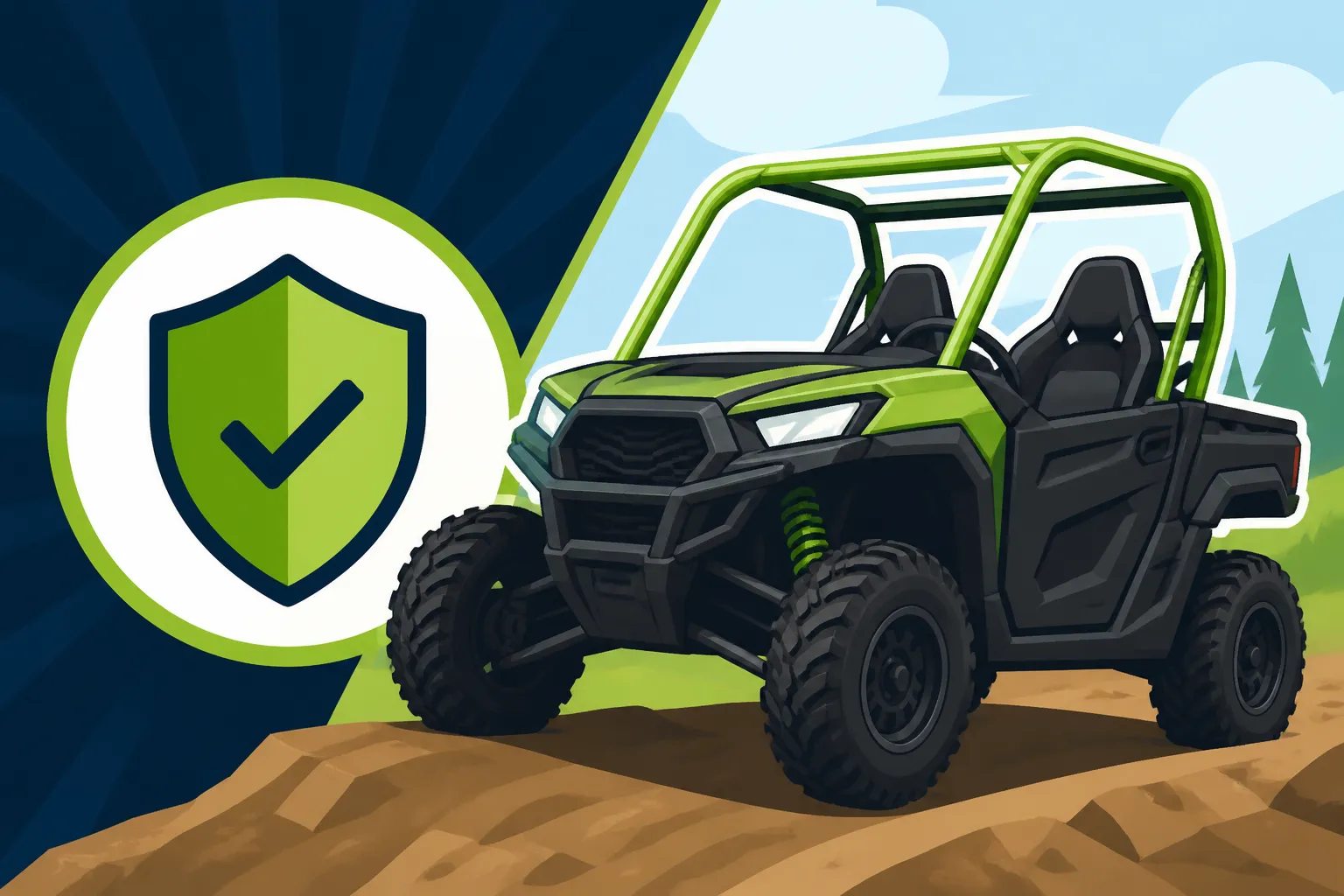
When you first sit in the driver's seat of an ROV, you immediately notice the robust cage structure surrounding the occupants. This isn't just for show; it's a meticulously engineered system designed to protect you and your passengers in the event of a rollover. Unlike traditional ATVs where the rider is exposed, ROVs provide a more enclosed, car-like experience, and with that comes a different set of safety considerations, paramount among them being rollover protection.
What Defines an ROV in Ontario?
In Ontario, an Off-Road Vehicle (ORV) is a broad term, but within that category, we specifically look at ROVs (Recreational Off-Highway Vehicles), often known as side-by-sides or UTVs. These are multi-wheeled vehicles with a steering wheel, bucket seats or a bench seat, and designed to carry passengers. Crucially, they come equipped with factory-installed rollover protective structures and seatbelts, distinguishing them from traditional ATVs. This classification matters because the regulations for riding these machines, particularly on public roads, often hinge on these inherent safety features. You'll find specific details on how these machines are classified under [Ontario's ROV Class and Its Engine Cap] and [Why Width Is Capped at 2.03 Metres]. It's not just about the engine size or how many wheels it has; it's about the fundamental design that prioritizes occupant safety through features like the ROPS.
How Factory-Installed ROPS Are Engineered
The roll-over protection system on your ROV is the backbone of its safety features. These cages are not just welded tubing; they are engineered with specific crush zones, triangulation, and mounting points to absorb and distribute impact forces during a rollover. Manufacturers invest heavily in research and development, subjecting these designs to rigorous testing, often involving dynamic and static load tests to simulate real-world rollover scenarios. The goal is to create a safety cell that maintains integrity and prevents serious intrusion into the occupant space. Think of it as a crumple zone in a car, but designed vertically and horizontally to withstand impacts from multiple directions. The materials used are chosen for their strength-to-weight ratio, ensuring the structure is robust without making the vehicle excessively heavy, which could itself impact handling and stability.
Challenges with ROV Design and Rollover Risk
Despite the advanced engineering of ROPS, ROVs, by their very nature and intended use, still present a rollover risk. Their higher centre of gravity compared to traditional ATVs, combined with the often-uneven, unpredictable terrain they navigate, means that they can be more susceptible to tipping, especially during sharp turns, traversing steep side slopes, or encountering obstacles at speed. Factors like carrying passengers, adding cargo, or even equipping aftermarket accessories can alter the vehicle's weight distribution and centre of gravity, subtly influencing its stability. This isn't to say ROVs are inherently unsafe, but rather that riders must always respect their capabilities and limitations, understanding that even the best ROPS can only do so much against the laws of physics if the machine is pushed beyond its design limits.
The Importance of ROPS: Why It Matters on Ontario Roads
While ROVs are primarily designed for off-road adventures, an increasing number of Ontario municipalities are opening up their roads to these machines, making the integrity of your ROPS even more critical. Whether you're navigating a remote trail or cruising down a permitted municipal road to get to the next section of trail, the ROPS acts as your primary defence in an unforeseen incident.
Protecting Occupants in an Accident
The most obvious, and arguably most important, function of the ROPS is to create a survival space for the occupants in the event of a rollover. When an ROV tips or rolls, the ROPS is designed to bear the brunt of the impact, deforming in a controlled manner to absorb energy and prevent the vehicle's weight from crushing the people inside. Without an effective ROPS, occupants would be directly exposed to the vehicle's weight, leading to severe or fatal injuries. This protective cage, in conjunction with properly worn [Seat Belts and Occupant Protection in Ontario], forms a critical system that significantly reduces the risk of serious harm. It’s the difference between a scary incident and a life-altering one.
Mitigating Injuries Beyond Rollovers
While "rollover protection" is in the name, the ROPS structure also offers secondary benefits in other types of accidents. For example, in a side impact with an obstacle like a tree or another vehicle, the cage can help distribute forces and prevent direct intrusion into the cabin space. It also provides anchor points for accessories like windshields, roofs, and side nets, which offer additional protection from debris, branches, and other hazards that might be encountered during a ride. Though not their primary design, these benefits contribute to the overall safety envelope of the ROV, helping to mitigate various forms of injury even if the vehicle doesn't fully roll over.
Confidence for Road and Trail Riding
Knowing that your ROV is equipped with a robust ROPS system instills a crucial sense of confidence, whether you're tackling challenging trails or riding on designated public roads. This peace of mind allows you to focus on the riding experience, knowing that a significant layer of safety is always present. For many, the ability to safely traverse municipal roads to link up trails is a huge draw of ROV ownership, and that capability relies heavily on the integrated safety systems, including the ROPS. This confidence isn't an excuse for reckless riding, but rather a foundation that supports responsible enjoyment of your machine in various environments. Understanding [Ontario UTV Road Rules] and [Ontario Side-by-Side Road Rules] becomes much easier when you trust your machine's built-in safety features.
Different Types of Roll-Over Protection Systems
While all factory-built ROVs come with some form of ROPS, there's a spectrum of designs and aftermarket options available. Understanding these variations can help you make informed decisions about your machine's safety, especially if you're considering modifications or upgrades.
Integrated Cages and Frames
The most common and robust form of ROPS is the integrated cage that is part of the vehicle's frame structure. These are meticulously designed by the manufacturer to meet specific safety standards and are often integral to the vehicle's chassis, meaning they contribute to the overall rigidity and handling. They are typically constructed from high-strength steel tubing, precision-welded, and strategically braced to withstand significant forces. Manufacturers like Polaris, Can-Am, and Honda all design their ROPS as a fundamental part of the vehicle, not an afterthought. These factory cages are the baseline, providing a minimum level of protection that has been engineered and tested alongside the rest of the vehicle. Any modification to these integrated systems should be approached with extreme caution, as altering them could compromise their structural integrity.
Add-On and Aftermarket ROPS Solutions
For those looking to enhance their factory protection or customize their ride, the aftermarket offers a wealth of options. This includes everything from bolt-on cage extensions and reinforcement kits to entirely new, heavier-duty roll cages. Companies like SuperATV, for instance, offer a wide range of aftermarket roll cages designed to provide enhanced protection for more extreme riding conditions, or simply to give your ROV a more aggressive look. These aftermarket solutions are often built to be stronger, offer better triangulation, or provide more occupant space in a rollover compared to some stock systems. When considering an aftermarket ROPS, it's crucial to ensure it's from a reputable manufacturer and that it's designed specifically for your make and model. Proper installation is also paramount; a poorly installed cage can be more dangerous than none at all.
Custom-Built Protection and Considerations
Some extreme off-road enthusiasts or competition riders might opt for custom-built roll cages. This path offers the ultimate in customization and strength, as the cage can be tailored precisely to the vehicle, specific riding style, and desired level of protection. However, custom fabrication should only be undertaken by highly skilled and experienced professionals who understand the principles of roll cage design, material science, and welding techniques. There are critical considerations like tube diameter, wall thickness, material grade (e.g., DOM steel vs. HREW), bend radius, and triangulation that must be correctly implemented. Without proper engineering and craftsmanship, a custom cage could fail catastrophically in an accident. Always ensure that any custom work adheres to accepted safety standards and, if applicable, competition regulations.
Maintaining and Inspecting Your ROPS
Like any critical safety component on your ROV, the roll-over protection system requires regular inspection and maintenance to ensure it remains in top condition. Neglecting your ROPS could mean it won't perform as intended when you need it most.
Regular Visual Checks and What to Look For
Before and after every significant ride, or at least on a regular schedule, you should perform a thorough visual inspection of your ROPS. Look for any signs of damage, no matter how minor. This includes dents, cracks, bends, or kinks in the tubing. Pay close attention to all welded joints, looking for any signs of cracking or separation. Check all bolts and fasteners that attach the ROPS to the frame or other components; ensure they are tight and free from corrosion. A loose bolt can compromise the entire structure. If you have any aftermarket accessories attached to your cage, like a SuperATV roof or light bar, check their mounting points as well. Even small dings can indicate a weakened area, especially if the tubing has been subjected to impact.
Post-Incident Inspection Protocols
If your ROV has been involved in any incident, even a minor tip-over that didn't result in a full roll, a detailed inspection of the ROPS is absolutely non-negotiable. Even if there's no visible damage, the structure could have sustained unseen stresses that have compromised its integrity. This is especially true if the vehicle experienced any impact to the cage. It's often wise to have a qualified mechanic or an experienced ROV technician perform this inspection, as they can identify subtle deformations or structural weaknesses that might escape an untrained eye. Never assume that just because it "looks fine" after a minor incident, it is fine. Your safety, and that of your passengers, depends on a sound ROPS.
When to Replace or Repair Components
Determining when to repair or replace ROPS components can be a tricky decision. Generally, if any part of the main ROPS structure shows significant bending, cracking, or severe deformation, replacement is almost always the safest option. Attempting to straighten bent tubing or re-weld a cracked section can introduce new weaknesses and compromises the original engineering. Many manufacturers specify replacement of the entire ROPS after a rollover, even if damage appears minimal. For minor cosmetic issues, like chipped paint or surface scratches, a repair might be feasible, but never at the expense of structural integrity. When in doubt, always consult with the ROV manufacturer's service manual or a certified dealer.
When Your ROPS Might Need an Upgrade or Customization
While factory ROPS are designed to meet specific safety standards, your individual riding style, terrain preferences, and personal needs might warrant considering an upgrade or customization. This is particularly true if you push your machine hard or value enhanced protection.
Assessing Your Riding Style and Terrain
Consider the environments you typically ride in. Are you a casual trail rider on well-maintained paths, or do you tackle aggressive rock crawling, steep hill climbs, or high-speed desert running? More extreme riding conditions naturally increase the risk of rollovers and impacts. If you frequently find yourself in situations where a rollover is a higher probability, or where impacts with obstacles are common, your factory ROPS might benefit from an upgrade. For instance, a heavy-duty aftermarket cage with additional bracing could offer a significant boost in protection over a stock system. Evaluating your riding habits honestly will guide your decisions here.
Considering Aftermarket Additions
Beyond entirely new cages, many riders customize their ROPS by adding accessories that attach directly to it. This can include roofs, front and rear bumpers, winch mounts, light bars, or even full doors and nets. For example, a sturdy aluminum or polyethylene roof from a brand like SuperATV attaches to the ROPS, offering protection from the elements and low-hanging branches, while also providing an additional layer of protection in a minor tip-over. When adding such accessories, always ensure they are compatible with your ROPS and don't compromise its structural integrity. Using appropriate clamps and fasteners, and not drilling unnecessary holes in critical tubing, is vital. You also need to consider how these additions might affect your vehicle's overall weight and centre of gravity.
Ensuring Compatibility with Ontario Regulations
Before embarking on any major ROPS upgrade or customization, it is absolutely essential to understand and ensure compliance with Ontario's regulations. While there are no specific provincial laws dictating aftermarket ROPS design (they focus more on the original vehicle classification), any modification that compromises the inherent safety features or changes the vehicle's classification could lead to issues. For example, if you replace a factory ROPS, the new system should at least meet or exceed the original's protective capabilities. When riding on public roads, especially in municipalities that allow [Ontario Municipalities That Allow ATVs on Roads], an officer checking your vehicle will expect it to meet safety standards. Always ensure that your modifications do not inadvertently make your vehicle non-compliant with things like [Ontario UTV Road Rules] or [Ontario Side-by-Side Road Rules], particularly regarding occupant protection.
Here's a quick reference for ROPS inspection:
| Component to Inspect | What to Look For | Action If Found | Frequency |
|---|---|---|---|
| Tubing/Bars | Dents, cracks, bends, kinks, corrosion | Repair minor corrosion, replace if bent/cracked/kinked | Pre/Post-Ride, Annually |
| Welds | Cracks, rust, signs of separation | Professional inspection/repair or replacement | Pre/Post-Ride, Annually |
| Mounting Bolts | Loose, missing, stripped threads, corrosion | Tighten, replace if damaged or corroded | Pre/Post-Ride, Annually |
| Braces/Gussets | Bends, cracks, deformation | Replace if damaged | Pre/Post-Ride, Annually |
| Accessories | Loose attachments, damage to mounting points | Tighten, repair, or replace | Pre/Post-Ride |
| Post-Incident | Any sign of impact, even if not visibly damaged | Professional inspection immediately | After any tip-over or impact incident |
Legal Requirements and Best Practices in Ontario
While the focus on ROPS is largely on manufacturer design and aftermarket enhancements, there are underlying legal frameworks and best practices in Ontario that riders should always be aware of to maximize safety. These combine the vehicle's design with rider behaviour to create the safest possible environment.
Ontario's Standards for ROV Construction
Ontario's regulations for ROVs are tied to their classification as off-road vehicles. While the province doesn't get into the minute details of ROPS design for individual vehicles, it relies on manufacturers to build machines that meet recognized safety standards for off-road use, often adhering to industry standards such as those set by the ANSI/ROHVA (Recreational Off-Highway Vehicle Association). When an ROV is manufactured and sold in Canada, it is expected to meet these inherent safety criteria, which include a properly designed and tested ROPS. This is why you will typically not find a specific government standard for the ROPS itself in provincial legislation, but rather a reliance on the vehicle's overall certification. [The Off-Road Vehicles Act and Ontario Riders] governs how these machines are operated, but it trusts the initial design to be safe.
The Role of Seat Belts and Occupant Restraints
A robust ROPS is only half the equation; the other, equally critical, component is the proper use of seat belts and occupant restraints. Ontario law mandates the use of seat belts in ROVs when riding on public roads where permitted. More importantly, even on private land or trails, wearing your seatbelt is crucial. The ROPS creates the survival space, but it's the seatbelt that ensures you stay within that survival space during a rollover or sudden impact. Without being properly restrained, you could be ejected from the vehicle or tossed around inside the cage, striking its hard surfaces and sustaining serious injuries. Always ensure your seatbelts are in good working order, free from cuts or fraying, and that they are buckled up correctly before every ride. This is non-negotiable for safety, and an officer will certainly check this during [What an Ontario Officer Checks Roadside]. You can read more about [Buckling Up in a Side-by-Side] for specific advice.
Beyond the Minimum: Best Practices for Enhanced Safety
While meeting legal requirements is important, true safety goes beyond the minimum. Here are some best practices:
- Always wear your seatbelt: As mentioned, this is paramount.
- Wear a helmet: Even with a full ROPS, a helmet provides critical protection against head injuries from impacts within the cage or during sudden jolts. [Ontario ATV Helmet Law] applies to ATVs, but it's a wise practice for ROV occupants too, especially if you're riding on public roads or at higher speeds.
- Passenger limits: Adhere strictly to the manufacturer's passenger capacity. Overloading an ROV significantly compromises its stability and the effectiveness of the ROPS.
- Stay inside the vehicle: Keep all body parts (arms, legs, head) inside the ROPS confines while the vehicle is in motion. During a rollover, even an arm outside the cage can be severely injured.
- No modifications to the ROPS without expert advice: Never cut, drill, or weld on your factory ROPS without consulting the manufacturer or a certified expert. You risk compromising its structural integrity. If you're looking for an enhancement, consider a well-designed, bolt-on aftermarket solution from a reputable brand like SuperATV that's built for your specific model.
- Rider training: Consider taking an ROV safety course. Understanding safe operating techniques for different terrains can help you avoid situations that might lead to a rollover in the first place.
- Regular maintenance: Beyond the ROPS, ensure all other safety systems like brakes, tires, and steering are in excellent working order. A well-maintained machine is a safer machine.
By combining robust ROPS, proper seat belt use, smart riding practices, and continuous vigilance, you can significantly enhance your safety and enjoyment of Ontario's incredible off-road and permitted on-road riding opportunities.
Disclaimer
This article is for general informational purposes only and does not constitute professional advice. Laws, prices and regulations vary by location and change over time. Consult a qualified professional for guidance on your specific situation.