Do You Need a Helmet on Your Own Property?
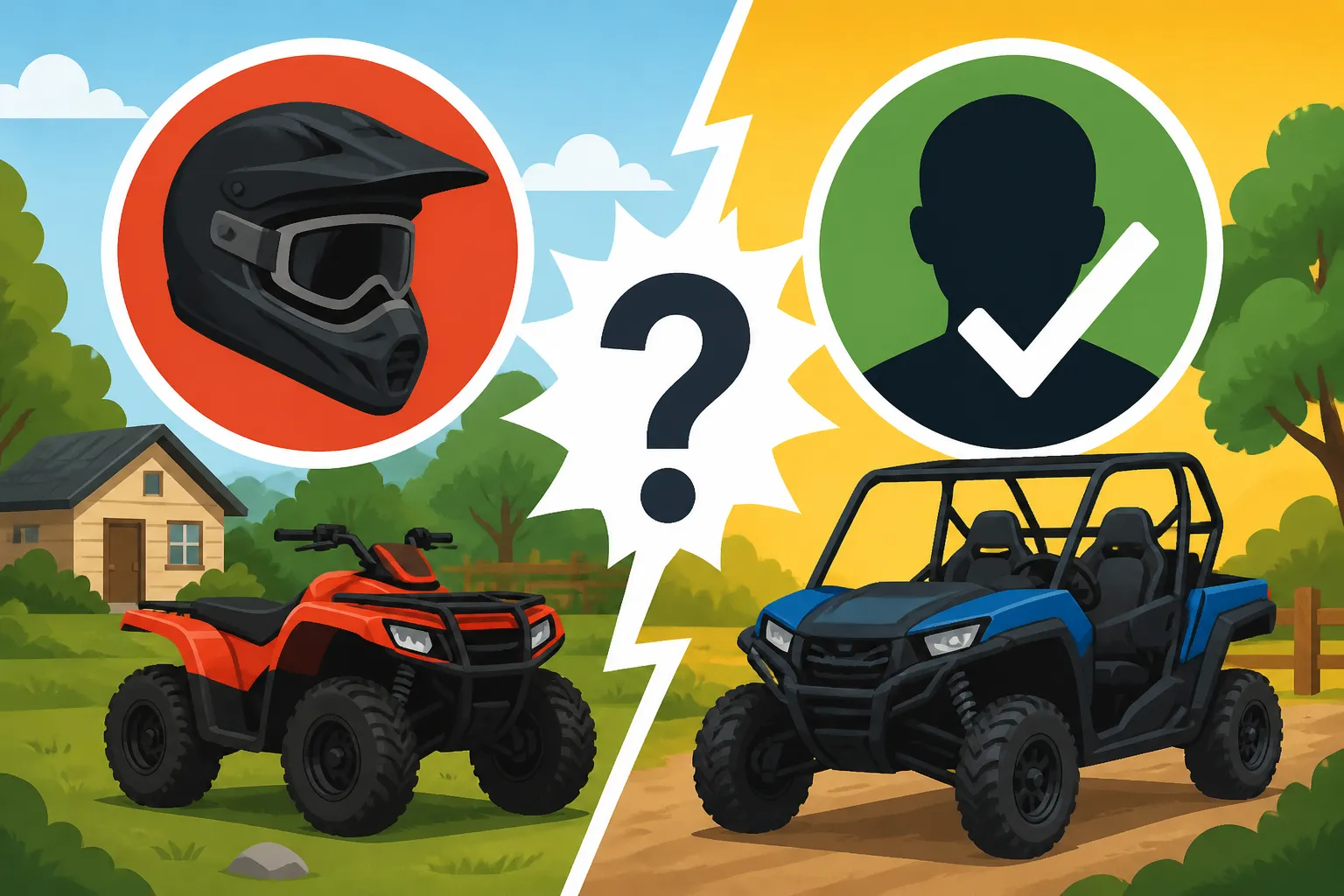
It's a question many of us have pondered while tinkering with our quads and side-by-sides in the backyard or out at the cottage. You're on your own property, far from public roads or busy trails, and you just want to take a quick spin. Do you really need to strap on that helmet? The rules around ATV and UTV use in Ontario can feel like a tangled mess, especially when it comes to riding on your own land, leaving many riders confused about their obligations. This guide is here to untangle those rules, clarify when and where a helmet is required on private property, and help you understand the deeper 'why' behind it all.
The General Rule: Helmets on Private Property in Ontario
The desire for freedom on your own land is completely understandable. There's nothing quite like the open air and the rumble of your machine as you navigate your back forty or a private woodlot. But Ontario's laws, specifically the Off-Road Vehicles Act (ORVA), cast a wide net when it comes to safety, and helmets are often right at the center of that.
The Short Answer: It Depends and Mostly Yes, for Minors
Let's cut right to it, because this is where a lot of the confusion lies. For adults (16 years of age and older), the rules for helmet use on your own private property are different than for public roads or managed trails. If you're 16 or older and operating an ATV or UTV on land that you own, the ORVA makes an exemption for you to ride without a helmet.
However, and this is a HUGE however, this exemption absolutely does not apply to minors. If the rider is under 16, a helmet is almost always required, even on private property. And if you're not on your property, but perhaps a friend's land or a family cottage you don't legally own, then the public road/trail rules apply, and that means a helmet is mandatory for everyone. It's a nuance that trips up many, thinking "private land" means all private land, but the law is quite specific about your private land.
Understanding the Off-Road Vehicles Act (ORVA)
The Off-Road Vehicles Act is the primary piece of legislation governing how ATVs, UTVs, and dirt bikes are operated in Ontario. Its purpose is to ensure the safe operation of these machines, not just on public roads and trails, but also to set a baseline for responsible use in general. The ORVA covers everything from registration and licensing to equipment requirements and, yes, helmet use.
Specifically, the Act states that anyone operating an ORV must wear an approved helmet, with a few key exceptions. The main exception, as we touched on, is for adults riding on their own land. It's important to remember that this Act is provincial legislation. While municipalities can pass by-laws to open roads to ORVs or set specific rules, the ORVA's core safety requirements, like helmet use for minors, remain paramount across the province. You can learn more about the broader framework in [The Off-Road Vehicles Act and Ontario Riders].
Why the Rules Exist: Safety First, Always
While that feeling of wind in your hair might seem appealing on a hot day in your own field, the reality is that ATVs and UTVs are powerful machines that can cause serious injury, even at low speeds or on familiar terrain. Accidents happen in a blink, and often, they're not due to reckless riding but rather an unexpected rut, a hidden rock, or a sudden shift in weight.
The helmet laws, particularly for minors, are rooted in an undeniable truth: head injuries are devastating. A helmet acts as your last line of defense, absorbing impact forces that could otherwise lead to concussions, skull fractures, or worse. While some might view these rules as overreaching, they are designed to protect riders from the very real, often life-altering consequences of an accident. Even on a short, casual ride, the risk is present. That's why the emphasis on safety, particularly for vulnerable young riders, is so strong in the legislation.
Specific Scenarios and Exemptions
The law isn't always black and white, and understanding the specific conditions under which helmet rules apply can save you a lot of headache (and potential fines). Let's delve into some common situations.
Adults on Their Own Property Unsupervised
This is the golden ticket for many adult riders in Ontario who cherish that sense of freedom. If you are 16 years of age or older, and you are operating an ORV on your own land, the Off-Road Vehicles Act provides an exemption from the helmet requirement. This means if you're riding your quad across your fields to check on livestock, or zipping your side-by-side through your private woodlot to gather firewood, you don't legally have to wear a helmet, provided you own the land.
It’s absolutely crucial to understand what "your own land" means here. We're talking about property for which you hold the deed. It doesn't extend to your parents' farm unless you're a co-owner, nor does it apply to a friend's cottage property, even if they give you permission. It certainly doesn't apply to Crown Land, municipal property, or managed trails, all of which fall under different regulations requiring helmets for all riders. For more on riding on your personal property, check out [Riding Unsupervised on Your Own Property].
While the law grants this specific exemption, it's still highly recommended to wear a helmet, regardless. A quick trip can turn into an unexpected tumble, and even on familiar ground, hazards can appear. Many riders choose to wear a helmet even when not legally required, prioritizing personal safety above all else.
Minors and Helmet Requirements
This is where the law is unequivocal: if the rider is under 16 years of age, they must wear an approved helmet whenever operating an ORV. There is no "private property" exemption for minors. Whether they're riding in your backyard, on your farm, or at a friend's cottage, that helmet needs to be strapped on properly.
The minimum age to operate an ORV in Ontario is 12 years old, and even then, riders between 12 and 16 have specific supervision requirements. [Ontario's Off-Road Minimum Age of Twelve] explains this in more detail. The helmet rule for minors is a non-negotiable safety measure designed to protect the most vulnerable riders. As a parent or guardian, ensuring your child always wears an approved helmet is not just about compliance, it's about safeguarding their future. Even on family land, where supervision might be less formal, the helmet rule still applies rigorously to young riders. For guidance on what younger riders can operate, refer to [What a 12-Year-Old May Ride on Private Land].
The Definition of an "Approved" Helmet
It's not enough to just put any helmet on your head; it has to be an approved helmet. In Ontario, an approved helmet means it meets specific safety standards. These generally include:
- CSA (Canadian Standards Association): A common standard for helmets sold in Canada.
- DOT (Department of Transportation): A U.S. standard often recognized in Canada.
- Snell: Another rigorous testing standard, often found in higher-end helmets.
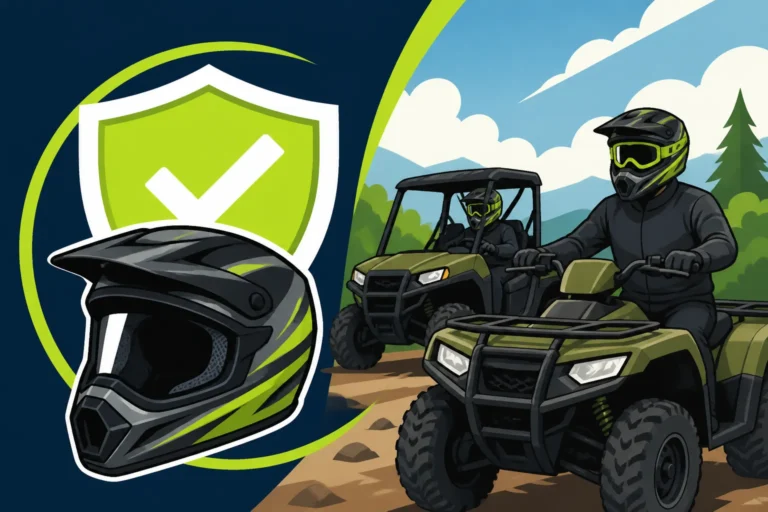
You'll typically find a sticker or label inside the helmet indicating which standard it meets. Helmets designed for other activities, like cycling or skateboarding, generally do not meet these ORV-specific standards and are not considered approved.
Beware of what are sometimes called "novelty helmets." These might look cool, but they offer little to no impact protection and are absolutely not approved for ORV use. An approved helmet is designed to withstand the types of impacts common in ATV and UTV accidents. Furthermore, it's not just about wearing an approved helmet, but wearing it correctly. The chin strap must be securely fastened to prevent the helmet from coming off during an impact. An unstrapped helmet is as good as no helmet at all. You can learn more about what to look for in [Approved Motorcycle Helmets in Ontario] and the importance of securing it in [Chin Straps and Ontario Enforcement].
Beyond Helmets: Other Private Property Considerations
While helmets are a major focus, especially concerning private land use, responsible ATV and UTV operation extends far beyond just head protection. There are other crucial aspects to consider, even when you're on your own property, that impact your safety, legal standing, and the longevity of your machine.
Insurance: Still a Must-Have, Even on Your Land
This is a point that often catches riders off guard. Many assume that if they're riding on their own property, away from public eyes, they don't need insurance. This couldn't be further from the truth. In Ontario, it is mandatory for all ATVs and UTVs to be insured with a motor vehicle liability policy, regardless of where they are operated. Yes, that includes your own private land!
Think about it: an accident on your property, even if it's just you, could still involve damage to your machine or property, or worse, injury to yourself or a guest. If a friend or family member is riding your machine on your land and has an accident, your liability coverage could be invaluable. Without insurance, you could be facing hefty fines and personal financial ruin if an incident occurs. [Ontario's Mandatory ORV Insurance] is not just for public trails; it’s for every single ride. For a deeper dive into the specifics, check out [The Motor Vehicle Liability Policy Ontario Wants] and understand the severe consequences outlined in [Ontario Fines for No ATV Insurance]. Even if your policy for riding on club trails is robust, you need to ensure your private property use is covered.
Machine Condition and Safety Gear Beyond the Helmet
While the helmet protects your head, the rest of your body is just as vulnerable. Even on private property, you should always ensure your machine is in good working order. Regular maintenance – checking tires, brakes, lights, fluid levels, and steering – is paramount. A sudden mechanical failure can be just as dangerous as hitting an unforeseen obstacle. Consider using quality parts from reputable brands like SuperATV to ensure your machine is ready for any challenge, whether it's a casual ride or heavy-duty work around your property.
Beyond the machine itself, think about what else you're wearing.
- Eye Protection: Goggles or a helmet visor are essential to shield your eyes from dust, debris, branches, and insects.
- Gloves: Protect your hands from blisters, abrasions, and provide a better grip.
- Sturdy Footwear: Boots that cover your ankles are crucial to prevent injuries from foot pegs, shifting terrain, or falling objects.
- Long Pants and Sleeves: Protect your limbs from scrapes, scratches, and sun exposure.
It's all part of a comprehensive approach to safety. Your helmet is critical, but it's one piece of a larger protective ensemble.
Supervising Young Riders Safely
For parents and guardians of young riders (aged 12-16), ensuring their safety goes beyond just making sure they wear a helmet. While the law allows 12-year-olds to ride with adult supervision, teaching them proper technique, emphasizing caution, and choosing appropriate terrain are equally important.
Always set clear boundaries and speed limits. Familiarize them with the machine's controls and ensure they understand how to react to different situations. Even on private property, where the temptation might be to let them experiment, strict supervision is key. Consider a formal training course, even though it's not legally mandated in Ontario, as it can provide valuable skills and reinforce safe habits. [Ontario Supervision Rules for Minors] delves into the legal specifics of overseeing younger riders. Remember, while the ORV is registered to an adult, the responsibility for a minor's safe operation rests squarely on the supervisor's shoulders.
Here's a quick summary of the helmet rules:
| Rider Age Group | Location | Helmet Required? | Notes |
|---|---|---|---|
| Under 16 | Your Own Private Property | YES | No exceptions; adult supervision required for 12-15 year olds. |
| Under 16 | Other Private Property | YES | Always, regardless of ownership. |
| Under 16 | Public Roads/Trails/Crown Land | YES | Absolutely, plus other ORVA rules apply (e.g., age, license, equipment). |
| 16 and Over | Your Own Private Property | NO (Exemption) | Legally exempt, but highly recommended for safety. Must be YOUR property. |
| 16 and Over | Other Private Property | YES | If you don't own the land, public rules apply. |
| 16 and Over | Public Roads/Trails/Crown Land | YES | Mandatory, plus other ORVA rules (e.g., license, registration, equipment). |
This article is for general informational purposes only and does not constitute professional advice. Laws, prices and regulations vary by location and change over time. Consult a qualified professional for guidance on your specific situation.