The QEW and Ontario ORVs
It's incredibly frustrating when you're itching to hit the trails, but you know that the quickest route to your favourite riding spot involves a stretch of major highway. Many of us dream of the ultimate convenience of simply riding our ATV or UTV from our driveway straight to the wilderness, but the reality of Ontario's road rules often throws a wrench in those plans, especially when it comes to formidable routes like the Queen Elizabeth Way. This guide will walk you through the hard truths and the nuanced rules about where your off-road vehicle can and absolutely cannot go on Ontario's road network, helping you understand the "why" behind the restrictions and how to plan your rides legally and safely.
Understanding the Hard Truth About Ontario's Major Highways
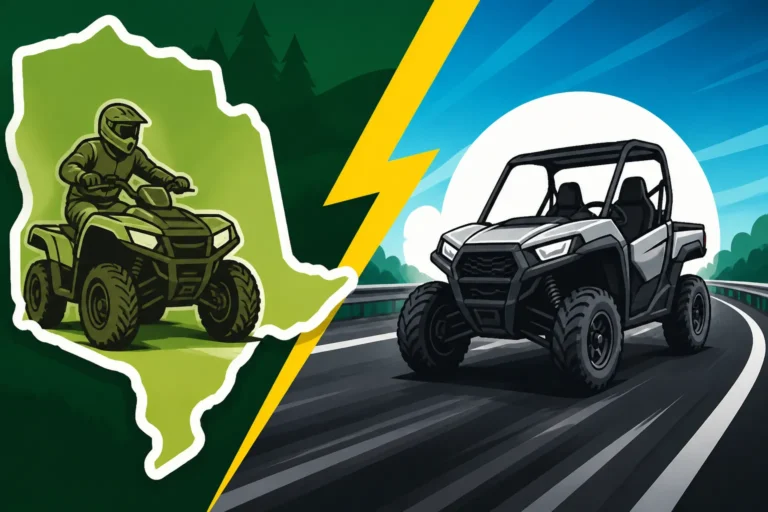
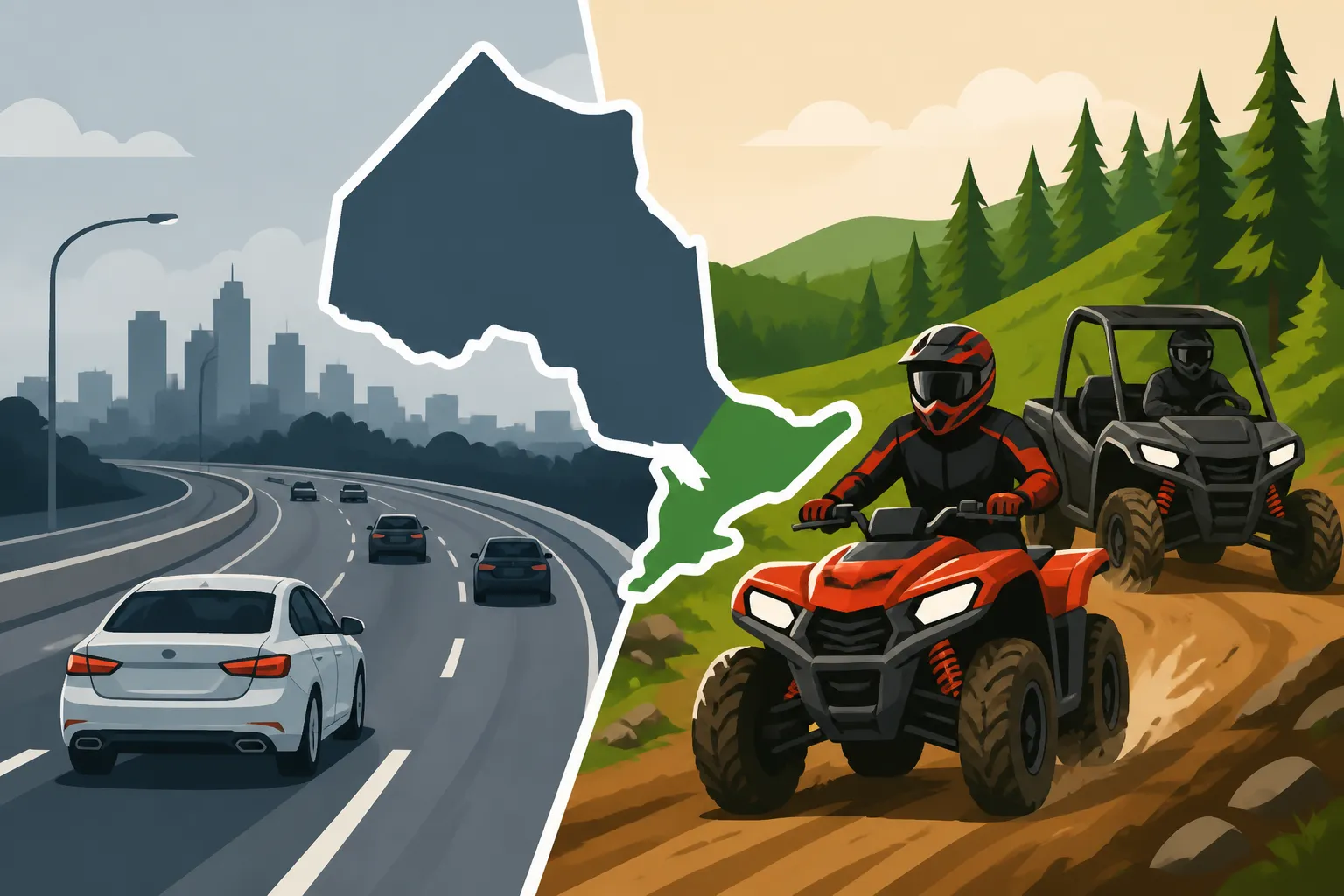
Let's cut right to it: the QEW, Highway 401, Highway 400, and other major provincial highways are simply not open for ATVs, UTVs, or any other type of off-road vehicle (ORV) to ride on. It’s a common misconception, or perhaps just wishful thinking, that if a smaller road allows ORVs, then all roads might eventually follow suit. Unfortunately, when it comes to multi-lane, high-speed thoroughfares like the QEW, the answer is a definitive no. This isn't just a suggestion; it's a critical safety and legal distinction that every ORV owner in Ontario needs to understand deeply.
Why High-Speed Traffic Makes ORV Use Impossible
The primary reason major highways are closed to ORVs boils down to an undeniable truth: safety. These highways are engineered for vehicles travelling at high speeds, typically 100 km/h or more, with heavy volumes of traffic that often include large commercial trucks. Picture your ATV or UTV, designed for rugged terrain and off-road agility, trying to keep pace with this kind of traffic. The speed differential alone creates an incredibly dangerous situation. An ORV, even a powerful one, cannot accelerate, brake, or manoeuvre safely in an environment dominated by vehicles travelling at double or triple its typical comfortable road speed.
Beyond speed, the sheer scale of modern highway infrastructure—multiple lanes, complex interchanges, limited shoulders, and high-volume entry and exit ramps—is entirely incompatible with ORV design and capability. Imagine trying to navigate a bustling QEW interchange on a side-by-side; it's a recipe for disaster. The risk of serious accidents involving ORVs and other vehicles, or even single-vehicle ORV incidents due to the unsuitable conditions, is simply too high. It's a sobering reality, but one that provincial lawmakers have firmly addressed to protect all road users.
The Legislative Framework: Highway Traffic Act vs. Off-Road Vehicles Act
Ontario’s road rules are governed by a robust legislative framework, primarily the Highway Traffic Act (HTA) and the Off-Road Vehicles Act (ORVA). These two acts, while seemingly overlapping in some areas, serve very distinct purposes and define different classes of vehicles and where they can operate. The HTA is the overarching legislation for most vehicles operating on public roads, setting out rules for cars, trucks, and motorcycles, and it generally restricts ORVs from its purview, especially on high-speed provincial highways.
The ORVA, on the other hand, specifically addresses the operation of ATVs, UTVs, and other off-road machines. It dictates things like registration, helmet requirements, and where ORVs can operate—which, critically, includes a provision that unless explicitly permitted, ORVs are generally prohibited from operating on highways. This legislative division is precisely why you won't see an ORV legally cruising down the QEW. Understanding [The Off-Road Vehicles Act and Ontario Riders] is fundamental to knowing your rights and limitations. The intent of the ORVA is to provide a framework for recreational use, often linking to trail networks, rather than integrating ORVs into the general flow of highway traffic.
Defining "Highway" and "Road" in Ontario ORV Law
The terms "highway" and "road" might seem interchangeable in everyday conversation, but in Ontario’s ORV legislation, they carry very specific legal definitions that are crucial for riders to understand. This distinction determines where you can legally ride your ATV or UTV, especially when it comes to accessing trails or connecting segments of your journey. Misinterpreting these terms can lead to serious fines or, worse, dangerous situations. It's not just about speed limits; it's about jurisdictional control and the type of traffic each route is designed to accommodate.
Provincial Highways and the Schedule B Exception
In Ontario, a "highway" is often understood to mean a road maintained by the province, identified by signs like the distinctive Crown logo. These include multi-lane freeways like the QEW, but also many two-lane provincial routes such as parts of Highways 11, 17, or 60. While the vast majority of these provincial highways are unequivocally closed to ORVs, there is a very specific and limited exception: Schedule B of Ontario Regulation 316/03. This schedule lists only those specific provincial highway segments where ORV use is permitted, typically to connect communities or trail networks where no other viable route exists.
It’s vital to understand that this list is incredibly short, highly specific, and does not include any 400-series highways or major arteries like the QEW. These exceptions are typically for short stretches, often on undivided highways in northern or rural areas, and always come with stringent conditions like speed limits (usually 20 km/h on shoulders or 50 km/h on the paved surface, if permitted). You absolutely cannot assume that because you see one provincial highway listed in Schedule B, another is also open. Always check [Schedule B and Ontario's Open Highways] and never take a chance on a provincial highway not explicitly listed.
Municipal Roads and Local By-laws
Conversely, "municipal roads" are those maintained by cities, towns, townships, and counties. The rules for ORV use on these roads are quite different and much more flexible. Under Ontario law, municipalities have the authority to create their own by-laws to open or close their roads to ORVs. This means that while some municipalities might embrace ORV tourism and open many of their roads, others might keep them entirely closed, or open only specific stretches during certain hours or seasons. This local control is why you might find that [Why One Township Road Is Open and the Next Closed] even in neighbouring communities.
These municipal by-laws are the key to expanding your riding opportunities beyond dedicated trails. Many riders utilize these open municipal roads to connect various trail systems, access fuel stations, or simply ride from their property to a trailhead. However, it's crucial to always know the specific by-laws of the municipality you're in or planning to visit. A great example of this localized approach can be seen in [Greater Napanee By-law 2022-0062] or [Middlesex Centre By-law 2021-010], which explicitly outline where ORVs are permitted within their boundaries. Never assume; always verify with the local municipal office or their official website.
Ontario's ORV Classes and Road-Use Regulations
Navigating the world of ORV use on Ontario's roads requires a clear understanding of how different types of off-road vehicles are classified and what specific rules apply to each. It's not a one-size-fits-all situation, and the legal definition of your machine can significantly impact where and how you're allowed to operate it on public roadways. This is where things can get a little complex, but grasping these distinctions is essential for legal and safe riding.
ATVs, ROVs, and MPVs: What's the Difference for Road Use?
Ontario Regulation 316/03 defines different classes of off-road vehicles, and these classifications are pivotal for determining road legality.
- ATVs (All-Terrain Vehicles): These are the traditional "quads" – single-rider or two-up machines with handlebars, straddle seats, and often, but not always, 4×4 capability. Most ATVs fall under a specific weight and width limit to be considered an ATV under the regulation.
- ROVs (Recreational Off-Highway Vehicles): Often referred to as UTVs or Side-by-Sides, these machines typically feature a steering wheel, foot pedals, bucket seats, and often roll-over protection structures (ROPS) and seatbelts. They are generally wider and heavier than ATVs. The regulation specifically defines their maximum engine size and width for various uses. Understanding [Ontario's ROV Class and Its Engine Cap] is key here, as larger, more powerful UTVs might have different restrictions.
- MPVs (Multi-Purpose Off-Highway Vehicles): This category is a bit broader and can include some larger, specialized UTVs or even small off-road utility vehicles that don't fit neatly into the ATV or ROV definitions. Like ROVs, they also have specific weight and width limits to adhere to [Ontario's MPV Class and Its Weight Limit].
The key takeaway is that each class has specific requirements for things like weight, width, engine size, and passenger capacity that dictate their road-worthiness. A common frustration is when a rider's side-by-side, perhaps with aftermarket accessories from a company like SuperATV that increase its width, technically pushes it outside the definition for legal road use, even if it's perfectly safe on trails. Always measure your machine carefully and compare it to the regulation's limits.
Speed Limits, Ages, and Licensing Requirements on Open Roads
Even on municipal roads that are legally open to ORVs, there are strict rules about how you can operate them. These aren't just suggestions; they are enforceable laws designed to ensure safety.
- Speed Limits: On open municipal roads, ORVs are generally restricted to lower speed limits than other traffic. Often, this means 20 km/h on roads where the posted limit is 50 km/h or less, and 50 km/h on roads where the posted limit is over 50 km/h. This is a critical distinction that many riders overlook, leading to tickets. Familiarize yourself with [Ontario's 20 and 50 km/h Speed Limits].
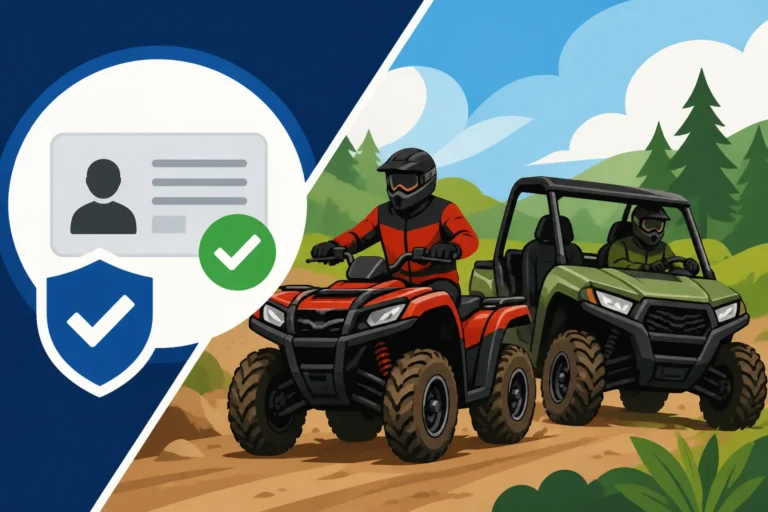
- Minimum Age and Supervision: To operate an ORV on a public road, the operator must be at least 16 years old and hold a valid G2 or M2 driver's licence (or higher). A G1 or M1 learner's permit is not sufficient for road operation. This is a common point of confusion, and it's essential to know that [Can You Ride an ATV in Ontario With a G1?] is a definite no for road use. For off-road trail riding, different age and supervision rules apply, but for any road use, the licence requirement is firm.
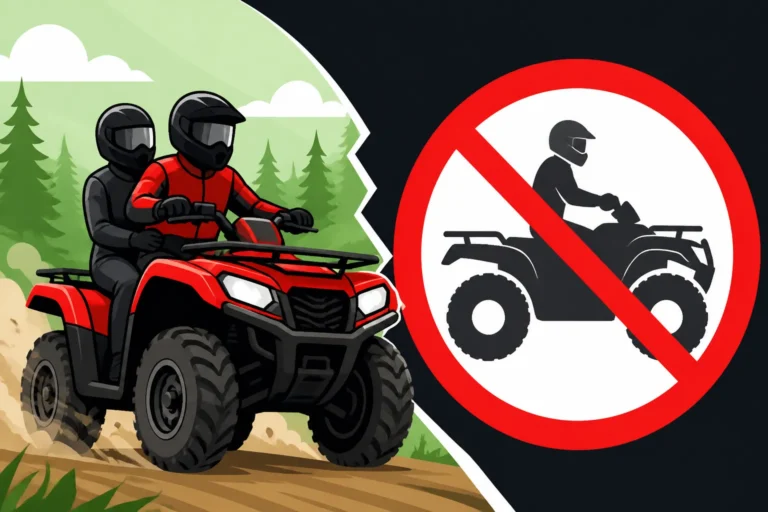
- Passengers: Passenger rules vary depending on the type of ORV. Single-rider ATVs, as the name suggests, are designed for one person, and carrying a passenger is illegal, even on open roads. Two-up ATVs and UTVs (ROVs/MPVs) can carry passengers, but only up to the manufacturer's specified capacity and only if the machine is designed for it, with proper seating and seatbelts (for UTVs). Understanding [Ontario ATV Passenger Rules] is paramount to avoid fines and ensure safety.
These rules, combined with requirements for helmets and insurance, form the bedrock of safe and legal ORV road operation. It's not enough for a road to be "open"; you also have to meet all the operator and vehicle requirements.
Essential Equipment for Road-Legal ORV Use
Riding an ORV on a municipal road in Ontario isn't as simple as just rolling off the trail. There’s a specific list of equipment your machine must have to be considered road-legal, even on those by-law approved routes. These requirements are in place to ensure your visibility to other motorists and your safety, aligning your ORV as much as possible with the standards of conventional road vehicles. Skipping these can lead to fines, so it’s crucial to get it right.
Lights, Mirrors, and Safety Features
For your ORV to be considered road-legal on municipal roads, it needs to be equipped with several key safety features, similar to what you'd find on a car or motorcycle.
- Headlights and Taillights: Your machine must have at least one headlight and one taillight that are properly functioning and visible from a specified distance. If you're riding at dusk, dawn, or in low visibility conditions, these are non-negotiable. Many ORVs come with decent lighting from the factory, but aftermarket upgrades, perhaps from a brand like SuperATV, can often enhance visibility, especially for night riding.
- Brake Lights: A functioning brake light that illuminates when you apply the brakes is also mandatory. This is critical for signalling your intentions to other drivers behind you.
- Rear-View Mirrors: At least one mirror is required, mounted to provide a clear view to the rear. Many riders opt for two mirrors for enhanced situational awareness, which is always a good idea when sharing the road with cars.
- Muffler: Your ORV must have a muffler that is in good working order and prevents excessive noise. Modified or straight-piped exhausts are generally not permitted on public roads. [Ontario ATV Muffler Rules] are in place to ensure community peace and prevent disturbances.
- Horn: A working horn is required to alert other road users of your presence or intentions.
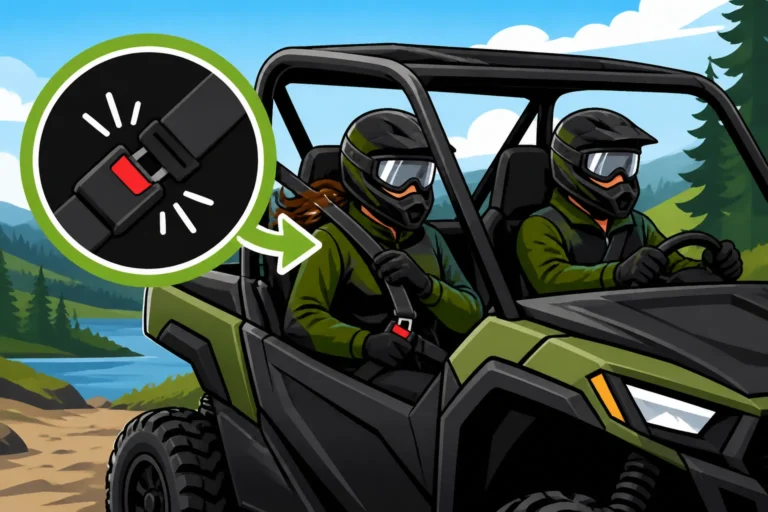
Beyond these, if your ORV is a side-by-side (ROV/MPV), it must also have a roll-over protection structure (ROPS) and seatbelts for all occupants. These are fundamental safety features for these types of machines when operating on roads. Always ensure your equipment is in good repair before heading out.
Tires, Helmets, and Insurance Proof
Beyond the basic lighting and signalling, there are other critical requirements for both your machine and yourself when riding on Ontario’s open municipal roads.
- Tires: Your ORV must be equipped with tires that are in good condition and suitable for road use. This generally means they must have sufficient tread depth and not be excessively worn. While knobby off-road tires are great for mud, they might not offer optimal grip on pavement, especially in wet conditions. Ensure your tires are roadworthy and always consider the conditions.
- Helmets: This is a non-negotiable safety item. Every operator and passenger on an ORV, regardless of whether you're on a trail or a legally open road, must wear an approved motorcycle helmet. This means a helmet that meets provincial safety standards, securely fastened with the chin strap. [Approved Motorcycle Helmets in Ontario] outlines the specific standards. Do not ride without one; it's a significant safety risk and carries hefty fines.
- Insurance: Just like any other vehicle on the road, your ORV must be insured with a valid motor vehicle liability policy. You must carry proof of this insurance with you whenever you operate the machine, whether on private property, trails, or open roads. [Ontario's Mandatory ORV Insurance] is not just a good idea; it's the law. An officer may ask for it during a roadside stop, and riding uninsured can lead to substantial penalties, including fines and impoundment of your machine. Keep your permit and insurance card in a waterproof pouch to protect them from the elements during your ride.
Meeting all these equipment and personal requirements isn't just about avoiding a ticket; it's about ensuring your safety and the safety of others when you share the road. Many aftermarket parts, like those offered by SuperATV, can help you meet these requirements or enhance your safety, but always verify they comply with Ontario regulations.
Enforcement, Penalties, and Safe Practices
Knowing the rules is one thing, but understanding the consequences of breaking them and adopting safe riding practices is another entirely. Ontario law enforcement takes ORV regulations seriously, particularly when it comes to road use, given the inherent risks involved. Being caught operating an ORV illegally on a provincial highway like the QEW, or even improperly on a municipal road, can lead to significant penalties that go far beyond a simple warning.
Fines, Impoundment, and Insurance Impacts
The repercussions for violating Ontario’s ORV road rules can be severe. If you're caught riding your ATV or UTV on a prohibited provincial highway, such as the QEW, you're looking at substantial fines. These could range from hundreds to thousands of dollars, depending on the specific charges laid under the Highway Traffic Act and the Off-Road Vehicles Act. Additionally, police have the authority to impound your vehicle. Imagine your trip ending abruptly with your ORV being towed away, leaving you stranded and facing significant towing and storage fees on top of any fines.
Beyond the immediate financial hit, there are long-term implications. Operating an ORV illegally or unsafely can affect your insurance. Your motor vehicle liability policy, which is mandatory, might not cover incidents that occur while you're violating the terms of the law or riding in prohibited areas. This could mean you're personally liable for damages or injuries if an accident occurs. An insurance claim or conviction could also lead to increased premiums or even cancellation of your policy. It’s a stark reminder that [Ontario Fines for No ATV Insurance] are designed to deter riders from taking such risks.
The Critical Importance of Planning Your Route
Given the strict limitations on ORV road use, especially regarding provincial highways, meticulous route planning becomes absolutely critical. You cannot simply hop on the QEW for a few exits to get to your favourite trail. Instead, you need to:
- Utilize Trail Networks: Plan your rides around established trail systems like those maintained by the OFATV or local clubs. These are designed for ORVs and are the safest and most enjoyable places to ride. Find out [Where to Ride an ATV in Ontario] to discover official trails.
- Check Municipal By-laws: Before planning a route that involves any road use, thoroughly research the by-laws of every municipality you intend to cross. Many townships provide maps or lists of their open roads online. If in doubt, contact the municipal office directly. This proactive approach can save you a lot of grief.
- Trailer Your Machine: For any significant distance that involves prohibited highways or areas without open municipal roads, trailering your ORV is the only legal and sensible option. This allows you to safely transport your machine to a staging area or trailhead where legal riding can begin. Many popular riding destinations have designated staging areas with ample parking for trucks and trailers.
- Connect Open Roads: If you’re lucky enough to find contiguous open municipal roads, plan your route to connect these segments legally. Be aware of speed limits, potential road closures, or other restrictions that might apply. Always carry your [Ontario ATV Trail Maps] and be prepared to adapt if a planned route is unexpectedly closed.
By understanding the rules, the penalties, and by putting in the effort to plan your route carefully, you can enjoy Ontario’s fantastic ORV opportunities responsibly and legally, avoiding the costly and dangerous mistakes of riding where you shouldn’t, especially on major highways like the QEW.
Alternatives for Long-Distance ORV Travel
Since major provincial highways like the QEW are definitively off-limits for ATVs and UTVs, riders need practical and legal alternatives for covering significant distances or accessing remote trailheads. The good news is that Ontario offers several viable solutions, allowing you to enjoy extensive riding adventures without breaking the law or endangering yourself and others.
Trailering Your ATV or UTV Safely
For any substantial journey that requires crossing regions or bypassing prohibited highways, trailering your ATV or UTV is the safest, most practical, and entirely legal solution. Investing in a good quality trailer—whether it's an open utility trailer, a dedicated ATV trailer, or an enclosed cargo trailer—is a fundamental part of responsible ORV ownership in Ontario. Trailering offers several advantages:
- Safety: Your ORV is securely fastened and transported by a vehicle designed for highway speeds, keeping it out of the dangerous flow of high-speed traffic.
- Legality: You're operating your ORV exactly where it belongs: on legal trails or designated staging areas, rather than risking fines and impoundment on unauthorized roads.
- Convenience: You can transport multiple machines, gear, fuel, and supplies, making it easier for group rides or multi-day expeditions. You can also bypass areas with no open municipal roads, setting up your base camp closer to the action.
- Machine Preservation: Transporting your ORV on a trailer reduces wear and tear on your machine, saving its components for the trails they were designed for, rather than subjecting them to kilometres of hard pavement.
When trailering, always ensure your machine is properly secured, the trailer lights are working, and you comply with all towing regulations under the Highway Traffic Act. This includes having proper safety chains, functional brake lights, and adequate tie-downs, perhaps using specialized straps from a company like SuperATV to keep your machine snug. Knowing [Where to Leave a Truck and Trailer] at various staging areas is also key to a smooth start to your ride.
Connecting Via Open Municipal Roads and Multi-Use Trails
While provincial highways are largely a no-go, many communities in Ontario have embraced ORV tourism by opening significant portions of their municipal road networks. This presents an excellent opportunity for riders to connect various trail systems, access amenities, or simply extend their rides. These open roads, coupled with dedicated multi-use trails, form a growing network that can facilitate impressive long-distance journeys.
- Municipal Road Networks: As discussed, many townships and counties have enacted by-laws that permit ORV use on specific roads. Riders can string these open segments together to create longer routes, often linking major trail systems like those managed by the OFATV or independent clubs such as the Eastern Ontario Trails Alliance (EOTA) or the Haliburton ATV Association (HATVA). You might find that [How an Ontario Municipality Opts In] can lead to fantastic new connections.
- Dedicated Multi-Use Trails: Ontario boasts an extensive network of multi-use trails, many of which are old rail beds or logging roads that have been repurposed for recreational use. These trails often span vast distances, connecting towns and villages. The Voyageur Multi-Use Trail System (VMUTS) near Mattawa is a prime example of such a network that allows for extensive ORV travel, often bypassing the need for provincial roads entirely.
- Strategic Staging Points: Plan your long-distance rides by identifying strategic staging points where you can unload your ORV from a trailer and begin riding on open municipal roads or direct trail access. This often means finding towns that are ORV-friendly and offer services like fuel, food, and accommodation. Checking [Ontario Trail Towns Worth a Weekend] can provide excellent starting points for your adventures.
By combining safe trailering practices with careful planning utilizing open municipal roads and dedicated multi-use trails, you can achieve truly epic ORV adventures across Ontario without ever having to contemplate the dangers and illegality of riding on highways like the QEW. It's about working within the rules to maximize your enjoyment and keep everyone safe.
Key Considerations for ORV Riders in Ontario
Riding an ATV or UTV in Ontario is an incredible experience, offering access to stunning natural landscapes and exciting adventures. However, it's crucial for every rider to operate responsibly, not only to comply with the law but also to ensure their own safety and preserve access for future generations. Beyond the specifics of highway rules, there are broader considerations that every ORV enthusiast should keep in mind.
The Importance of Continuous Education and Awareness
The world of ORV regulations can change, and what's permissible in one area might be strictly prohibited in another. That's why continuous education and staying informed are paramount.
- Stay Up-to-Date on Regulations: Laws and municipal by-laws regarding ORV use can be updated or changed. Regularly check official government sources, municipal websites, and reputable ORV associations (like the OFATV) for the latest information. Don't rely solely on word-of-mouth or outdated information.
- Understand Your Machine's Class: Revisit the classifications for ATVs, ROVs, and MPVs periodically. If you upgrade your machine or add aftermarket parts (such as those from SuperATV that might alter width or weight), re-evaluate its legal classification for road use. A machine that was once compliant might, with modifications, no longer meet the provincial definitions for certain types of road access.
- Rider Training: While not always mandatory for adult riders, taking an approved ORV safety course is highly recommended. These courses provide invaluable training on safe operation, hazard awareness, and understanding the rules of the trail and road. They are particularly beneficial for new riders or those looking to refresh their skills. [Ontario Rider Training and Why It Is Voluntary] explains more about the options available.
- Environmental Awareness: Respect for the environment is key. Stick to marked trails, avoid riding in sensitive areas, and follow "tread lightly" principles to minimize your impact on the natural surroundings. This includes understanding [Ontario Rules for Riding a Wetland] or other fragile ecosystems.
Respecting Landowners and Community Guidelines
A significant portion of Ontario's trail network relies on access granted by private landowners and cooperation with local communities. Maintaining good relationships is vital for the continued growth and availability of riding opportunities.
- Landowner Permission: Never, ever ride on private property without explicit permission from the landowner. Trespassing not only carries legal penalties but also erodes trust and can lead to trail closures. Always know [Ontario Trespass Rules for Riders] and respect property boundaries.
- Noise and Dust: Be mindful of the noise and dust your ORV generates, especially when riding through or near residential areas. This goes back to ensuring your muffler is in good working order and riding respectfully. Excessive noise is a common complaint that can lead to tighter restrictions or trail closures.
- Trail Etiquette: Practice good trail etiquette. Yield to other trail users, especially hikers, cyclists, and equestrians. Always be prepared for oncoming traffic, slow down in blind corners, and keep an appropriate distance from other riders. Be aware of [Ontario Trail Etiquette With Snowmobilers] if you ride multi-use trails in the winter.
- Support Local Clubs: Many of Ontario's fantastic trails are maintained by volunteer-driven clubs. Consider becoming a member or purchasing a trail permit from these organizations. Your contributions help fund trail maintenance, signage, and advocacy efforts that keep trails open and accessible. Understanding [Ontario ATV Trail Permits Explained] is a great first step in supporting the riding community.
By embracing these considerations, you contribute to a positive future for ORV riding in Ontario, ensuring that the incredible experiences offered by the province's diverse terrain remain accessible and enjoyable for everyone.
| Highway Type | General ORV Access Status | Specifics for ORV Use | Legal Authority | Common Examples |
|---|---|---|---|---|
| Provincial 400-Series Highways | Strictly Prohibited | No ORV access permitted under any circumstances. Extremely high-speed traffic, multi-lane, complex interchanges. | Highway Traffic Act, Off-Road Vehicles Act (Ontario Regulation 316/03) | QEW, Hwy 401, Hwy 400 |
| Other Provincial Highways | Generally Prohibited, with very limited exceptions | Prohibited unless explicitly listed in Schedule B of O. Reg. 316/03. Exceptions are rare, short, and have speed limits. | Highway Traffic Act, Off-Road Vehicles Act (O. Reg. 316/03, Schedule B) | Parts of Hwy 11, Hwy 17, Hwy 60 (check Schedule B) |
| Municipal Roads | Permitted only where explicitly opened by local by-law | Access depends entirely on local municipal by-laws. Often includes speed limits (e.g., 20/50 km/h) and specific routes. | Off-Road Vehicles Act, Municipal By-laws | City streets, township roads, county roads |
| Dedicated ORV Trails | Permitted with appropriate trail permit | Designed for ORV use. Requires a valid trail permit (e.g., OFATV). May have specific rules from the trail operator. | Off-Road Vehicles Act, Landowner Agreements, Trail Club Regulations, Provincial Parks Act (where applicable) | OFATV trails, Ganaraska Forest, VMUTS |
| Crown Land | Generally permitted, with restrictions | Free use policy in many areas, but restrictions may apply in specific zones or during certain seasons. | Public Lands Act, Crown Forest Sustainability Act, Regional MNRF regulations | Remote forest access roads, designated Crown Land areas |
Disclaimer
This article is for general informational purposes only and does not constitute professional advice. Laws, prices and regulations vary by location and change over time. Consult a qualified professional for guidance on your specific situation.