Why Ontario’s 400-Series Highways Stay Closed
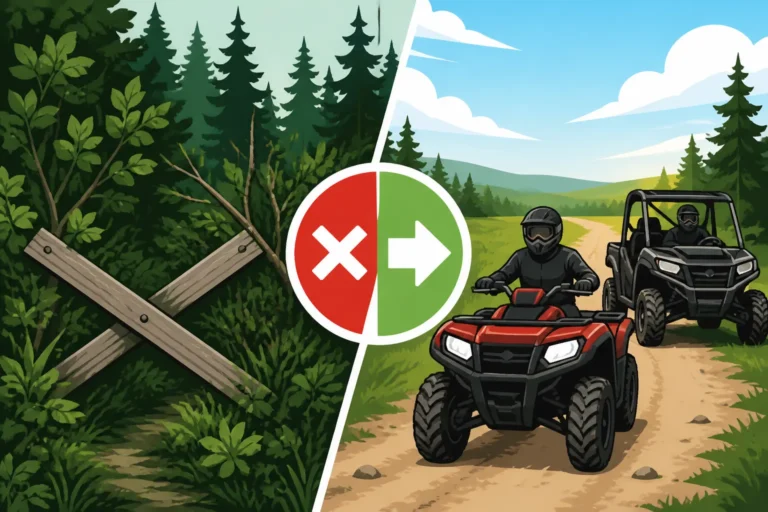
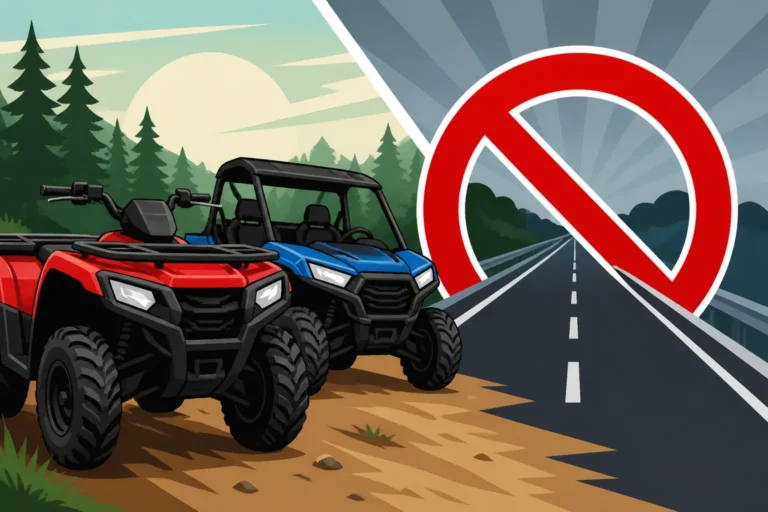
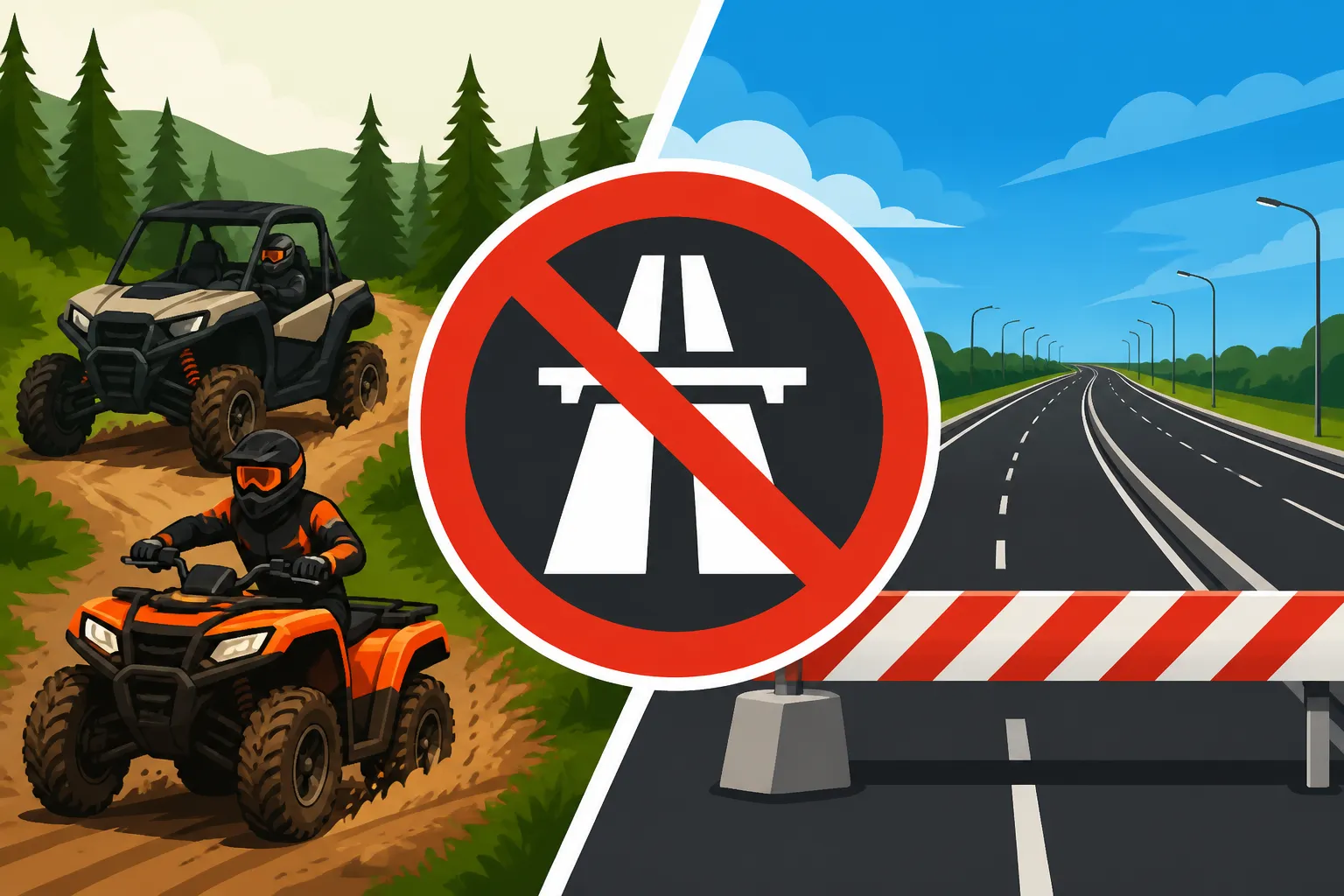
It's incredibly frustrating, isn't it? You've got this awesome ATV or UTV, perfectly registered and insured, and you just want to get from Point A to Point B, maybe to connect to a fantastic trail network or reach a distant cottage. But then you hit a wall: Ontario's major 400-series highways are completely off-limits to off-road vehicles. This guide is all about diving deep into the reasons why those fast-moving arteries of our province remain closed to ORVs, examining the legal, safety, and infrastructural complexities at play.
The Legal Framework: Why 400-Series Highways Are Different
When it comes to motor vehicles in Ontario, not all roads are created equal in the eyes of the law. There's a fundamental distinction in how our provincial legislation treats different types of roadways and, by extension, the vehicles allowed on them. This distinction is the bedrock of why your ATV or UTV, despite being a powerful and capable machine, simply isn't permitted on highways like the 401, 400, or the QEW.
The Highway Traffic Act's Stance
The Highway Traffic Act (HTA) is the overarching piece of legislation that governs virtually everything that moves on Ontario's public roads, from bicycles to transport trucks. Its primary purpose is to ensure the safety and efficient flow of traffic. When the HTA was drafted and subsequently updated, the 400-series highways were specifically designated as "controlled-access highways." This isn't just a fancy term; it implies a very strict set of rules about what kinds of vehicles can enter, how they enter, and their minimum performance standards.
For instance, the HTA presumes that vehicles on these highways will be capable of maintaining high speeds safely, accelerating rapidly to merge with traffic, and possessing certain structural integrity and safety features designed for high-speed collisions. Most ATVs and UTVs, by their very design and classification, simply do not meet these rigorous criteria. They are built for off-road ruggedness and agility, not sustained high-speed highway travel. Trying to force them into a highway environment would be like trying to fit a square peg in a round hole – potentially dangerous and definitely illegal.
The Off-Road Vehicles Act and Its Limits
Separate from the HTA, we have the Off-Road Vehicles Act (ORVA), which specifically regulates ATVs, UTVs, and other ORVs in Ontario. The ORVA dictates where and how these machines can be ridden, including provisions for limited road access. However, it's critical to understand that the ORVA grants permissions where the HTA doesn't prohibit, or it sets its own specific rules for ORVs. Crucially, the ORVA does not override the fundamental classifications and prohibitions set forth for controlled-access highways by the HTA.
The permissions granted under the ORVA for road use are generally limited to municipal roads or specific provincial highways listed in "Schedule B" of Ontario Regulation 316/03, usually with strict speed limits (like 20 km/h or 50 km/h) and conditions. These are almost exclusively lower-speed, lower-volume roads where the integration of ORVs poses a much lower risk. The 400-series highways are notably absent from any of these permissions. The ORVA, therefore, defines the allowed spaces for ORVs, and those spaces simply do not extend to Ontario's busiest, fastest arteries. This means that even if your UTV is a beast with impressive power, its legal classification under the ORVA doesn't grant it the same rights as a car on a 400-series highway. You'll find specific details on permitted road use in articles like [Riding an ATV on Ontario Roads] and [Ontario ATV Rules on a Municipal Road].
Jurisdiction and Authority
Another layer to this legal onion is the matter of jurisdiction. While municipalities have the power to pass by-laws to open their local roads to ORVs – within the parameters set by the province, of course – the 400-series highways fall under direct provincial jurisdiction and are managed by the Ministry of Transportation (MTO). The MTO, in conjunction with the provincial government, sets the rules for these high-speed corridors.
These rules are established with safety, efficiency, and the protection of the vast number of daily commuters and commercial traffic in mind. Allowing ORVs on these highways would require a significant legislative shift, not just a municipal by-law, and would likely involve extensive studies into safety impacts, traffic flow disruptions, and potential costs for infrastructure modifications. Given the current safety concerns and the high volume of traffic, such a change is highly improbable. Understanding how different levels of government influence ORV access is key to grasping why some roads are open and others, like the 400-series, remain steadfastly closed.
Speed, Safety, and Design Limitations
It's easy to look at a powerful side-by-side or a performance ATV and think, "Hey, this thing can go fast, why can't it be on the highway?" But the reality of highway travel involves far more than just top speed. The inherent design of off-road vehicles, coupled with the unforgiving environment of a 400-series highway, creates a cocktail of safety hazards that current legislation simply isn't willing to permit.
High-Speed Differentials
Imagine you're driving a car at 110 km/h on Highway 400. Now, picture an ATV or UTV, even one capable of hitting 80 km/h, trying to merge into that traffic. The speed differential is massive. A typical ATV is not designed for the rapid acceleration needed to quickly match highway speeds, nor is it built to maintain those speeds for extended periods without significant mechanical stress.
This difference in speed creates a huge safety risk. Other vehicles would need to slow down significantly or make sudden lane changes to avoid an ORV, increasing the likelihood of multi-vehicle collisions. Furthermore, the wind shear from large transport trucks passing at highway speeds could easily destabilize a lighter, less aerodynamic ORV, especially those with tall lift kits or wider stances. Even with aftermarket stability enhancements, like those offered by SuperATV for improved off-road performance, they don't fundamentally change the vehicle's design for high-speed highway aerodynamics or crash protection against a multi-ton transport. This dynamic is a primary reason why [Ontario ATV Speed Limit on Roads] is so much lower on permitted municipal routes.
Infrastructure Not Designed for ORVs
Ontario's 400-series highways are engineered for specific types of vehicles – cars, trucks, and buses. This engineering includes everything from lane width and shoulder design to guardrails, signage, and emergency access points. ORVs, with their different dimensions, weight distribution, and handling characteristics, simply don't fit into this design.
Consider the shoulders: on a 400-series highway, shoulders are often narrow and not always consistently paved. An ORV pulled over on a shoulder would be extremely vulnerable to passing traffic, especially if it breaks down and needs roadside assistance. The on-ramps and off-ramps are designed for quick acceleration and deceleration, which ORVs struggle with, creating bottlenecks and hazardous merging conditions. Furthermore, the drainage systems, median barriers, and even the reflectivity of road markings are all optimized for standard highway vehicles, not for the unique perspective and visibility of an ORV driver. Trying to integrate ORVs into this existing infrastructure would require a complete re-engineering of the highway system, which is a monumental and cost-prohibitive undertaking.
Emergency Services and ORVs on Highways
In the event of an incident involving an ORV on a 400-series highway, the challenges for emergency services would be amplified. Responding to a breakdown or collision involving a vehicle that isn't designed for the highway environment poses unique risks to first responders. Paramedics, police, and tow truck operators would face increased danger trying to assist an ORV in live, high-speed traffic.
For example, an ORV involved in a collision at highway speeds would offer virtually no occupant protection compared to a passenger car, leading to potentially far more severe injuries. The recovery of a damaged ORV might also be more complex, requiring specialized equipment not typically deployed for highway incidents. The current emergency response protocols and infrastructure are simply not equipped to handle ORVs on these major roadways, making their presence a significant liability from an emergency management perspective.
The Distinct Classes of Off-Road Vehicles in Ontario
Understanding why ORVs are barred from 400-series highways also requires a deeper look into how Ontario classifies these machines. The province doesn't just see a "quad" or a "side-by-side"; it categorizes them meticulously, and these categories come with specific operational guidelines and limitations.
ATVs, ROVs, and MPVs: Understanding the Categories
Ontario Regulation 316/03, under the Off-Road Vehicles Act, defines distinct classes of off-road vehicles, and these distinctions are crucial for understanding where each can legally operate.
- ATV (All-Terrain Vehicle): This is your traditional quad, designed for a single rider or, if equipped with a designated passenger seat, for two. They are typically saddle-seated machines.
- ROV (Recreational Off-Highway Vehicle): This class generally refers to side-by-sides (SxSs) or UTVs. These are multi-purpose, side-by-side seated vehicles with a steering wheel and often seat belts, resembling a small off-road car. [Why a Side-by-Side Is an ROV, Not an ATV] delves into this distinction.
- MPV (Multi-purpose Off-Highway Vehicle): This is a broader category that can include vehicles like Argo or tracked vehicles.
Each of these classifications has specific rules regarding engine size, weight, width, and occupancy. For instance, the ATV class often has specific limitations on carrying passengers on single-rider machines. The ROV class (side-by-sides) is typically wider and heavier, which brings its own set of considerations for trail use and municipal road access. While these machines are built tough and can navigate challenging terrain, they are fundamentally different from passenger cars or light trucks that are designed and certified for highway use. They lack features like crumple zones, advanced airbag systems, and specific chassis designs that absorb impact in high-speed collisions – features that are standard requirements for vehicles on 400-series highways.
Weight, Width, and Engine Restrictions
Beyond the general classification, there are specific physical parameters that further restrict ORVs from highway use. The ORVA (and related regulations) sets limits on weight and width for machines that are permitted on certain municipal roads. While an ORV might meet the width requirements for a specific municipal by-law, the spirit of these restrictions is about fitting safely into existing lower-speed road infrastructure, not about being compatible with a 400-series highway.
For example, many larger UTVs, especially those with custom cages or aftermarket accessories from companies like SuperATV designed for enhanced off-road protection or utility, might exceed certain width or weight thresholds for some municipal roads, let alone a 400-series highway. Their higher centre of gravity and narrower track width compared to highway vehicles (even if accessorized for stability) make them inherently less stable at sustained high speeds, especially during emergency maneuvers or in crosswinds. The engine size, while often powerful, is typically geared for torque and low-end grunt for off-road capability, not for efficient, high-speed cruising over long distances. The combination of these physical characteristics means ORVs simply don't handle or perform like highway vehicles.
Safety Features and Highway Standards
When you purchase a vehicle destined for highway use, it must meet a rigorous set of Canadian Motor Vehicle Safety Standards (CMVSS). These standards cover everything from braking performance, lighting, tire specifications, and occupant protection (like seat belts, airbags, and crashworthiness) to emissions and noise. ATVs and UTVs are subject to their own set of safety standards, but these are geared towards off-road use and do not encompass the requirements for highway speeds and crash protection.
For instance, an ORV's braking system is designed for off-road conditions, which are very different from the demands of stopping quickly and predictably from 100 km/h on asphalt. Their lighting systems might be adequate for trails or low-speed roads but are often insufficient for the visibility requirements of a highway, especially at night or in adverse weather. While many UTVs come with seat belts, these are typically not engineered to the same crash impact standards as those in highway vehicles. The lack of these fundamental highway-specific safety features means ORVs pose an unacceptable risk to both their occupants and other highway users if they were allowed on 400-series roads.
Comparing ORV Road Access: 400-Series vs. Municipal Roads
It's natural to feel a sense of unfairness when you see other provinces with different rules, or even when you see motorcycles and sometimes even farm tractors on certain roads where your quad isn't allowed. The key here is to understand the deliberate distinctions Ontario makes between different types of roads and the local control that comes with them.
Local Road Access: A Municipal Decision
The most significant difference lies in who gets to make the rules. For most local, lower-speed roads, Ontario has empowered its municipalities to decide whether to open specific roads within their jurisdiction to ORVs. This is done through municipal by-laws, which detail specific roads, times of day, speed limits, and even the types of ORVs allowed. This local control allows communities to balance the needs of riders with the concerns of residents, local traffic patterns, and existing infrastructure. You can learn more about this in [How an Ontario Municipality Opts In].
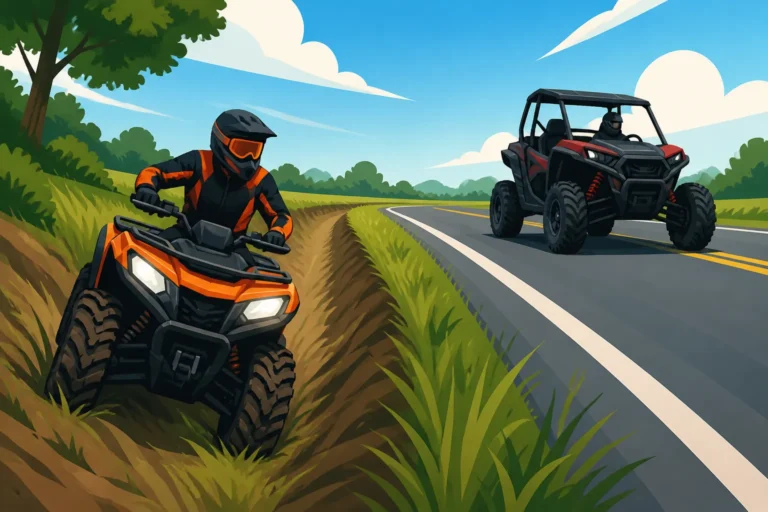
These municipal roads are typically rural, two-lane roads, often with lower posted speed limits (50 km/h or 80 km/h), where ORV traffic can integrate more safely. The speed differential with other vehicles is less pronounced, and drivers are generally more accustomed to encountering a variety of vehicles, including slow-moving farm equipment or cyclists. This allows riders to legally [Cross a Provincial Highway Legally] by using an approved municipal road to get from one trail section to another. The province provides the framework, but the municipalities make the granular decisions.
Controlled-Access Highways vs. Arterial Roads
The 400-series highways, on the other hand, are "controlled-access" highways. This means there are no at-grade intersections, no traffic lights, and strictly limited entry and exit points (ramps). They are designed for the high-volume, high-speed movement of traffic over long distances. "Arterial roads" are major thoroughfares, but they still have intersections, traffic lights, and direct property access, allowing for slower speeds and easier integration of diverse vehicle types.
This table highlights the stark differences:
| Feature | 400-Series Highways | Municipal Roads (Permitted for ORVs) |
|---|---|---|
| Access Control | Fully controlled access (ramps only), no at-grade intersections | Uncontrolled (at-grade intersections, driveways) |
| Primary Function | High-speed, high-volume, long-distance travel | Local travel, connecting communities, mixed traffic |
| Typical Speed Limit | 100-110 km/h | 50-80 km/h (often 20 or 50 km/h for ORVs) |
| ORV Legal Status | Prohibited | Permitted by municipal by-law, with restrictions |
| Vehicle Design Focus | Stability, crashworthiness, aerodynamics at high speed | General purpose, local transport, varying designs |
| Emergency Services | Specialized highway response | Local police, fire, EMS, adapted to lower speeds and conditions |
The Role of Schedule B
Ontario Regulation 316/03, which falls under the Off-Road Vehicles Act, includes a crucial list known as "Schedule B." This schedule specifies certain provincial highways or portions of them where ORVs are permitted to operate, typically under specific conditions (like specific speed limits, operating hours, and only if the ORV meets certain criteria). These are almost exclusively lower-tier provincial highways, often in more rural areas, which might be necessary for ORV riders to connect trail systems or access services.
However, a quick glance at Schedule B reveals a critical absence: no 400-series highways are listed. Not even a small section. This deliberate omission underscores the provincial government's unwavering stance on keeping these high-speed, high-volume corridors free of ORV traffic. The very design and intent of the 400-series highways are incompatible with the safe operation of off-road vehicles, regardless of how robust or accessorized a machine might be. For a more detailed look at where you can ride, refer to [Ontario Highways Open to ATVs] to understand the contrast with the 400-series.
The Future: Is There Any Hope for Change?
The question naturally arises: will the 400-series highways ever open up to ATVs and UTVs in Ontario? While the current legal and safety landscape makes it seem unlikely, it's worth exploring the dynamics that could, in theory, lead to change, and what the reality on the ground suggests.
Advocacy and Rider Organizations
Off-road vehicle advocacy groups, such as the Ontario Federation of ATV Clubs (OFATV), tirelessly work to expand and improve riding opportunities across the province. Their efforts are largely focused on trail development, municipal road access, and ensuring fair and safe regulations for off-road use. These organizations are the voice of the riders, and they play a vital role in liaising with provincial and municipal governments.
While their primary focus has historically been on expanding the trail network and gaining access to lower-speed municipal roads, the idea of highway access is sometimes discussed within the broader rider community. However, even these groups understand the immense challenges and safety implications of advocating for 400-series highway access. Their efforts are generally more strategically directed towards achievable goals that genuinely enhance the riding experience, rather than pushing for changes that are likely to be rejected outright due to overwhelming safety concerns. So, while advocacy is ongoing, it's realistically focused on local access, not high-speed thoroughfares.
The Challenge of Legislative Change
Any change to allow ORVs on 400-series highways would require significant legislative amendments, primarily to the Highway Traffic Act, and potentially a complete overhaul of related regulations under the Off-Road Vehicles Act. This isn't a simple matter of tweaking a by-law; it would involve a complex and lengthy political process, including:
- Extensive Safety Studies: The government would need to commission exhaustive studies on the safety implications of mixing ORVs with high-speed highway traffic, evaluating accident risks, traffic flow impacts, and emergency response capabilities.
- Public Consultation: There would be widespread public consultation, and it's highly probable that the public, particularly those who regularly use 400-series highways, would voice strong opposition due to perceived safety risks and potential traffic disruptions.
- Infrastructure Modifications: As discussed, the existing infrastructure is not designed for ORVs. Significant and costly modifications to shoulders, ramps, and possibly even lane designs would be required, which would be an enormous taxpayer expense.
- Insurance and Liability: The insurance industry would need to completely reassess its models for ORVs operating in such high-risk environments, likely leading to dramatically increased premiums or even refusal to cover such use. [Ontario ATV Insurance Requirement] for off-road and municipal road use is already a key consideration for riders.
Given the current political climate, the MTO's strong emphasis on highway safety, and the sheer logistical and financial hurdles, the likelihood of such legislative change happening in the foreseeable future remains incredibly low.
What Riders Can Do Now
So, if riding on 400-series highways isn't an option, what can riders do? The best approach is to focus on what is available and to ride responsibly within those parameters.
- Utilize the Existing Network: Ontario boasts an incredible network of trails maintained by clubs under the OFATV. Focus your energy on exploring and supporting these designated trail systems.
- Understand Local By-laws: Actively research and understand the specific municipal by-laws in the areas you plan to ride. These allow for [Ontario ATV Rules for Crossing a Highway] on municipal roads and help you connect trails legally.
- Ride Safely and Responsibly: By demonstrating responsible riding habits, adherence to rules, and respect for other road users on permitted municipal roads, the ORV community strengthens its case for continued and perhaps expanded local access.
- Support Advocacy Groups: Become a member of organizations like the OFATV. Your membership fees and volunteer hours directly contribute to maintaining and expanding the accessible trail network and advocating for rider rights within realistic and safe boundaries.
- Plan Your Route: When planning a long trip, use dedicated ORV maps and resources to identify legal trail connections and permitted municipal road links, rather than even contemplating using restricted highways. You'll likely need to trailer your machine for significant distances where 400-series highways are unavoidable.
The goal is to foster a positive image of ORV riders, ensuring that the existing permissions for municipal road use remain, and that future opportunities for trail expansion are well-received. While the 400-series highways might forever remain off-limits, there are still thousands of kilometres of incredible riding to be had in Ontario.
Disclaimer
This article is for general informational purposes only and does not constitute professional advice. Laws, prices and regulations vary by location and change over time. Consult a qualified professional for guidance on your specific situation.