Carrying an Insurance Card on a Ride
It's easy to get caught up in the thrill of the ride when you're out on your ATV or UTV in Ontario, exploring trails or traversing designated municipal roads. But many riders often overlook one crucial, yet easily forgotten, piece of paperwork: your insurance card. Getting pulled over, even for a routine check, only to realize your proof of insurance is either at home, waterlogged, or simply not accessible, can quickly turn a fantastic day into a frustrating and expensive headache. This guide is here to walk you through exactly what you need to know about carrying your ATV or UTV insurance card in Ontario, ensuring you're always prepared and compliant with the law.
The Absolute Necessity of Insurance Proof on Ontario Trails and Roads
Riding an off-road vehicle (ORV) in Ontario isn't just about having the right machine, the proper helmet, or even a valid permit; it's also about being legally insured and, crucially, being able to prove it when asked. This isn't just a suggestion; it's a fundamental requirement enshrined in provincial law, designed to protect everyone on the trails and roads.
Why Ontario Law Demands It: Beyond Just Having Coverage
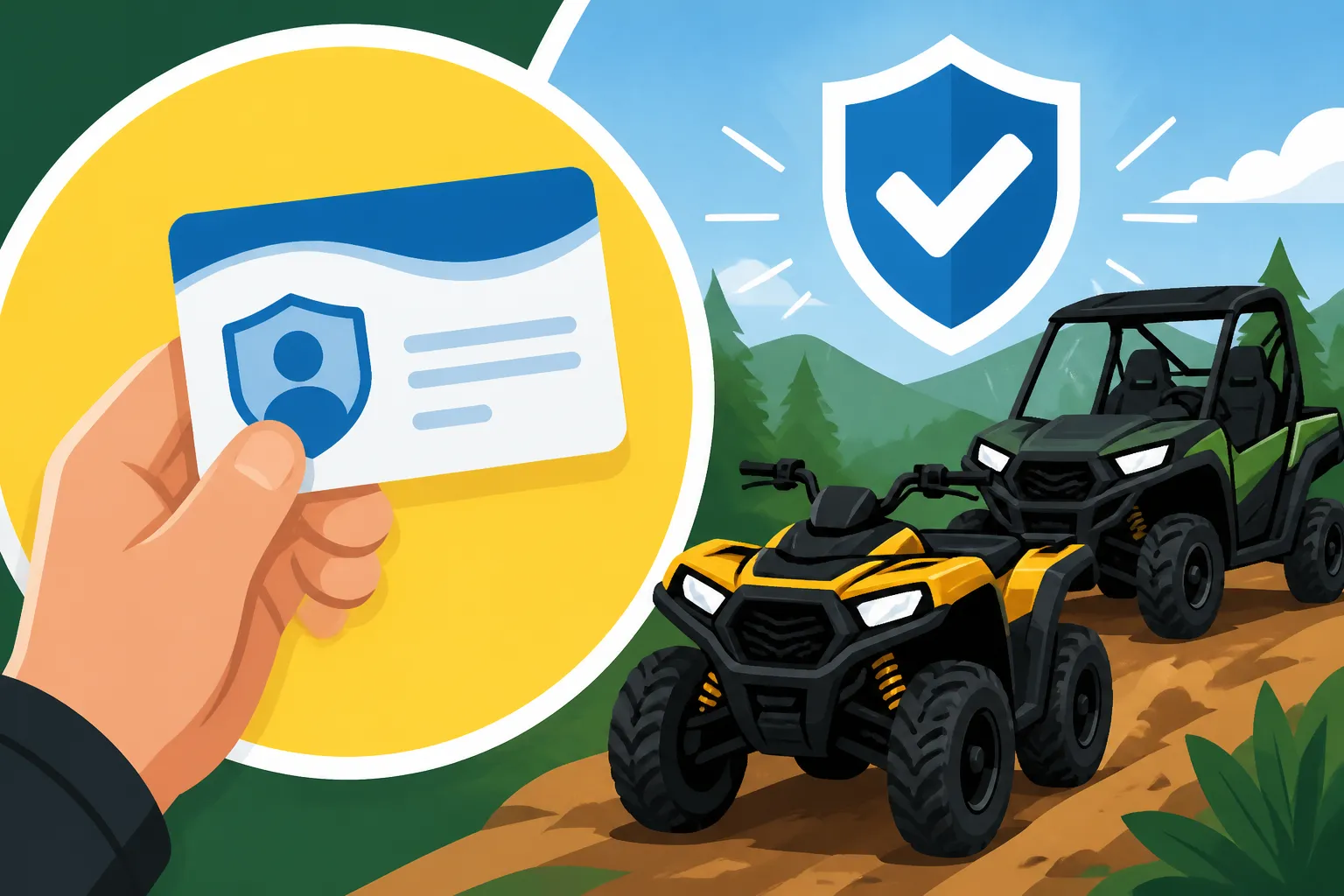
Think of your insurance card as your rider's passport to legal operation. [Ontario's Mandatory ORV Insurance] is not merely a formality; it's a cornerstone of responsible riding. The provincial government mandates that all ORVs, including ATVs and UTVs, have valid motor vehicle liability insurance. This insurance isn't just for your peace of mind; it's there to cover potential damages or injuries you might cause to others or their property while operating your machine. Without this coverage, the financial repercussions of an accident, even a minor one, could be devastatingly high.
But simply having the insurance isn't enough. You are legally required to carry proof of that insurance with you whenever you operate your ORV, whether you're cruising down an open municipal road or navigating a remote trail. This requirement exists so that if you're involved in an incident, or if a law enforcement officer conducts a routine stop, you can immediately demonstrate your compliance. This saves time, prevents confusion, and ensures accountability on the spot. It's a key part of what makes you a responsible and legally operating rider in Ontario, similar to how a driver of a car needs to show their car insurance.
What Happens When You're Caught Without It: Consequences for Lacking Documentation
Imagine you're deep in the Haliburton trails, enjoying the crisp autumn air, when you encounter a Ministry of Natural Resources and Forestry (MNRF) officer or an Ontario Provincial Police (OPP) constable. They ask to see your permit, your driver's licence, and your proof of insurance. You produce the first two with a smile, but then you realize your insurance card is safely tucked away in your wallet back home, or perhaps it slipped out of your fanny pack somewhere along the trail. This seemingly minor oversight can lead to some significant penalties.
Even if you do have valid insurance, failing to produce proof of it when requested by an officer can result in a fine. It's not just about proving you're covered; it's about being able to provide that tangible evidence on demand. The fines for this can be substantial, and in some cases, an officer might even have the authority to impound your machine until proper documentation is provided. If, worse yet, you are found to be riding without any insurance at all, the consequences escalate dramatically. [Ontario Fines for No ATV Insurance] can reach into the thousands of dollars, far exceeding the cost of even a comprehensive insurance policy. Beyond the monetary penalties, a conviction for operating an uninsured vehicle can also affect your future insurance rates and your driving record. It’s a very costly lesson to learn, and one that is entirely avoidable by simply ensuring you have your proof of insurance with you every time you swing a leg over your quad or buckle into your side-by-side. You definitely don't want to explain to your family why your fun weekend outing turned into a huge bill and a visit to the impound lot.
Understanding Ontario's Insurance Card Requirements
Navigating the specifics of what constitutes valid proof of insurance can sometimes feel a bit murky, especially with the evolution of digital documents. However, when it comes to riding your ORV in Ontario, the rules are fairly straightforward. Knowing these requirements upfront can save you a lot of grief during a roadside stop.
Physical Card vs. Digital Copies: What's Accepted and What's Not
For years, the gold standard for proving vehicle insurance in Ontario was the physical pink slip – that small, often folded, paper card issued by your insurer. This is still absolutely acceptable and widely recognized. You simply hand it over to the officer, they check the details, and you're usually on your way. Many riders prefer this traditional method, often laminating their card or keeping it in a waterproof pouch to protect it from the elements, a smart move for anyone frequently out in the variable Ontario weather.
However, the world is moving digital, and Ontario has adapted to some extent. You can present an electronic version of your insurance card on a mobile device, like your smartphone or tablet. This means you could have a PDF, an image file, or access your insurer's app to display your card. This offers convenience, as most of us have our phones with us anyway. But here's the crucial caveat: if you choose the digital route, you are responsible for ensuring your device is charged and the display is legible. An officer isn't obliged to wait for your phone to charge or to squint at a cracked screen. Plus, if you hand over your phone, be prepared for them to handle it. Ensure your phone is in a secure, easily accessible, and weather-protected location, perhaps in a sturdy SuperATV storage bag attached to your machine, ready to be presented. While convenient, some riders still find the digital option a bit fiddly on the trail, especially with muddy hands or in bright sunlight. The key is legibility and accessibility without delay.
What Information the Card Must Display: Key Details Police Look For
When you hand over your insurance card, whether physical or digital, law enforcement officers are looking for specific pieces of information to verify your coverage. It's not just a blank piece of paper; it's a legal document. Primarily, they want to see that you have a valid [The Motor Vehicle Liability Policy Ontario Wants]. This policy provides crucial liability coverage, which is the most fundamental requirement.
Here’s a breakdown of the essential details that must be clearly visible on your insurance card:
- Policy Holder's Name: This should match the name of the person operating the vehicle, or at least be readily identifiable as the owner of the policy.
- Insurer's Name: The name of the company providing your insurance (e.g., Aviva, Intact, The Personal).
- Policy Number: A unique identifier for your insurance coverage.
- Effective Date and Expiry Date: This is perhaps one of the most critical details. Officers need to quickly verify that your insurance policy is currently active and has not lapsed. [Riding With an Expired Insurance Card in Ontario] is just as serious as having no insurance at all.
- Vehicle Information: The make, model, and crucially, the Vehicle Identification Number (VIN) of your ATV or UTV should be listed. This links the insurance policy directly to the specific machine you are operating.
- Coverage Type and Limits: While the officer primarily cares about the liability aspect, your card will typically also show the type of coverage you have (e.g., liability, collision, comprehensive) and the minimum liability limits, which in Ontario are generally set at $200,000 for ORVs.
It's a good habit to periodically review your insurance card to ensure all these details are correct and up to date. Mistakes can happen, and catching them before a roadside stop can save you a lot of hassle.
Best Practices for Safely Storing Your Insurance Card
Once you have your insurance card, the next challenge is ensuring it survives the rigours of off-road riding and is readily available when you need it. The trails are rarely a pristine environment; dust, mud, water, and vibrations are all part of the adventure. Your insurance card needs to be prepared for all of it.
Protecting Against the Elements: Waterproofing and Durability
Picture this: you're tearing through a muddy section of trail near Bancroft, water splashing everywhere, and then you hit a deep puddle that drenches you from head to toe. Later, an officer pulls you over, and when you reach for your insurance card, it's a soggy, illegible mess. This scenario is all too common, and it's easily avoidable with a little forethought.
Waterproofing is paramount. Many riders simply slip their physical insurance card into a small, sealable plastic bag, like a Ziploc, before placing it in a more robust storage solution. This creates a basic, effective barrier against moisture. For a more durable solution, you might consider a dedicated waterproof document pouch, often made from heavy-duty vinyl or similar materials with a secure roll-top or zipper seal. These are designed to withstand submersion and splashes. Some riders even go so far as to laminate their actual paper card for maximum protection, though you'll want to ensure lamination doesn't obscure any important details or void its official status with your insurer.
Beyond water, consider dust and dirt. A grimy, sand-blasted card is almost as useless as a soggy one. Whatever method you choose, ensure it fully encloses and protects the card from these abrasive elements. If you're using a digital copy, ensure your phone is in a robust, waterproof case that can handle drops and splashes. A quality SuperATV phone mount with a sealed, clear cover can be an excellent way to keep your digital card visible and protected, while still allowing you to access it quickly. Remember, the goal is for the card to be perfectly readable when you present it, regardless of the conditions you've just ridden through.
Accessible Yet Secure: Where to Keep It on Your Machine or Person
The second critical aspect of storage is balancing accessibility with security. You need to be able to retrieve your insurance card quickly upon request, but it also needs to be securely fastened or tucked away so it doesn't get lost on a bumpy ride. Losing your card mid-ride is almost as bad as leaving it at home.
Many riders opt to keep their insurance card, along with their ORV permit, in a small, secure compartment on their machine. This could be a glove box on a UTV, a small, waterproof storage box mounted to the rack of an ATV, or even a specialized handlebar bag. The key here is "secure." Ensure whatever container you use is firmly attached and won't bounce open or detach during aggressive riding. A small, lockable box can provide an extra layer of security against theft or accidental loss.
Alternatively, you can carry it on your person. A waterproof wallet or a small pouch worn under your riding jacket, in a chest pocket, or even securely tucked into a fanny pack are popular choices. The advantage of carrying it on your person is that it stays with you even if you dismount from your machine. However, be mindful of comfort and how it might interfere with your riding gear. Whatever location you choose, practice retrieving it quickly. You don't want to be fumbling around under pressure while an officer waits. [Keeping Your ORV Permit Dry on a Wet Ride] offers similar advice that applies perfectly to your insurance card, emphasizing the importance of protection from the elements.
What to Expect During a Roadside Stop
Even the most law-abiding riders can be pulled over for a routine check. When that happens, knowing what to do can make the experience quick and stress-free. Your calm demeanour and preparedness are your best assets.
Presenting Your Documents: The Process and What an Officer Expects
If a law enforcement officer, whether OPP, MNRF, or local police, signals you to stop, do so safely and promptly. Pull over to the side of the trail or road in a clear, safe spot where you won't obstruct others. Turn off your engine and remove your helmet. These actions immediately signal respect and cooperation.
When the officer approaches, they will typically ask for your driver's licence, your ORV permit (your vehicle registration), and your proof of insurance. Take a deep breath, remain calm, and retrieve your documents efficiently. This is where your good storage habits pay off. Have them ready to hand over. [Showing Proof at a Roadside Stop] is about demonstrating that you are a responsible operator.
Present your physical insurance card or display the digital version on your phone clearly. Be polite and answer any questions truthfully. Remember, the officer is simply doing their job, ensuring that everyone on the trails and roads is compliant with the law. They're looking for the previously mentioned key details: your name, the insurer, policy number, dates, and the VIN of your machine. If all checks out, they'll likely return your documents and send you on your way. Do not argue, become defensive, or make excuses. Your best bet is always to be cooperative and prepared.
Dealing with Lost or Damaged Cards: Immediate Steps and Long-Term Solutions
It happens. Despite your best efforts, sometimes an insurance card can get lost or damaged on the trail. Maybe it flew out of an unzipped pocket, or a severe downpour finally breached your "waterproof" pouch. What do you do then?
Immediately after realizing your card is lost or damaged beyond recognition, the best course of action is to try and contact your insurance provider. Many companies have online portals or mobile apps where you can access a digital copy of your card immediately. If you have cell service, you might be able to pull it up on your phone. This digital version can serve as temporary proof if you're stopped. If you don't have cell service, and you're stopped, explain the situation calmly and truthfully to the officer. While they might still issue a ticket for failure to produce proof, demonstrating that you understand the requirement and are actively trying to rectify the situation can sometimes help.
For a long-term solution, contact your insurance broker or company as soon as possible to request a replacement card. Most insurers can issue a new physical card and mail it to you, or provide you with a printable PDF version. Until you receive the replacement, rely on a digital copy if available, or carry a printout of the policy declaration page if it contains all the necessary information. This situation underscores the value of having a digital backup on your phone and considering carrying a secondary, physical photocopy in a separate, secure location on your machine or person. This is where the concept of [Carrying the Permit or a True Copy] comes in handy—a photocopy of your insurance card is better than nothing, though the original is always preferred. Just make sure any copy is legible and clearly shows all the required information.
Common Pitfalls and How to Avoid Them
Even with the best intentions, riders can sometimes fall into common traps regarding their insurance documentation. Being aware of these pitfalls is the first step toward avoiding them entirely.
Expired Cards and Lapsed Policies: The Importance of Staying Current
One of the most frequent reasons riders run into trouble during a roadside check isn't that they don't have insurance, but that their insurance has expired. Life gets busy, and it's easy to overlook renewal notices, especially if your ORV policy is separate from your primary vehicle insurance. An expired insurance card is, legally speaking, the same as having no insurance at all. The officer checking your documents will look closely at the "Valid Until" or "Expiry Date" printed on your card. If that date has passed, you're in violation.
This situation can arise for several reasons: perhaps you changed insurers, your payment method failed, or you simply missed the renewal reminder. Regardless of the reason, the consequences are the same as riding uninsured, which can lead to significant fines and potential impoundment of your machine, as highlighted in [The $5,000 Fine for Riding Uninsured in Ontario]. To avoid this, make it a habit to check the expiry date on your insurance card annually, or even semi-annually. Set calendar reminders on your phone, or make a note on your physical calendar to review your policy and ensure it's current. If you switch insurers, always ensure your new policy is in effect before your old one expires, and get your new card promptly. It's crucial that you have [Insurance Before You Leave the Yard] with up-to-date documentation.
Relying on a Permit Without Insurance Proof: Why They Are Separate Documents
Another common misconception among some ORV riders is that having their Ontario ORV permit (the vehicle registration) is sufficient proof of insurance. This is absolutely not true. While both are critical documents you must carry, they serve entirely different purposes and are distinct legal requirements. Your ORV permit proves that your machine is registered with the province and that you are the legal owner or operator. It's akin to the ownership papers for your car. Your insurance card, on the other hand, proves that you have the mandatory liability coverage in place to legally operate that vehicle.
An officer will ask for both your permit and your insurance card. Presenting one without the other is not acceptable. Think of it like this: you wouldn't drive your car with only your registration but no insurance, would you? The same principle applies to your ATV or UTV. While there might be some overlap in the information displayed (like the VIN), the core purpose of each document is unique. Always ensure you have both documents readily accessible and in good condition when you head out for a ride. Even if [Does a Photocopy of the Permit Satisfy an Officer?], the same reasoning applies to insurance—the original or a clear digital version is always preferred, but a copy is better than nothing.
Here’s a quick overview to help distinguish between these vital documents and their best storage practices:
| Document Type | Purpose | Key Information | Preferred Storage Method | Notes |
|---|---|---|---|---|
| ORV Permit | Proof of vehicle registration and ownership. | Owner's name, vehicle details, VIN, permit number. | Waterproof pouch, secure compartment on ORV, or on person. | Essential for legal operation; often checked with insurance. |
| Insurance Card | Proof of mandatory motor vehicle liability insurance. | Policy holder, insurer, policy number, dates, VIN, coverage. | Waterproof pouch, secure compartment on ORV, or on person. | Absolutely required; digital versions accepted if accessible and legible. Must be current. |
Carrying your insurance card and ORV permit together in the same secure, waterproof location is often the most practical solution, as you'll always need both during a roadside stop.
Conclusion
Carrying your ATV or UTV insurance card while riding in Ontario isn't just about avoiding a ticket; it's about being a responsible, law-abiding member of the riding community. It protects you, it protects others, and it ensures that you can enjoy the fantastic trails and roads our province has to offer without unnecessary stress or legal complications. By understanding what's required, implementing smart storage solutions, and staying diligent about your policy's expiry, you'll always be ready for whatever the trail, or a roadside check, throws your way. So, before you hit the throttle, take a moment to double-check: is your insurance card safe, dry, and easily accessible? Your peace of mind, and your wallet, will thank you.
Disclaimer
This article is for general informational purposes only and does not constitute professional advice. Laws, prices and regulations vary by location and change over time. Consult a qualified professional for guidance on your specific situation.