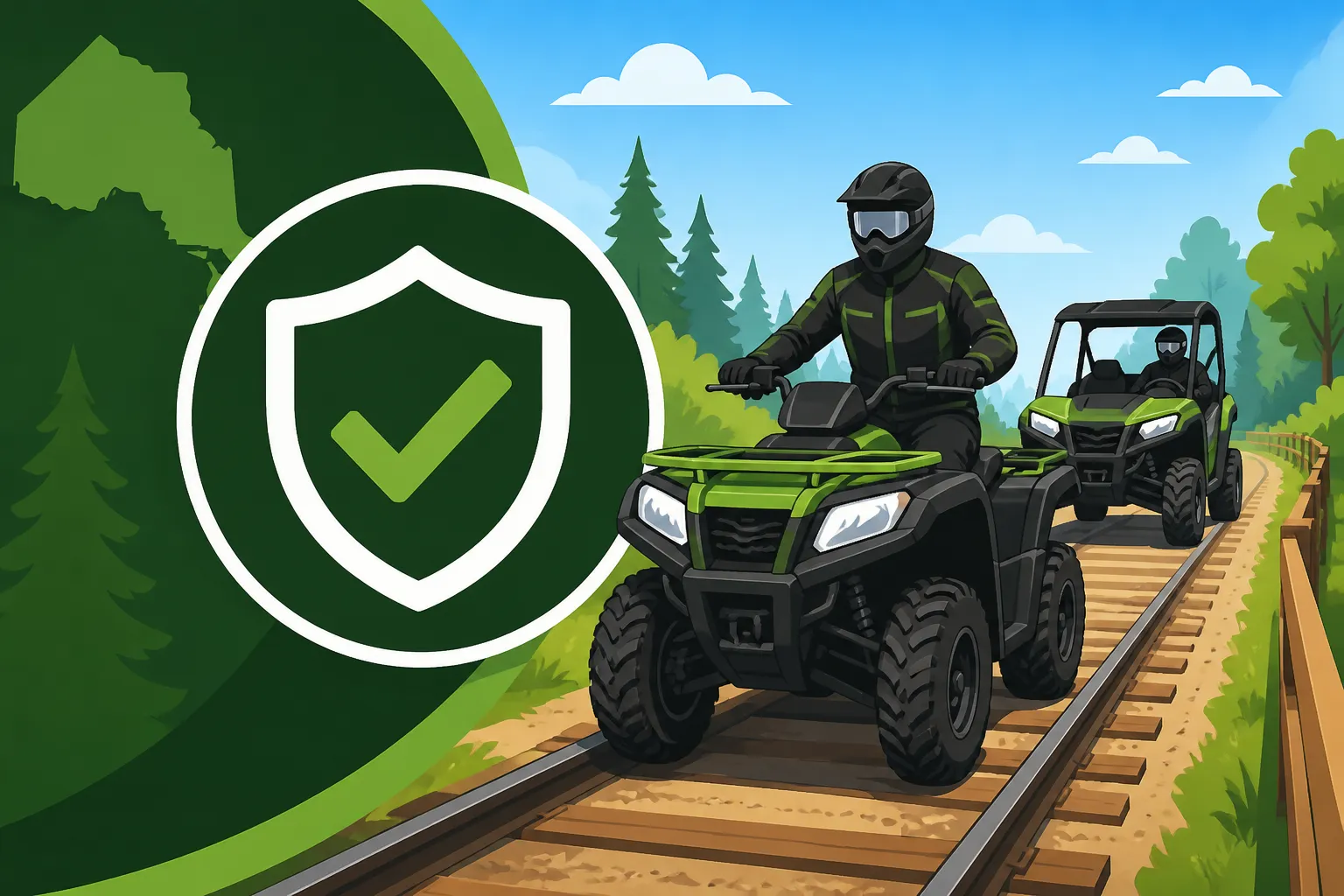
Ontario ATV Rules for Riding a Rail Trail
Oh, the allure of those long, straight stretches of old railway bed, converted into what we call "rail trails" across Ontario! Many of us, myself included, have looked at these scenic paths and thought, "Wouldn't that be a fantastic place to cruise on my ATV or UTV?" They seem like the perfect opportunity for a relaxed ride, connecting towns or just enjoying the landscape without the technical challenges of some deeper bush trails.
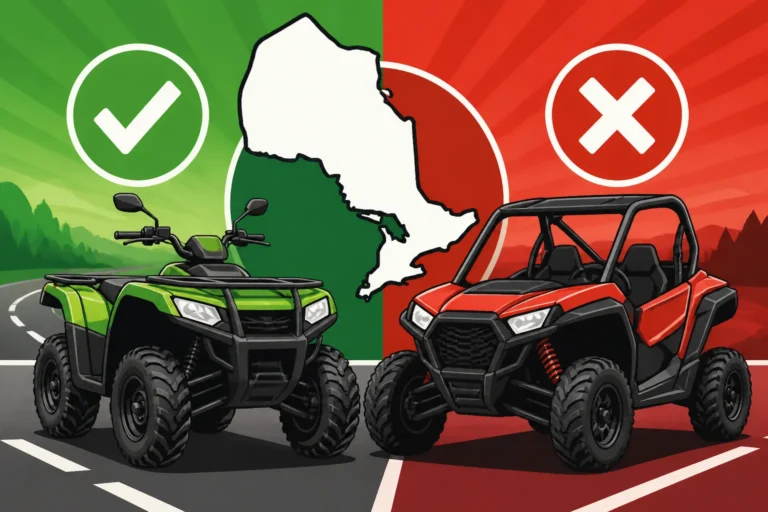
But then, the big question mark pops up, doesn't it? Can we actually ride our off-road vehicles on them? The short answer, and what makes it such a frustrating question for many riders, is that it's rarely a straightforward "yes" or "no." It’s a complex tapestry woven from provincial laws, local bylaws, and the whims of individual land managers. This guide is here to unravel that complexity, explaining exactly what Ontario's rules are for riding your ATV or UTV on a rail trail, so you can ride confidently and legally.
The Allure and Ambiguity of Ontario's Rail Trails for ATV Riders
It's easy to understand why rail trails hold such an appeal for ATV and UTV riders. They offer unique perspectives on the landscape, often following historic routes that weave through forgotten corners of Ontario. The consistent grade and often smoother surfaces can be a welcome change from rougher, more technical terrain. But this very appeal, combined with a lack of consistent signage, is often what leads to confusion and, unfortunately, unintentional rule-breaking.
What Exactly Are Ontario's Rail Trails?
Before we can even begin to talk about rules, let’s get clear on what a "rail trail" actually is in the Ontario context. These are former railway corridors that have been decommissioned by the railway companies and repurposed for other uses. Instead of steel tracks and wooden ties, you'll now find paths varying greatly in their makeup: some are well-graded crushed stone, perfect for walking or cycling, others are still quite rough with old railway ballast, and a few might even be paved.
The crucial point here is that these trails are no longer managed by railway companies. Instead, they’ve often been acquired by local municipalities, conservation authorities, or even dedicated volunteer trail associations. This means that a single, continuous rail trail might actually pass through multiple jurisdictions, each with its own set of rules and management priorities. This patchwork ownership is a huge reason why clarity on ATV access is so hard to come by. It's not one big, simple system, but many smaller, interconnected pieces.
Why ATV Access to Rail Trails is Often a Grey Area
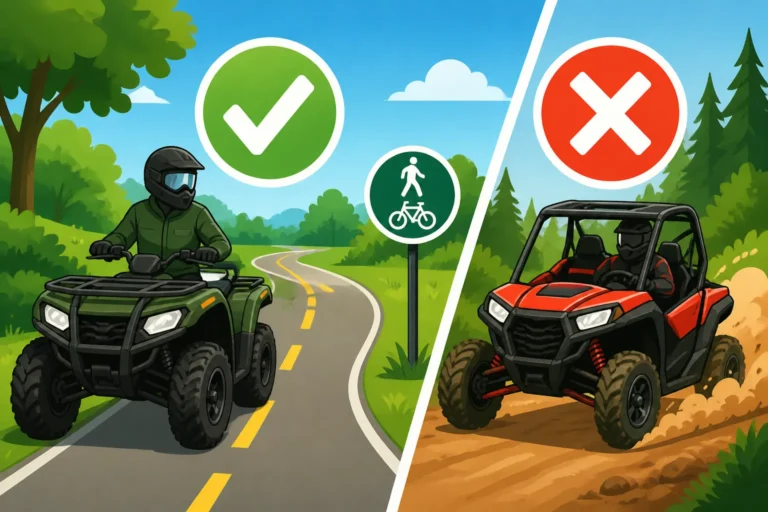
The primary reason for the ambiguity around ATV access to rail trails often boils down to their "multi-use" nature. These trails are incredibly popular for a wide variety of activities: families out for a stroll, serious cyclists on long-distance tours, birdwatchers, and sometimes even equestrians. When you introduce motorized vehicles like ATVs and UTVs into this mix, you're immediately faced with potential conflicts. Concerns about safety, noise, dust, and environmental impact naturally arise.
This is why many managing bodies, in an effort to accommodate the widest range of users and minimize conflicts, often restrict or even outright prohibit motorized access. It can be incredibly frustrating to see a perfectly good, wide trail and be told your machine isn't welcome. You might find one section of a former rail line that explicitly allows ORVs, only to find that just a few kilometres down the path, once you cross an invisible municipal boundary, the same trail becomes strictly non-motorized. This inconsistency forces riders into a constant state of uncertainty, which is far from ideal for planning an enjoyable outing.
Understanding the Laws Governing Rail Trail Use in Ontario
Navigating the legal landscape for riding your ATV or UTV on Ontario's rail trails can feel like deciphering ancient scrolls. It's not just one overarching law; it's a layered system that includes provincial legislation, local municipal bylaws, and the specific policies of the land managers. Getting it wrong can lead to fines, so understanding these layers is essential.
The Off-Road Vehicles Act and Its General Principles
At the foundational level, all off-road vehicle use in Ontario is governed by [The Off-Road Vehicles Act and Ontario Riders]. This provincial legislation establishes the essential requirements for operating an ORV, such as mandatory registration, insurance, and equipment standards (like helmets, lights, and mufflers). It's the baseline that says, "If you're going to ride an ORV, here's what your machine needs and how you need to operate it safely."
However, what the Act doesn't do is grant universal permission to ride anywhere you please. Instead, it empowers municipalities, conservation authorities, and other landowners to enact their own specific rules regarding ORV use on lands and roads under their jurisdiction. So, while your ATV might be perfectly legal and ready to roll according to the provincial Act, that alone doesn't mean you can take it onto any rail trail you encounter. The Act provides the framework, but the local rules fill in the details about where you can actually ride.
The Role of Municipal Bylaws and Landowner Permissions
This is arguably the most critical and often the most confusing piece of the puzzle for rail trails. Because many rail trails are owned or managed by individual municipalities or conservation authorities, these local bodies have the power to create bylaws that specifically permit or prohibit ORV use on their portions of the trail. This means you could have a single rail trail that stretches across three townships, with one allowing ORVs, the next prohibiting them, and the third allowing them only during certain hours or seasons.
It is absolutely imperative to [Checking a Township's ORV By-law] before you plan any ride on a rail trail. Don't rely on word-of-mouth, outdated information, or what you think the rule might be. Bylaws can and do change, and enforcement can be strict. A simple sign at a trailhead might state "No Motorized Vehicles," but sometimes, a deeper dive into the municipal bylaws is needed to confirm if a specific section is truly open. Without an explicit bylaw permitting ORVs on that section of rail trail, you could inadvertently be trespassing or violating a municipal code, leading to significant [Ontario ATV Fines for Riding a Closed Trail]. It can feel like a bureaucratic maze, but taking the time to confirm is always worth it to avoid a costly surprise.
Multi-Use Trails and ORV Exclusion
Many rail trails are proudly advertised as "multi-use," but it's important to understand that this often implies non-motorized multi-use. These trails are typically developed with the intent of providing quiet, accessible recreation for hikers, cyclists, and sometimes horseback riders. Introducing ATVs and UTVs, with their inherent noise, dust, and speed, can lead to real conflicts with these other user groups.
Trail associations and land managers often prioritize the safety and enjoyment of the broadest user base, which sometimes means excluding motorized vehicles. This isn't always about being anti-ATV; it's about managing user expectations and minimizing potential hazards and environmental impacts. While it can be disheartening for us as riders, understanding this perspective helps explain why so many rail trails, particularly those close to urban centres or in ecologically sensitive areas, maintain a strict "no motorized vehicles" policy. This makes sticking to dedicated ORV trails, or rail trail sections explicitly opened by bylaw, even more crucial for maintaining positive relationships within the wider trail community.
Here's a quick overview of how different trail types in Ontario typically handle ORV access:
| Trail Type | Typical ORV Access | Key Considerations |
|---|---|---|
| Rail Trails | Often Restricted | Varies by municipality/landowner. Always check local bylaws and signage. Surfaces can be varied. |
| OFATV Club Trails | Permitted with Pass | Requires a valid [Ontario ATV Trail Permits Explained] and insurance. Designed and maintained for ORV use. |
| Crown Land Trails | Generally Permitted | Subject to [Riding Crown Land in Ontario] regulations, local restrictions, and specific land use policies. |
| Provincial Parks | Strictly Prohibited | Focus on natural conservation and non-motorized recreation. [Why Provincial Parks Turn Quads Away] is a common reality. |
| Municipal Roads | Permitted by Bylaw | Only where [Ontario ATV Rules on a Municipal Road] specifically allow, often with strict speed, time, and road class limits. |
Finding ATV-Friendly Rail Trails and What to Expect
Despite the complexities and restrictions, the good news is that there are rail trails in Ontario where ATVs and UTVs are not only permitted but actively welcomed. Finding them requires a proactive approach and a bit of detective work, but it's absolutely worth the effort for the unique riding experiences they offer.
Research, Research, Research: Your Best Tool
Your most powerful tool in finding legal and enjoyable rail trail sections for your ORV is thorough, up-to-date research. Start with the most reliable source for organized ORV riding in the province: the Ontario Federation of ATV Clubs (OFATV). Many of [Ontario's OFATV Trail Network] incorporate segments of former rail beds. These sections are typically well-integrated into larger trail systems and are clearly marked on official club maps. If a rail trail is part of an OFATV club network, your annual trail permit from the OFATV generally covers its use. Check the [Ontario Trail Maps and the Club That Made Them] available through OFATV and individual club websites.
Beyond the OFATV network, you'll need to consult municipal websites for their specific ORV bylaws. Some forward-thinking municipalities have embraced ORV tourism, recognizing the economic benefits riders can bring to local businesses. These communities have often passed bylaws that allow ATVs and UTVs on designated sections of rail trails, using them as connectors to broader trail systems or to grant access to town amenities like gas stations and restaurants. Look specifically for bylaw numbers or maps showing permitted routes. If the information isn't clear, don't hesitate to call the municipal office or the local conservation authority directly. It’s always far better to make a phone call than to risk a fine or contribute to negative perceptions of ORV riders.
What to Expect on ATV-Friendly Rail Trails
Even on rail trails that openly welcome ATVs and UTVs, it’s crucial to understand that the riding experience will likely be different from what you encounter on a dedicated, purpose-built ATV trail. These are often shared-use environments, and a respectful, cautious approach is paramount.
- Mixed Users are a Given: This is perhaps the biggest difference. You will almost certainly encounter hikers, cyclists, families with strollers, and potentially horseback riders. Treat every other trail user with the utmost courtesy. Maintain slow speeds, especially when passing, and always yield the right-of-way. Dust control is paramount: if you see someone ahead, slow right down to a crawl to avoid kicking up dust. Being a good ambassador for the sport [Riding With a Group Across Club Lines] is critical for our continued access.
- Varied Surfaces and Obstacles: While rail trails are generally flatter and less technical than rugged bush trails, their surfaces can still vary significantly. You might encounter smooth, compacted gravel, but also rougher sections where the old railway ballast remains. Some may feature old wooden bridge decks or culverts. Always adjust your speed and riding style to the conditions. Keep an eye out for unexpected obstacles like potholes, washouts, or even old railway ties that might be protruding.
- Unique Infrastructure: Expect to see old railway-related infrastructure. This could include level crossings (even if the tracks are gone), old whistle posts, or unique bridge structures. Pay attention to any signage related to these features. You might also find benches, picnic tables, or interpretive plaques, as these trails are often designed for recreational enjoyment beyond just riding.
- Gateway to Amenities: One of the fantastic advantages of rail trail sections that permit ORVs is their potential to link you directly to community amenities. Many towns that have opened up their rail trails understand that riders need access to gas, food, and lodging. This can make planning multi-day adventures much more convenient. Just be sure to understand the specific rules for riding on [Ontario ATV Rules on a Municipal Road] if you need to use town streets to reach these amenities.
Equipping Your Machine for Multi-Use Trail Riding
While you don't typically need to re-engineer your ATV or UTV for rail trail riding, a few considerations for your machine can enhance your experience and minimize impact. Given the potentially harder and more varied surfaces, tires with a less aggressive tread pattern might offer a smoother, quieter ride than super-aggressive mud tires. They can also wear better on harder surfaces. Companies like SuperATV offer a range of tires and accessories that balance performance on diverse terrains, which could be beneficial for rail trail riding without compromising your machine’s capability for when you inevitably hit the more challenging off-road trails.
Additionally, consider accessories that enhance comfort and safety for potentially longer, less technical rides, such as comfortable seat covers, windshields (especially for UTVs to deflect dust), and robust lighting for early morning or late evening rides. Above all, always ensure your machine is in top mechanical condition, meets all [Ontario ATV Insurance Requirements], and that you are carrying your [Carrying the Permit or a True Copy] of your registration. Being prepared means you can focus on enjoying the ride, not worrying about compliance.
Respecting the Rules and Other Users
Ultimately, the future of ORV access to Ontario's diverse trail systems, including those precious rail trail sections, depends heavily on the collective behaviour of riders. Every instance of irresponsible riding, noise complaints, or trail damage provides ammunition to those who advocate for banning all motorized vehicles. Being a good steward of the trails isn't just a suggestion; it's a necessity for preserving our riding opportunities.
Being a Good Ambassador for the Sport
When you’re out on a rail trail, you’re not just an individual rider; you’re an ambassador for the entire ORV community. This means your actions have a direct impact on public perception and future access decisions. Embrace these principles:
- Obey Speed Limits: Rail trails often have significantly lower speed limits than dedicated ORV trails due to the presence of other users and varied conditions. Even if no speed limit is posted, common sense dictates slowing down dramatically when approaching hikers, cyclists, or residential areas.
- Control Dust and Noise: These are two of the most common complaints about ORVs. Reduce your speed well in advance when passing other trail users to minimize dust. Ensure your exhaust system is in good repair and meets all provincial noise regulations. Excessive noise can quickly turn a neutral observer into an opponent of ORV access.
- Stay on the Designated Trail: Rail trails are often flanked by private property, agricultural land, or sensitive ecological zones. Do not veer off the marked trail. Respect private property boundaries and any fencing or signage that indicates where you shouldn't go.
- Mandatory Documentation: Always ensure your ATV or UTV is properly registered and insured. An officer conducting checks on any public trail will expect to see proof of your [Ontario ORV Permit Cost] and valid [Ontario ATV Insurance Requirements]. Having everything in order helps demonstrate that you are a responsible and legal operator.
The Future of ORV Access to Rail Trails
The landscape of trail access in Ontario is dynamic. As more railway lines are decommissioned and converted into recreational paths, and as the popularity of ATVs and UTVs continues to grow, there will undoubtedly be ongoing discussions about how best to share these resources. By riding responsibly, advocating for sensible access policies through organizations like the OFATV, and always being a courteous trail user, we can collectively work towards ensuring that more, not fewer, opportunities arise for us to enjoy Ontario’s unique and beautiful rail trails.
Remember, every positive interaction with another trail user, every time you adhere strictly to the rules, and every effort you make to be a responsible rider helps build a stronger case for the ORV community. Let's ensure that our machines are seen as a valuable, enjoyable part of Ontario's outdoor recreation fabric, rather than a source of conflict.
Disclaimer
This article is for general informational purposes only and does not constitute professional advice. Laws, prices and regulations vary by location and change over time. Consult a qualified professional for guidance on your specific situation.