Riding Two Up Where Only One Is Allowed
It's a scene many of us have faced: you're heading out for a fantastic ATV or UTV ride, the sun is shining, and a friend, partner, or even your excited child asks, "Can I come with you?" Your heart sinks a little as you glance at your machine, knowing deep down it's designed for one. The frustration is real – you want to share the adventure, but you're unsure of the rules, or worse, you know your machine isn't built for two. This comprehensive guide is here to clear up the confusion about riding two-up where only one is allowed in Ontario, outlining the specific regulations, safety implications, and the severe penalties for getting it wrong.
Understanding Ontario's Rules for Carrying Passengers on ORVs
Let's cut right to the chase: Ontario's regulations around carrying passengers on off-road vehicles (ORVs) are pretty strict, and they hinge entirely on how your machine was designed and classified. It's not just a suggestion; it's the law, and it's there for everyone's safety, including yours, your passenger's, and other trail users. Trying to squeeze a second person onto a single-rider machine can lead to some serious trouble, both legally and physically.
The "Single-Rider" ATV Versus a "Two-Up" Machine
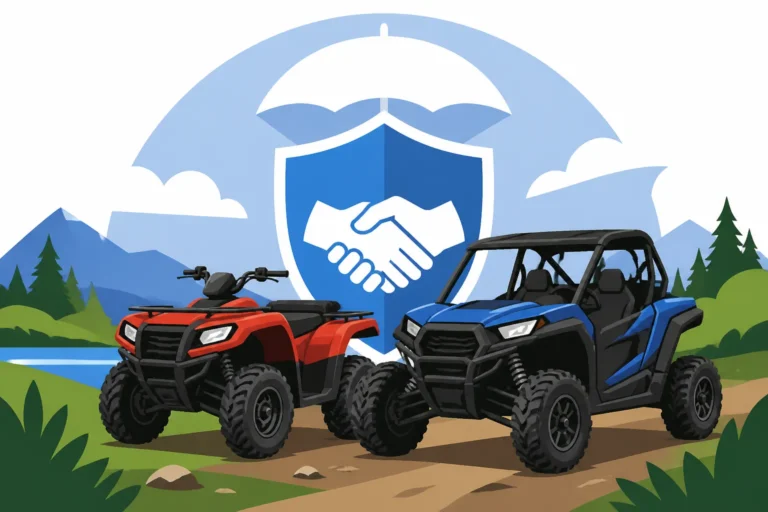
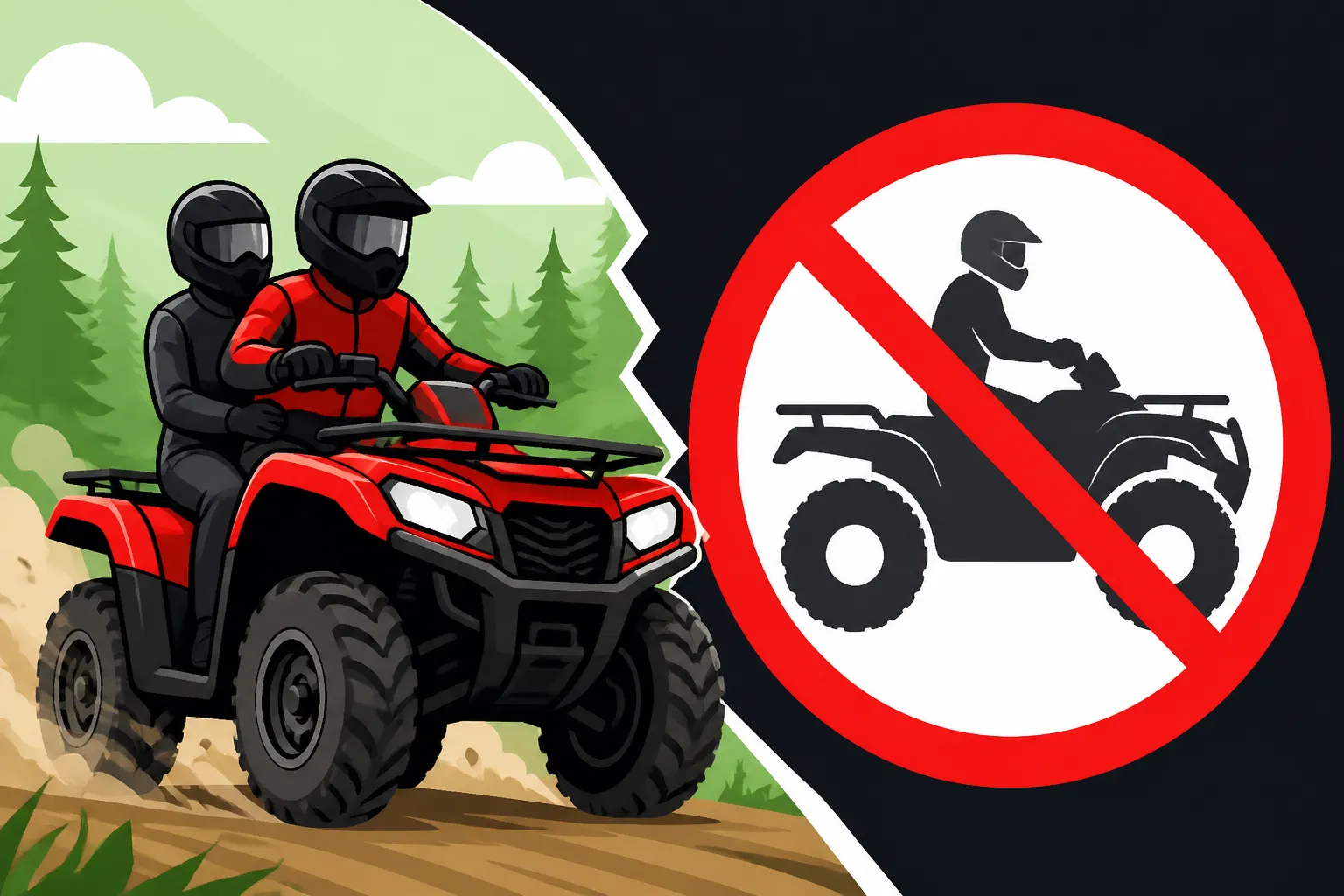
The most crucial distinction you need to understand is between a "single-rider" ATV and a "two-up" or "tandem" ATV. A single-rider ATV, as its name suggests, is built with only one seat, intended for one operator. These machines typically have a shorter wheelbase and a seat that prevents a second person from sitting comfortably and safely without significantly altering the machine's balance. You might see people try to add a small seat pad behind them, or just have someone perch on the rear rack, but this is a huge no-no in the eyes of the law and, more importantly, a massive safety risk.
A two-up ATV, on the other hand, is specifically designed by the manufacturer to safely carry an operator and one passenger. You'll notice they have a longer frame, an extended seat that often features a raised portion for the passenger, dedicated handholds for the passenger to grip, and proper footrests. These design elements aren't cosmetic; they're engineered to ensure stability and safety when carrying the added weight of a second person. If your ATV doesn't have these factory-installed features, it's a single-rider, full stop.
Legal Classifications and Passenger Capacity
Ontario's Off-Road Vehicles Act and its associated regulations, particularly Regulation 316/03, define different classes of ORVs, and these classifications directly impact passenger rules.
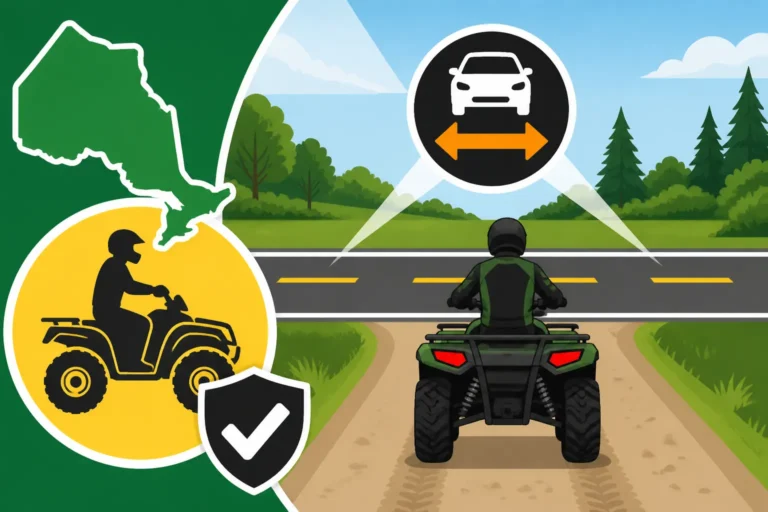
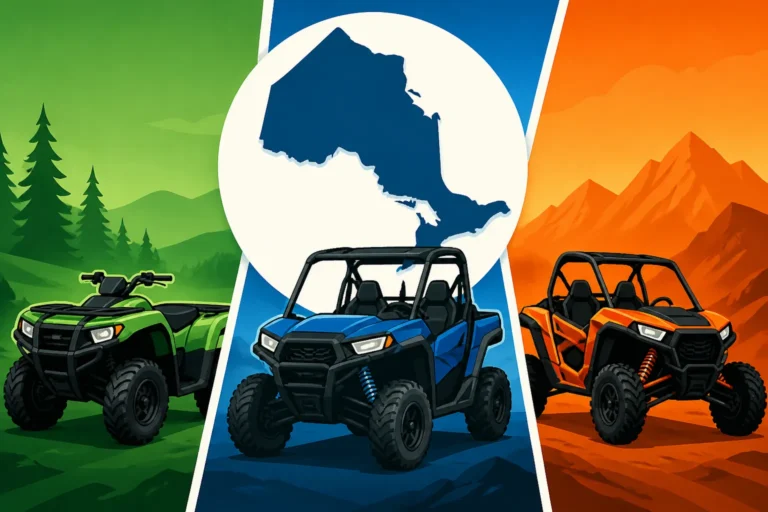
- ATV Class: This refers to all-terrain vehicles. Under the regulations, an ATV (the traditional quad) is generally designed for a single rider unless it's specifically manufactured and equipped for an operator and a passenger. If it's a single-rider ATV, you cannot carry a passenger, especially on any road where ORVs are permitted. The moment you venture onto a municipal road that has been opened to ORVs, these rules become even more stringent and visible to enforcement. For more on what constitutes an ATV, check out [The ATV Class Under Ontario Regulation 316/03].
- ROV Class (Recreational Off-Highway Vehicle): This is where side-by-sides (SxS) and utility-terrain vehicles (UTVs) typically fall. ROVs are explicitly designed by the manufacturer to carry one or more occupants, seated side-by-side, and are equipped with roll-over protective structures (ROPS) and seat belts. Because they are designed for multiple occupants, you can carry passengers up to the manufacturer's specified seating capacity, provided each passenger uses a seatbelt where equipped. This is why you often see families enjoying trails in their side-by-sides; the machine is built for it. For detailed rules on side-by-sides, consult [Ontario Side-by-Side Road Rules] and [Ontario UTV Road Rules].
- MPV Class (Multi-Purpose Off-Highway Utility Vehicle): These are similar to ROVs but often heavier and designed more for work. Like ROVs, they are typically designed with multiple seats and occupant restraints, allowing passengers as per their manufacturer's specifications.
The bottom line is that the machine's original design dictates its passenger capacity. You cannot modify a single-rider ATV to safely or legally carry a passenger on a road. Trying to add a rear seat or footpegs won't cut it. The law looks at how the vehicle left the factory.
Penalties for Non-Compliance: What's at Stake?
Ignoring Ontario's passenger rules on an ORV can lead to some serious consequences that go far beyond a slap on the wrist. When an officer pulls you over, especially if you're riding on an open municipal road, they're looking for compliance with a whole host of regulations, and passenger capacity is a big one.
- Fines: You can face significant fines for carrying a passenger on a single-rider ATV, or for carrying more passengers than your ROV or MPV is designed for. These aren't small tickets; they can put a serious dent in your wallet.
- Insurance Implications: This is perhaps the most critical financial risk. If you're involved in an accident while carrying an unauthorized passenger, your insurance company could deny coverage. This means you would be personally liable for any damages, medical bills, or legal fees, which could easily run into the tens or hundreds of thousands of dollars. The required [Ontario ATV Insurance Requirements] exist for a reason, and riding outside the bounds of your policy's terms can invalidate it. Consider the profound impact of [Ontario Fines for No ATV Insurance] – riding with an unauthorized passenger is akin to riding uninsured in the eyes of an insurance provider.
- Safety Risks: This is paramount. A single-rider ATV simply isn't engineered to handle the additional weight of a passenger, especially when it comes to weight distribution, braking, and steering. You risk losing control, rolling over, or throwing your passenger off, leading to severe injuries or worse. Your machine's suspension, tires, and frame are all designed with a specific load in mind.
- Impoundment: In some serious cases, particularly if multiple infractions are observed or if the officer deems your actions to be dangerously negligent, your ORV could be impounded. That's a huge headache and an even bigger cost to retrieve your machine.
It's clear that the risks far outweigh any perceived convenience or fun of bringing an extra person along on a single-rider machine.
Why Passenger Restrictions Exist: Safety and Design
It might feel restrictive sometimes, but the provincial government and manufacturers aren't trying to spoil your fun for no reason. These passenger restrictions are deeply rooted in fundamental principles of vehicle dynamics, safety engineering, and public welfare. They’re designed to prevent serious injuries and fatalities that can arise from misusing these powerful machines.
Stability and Handling Compromises
Think about the physics for a moment. An ATV's handling characteristics are finely tuned for a single rider. The center of gravity, the suspension's spring rates, the braking system's capacity, and the steering response are all optimized for one person shifting their weight to maneuver the machine.
When you add a second person to a single-rider ATV:
- Center of Gravity Shifts: The additional weight, especially if it's perched on the rear rack, dramatically raises and shifts the machine's center of gravity. This makes the ATV much more prone to rolling over, particularly on turns, inclines, or uneven terrain. A sharp turn that would be routine for a single rider can become a dangerous tipping hazard with an extra passenger.
- Reduced Control: The operator's ability to shift their weight and maintain balance is crucial for controlling an ATV. With a passenger restricting movement or adding unpredictable weight shifts, the operator's control is severely compromised. Braking distances increase, and steering becomes less responsive.
- Suspension Overload: The suspension system isn't designed for the extra load. It will bottom out more easily, reducing shock absorption and making the ride harsher and less stable. This can lead to a loss of traction and control, especially over bumps or rough terrain.
- Braking Inefficiency: The braking system has a maximum capacity. An overloaded ATV will take much longer to stop, which can be disastrous in an emergency situation or when navigating trails with sudden obstacles.
These aren't hypothetical scenarios; they are real-world consequences that can turn a fun outing into a tragedy.
Ergonomics and Occupant Protection
Beyond stability, the physical design for occupant protection is critical. A single-rider ATV offers no proper ergonomic support for a passenger.
- Lack of Proper Seating: Perching on a rear rack offers no secure seating position. There's no back support, no contouring to hold the passenger in place, and often no soft padding. This means the passenger is constantly fighting against the machine's movements, leading to fatigue and a higher risk of falling off.
- No Handholds or Footrests: Without dedicated handholds, a passenger will instinctively grab onto the operator, which further compromises the operator's control. They might also try to hold onto parts of the machine not designed for gripping, like fenders or body panels, which can be slippery or provide inadequate support. Lack of proper footrests means dangling feet, which can get caught in wheels, dragged on the ground, or injured by debris.
- Exposure to Hazards: A passenger on a single-rider ATV is far more exposed to exhaust heat, moving parts, and flung debris. They lack the protective positioning that dedicated passenger seating and features provide on a two-up machine or a side-by-side.
This lack of dedicated ergonomic design makes any passenger incredibly vulnerable.
The Role of Insurance in Passenger Safety
Insurance companies assess risk. When you insure your ORV, the policy is based on the assumption that you will operate it according to manufacturer specifications and provincial laws. If your policy covers a single-rider ATV, it implicitly assumes you're operating it solo.
If you have an accident with an unauthorized passenger:
- Voided Coverage: As mentioned, your insurance provider has every right to deny your claim. They can argue that you materially misrepresented the risk by operating the vehicle outside its intended design, effectively voiding your coverage for that incident.
- Personal Liability: This means that if your passenger is injured, or if you cause damage to property or other people, you could be personally responsible for all costs. This isn't just a hypothetical; it's a very real danger. Imagine facing a lawsuit for medical expenses, lost wages, and pain and suffering from an injured friend or family member because you didn't adhere to the rules.
This highlights why understanding [Ontario ATV Insurance Requirements] is not just about avoiding fines, but about protecting yourself and those you care about from potentially life-altering financial burdens.
Navigating Passenger Rules on Different Terrains
The rules regarding passengers on ORVs can feel like a minefield because they sometimes change depending on where you're riding. However, when it comes to riding two-up on a single-rider machine, the general principle of "don't do it" remains constant, with varying degrees of enforcement and risk.
Road Riding: Strict Interpretation
When you bring your ORV onto a public road in Ontario that has been opened for use by municipalities, the rules become extremely strict. This is because you are now sharing the road with other motor vehicles, pedestrians, and cyclists, and safety becomes paramount.
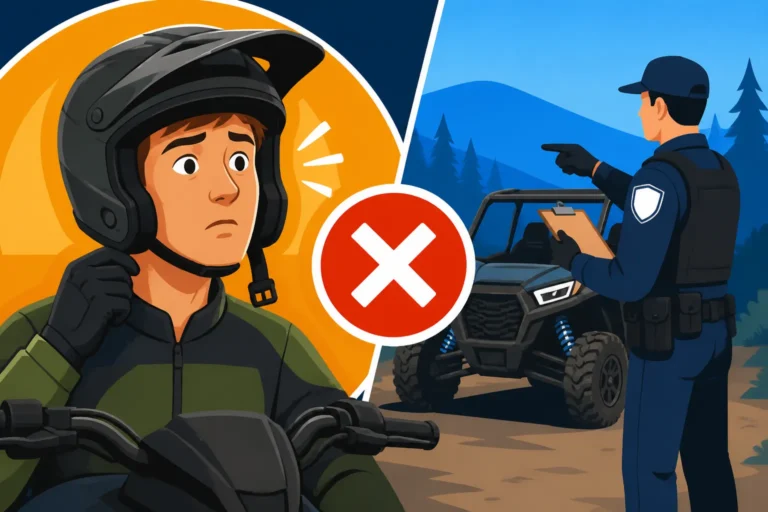
- Zero Tolerance: On an open municipal road, there is absolutely zero tolerance for carrying a passenger on a single-rider ATV. The police and municipal by-law officers are trained to recognize these infractions, and they will issue tickets. This is not the place to test the limits.
- Designated Seating Only: For ROVs (side-by-sides) and MPVs, passengers must be in a seat designed for them, and they must be wearing a seatbelt if one is provided. This is mandated by [Ontario UTV Road Rules] and [Ontario Side-by-Side Road Rules]. You can't have someone just sitting on the cargo bed or standing up.
- Age Requirements: Even for designated passenger seating, there are often minimum age requirements, especially for children. It's vital to know these rules before taking a younger rider on the road. For guidance, look at [Can a Child Ride Passenger on an Ontario Road?].
- Checking By-Laws: Remember that even if a municipality has opened its roads to ORVs, specific local by-laws might have additional restrictions or conditions. Always check the local by-law for the area you plan to ride in. You can learn more about this by checking [Checking a Township's ORV By-law].
In essence, if you're on a public road, assume the most conservative interpretation of the law applies. Your machine must be designed for the number of occupants you have, and all safety equipment (like seat belts) must be used.
Off-Road and Private Property Considerations
What about riding off-road or on private property? This is where things can get a little grayer, but the underlying safety principles never change.
- Private Land: If you are riding on your own private property, you generally have more leeway regarding passengers on a single-rider ATV, as long as you are not on a public road or trail. However, this doesn't make it safe. The physics of stability and handling don't disappear just because you're on private land. Many accidents happen on private property due to misuse. Even if you don't face a fine, the risk of serious injury remains. Your insurance might still be an issue if you have an accident, even on private land, if you're operating outside the machine's intended use. [Riding Unsupervised on Your Own Property] still carries inherent risks.
- Club Trails and Crown Land: When riding on organized club trails (like those maintained by OFATV) or designated Crown land trails, you are generally expected to adhere to the manufacturer's recommendations for your machine, which means single-rider ATVs are for one person only. While enforcement might not be as omnipresent as on municipal roads, trail patrollers and land managers can still take action, and you are always liable for your actions. These trails are often shared, and your unsafe choices could affect others.
The critical takeaway here is that while the legal enforcement might be different off-road or on private land compared to public roads, the safety risks are always present, and your insurance coverage could still be jeopardized.
What If You Really Want to Ride With a Passenger?
If you frequently find yourself wanting to share the ride with someone, clinging to a single-rider ATV isn't the solution. There are two primary, safe, and legal ways to accommodate a passenger:
- Invest in a Two-Up ATV: These machines are purpose-built for two. They have the extended seat, passenger handholds, and proper footrests. Their chassis and suspension are designed to handle the additional weight, making for a much safer and more comfortable experience for both operator and passenger. This is the ideal solution for those who love the traditional ATV feel but need the extra capacity.
- Upgrade to a Side-by-Side (ROV/UTV): Side-by-sides are becoming incredibly popular for a reason. They offer car-like seating, often with multiple seats, seat belts, and a roll cage for enhanced protection. They are designed from the ground up for multiple occupants and offer a very different, often more stable, riding experience, especially for families or groups. For trail enthusiasts, many aftermarket accessory companies like SuperATV offer a wide range of parts and accessories to enhance the comfort and utility of these multi-passenger machines, from windshields to storage solutions, making them even more versatile for group outings.
These are the only truly responsible answers if you want to consistently ride with a passenger in Ontario. Any other solution involves cutting corners on safety and risking severe penalties.
Making Informed Choices for Safe and Legal Riding
Ultimately, being a responsible ORV rider means making informed choices that prioritize safety and adhere to the law. There’s a lot of freedom and fun to be had on Ontario’s trails and open roads, but that enjoyment is built on a foundation of respect for the rules and the capabilities of your machine. When it comes to passengers, there’s no room for guesswork.
Checking Your Machine's Manufacturer Specifications
Before you even think about taking a passenger, pull out your ORV’s owner’s manual. This is your bible for understanding your specific machine.
- Look for Passenger Capacity: The manual will explicitly state whether your ATV is a single-rider or a two-up model. It will also provide the maximum weight capacity, which is crucial. Never exceed this limit, even if you are riding solo.
- Examine the Design: Visually inspect your ATV. Does it have an extended, stepped seat designed to accommodate two people comfortably? Are there dedicated, sturdy handholds for a passenger? Does it have separate footrests for a second person? If the answer to any of these is no, then it’s a single-rider. Don't try to rationalize it.
- Manufacturer Stickers: Many ATVs will have warning labels or stickers directly on the machine indicating its passenger capacity, often showing a single rider symbol if it’s not meant for two.
Relying on "what someone told you" or "what you've seen others do" is a dangerous path. Always go back to the manufacturer's intended design.
The Importance of Designated Passenger Seating and Handholds
It bears repeating: proper passenger accommodation isn't a luxury; it's a safety feature. The presence of designated passenger seating, sturdy handholds, and separate footrests are the physical cues that indicate a machine is designed for more than one person. Without them, any "passenger" is at extreme risk.
- Secure Positioning: A properly designed passenger seat provides contours and support to keep the person stable, even over rough terrain. This is vastly different from sliding around on a flat cargo rack.
- Active Bracing: Handholds allow the passenger to actively brace themselves against acceleration, braking, and turns, working with the machine's movements rather than fighting against them.
- Protection from Hazards: Dedicated footrests keep feet safely tucked away from rotating tires, hot exhaust pipes, and ground obstacles.
Think of it this way: you wouldn't let someone ride in the trunk of your car. The same principle applies here. Your passenger deserves the same level of safety and security as you do. While aftermarket accessories from companies like SuperATV might offer comfort upgrades for UTV seats or additional grab handles, they cannot legally convert a single-rider ATV into a two-up machine or override manufacturer safety warnings for road use. Their purpose is usually to enhance already compliant multi-passenger vehicles.
When Upgrading to a Two-Up or Side-by-Side is the Answer
If you're constantly finding yourself wishing you could bring a companion, and you only own a single-rider ATV, it’s time to seriously consider an upgrade. While it's an investment, the peace of mind knowing you're riding safely and legally with your loved ones is priceless.
- Enhanced Experience: Not only are two-up ATVs and side-by-sides safer for passengers, but they also offer a more comfortable and enjoyable experience. Your passenger can actually relax and take in the scenery, rather than clinging on for dear life.
- Versatility: Many two-up ATVs and side-by-sides offer increased cargo capacity and can be incredibly versatile for both recreation and utility, allowing you to bring more gear or help with tasks around the property.
- Family Fun: For families, especially those with children who are old enough and meet the legal requirements, a side-by-side can be a fantastic way to introduce them to the world of ORV riding in a controlled and safe environment. This can truly foster a shared passion for the outdoors. You can even find family-friendly accessories or safety nets through brands like SuperATV for your UTV to make the experience even better for younger passengers, always ensuring they are properly secured and within legal parameters.
The decision to ride with a passenger is a big one, and in Ontario, the law is clear: if your machine isn't designed for it, it's not allowed. Prioritize safety, know your machine's limits, and always adhere to the rules.
Disclaimer
This article is for general informational purposes only and does not constitute professional advice. Laws, prices and regulations vary by location and change over time. Consult a qualified professional for guidance on your specific situation.