Approved Versus Novelty Helmets
Choosing the right helmet for your ATV or UTV adventures in Ontario isn't just about looking good; it's a critical safety decision that could quite literally save your life. Many riders, often unknowingly, fall into the trap of purchasing what's called a "novelty helmet," which looks the part but offers virtually no protection in an accident, leaving them vulnerable to serious injury and potential legal trouble. This guide will walk you through the essential differences between truly approved helmets and novelty items, ensuring you understand Ontario's regulations and can confidently select headgear that provides genuine safety on and off the trails.
The Critical Difference: Approved Versus Novelty Helmets
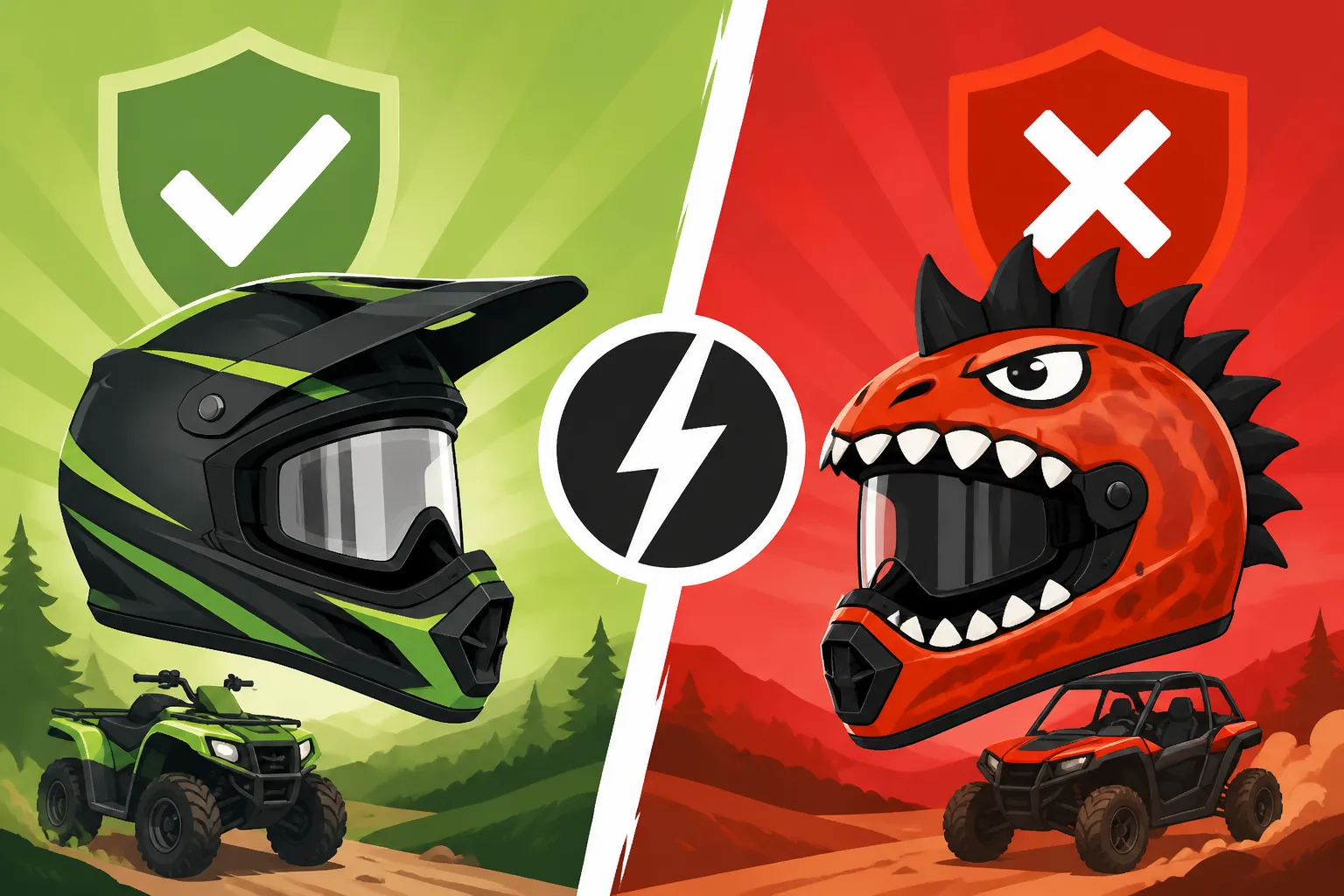
The world of helmets can be a confusing one, with so many styles, brands, and price points. However, when it comes to riding an ATV or UTV in Ontario, the most crucial distinction you need to grasp is the one between a helmet that's officially "approved" and one that's merely a "novelty" item. This isn't just semantics; it's the difference between protection and peril.
What Makes a Helmet "Approved" in Ontario?
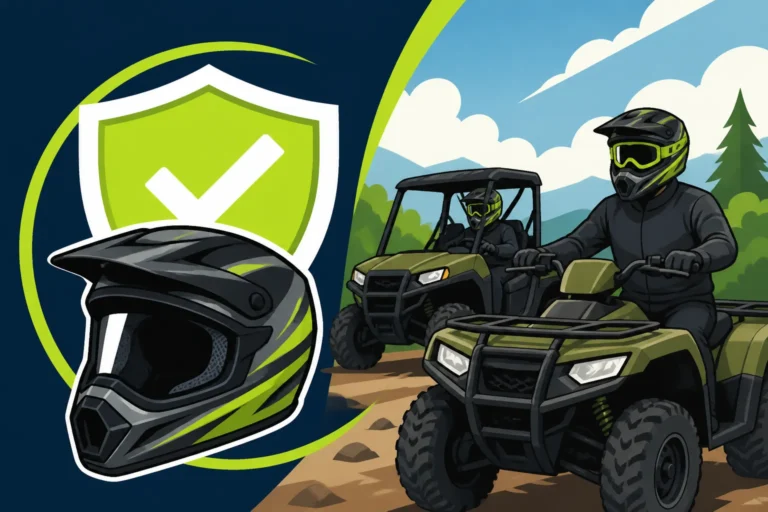
When we talk about an "approved" helmet in Ontario, we're referring to headgear that has undergone rigorous testing and met specific safety standards established by recognized organizations. These standards are not just suggestions; they represent a benchmark for a helmet's ability to protect your head in various impact scenarios. The most common certifications you'll see, and that are recognized in Ontario, include:
- DOT (Department of Transportation): This is a US standard, but helmets meeting DOT FMVSS 218 are widely accepted in Ontario. It ensures the helmet can withstand certain impacts, has sufficient penetration resistance, and the chin strap retention system will hold. You'll usually find a "DOT" sticker on the back of these helmets.
- ECE (Economic Commission for Europe): This European standard (ECE 22.05 or ECE 22.06) is often considered even more stringent than DOT by some experts, with different testing protocols that include abrasion resistance and chin bar integrity. Many high-end helmets, even those sold in North America, will carry an ECE sticker.
- Snell: The Snell Memorial Foundation is a private, non-profit organization that develops its own voluntary, higher-than-minimum safety standards. Snell certifications (like Snell M2020) are often sought after by riders who desire an extra layer of protection, as their testing can be more aggressive than DOT or ECE.
- CSA (Canadian Standards Association): While less common for ATV/UTV helmets specifically, some safety equipment might carry a CSA approval. However, for ORV helmets, DOT and ECE are the primary ones to look for.
These certifications aren't just pretty stickers. They signify that the helmet's design, materials, and construction have been put through their paces. Testers drop helmets from various heights onto different surfaces, ensuring the shell doesn't shatter, the liner absorbs energy effectively, and the strap doesn't fail. Imagine hitting a tree branch on a tight trail or tumbling over a rocky incline; an approved helmet is engineered to dissipate those forces away from your skull, minimizing the risk of severe injury. Without these certifications, you have no real guarantee of protection. You can learn more about the legal requirements by checking out [Approved Motorcycle Helmets in Ontario].
The Allure and Dangers of Novelty Helmets
On the other end of the spectrum are novelty helmets. These often appeal to riders for various reasons: they might be significantly cheaper, come in a wider array of "cool" or custom designs, or simply feel lighter and less cumbersome to wear. Many riders mistakenly believe that because it looks like a helmet, it is a helmet, and therefore offers protection. This couldn't be further from the truth.
Novelty helmets are designed solely for aesthetic purposes. They typically feature thin, flimsy outer shells, minimal to no impact-absorbing foam liner, and a chin strap that offers little to no retention strength. In many cases, these helmets are marketed as "brain buckets" or "parade helmets," explicitly stating they do not meet any federal or provincial safety standards. The problem is, sometimes those disclaimers are easy to miss, or riders simply don't understand their implications.
The danger posed by a novelty helmet is immense. In a real-world scenario, even a low-speed fall off your quad or side-by-side, such as tipping over on a muddy trail or bumping into a stationary object, can turn catastrophic with inadequate head protection. Where an approved helmet might absorb the impact and leave you with a headache, a novelty helmet could fail entirely, leading to concussions, skull fractures, or worse. They offer a false sense of security, which can be even more dangerous than riding without a helmet, as it might encourage a rider to take risks they wouldn't otherwise. It’s crucial to understand that these helmets are not designed for impact and will simply not hold up when you need them most.
Understanding Ontario's Helmet Laws for ORVs
Ontario's roads and trails are fantastic places to ride, but the province takes safety seriously, especially when it comes to head protection. Ignorance of the law is never an excuse, and understanding where and when an approved helmet is required is essential for every ATV and UTV rider. It's not just about avoiding a ticket; it's about protecting yourself and those you ride with.
Where the Helmet Rule Applies: Roads, Trails, and Private Land
The Off-Road Vehicles Act is the primary legislation governing ORVs in Ontario, and it's quite clear about helmet use. If you're operating an ATV, UTV, or dirt bike on a public road where ORV use is permitted, an approved helmet is absolutely mandatory. This includes municipal roads that have "opted-in" to allow ORVs, as well as when you are crossing a provincial highway. You must always adhere to [Ontario ATV Helmet Law] when on any public thoroughfare.
The rules also extend beyond public roads. If you're riding on sanctioned trails, such as those maintained by the Ontario Federation of ATV Clubs (OFATV), an approved helmet is a condition of use. These clubs prioritize rider safety, and wearing certified headgear is fundamental to their trail access agreements and insurance policies. Even if you're riding on private property, many insurance providers will only cover you in the event of an accident if you were wearing an approved helmet. Imagine a scenario: you're riding on your own land, take a spill, and sustain a head injury. If your insurance company finds you were wearing a novelty helmet, they might deny your claim, leaving you with massive medical bills. The law protects not just the public, but aims to protect you. The best practice is always to wear an approved helmet, no matter where you ride. This commitment to safety is a core principle in [The Off-Road Vehicles Act and Ontario Riders].
Consequences of Non-Compliance
Failing to wear an approved helmet when required by law in Ontario can lead to several undesirable outcomes, ranging from financial penalties to severe personal repercussions. The immediate consequence, should you be stopped by an Ontario Provincial Police (OPP) officer or a municipal by-law officer, is a fine. While specific fine amounts can change, they are substantial enough to serve as a deterrent. You might also face additional charges if your helmet is deemed wholly inadequate, or if you're found to be in violation of other aspects of [Equipment Ontario Requires on a Road-Legal ORV].
Beyond the immediate fine, the long-term consequences can be far more serious. As mentioned, an accident while wearing a novelty helmet could lead to your insurance claim being denied. This means you would be personally responsible for all medical costs, vehicle repair or replacement, and any liability claims if another person or property was involved. The financial burden could be devastating. More importantly, and tragically, the most severe consequence is the increased risk of life-altering injury or fatality. Brain injuries are incredibly complex and can lead to permanent disability, cognitive impairment, or worse. The small comfort or cost savings of a novelty helmet pales in comparison to the potential for irreversible damage to your health and future. It’s also something an officer will check during a roadside stop, so be prepared with the right gear, as covered in [What an Ontario Officer Checks Roadside].
| Feature | Approved Helmet (e.g., DOT, ECE, Snell) | Novelty Helmet (Not Certified) |
|---|---|---|
| Primary Purpose | Head protection in an impact | Aesthetic, fashion, looks |
| Safety Testing | Rigorously tested to industry standards | No testing, offers minimal or no protection |
| Material Quality | Multi-density foam liner, robust shell | Thin foam, fragile shell, low-quality materials |
| Impact Absorption | Designed to absorb and dissipate force | Poor to non-existent |
| Penetration Resist. | High | Very low |
| Chin Strap | Strong, reliable retention system | Weak, easily adjustable, prone to failure |
| Legality in ON | Mandatory where specified (roads, trails) | Illegal where approved helmets are required |
| Insurance Impact | Generally covered if safety equipment used | Risk of claim denial in an accident |
| Typical Cost | Moderate to high | Very low to low |
| Protection Level | High | None |
How to Choose a Truly Protective ORV Helmet
Now that we understand the critical difference between approved and novelty helmets and the legal implications in Ontario, the next step is to confidently choose a helmet that will genuinely protect you. This involves knowing what to look for, understanding how it should fit, and considering the specific demands of ATV and UTV riding.
Identifying the Safety Certifications
When you're shopping for a helmet, the very first thing to check for are the safety certification stickers. These are usually found on the back or side of the helmet, sometimes under a clear coat or inside the helmet on a label. You are looking for the acronyms we discussed earlier:
- DOT FMVSS 218: This is perhaps the most common certification you'll encounter for helmets sold in North America. The sticker should be clearly visible and permanently affixed.
- ECE 22.05 or ECE 22.06: Often found on imported or premium helmets, this certification is also globally recognized and accepted in Ontario. The ECE label is typically sewn into the chin strap or found as a sticker on the back.
- Snell M2020 (or previous M-standards): This signifies a higher voluntary standard. Snell stickers are often found inside the helmet or on the back.
Never buy a helmet that does not clearly display at least one of these recognized safety certifications. If you can't find the sticker, or if it looks suspicious or easily removable, walk away. A reputable dealer will be able to show you where the certifications are and explain what they mean. Don't be swayed by marketing jargon or stylish graphics if the fundamental safety certifications are missing. Your head is worth more than a pretty, uncertified shell.
Fit, Comfort, and Features for ATV/UTV Riding
Once you've confirmed the helmet is certified, the next most critical factor is the fit. A helmet that is too loose can shift during an impact, failing to protect your head properly, while one that's too tight can be uncomfortable and distracting. Here’s how to assess the fit:
- Measure Your Head: Use a cloth measuring tape to find the circumference of your head, just above your eyebrows and around the widest part of your head. Compare this measurement to the manufacturer's sizing chart.
- Try It On: The helmet should feel snug all around your head, with no pressure points. It should not wiggle or shift easily when you shake your head from side to side or up and down. The cheek pads should press firmly against your cheeks without causing discomfort.
- Chin Strap: Fasten the chin strap securely. You should be able to fit no more than one or two fingers between the strap and your chin. Try to pull the helmet off your head from the back; if it comes off, it's too loose.
- Field of Vision: Ensure the helmet provides a wide enough field of vision, especially peripheral vision, which is crucial for situational awareness on trails.
Beyond fit, consider features specific to ATV/UTV riding. Many riders prefer a dirt bike-style full-face helmet with a peak visor and plenty of ventilation. The peak visor helps block sun glare and deflect roost (dirt/mud kicked up by other riders), while good ventilation keeps you cool during strenuous rides. You'll likely wear goggles with this style, so ensure there's a good goggle port. For UTV riders, full-face or modular helmets (where the chin bar flips up) can also be popular, often with built-in visors. If you ride in muddy conditions, you might want a helmet with a removable liner for easy cleaning. Brands might offer various accessories like communication systems or specific goggle styles. For example, you might be looking for rugged storage solutions for your helmet or tools to mount a windshield to protect your face and visor from debris, and companies like SuperATV offer a wide range of UTV accessories that complement safe riding practices. Remember, a comfortable helmet is one you'll want to wear, which means you'll wear it more often.
Maintaining Your Helmet for Lasting Protection
Buying a high-quality, approved helmet is a significant investment in your safety. But just like your ATV or UTV, a helmet requires proper care and maintenance to continue offering that protection. Ignoring its condition or failing to care for it properly can compromise its integrity, making it less effective when you need it most.
When to Replace Your Helmet
Helmets are designed to be a single-impact device. This means that if your helmet has been involved in any kind of impact – even if it was just dropped from a small height onto a hard surface, or took a light bump during a minor tip-over – it should be replaced immediately. Even if there's no visible damage, the internal impact-absorbing foam, typically made of EPS (expanded polystyrene), can be crushed or compromised. Once that foam is compressed, it cannot provide the same level of protection in a subsequent impact. This is famously known as the "one crash, one helmet" rule, and it's non-negotiable for your safety.
Beyond impacts, helmets also have a lifespan due to general wear and tear, and degradation of materials. Exposure to UV light, sweat, oils from your skin, and environmental factors can slowly break down the helmet's components over time. Most manufacturers, and safety organizations, recommend replacing your helmet every five years from the date of manufacture (often stamped inside the helmet or on the chin strap), regardless of how often it's been used or if it's been in a crash. After this period, the materials can lose their effectiveness, especially the EPS liner, which might not absorb energy as efficiently. Regularly inspect your helmet for signs of damage: cracks in the shell, frayed chin straps, loose fittings, or compressed/deteriorated padding. If you see any of these, it's time for a new helmet.
Proper Cleaning and Storage
Taking good care of your helmet will help it last longer and remain comfortable to wear. Here are some tips for cleaning and storage:
- Cleaning the Shell: Use mild soap and water with a soft cloth to clean the exterior of your helmet. Avoid harsh chemicals, solvents, or abrasive cleaners, as these can damage the helmet's finish or compromise the integrity of the shell materials. For stubborn dirt or mud from a particularly exhilarating ride, a little extra elbow grease with gentle soap is better than strong chemicals.
- Cleaning the Liner: Many modern helmets come with removable, washable liners. This is a fantastic feature, especially for ATV/UTV riders who tend to get sweaty or muddy. Follow the manufacturer's instructions for washing the liner, which usually involves hand washing with mild soap and air drying. If your liner isn't removable, you can gently spot clean it with a damp cloth and a very diluted mild soap solution. Ensure the helmet is thoroughly dry before wearing it again to prevent mildew or odors.
- Visors and Goggles: Clean your helmet visor or goggle lenses with a microfibre cloth and specialized cleaner (if recommended by the manufacturer) or simply warm water and mild soap. Avoid dry wiping, as this can scratch the surface, especially if there's grit present.
- Storage: Store your helmet in a cool, dry place away from direct sunlight, extreme temperatures, or harsh chemicals. Leaving it in a hot vehicle or garage can degrade the EPS liner over time. A helmet bag or a dedicated shelf is ideal. Avoid hanging it by the chin strap or resting it on irregular surfaces that could deform the padding. If you're on a multi-day trip, consider stowing it securely in a storage box on your UTV, perhaps even one from a brand like SuperATV that is designed to withstand the rigors of the trail. Proper storage not only prolongs the helmet's life but also ensures it's in optimal condition for your next ride.
Disclaimer
This article is for general informational purposes only and does not constitute professional advice. Laws, prices and regulations vary by location and change over time. Consult a qualified professional for guidance on your specific situation.