Adding a Third Machine to an Ontario Family Permit
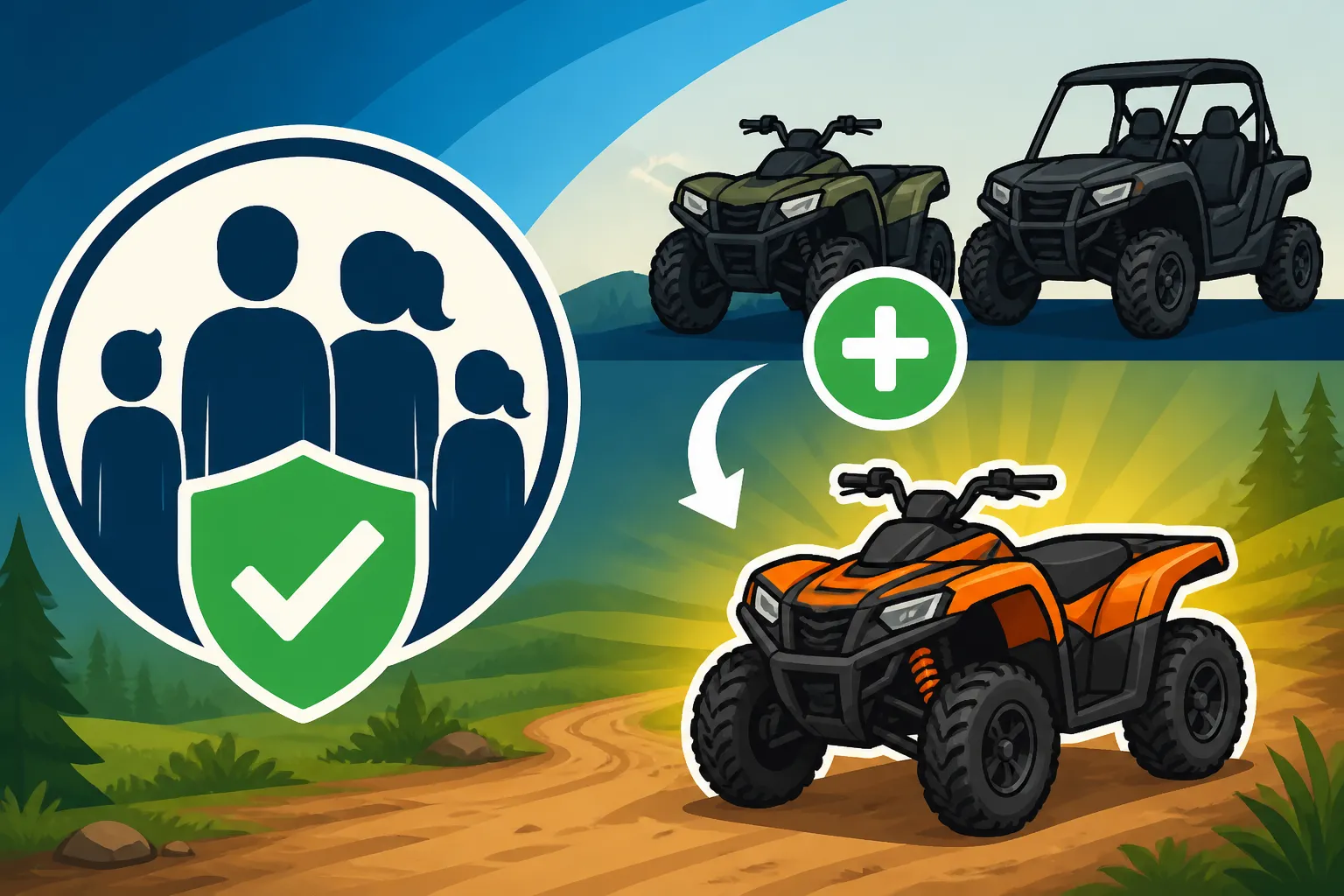
Adding a third ATV or UTV can complicate an Ontario family trail permit: the machines may be kept at one address, but that does not automatically mean one discounted permit covers all three. The practical answer is usually to keep the family permit for two machines and buy a separate permit for the third. Confirm the current options before riding.
What an Ontario family permit usually covers
An Ontario family trail permit is different from registering a machine with the province. It is a trail-access permit, not the vehicle permit or plate required for an ORV that must be registered. The Ontario ATV Trail Permits Explained covers that distinction in more detail.
In the usual family-permit setup, the family option covers two machines. A third ATV or UTV normally needs its own trail permit, even if it is owned by a family member, stored at the same address, and used on the same rides. Sharing a household or account does not, by itself, extend the permit to another machine.
That means a third machine should not be treated as covered just because the existing family permits have already been purchased. Check the live permit options with the issuing organization before buying: permit names, eligibility, and purchase arrangements can change. If the current terms still limit the family option to two machines, budget for a separate permit for the third.
| Your situation | What to check | Likely next step |
|---|---|---|
| Two machines are already covered by a family permit | Which machines are listed or associated with it | Keep the existing permits with those machines |
| You want to use a third machine on permitted trails | Whether the current family option allows more than two machines | Plan on a separate trail permit for the third |
| The third machine is replacing one of the first two | Whether the permit can be reassigned and what proof is needed | Ask the permit issuer before swapping machines |
| The third machine will ride only where no trail permit is required | Local access rules and land restrictions | Confirm that the planned route is actually permit-free |
A trail permit is generally tied to a particular machine or permit record, not to every vehicle a household owns. Do not assume one permit can be moved between three machines depending on who is riding. The Ontario Trail Permit for a Second Machine can help clarify how an additional machine is treated, while Two Machines at One Address explains the address side of the family option.
Also separate trail access from registration and insurance. A trail permit does not replace provincial registration, a number plate, or liability insurance where those are required. A machine may need all of these independently, depending on how and where it is used. The Registering an ATV in Ontario and Ontario ATV Insurance Requirements explain those separate obligations.
How to arrange coverage for the third machine
First, identify which machines the existing family permit covers. Check the confirmation, permit records, or account used to purchase it. Match each record to the machine’s identifying details, such as its make and vehicle identification number, where requested. Keep the purchase confirmation and any permit materials together so you can resolve a mismatch before heading out.
Then check the current family-permit terms and the purchase system. Look for a specific option for an additional machine, not simply a way to add another vehicle to an account. An account may hold information for multiple household members or purchases without extending the coverage of a permit already issued for two machines.
If the system does not offer a third-machine family add-on, the usual solution is to purchase a separate annual permit for that machine. Confirm the permit is issued for the intended ATV or UTV and that it is valid for the planned riding area and dates. The QuadON Annual Permit in Ontario and Where to Buy an Ontario ATV Trail Permit provide more background on the annual option and purchasing process.
A useful sequence is:
- Review the current family-permit record. Confirm which two machines are covered and whether the permit is still valid.
- Check the current family terms. Use the issuing organization’s current information rather than relying on a past purchase or another rider’s recollection.
- Look for an additional-machine option. If one is not clearly offered, do not infer that an account entry or household address extends coverage.
- Buy the appropriate separate permit if needed. Make sure it is associated with the third machine and the correct rider or household details.
- Save the confirmation and display or carry the permit as required. Have the relevant proof available for a trail check.
- Confirm coverage for each trail area. A permit that works for one club’s trail system may not automatically cover another.
If you are replacing one of the two family machines rather than adding a third, pause before buying. The permit may need to be transferred or updated, and the process can depend on the issuer’s rules. Do not put the old permit material on a replacement machine and assume it transfers automatically. Ask the permit provider what information it needs and whether the original permit must be cancelled or amended.
The same care applies if one person buys the third machine for another family member. A family relationship does not necessarily determine who or what the permit covers. Read the conditions for the permit and enter the machine and purchaser details accurately. If the household address is part of eligibility, retain the requested proof. Proof of Address for a Family Permit discusses what to prepare.
Check the trail coverage before you ride
A separate permit for the third machine may solve the machine-count issue, but it does not guarantee that every trail on your route is covered. Ontario riding areas can have different permit arrangements. Some trails are managed by clubs within a broader permit network, while certain areas may sell their own pass or set additional access conditions. The Ontario’s Separate Club Passes explains why one permit should not be assumed to work everywhere.
Before travelling, confirm:
- The permit is valid for the date of your ride.
- The specific trail area accepts that permit.
- The permit is associated with the machine that will be on the trail.
- Any separate pass or club requirement has been met.
- The route is open and the machine is allowed on it.
This check matters especially when the ride crosses between club areas. Trail maps and routes can make connected systems look like one continuous network, but permit coverage may differ at a boundary. Check the club or permit information for the particular route, and see Does Your Permit Cover the Next Club’s District? if you are joining trails across districts.
Crown land is not a universal workaround. Ontario’s free-use policy does not mean every trail or parcel is open to every rider, and it does not override restrictions, signs, closures, or other applicable rules. Access can depend on the land and the route. The What Free Use Means on Crown Land explains what to verify before relying on that option.
If the third ATV or UTV will be used only on private property, a trail permit may not be needed for that activity, but get the landowner’s permission and check the applicable rules. Once the machine enters a club trail or another managed route, the relevant permit requirements apply. Avoid buying based only on where the machine is stored; consider where it will actually be ridden.
Common mistakes when adding another machine
Assuming one household means unlimited machines. A family permit’s address requirement and its machine limit are separate conditions. Meeting the address condition does not necessarily increase how many machines the permit covers.
Treating a trail permit as a registration permit. Trail access does not substitute for provincial vehicle registration, plates, or insurance. Check those requirements separately, especially if road use is planned.
Moving a permit between machines without approval. A permit associated with one machine may not cover a different one. Ask the issuer before transferring it, even if the old machine is no longer being used.
Relying on an old price or permit description. The cost and purchase terms can change. Check the current provider information before paying, and do not assume a past family purchase establishes today’s rules. For general cost context, see Ontario ATV Trail Permit Cost.
Assuming permit coverage follows the rider. A permit for a machine should not be treated as a personal pass that can be used on any ATV or UTV. Confirm how the issuer identifies the covered machine and what proof to carry.
Waiting until the trailhead to sort it out. A receipt, account page, or family relationship may not satisfy a patrol check if the third machine is not covered. Purchase and verify the permit before loading up.
The simplest plan is to identify the two machines covered by the family permit, then treat the third as requiring its own permit unless the provider’s current terms clearly allow an additional family machine. Confirm coverage for the actual trail network, and keep trail access separate from registration and insurance. That avoids the costly assumption that all machines at one address share the same coverage.
Disclaimer
This article is for general informational purposes only and does not constitute professional advice. Laws, prices and regulations vary by location and change over time. Consult a qualified professional for guidance on your specific situation.