Two Machines at One Address
When two ATVs or UTVs are kept at one Ontario address, it is easy to assume one trail permit covers both. Usually, trail access is tied to the individual machine, even when a household can buy a discounted permit option. Here’s how to think about permits for two machines, what the address may establish, and which details to confirm before riding.
What “two machines at one address” means
An Ontario trail permit and an Ontario vehicle registration are different things. Registration and its plate relate to a machine’s legal identification and use under provincial rules. A trail permit relates to access to trails managed by participating clubs or organizations. Buying a permit for one does not register the other, and registering two machines does not automatically provide trail access for either.
If you are comparing permit options for two machines in the same household, the key distinction is between a family-rate purchase and a single permit shared between vehicles. A family option may reduce the cost of buying permits for qualifying machines at one address. It does not necessarily mean one sticker or permit record can be moved between the two machines whenever you choose. Check the current terms of the permit program before buying.
| Situation | What to expect | What to confirm |
|---|---|---|
| Two machines used on the same ride | Each machine may need its own valid trail permit | Whether the permit option covers both machines and how each must be identified |
| Two household members ride separate machines | A family-rate option may be available | The household and address requirements |
| One person owns both machines | Do not assume one permit can be swapped between them | Whether the family option applies when one person is the owner |
| One machine is used only occasionally | A shorter-duration permit may be more practical | Whether the machine needs a permit for each planned ride |
| The machines are at the same address but used by different households | Sharing an address may not be enough | The program’s definition of a qualifying family or household |
| You ride outside the permit’s participating area | Local or separate permits may apply | Reciprocity and the rules of the destination trail system |
The phrase “at one address” is most useful as a clue about eligibility, not as proof that the machines share trail access. A permit program may use the address to determine whether two machines qualify for a family purchase option. That does not mean any two riders who happen to store machines at the same property qualify, or that the machines can ride under one permit.
For more on the discount structure and its limits, see Ontario’s Family Permit Discount. If you are specifically considering a permit for an additional vehicle, Ontario Trail Permit for a Second Machine is also relevant. The provider’s current rules are the deciding factor, especially if the machines belong to different people or are registered to different addresses.
How family permits and machine-specific permits work
A trail permit generally needs to be associated with the machine that will use it. That matters for enforcement and for trail management: a patroller may check whether the machine being ridden displays or can produce the required permit. If two machines travel together, treat them as two separate vehicles for permit planning. Do not assume that one permit covers both just because they share an owner, home, trailer, or ride group.
A family-rate option is best understood as a way to buy permits for more than one qualifying machine under the program’s household rules. It is not necessarily a free second permit, nor a permit that follows the family wherever it rides. Each vehicle may still need its own permit sticker, record, or other proof, depending on the program’s process.
Before choosing that option, check these points:
- How many machines are included. Confirm the number of vehicles covered by the family purchase. Do not infer that a two-machine option covers a third machine at the same address.
- Who can be the permit holder. The program may define which household members can use the permits. Ask whether permits can be issued to separate family members or must be purchased under one account.
- What counts as the same address. Find out whether the program requires proof of residential address and what documents it accepts. A cottage, seasonal property, rental address, or shared property may not be treated the same as a primary residence.
- Whether each machine gets its own permit identification. Check where the sticker goes or how a digital permit is assigned. A permit intended for one vehicle should not be moved to another unless the provider explicitly allows it.
- Where the permit is valid. Some trail networks have separate permit arrangements. A family purchase in one system should not be assumed to cover every club area in Ontario.
The difference between the permit and club membership can also matter. A permit may provide the authorization needed for trail use, while club membership can have separate benefits or requirements. The details vary by organization. See Ontario Club Membership Versus a Trail Permit if you are weighing whether to buy a permit alone or join a club as well.
Do not confuse a family trail permit with provincial registration or insurance. A second ATV or UTV still needs to meet the requirements that apply to that machine, even if it is parked beside another vehicle at the same address. Each machine’s registration, plate, insurance, and road-use eligibility are separate questions. Registering Two Machines at Once explains the provincial-registration side, while Ontario ATV Insurance Requirements covers insurance obligations.
Buying permits for two machines
A straightforward way to avoid mistakes is to plan around the vehicles, not just the household. Before purchasing, make a list of the machines you expect to take onto trails, who will ride each one, and which trail areas are on the itinerary. Then compare the available permit choices against that list.
Check the permit program first
Ontario has multiple trail organizations and local arrangements, so there is no single assumption that safely covers every riding area. Start with the organization that manages the trails you intend to use. Check whether it offers a family option, what its eligibility rules say, and whether its permit is accepted in any other areas you plan to visit.
A permit that works in one area may not apply to another network, even when the trails connect. If the ride crosses a club boundary, verify coverage before setting out. Ontario’s Separate Club Passes explains why some areas require a different pass, and Does Your Permit Cover the Next Club’s District? is useful when planning a route across club lines.
Match the permit to each machine
Write down the make, model, and any identifying information requested during purchase. If the program issues a sticker, make sure you understand which machine it belongs to and where it must be displayed. If the permit is digital or stored in an account, confirm whether you must carry proof on your phone or have a physical copy available.
When buying at the last minute, do not rely on a receipt alone unless the provider says it is accepted as proof of a valid permit. Check the provider’s instructions for displaying and carrying the permit. What an OFATV Trail Permit Sticker Looks Like and Showing a Permit on a Phone cover common proof questions.
Compare the real cost of riding
A family option may be economical if both machines will use the trail system often. If one vehicle will rarely leave the garage, a day or short-term permit may be a better fit, where available. Compare the actual permitted use and validity period, not just the headline price. Permit costs and options can change, so check the current figures with the organization selling the permit.
Also consider whether both machines will be used at the same time. If two riders plan to ride together, each machine needs to meet the trail system’s permit rules. If only one machine is likely to be used on a given day, ask whether there is an option suited to occasional use rather than buying a longer permit for both.
A practical comparison looks like this:
| Riding pattern | Questions to ask |
|---|---|
| Both machines ride often | Is a family purchase available, and does it cover both vehicles for the intended period? |
| One machine rides often, the other rarely | Can the second machine use a day or short-term permit when needed? |
| Machines are used by different family members | Does the program allow separate permit holders at the same qualifying address? |
| Machines are stored at a cottage | Does the program accept the cottage address, or does it require a primary residence? |
| The route crosses club areas | Is the permit valid in each area, or are separate passes needed? |
If you are buying through an account that already has one machine listed, do not assume the second vehicle is automatically added. Look for an explicit second-machine or family option, and save the confirmation for each machine. If the checkout process is unclear, contact the permit provider before paying rather than trying to resolve a coverage issue at the trailhead.
Address, ownership, and common problems
Sharing an address can make a family permit option possible, but address alone may not settle eligibility. The provider may also consider who lives there, who owns or operates the machines, and how the permit is registered. A parent and adult child at one residence may be treated differently from two unrelated people storing machines at the same property. A couple with separate vehicle registrations may have different paperwork from a household borrowing a machine from a neighbour.
That is why it is worth checking the terms before purchase if any of these apply:
- The machines are owned by different people.
- One machine is owned by a business or incorporated entity.
- The address is a seasonal cottage or rental property.
- The riders live at different addresses but store machines together.
- A household member moves after the permits are purchased.
- One machine is sold, replaced, or transferred to someone else.
If the address changes after purchase, ask whether the permit record needs updating. Do not assume that changing an address on a provincial vehicle permit also updates a trail permit account; these are separate systems. For provincial records, see Changing an Address on a Permit. For a transfer or sale, check the trail organization’s rules as well as the vehicle paperwork.
Another common error is treating a trail permit as transferable simply because the vehicle changes hands. The seller may be able to pass on documents or a sticker with the machine, but the trail program may have its own transfer policy. Confirm whether a permit stays with the machine, the account holder, or neither. Does an Ontario ORV Plate Stay With the Machine? concerns the provincial plate, which is not the same as a trail sticker.
For a machine that has not yet been registered, sort out its provincial paperwork separately before trail riding. Registration, ownership documents, and a trail permit serve different purposes. If you have a used machine or incomplete paperwork, Proving Ownership of an Ontario ATV can help clarify the registration side. Do not treat a family trail permit as a substitute for missing ownership or registration documents.
Finally, remember that a valid trail permit is not blanket permission to ride anywhere. Trail access depends on the rules of the particular network and any local closures or restrictions. Confirm that the route is open, that your permit is accepted, and that both machines are permitted on the trails you plan to use. For a broader overview of coverage, see Ontario ATV Trail Permits Explained.
A simple checklist before the first ride
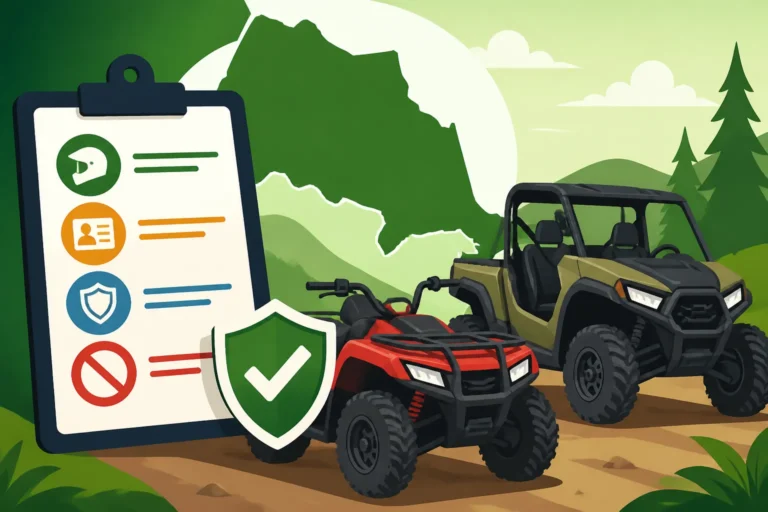
Before taking two machines out from one address, confirm the following for each vehicle:
- It has the provincial registration and plate required for its use.
- Its insurance meets the applicable requirements.
- It has its own valid trail permit or is clearly included under a qualifying permit arrangement.
- The permit is displayed or carried in the way the trail organization requires.
- The permit covers the club areas on the planned route.
- The machines meet any trail-system rules for vehicle type, width, or other restrictions.
- The trail is open and suitable for the machines.
If an organization confirms that a family option covers both vehicles, keep that confirmation and the purchase record accessible. If the family option requires proof of address, prepare the required documents before checkout. Where a rule is not clear, ask the permit provider directly and describe the ownership, address, and riding situation accurately.
The main takeaway is simple: two machines at one address may qualify for a family-rate permit purchase, but do not assume that one permit can be shared between them. Confirm the current eligibility rules, make sure each machine is properly covered, and check that the permit applies to every trail area you intend to ride.
Disclaimer
This article is for general informational purposes only and does not constitute professional advice. Laws, prices and regulations vary by location and change over time. Consult a qualified professional for guidance on your specific situation.