Ontario Side-by-Side Road Rules
Navigating the rules for riding your side-by-side on Ontario roads can feel like trying to solve a puzzle with half the pieces missing. Many owners invest in these incredible machines for recreation, utility, or even getting around their rural properties, only to be hit with conflicting information or confusion about what’s actually permitted on public roads. It's a common frustration, but this guide is here to clear the fog, detailing exactly what you need to know to legally and safely operate your side-by-side on Ontario's municipal roads.
Understanding Ontario's Vehicle Classifications for Side-by-Sides
One of the biggest sources of confusion for side-by-side owners in Ontario stems from how these machines are classified under the law. You might call your rugged two-seater an "ATV" in casual conversation, or perhaps just a "quad," but the province of Ontario makes very specific distinctions that significantly impact where and how you can ride it on public roadways. Getting this foundational understanding right is crucial before you even think about putting a wheel on asphalt.
Why Your Side-by-Side Isn't Always an "ATV" in the Eyes of the Law
While the term "ATV" (All-Terrain Vehicle) is often used as a catch-all for anything with four wheels designed for off-road use, Ontario's Off-Road Vehicles Act and its associated regulations, particularly Regulation 316/03, define different classes of off-road vehicles. For most side-by-sides, the relevant classification is a "Recreational Off-road Vehicle," or "ROV." This isn't just a fancy name; it comes with its own set of rules, equipment requirements, and operational restrictions distinct from what a traditional single-rider ATV might face.
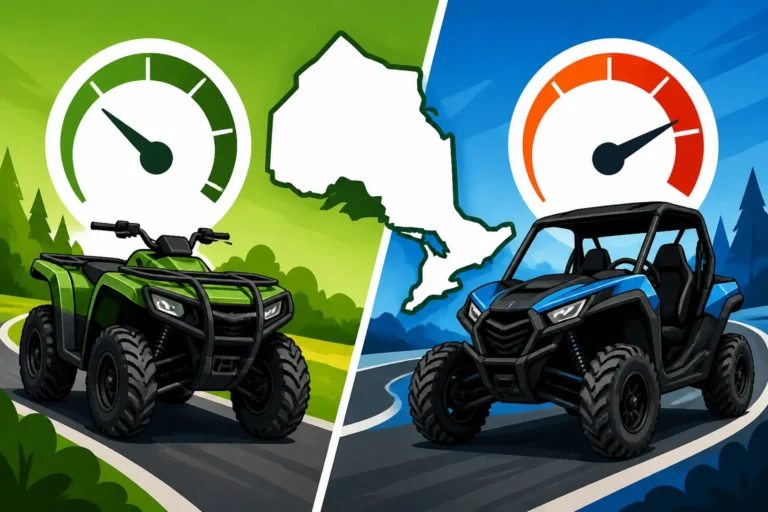
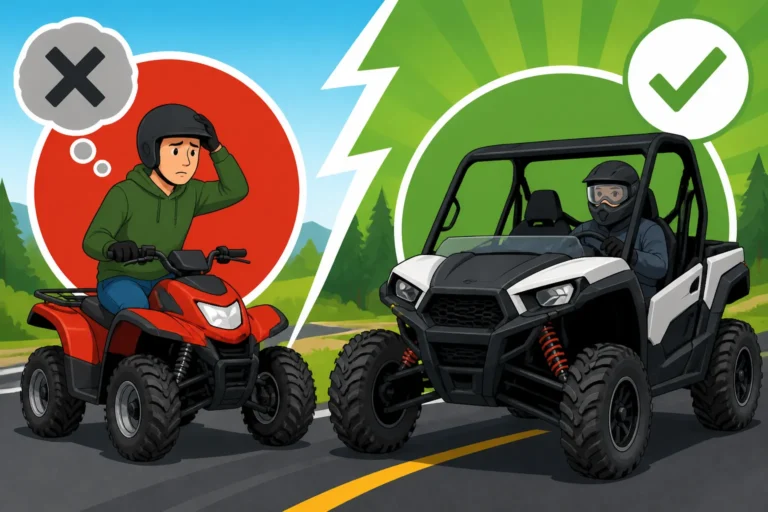
The key difference lies in the design purpose and physical characteristics. ATVs are generally designed for a single rider, straddled, with handlebars. ROVs, on the other hand, are designed for multiple occupants, feature side-by-side seating, a steering wheel, and often a roll-over protection structure (ROPS) or roll cage. These differences mean that the legislation treats them differently, particularly when it comes to road access, passenger rules, and specific safety equipment. You can't assume the rules for an ATV automatically apply to your side-by-side; always check the ROV-specific regulations.
The Critical Weight and Width Limits
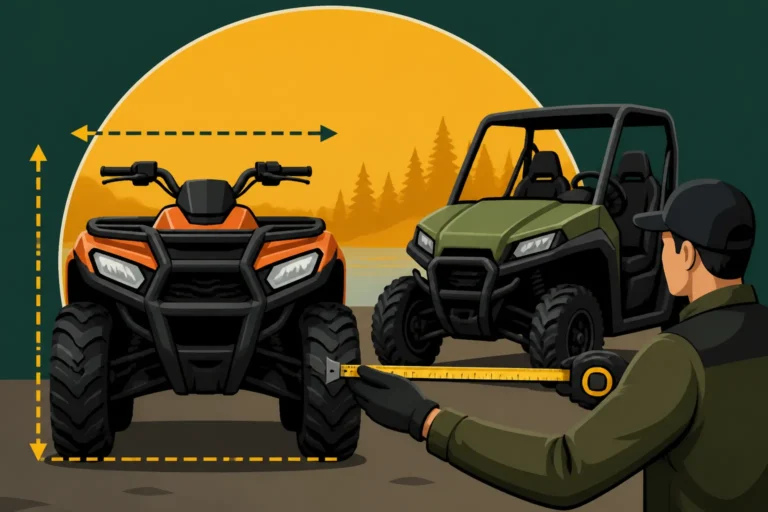
For your side-by-side to even be considered an ROV eligible for road use where permitted, it must fall within specific physical dimensions. Ontario law dictates that an ROV cannot exceed 2.03 metres (80 inches) in width and 1,700 kilograms (3,748 pounds) in weight. These limits are non-negotiable for road-legal operation. If your machine, as manufactured or modified, goes over either of these thresholds, it's simply not classified as an ROV under the Off-Road Vehicles Act for road use purposes, and therefore cannot be legally operated on municipal roads.
It’s incredibly important for owners to measure their machines carefully, especially if you've added aftermarket accessories. Things like wider tires, wheel spacers, or specialized suspension systems designed for extreme off-roading, such as those from SuperATV, could inadvertently push your machine beyond the 2.03-metre width limit. Similarly, heavy-duty winches, plows, or other utility attachments could add enough weight to exceed the 1,700-kilogram maximum. Always confirm your side-by-side's exact specifications, including its curb weight and overall width, to ensure it complies with these critical legal parameters. Failure to do so could result in fines or worse, having your machine impounded.
Essential Equipment and Requirements for Road-Legal Side-by-Sides
Once you’ve confirmed that your side-by-side fits Ontario’s legal definition of an ROV for road use, the next step is to ensure it's properly equipped and registered. This isn't just about common sense safety; it's about meeting specific legal standards that allow these machines to safely and predictably share the road with other vehicles. Skipping any of these requirements can lead to serious legal consequences and compromise your safety, as well as the safety of others.
What Equipment Your Side-by-Side Needs to Hit the Road
To be legally driven on an Ontario road where permitted, your side-by-side must be outfitted with a list of mandatory equipment that goes beyond what might be necessary for trail-only riding. This ensures visibility, signaling capability, and the ability to operate safely alongside cars and trucks. You'll need properly functioning headlights, taillights, and brake lights to ensure you can see and be seen, especially during dawn, dusk, or in adverse weather conditions.
In addition to lighting, a working horn is mandatory for signaling your presence, and a muffler is required to keep noise levels within acceptable limits. Mirrors are also essential, typically one on each side, allowing the operator to monitor traffic behind and beside them. Finally, if your machine is equipped with seat belts from the factory, they must be in good working order and worn by all occupants. It's crucial that all this equipment is fully functional and maintained. Consider inspecting these components regularly, especially after a particularly rough trail ride, to ensure they haven't been damaged or become dislodged.
Insurance, Registration, and Licence Plate Specifics
Beyond the physical equipment on your machine, there are administrative requirements that must be met for legal road operation. First and foremost, you absolutely must have valid [Ontario ATV Insurance Requirement]. This isn't optional; it's a legal mandate for all off-road vehicles, whether you're riding on private land, designated trails, or public roads. The insurance policy must be a motor vehicle liability policy, just like what you'd have for a car or truck, and you must carry proof of that insurance with you whenever you're operating the machine. The penalties for riding uninsured are severe, including substantial fines and potential impoundment of your side-by-side.
Secondly, your side-by-side needs to be registered with the province. This involves obtaining an [Ontario ORV Permit Cost] – a one-time fee paid when you first register the machine. Unlike snowmobiles, ORVs in Ontario do not require an annual permit renewal or sticker. Once registered, you'll be issued an [Ontario ORV Plates and Where They Mount] that must be securely affixed to the rear of your side-by-side. This plate must be clearly visible and kept free of mud or debris. Remember to carry your permit (or a true copy) with you at all times when riding, as law enforcement officers will expect to see it along with your proof of insurance during a roadside stop.
Where and How You Can Ride Your Side-by-Side on Ontario Roads
This is often the trickiest part for side-by-side owners to grasp, as Ontario's rules for ORV road access aren't a blanket allowance across the entire province. Instead, it's a patchwork of regulations largely determined at the local municipal level. Understanding this system is paramount to avoiding fines and ensuring you're riding legally.
Understanding Municipal By-laws and Open Roads
In Ontario, while the Off-Road Vehicles Act sets the provincial framework, the decision to open municipal roads to ORVs, including side-by-sides, rests with individual city, town, and township councils. This means that while you might be legally riding your side-by-side down a road in one municipality, crossing an invisible line into the next township could suddenly put you in violation of the law if that municipality hasn't passed a by-law permitting ORV use on its roads. It's a hyper-local system, and ignorance is no defense if you're stopped by an officer.
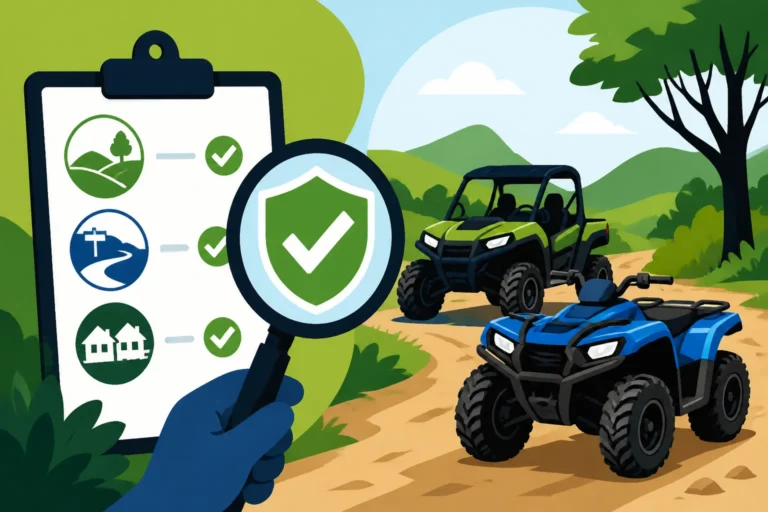
Therefore, before you ever venture onto a municipal road, it is absolutely critical to [Checking a Township's ORV By-law]. Many municipalities, particularly in rural areas, have embraced ORV tourism and access, passing by-laws to allow side-by-sides and other ORVs on certain roads to connect trails or access services. Good examples include specific by-laws like [Greater Napanee By-law 2022-0062] or [Middlesex Centre By-law 2021-010], which explicitly outline which roads are open, what hours they're open, and any other specific local rules. Always consult the official municipal website or contact the municipal office directly. Installing useful accessories like a SuperATV winch or a heavy-duty bumper is great for the trails, but won't help you if you're riding illegally on a closed road.
It's also important to remember that King's Highways (like the 400-series, the QEW, Highways 11, 17, 60, etc.) are generally not open to ORVs, with very few, highly specific exceptions, often only for direct crossings. You cannot plan a long-distance road trip using these major provincial arteries on your side-by-side. Focus your road-riding plans on designated municipal roads where by-laws are explicitly in place to permit ORV access.
Speed Limits and Road-Specific Rules
When you are fortunate enough to find an open municipal road for your side-by-side, there are specific speed limits and operational rules that must be strictly followed. These are designed to integrate ORVs safely into the existing road network. Firstly, if the posted speed limit on the municipal road is 50 km/h or less, your maximum speed on your side-by-side is 20 km/h. If the posted speed limit on the municipal road is greater than 50 km/h, your maximum speed on your side-by-side is 50 km/h. These are absolute maximums; you are always expected to operate at a safe speed for the conditions, which might be lower than the posted maximum.
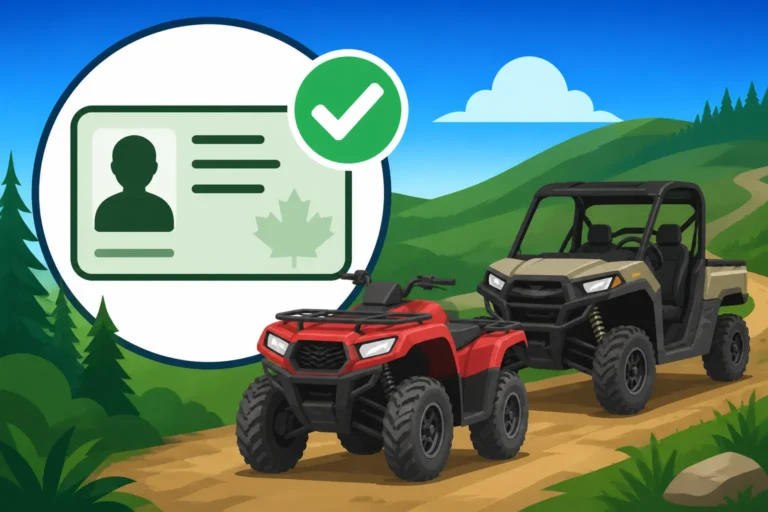
Beyond speed, there are other crucial rules. You must have the appropriate driver's licence, which for road use of an ROV is a minimum of a G2 or M2 licence ([Ontario's G2 and M2 Licence Requirement]). A G1 licence, for example, is insufficient for operating an ROV on a public road. All occupants, including the driver and any passengers, must wear an [Approved Motorcycle Helmets in Ontario] with the chin strap securely fastened. Riding on the shoulder of a road is only permitted if explicitly allowed by the municipal by-law, and riding on sidewalks or bike paths is strictly prohibited. When crossing a provincial highway, you must do so at a right angle after coming to a complete stop, giving way to all traffic.
Safety, Passengers, and Avoiding Penalties
Operating a side-by-side on Ontario roads comes with significant responsibilities, not just for the driver but for any passengers as well. Understanding these rules, particularly regarding occupant safety and the severe consequences of non-compliance, is crucial for an enjoyable and lawful experience.
Passenger Rules and Occupant Protection
Side-by-sides are designed to carry more than one person, which is a key differentiator from most traditional ATVs. When riding your ROV on an Ontario road, it's essential that you only carry as many passengers as the manufacturer designed the machine for. Every occupant must have a designated seating position and, if the machine is equipped with them (which most ROVs are), everyone must wear their seat belt. These seat belts are not optional; they are a critical safety feature, especially given the potential for rollovers on uneven terrain or in sudden maneuvers.
For passenger safety, particularly with children, always refer to your side-by-side's owner's manual for age and height recommendations. While the law generally permits passengers in ROVs, ensuring they are properly secured and wearing a helmet is paramount. Features like robust roll cages and secure doors, often enhanced by aftermarket accessories from companies like SuperATV, are designed to provide occupant protection in the event of an incident. However, these features are only effective if passengers are seated correctly, wearing seat belts, and an [Ontario ATV Helmet Law for Passengers] is always observed.
The Consequences of Non-Compliance
Operating your side-by-side on Ontario roads without meeting all the legal requirements can lead to severe penalties. Ignorance of the law is never an excuse, and enforcement officers are well-versed in the specifics of the Off-Road Vehicles Act and municipal by-laws. Riding an unregistered or uninsured side-by-side can result in substantial fines, which are often in the thousands of dollars, and the vehicle can be immediately impounded. [Ontario Fines for No ATV Insurance] are particularly steep because it puts everyone on the road at risk.
Beyond administrative fines, operating a machine that doesn't meet equipment standards, riding where prohibited, or exceeding speed limits can also lead to charges under the Highway Traffic Act or the Off-Road Vehicles Act. This can impact your driving record, lead to licence suspension, and even escalate to criminal charges in cases of dangerous operation or impaired driving. Always carry your [Ontario ATV Permit Lookup] documentation and proof of insurance, ensure your machine is properly equipped, and confirm local by-laws before you ride. A little preparation can save you a lot of grief, money, and potentially prevent serious injury.
Key Ontario Side-by-Side Road Rules
| Requirement | Detail | Important Note |
|---|---|---|
| Vehicle Type | Recreational Off-Road Vehicle (ROV) | Must meet specific width/weight limits (under 2.03m / 1,700kg) |
| Registration | [Ontario ORV Permit Cost] (one-time fee) & Plate | No annual renewal. Permit and insurance proof must be carried. |
| Insurance | Mandatory Motor Vehicle Liability Policy | [Ontario Fines for No ATV Insurance] are severe. |
| Licence | Minimum G2 or M2 | [Can You Ride an ATV in Ontario With a G1]? No, not on roads. |
| Helmet | Mandatory [Approved Motorcycle Helmets in Ontario] for all occupants | Chin strap secured. |
| Equipment | Headlights, taillights, brake lights, horn, mirrors, muffler, seatbelts | All must be operational. |
| Road Access | Permitted only on municipal roads where by-laws allow | Not allowed on most provincial highways or 400-series. [Checking a Township's ORV By-law] is critical. |
| Speed Limit | 20 km/h (posted 50 km/h or less); 50 km/h (posted over 50 km/h) | Always ride to conditions. |
Disclaimer
This article is for general informational purposes only and does not constitute professional advice. Laws, prices and regulations vary by location and change over time. Consult a qualified professional for guidance on your specific situation.