Registering a Machine You Inherited in Ontario
Inheriting an ATV or UTV can bring a mix of emotions – grief for the loss, but also perhaps a sense of excitement at the prospect of riding. However, the practicalities of getting that machine legally registered in your name in Ontario can quickly turn that excitement into a headache. Many people find themselves utterly bewildered by the unique paperwork and tax rules involved when a vehicle isn't a straightforward purchase. This comprehensive guide is here to demystify the process of registering an inherited off-road vehicle in Ontario, helping you navigate the estate transfer, required documents, and ServiceOntario requirements smoothly.
Understanding the Unique Challenge of Inherited ORVs
When you inherit an off-road vehicle like an ATV or UTV, it's not simply a matter of walking into a ServiceOntario centre with a bill of sale. The process is layered with legal steps related to the deceased's estate, which can feel incredibly daunting, especially when you're still grappling with the emotional weight of loss. It's a different beast entirely from buying a machine from a dealer or a private seller, and understanding these differences is the first crucial step.
Why Inheritance is Different from a Purchase
A typical purchase involves two living parties: a seller providing a properly signed [The Ontario Vehicle Permit Explained] (formerly known as the ownership) and a buyer presenting identification and paying [13 Percent RST on an Ontario ATV] at the ServiceOntario counter. With an inherited machine, the "seller" is deceased, and the transfer happens through the legal framework of an estate. This means the primary document isn't a bill of sale but rather a legal instrument – typically a will or a grant of probate – that designates you as the rightful recipient of the property. You're not buying it; you're receiving it as part of an estate distribution. This distinction significantly alters the required paperwork and the tax implications.
Moreover, the person handling the transfer at ServiceOntario won't be the original owner, but rather the estate's executor or administrator. This adds another layer of verification, as ServiceOntario needs to confirm that the person presenting the documents has the legal authority to act on behalf of the deceased's estate. It’s all about ensuring a legitimate transfer and preventing fraud, which can make the process feel slower and more scrutinizing than you might expect.
Common Hurdles to Expect When Inheriting an ORV
One of the biggest frustrations when inheriting an ORV is the state of the existing documentation. Often, the deceased might have kept meticulous records, but just as frequently, the permit might be lost, damaged, or simply not where you'd expect it to be. This immediately presents a hurdle, as the original [Proving Ownership of an Ontario ATV] is the cornerstone of any vehicle registration. Losing this document doesn't mean you can't register the machine, but it does mean you'll have extra steps to prove legitimate ownership through the estate.
Another common challenge is navigating family dynamics, especially if the will isn't crystal clear or if there are multiple heirs. The executor of the estate has a legal duty to distribute assets according to the will or intestate laws, and sometimes an inherited ORV might be a point of contention. You might also find yourself dealing with an executor who is unfamiliar with the process of transferring an off-road vehicle, requiring you to guide them through the steps. It’s easy to get discouraged, but remember that many people face these exact issues, and there are established pathways to follow.
The Paperwork Trail: What You'll Need to Gather
Success in registering an inherited ORV hinges almost entirely on having the correct documentation. This isn't just about showing up with a single piece of paper; it’s about building a solid case for your right to register the machine. Gathering these documents can take time and effort, but being prepared will save you immense frustration down the line.
The Will and Estate Documentation
The foundational document for any inherited property is the deceased's last will and testament. If the will specifically bequeaths the ATV or UTV to you, this is your primary proof of entitlement. You'll need an original or a court-certified copy of the will. Along with the will, you'll likely need the Grant of Probate (also known as Letters of Probate or Certificate of Appointment of Estate Trustee With a Will). This court document formally confirms the validity of the will and grants the executor (or estate trustee) the legal authority to administer the estate, including transferring assets like the ORV.
If there was no will, the situation is slightly different but still manageable. In this case, the estate is administered "intestate," and the court will issue a Grant of Letters of Administration (Certificate of Appointment of Estate Trustee Without a Will). This document appoints an administrator (often the closest next of kin) who then has the legal authority to distribute the assets according to Ontario's Succession Law Reform Act. Regardless of whether there's a will or not, having the appropriate court-issued document proving the executor's or administrator's authority is absolutely critical for the ServiceOntario transfer.
Proving Ownership When Papers Are Scarce
It’s an unfortunate reality that sometimes the original [The Ontario Vehicle Permit Explained] for the ORV is nowhere to be found. Perhaps it was misplaced, damaged, or simply never passed along. Don't panic. ServiceOntario has procedures for situations like this. The key is to provide as much verifiable information as possible about the machine and its former owner. You'll need to provide the Vehicle Identification Number (VIN) – locate it on the frame of the ATV or UTV – and any other identifying marks.
If the permit is missing, the executor will likely need to sign a sworn affidavit confirming their right to dispose of the property and attesting that they do not possess the original permit and have no knowledge of any liens or encumbrances on the vehicle. This affidavit essentially replaces the missing permit in establishing the chain of ownership from the deceased's estate to you. You can often find templates for such statutory declarations on legal document websites like LawDepot, which can guide you in drafting the necessary statement to present at ServiceOntario. This helps bridge the gap when the traditional proof of ownership is unavailable.
Bill of Sale Quandaries for Inherited Machines
Since you’re not buying the machine, a traditional bill of sale between you and the deceased isn’t applicable. However, ServiceOntario still needs a document that formalizes the transfer of the machine from the estate to you, even if no money changes hands. This often takes the form of a formal letter from the executor, sometimes referred to as an "Executor's Letter of Transfer" or an "Affidavit of Transmission," which clearly states that the ORV is being transferred to you as part of the estate distribution. This letter should identify the deceased, the executor, you (the beneficiary), and the specific ORV by its make, model, year, and VIN.
In some cases, especially if you had to prove ownership due to missing permits, the affidavit signed by the executor (as mentioned above) can serve a dual purpose, both proving ownership from the estate and documenting the transfer to you. Again, resources like LawDepot can be helpful for finding suitable templates for affidavits or statutory declarations that effectively serve this purpose. The goal is to create a clear paper trail showing that the machine has legally moved from the deceased's estate into your possession, satisfying ServiceOntario's need for a documented transfer, even without a monetary transaction.
Navigating Retail Sales Tax (RST) for Inherited ORVs
Retail Sales Tax (RST) is a significant concern for anyone acquiring an ORV in Ontario, typically 13% of the purchase price or the vehicle's wholesale value. However, one of the few silver linings when inheriting a machine is the potential for an exemption from this tax, specifically designed for estate transfers. Understanding this exemption is crucial, as it can save you a substantial amount of money.
Ontario's Estate Transfer Exemption Explained
Good news! Ontario generally provides an exemption from Retail Sales Tax for off-road vehicles transferred as part of an estate. This means if you are the legitimate beneficiary of an ORV specified in a will, or if it is being transferred to you as part of an intestate distribution, you typically will not have to pay the 13% RST. This is a huge relief, as the tax on even a modest ATV can amount to hundreds, if not thousands, of dollars. The rationale behind this [Ontario's Estate Transfer Exemption] is that it's not a commercial sale or a gift between living individuals, but rather a disposition of property following a death, which is treated differently under tax law.
To claim this exemption, you will need to complete a form provided by ServiceOntario, often called a "Statement of Gift/Transfer of a Used Vehicle in Ontario" or similar. On this form, you'll indicate that the vehicle is an estate transfer, and you'll present the supporting documentation like the will and grant of probate/letters of administration. As long as your paperwork clearly demonstrates that the transfer is a direct result of an estate distribution to a named beneficiary or legal heir, you should be able to process the registration without incurring RST.
When RST Might Still Apply
While the estate transfer exemption is widely applicable, there are specific scenarios where RST might still be levied. If, for instance, the executor decides to sell the ORV from the estate to you, rather than transfer it as an inheritance, then the transaction would be treated as a [Retail Sales Tax on an Ontario Private Sale], and you would be required to pay the 13% RST on the agreed-upon price. This can happen if the will instructs the sale of assets to fund other bequests, or if there's an agreement among heirs to sell an asset to one party.
Another scenario where RST might apply is if the vehicle is transferred to someone who is not a direct beneficiary or legal heir, or if the transfer doesn't fully align with the estate's distribution instructions. For example, if the ORV was willed to one person, but the executor decided to give it to someone else (perhaps with the original beneficiary's consent, but without formal amendment to the will), ServiceOntario might scrutinize the transfer and could decide to impose RST. It's always best to ensure the transfer directly reflects the legal disposition of the estate to avoid unexpected tax burdens.
Valuation Considerations
Even with the estate transfer exemption, ServiceOntario will still take note of the vehicle's value. While you won't be paying RST based on this value for a direct inheritance, it's part of the official record. Unlike cars and trucks, [Why ORVs Have No Red Book Value], which means there isn't a widely accepted, standardized guide for their market value. ServiceOntario staff typically use a combination of factors: the stated value on any transfer documents (even if it's "zero" for an inheritance), general market knowledge, and sometimes local classifieds or online listings for similar machines.
If, for some reason, you declare an exceptionally low value for the ORV in an attempt to trigger a lower tax burden (which, as discussed, usually isn't an issue for direct estate transfers), ServiceOntario does have the discretion to assess a "fair market value" for the purpose of taxation, should the exemption not apply. However, for a legitimate estate transfer, the primary concern is usually ensuring all the documentation correctly points to the exemption, rather than disputing the vehicle's worth. Be prepared to provide the year, make, model, and VIN so they can identify the machine accurately.
The ServiceOntario Visit: What to Expect
Once you've meticulously gathered all your documents, the next step is to visit a ServiceOntario centre. This can be a straightforward process if you're well-prepared, but it can quickly become frustrating if you arrive with incomplete paperwork. It’s highly recommended to approach this visit with patience and a complete understanding of what the clerks need to see.
Booking Your Appointment and What to Bring
Gone are the days of simply walking into a ServiceOntario centre and hoping for the best. Many locations now strongly recommend or even require booking an appointment online for vehicle registration services. This can save you a significant amount of waiting time. Check the ServiceOntario website for the specific centre you plan to visit to confirm their current procedures. When you do book, make sure you specify the type of service you need, which is "vehicle registration" or "transfer of ownership."
For your appointment, assemble a comprehensive folder. You will need:
- Your own valid government-issued photo identification (e.g., driver's licence, passport).
- The executor's valid government-issued photo identification (if the executor is present). If they are not present, you will need a notarized copy of their ID or a clear, legible photocopy if the specific ServiceOntario office accepts it, though originals are always preferred.
- The original ORV Permit (if available and correctly signed by the deceased). If not, your affidavit.
- The original or court-certified copy of the Will and Grant of Probate/Letters of Administration.
- The Executor's Letter of Transfer or Affidavit of Transmission, specifically detailing the ORV and the transfer to you.
- Proof of your residential address in Ontario (if not on your ID, e.g., utility bill).
- Any other supporting documents you used to prove ownership or the estate's authority.
- A completed "Statement of Gift/Transfer of a Used Vehicle in Ontario" form, indicating the estate transfer exemption.
A quick review of [Ontario ATV Registration Paperwork] might also be helpful to ensure you haven't missed any general requirements that apply even to inherited machines.
| Document Type | Required for Inherited ORV? | Notes for Estate Transfer |
|---|---|---|
| Original ORV Permit | Yes (if available) | Crucial. If missing, prepare alternative proof of ownership. |
| Grant of Probate / Letters of Admin. | Yes | Court document confirming executor's authority or intestate administration. |
| Deceased's Will (if applicable) | Yes | Original or court-certified copy, if the ORV is specifically bequeathed. |
| Executor's ID | Yes | Valid government-issued photo ID for the executor. |
| Your ID (Beneficiary) | Yes | Valid government-issued photo ID for yourself. |
| Executor's Letter of Transfer/Affidavit | Yes | Formal document from executor transferring ORV to you, identifying the vehicle. |
| Sworn Affidavit of Ownership | Yes (if permit missing) | Attesting to estate's ownership and reason for missing permit. Templates at LawDepot. |
| Statement of Gift/Transfer form | Yes | ServiceOntario form to claim the estate transfer RST exemption. |
| Proof of Insurance (for road use) | Recommended | While not always needed for registration, you'll need it to ride. [Insurance and Ontario ORV Registration] |
What to Present at the Counter
When your number is called or your appointment time arrives, take a deep breath. Be clear and concise with the ServiceOntario clerk. State that you are there to [Registering an ORV at a ServiceOntario Centre] that you have inherited. Present your documents in an organized manner. Start with your own ID, then the ORV permit (or the affidavit substituting it), followed by the will and grant of probate/letters of administration, the executor's ID, and then the executor's letter of transfer. Finally, present the completed "Statement of Gift/Transfer" form.
The clerk will meticulously review each document to ensure it's authentic and complete. They will be looking for consistency in names, dates, and vehicle identification numbers. Be prepared to answer questions about the estate, the deceased, and your relationship to them. Remember, they are simply doing their job to ensure a legal and proper transfer. If everything is in order, they will process the transfer, update the vehicle's record, and issue you a new [The Ontario Vehicle Permit Explained] in your name, along with an ORV plate if the machine never had one, or if you need a replacement. You must be at least [Why You Must Be 16 to Register in Ontario] to have the permit issued in your name.
Addressing Missing or Incomplete Documents
This is where your patience will truly be tested. If the ServiceOntario clerk identifies any missing or incomplete documents, they will likely provide you with specific instructions on what you need to provide. Do not get discouraged; it's a common occurrence. For example, if the executor’s letter is missing specific details, you might be asked to obtain a revised version. If the original will is misplaced, you may need to apply to the court for a certified copy.
In cases where proving ownership is particularly difficult, such as with very old machines or those with a tangled history, the clerk might suggest obtaining an order from the Superior Court of Justice. This is a more complex and costly route, but it's available as a last resort to establish legal ownership. Often, a well-drafted and sworn affidavit, perhaps prepared with assistance from a service like LawDepot, can overcome many documentation shortfalls, especially if it clearly and credibly explains the situation. The key is to address the specific issue directly and provide the requested information or an acceptable alternative as quickly as possible.
Post-Registration Essentials and Ongoing Responsibilities
Congratulations, you've navigated the complexities of registering your inherited ORV! Now that the machine is legally in your name, there are a few more crucial steps to ensure you're ready to hit the trails safely and lawfully, and to understand the ongoing obligations of owning an off-road vehicle in Ontario.
Receiving Your Ontario Vehicle Permit and Plate
Once the registration process is complete, the ServiceOntario clerk will issue you a brand new [The Ontario Vehicle Permit Explained] in your name. This is your official proof of ownership and registration for the ORV. It's a small, green document that you must carry with you whenever you operate the machine, or at least a true copy of it. If the machine didn't already have an ORV plate, or if the old one was lost or damaged, you will also be issued a new plate.
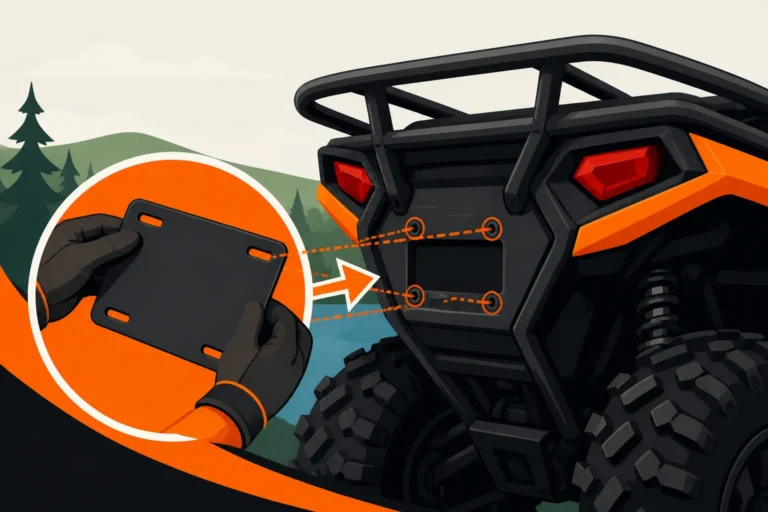
You’ll need to mount this plate properly. Ontario has specific rules for [Ontario ATV Plate Placement Rules]. For most ATVs, the plate is mounted on the rear of the machine, clearly visible, and free from obstruction. For three-wheeled ATVs (though these are rare and have specific rules for riding), it's typically on the front. Make sure it's securely attached so it doesn't rattle loose or get damaged during a ride. It's a small detail, but an improperly displayed plate can lead to fines.
Insurance: A Non-Negotiable Step Before You Ride
While obtaining your permit and plate makes your ORV registered, it does not make it legal to ride, especially if you plan to operate it anywhere other than private property you own and control. [Insurance and Ontario ORV Registration] is mandatory in Ontario for any off-road vehicle operated off your own property, including on OFATV trails, Crown land, or municipal roads where ORVs are permitted. This isn't just a suggestion; it's the law, and fines for riding uninsured can be substantial.
You'll need a Motor Vehicle Liability Policy with a minimum of $200,000 in third-party liability coverage. Contact an insurance broker who specializes in recreational vehicles to get a quote. They can add your newly acquired ORV to an existing policy (like your car or home insurance) or set up a standalone policy. Make sure you carry proof of your valid insurance whenever you ride, as an officer may ask for it. Do not delay this step; riding without insurance leaves you vulnerable to massive financial and legal repercussions in the event of an accident.
No Annual Renewal for an Ontario ORV
Here's some truly great news, and a stark difference from cars or snowmobiles: once you've registered your inherited ATV or UTV in Ontario, there's [No Annual Renewal for an Ontario ORV]. That's right – no yearly sticker, no annual fee to pay to ServiceOntario for the permit itself. The registration is essentially a one-time process for the life of the machine under your ownership.
This means you won't have to worry about renewal dates or administrative headaches each year. However, it's still crucial to keep your personal information (like your address) up to date with ServiceOntario, and to ensure your insurance policy remains current. While the registration doesn't expire, your insurance policy certainly does, and your trail permit (if you ride OFATV trails) will need annual renewal. So, while you get a break on the provincial registration fee, remember there are still other ongoing costs and responsibilities associated with owning and operating an ORV.
Disclaimer
This article is for general informational purposes only and does not constitute professional advice. Laws, prices and regulations vary by location and change over time. Consult a qualified professional for guidance on your specific situation.