Ontario ATV Rules for Crossing a Highway
One of the trickiest parts of navigating Ontario's vast trail networks on your ATV or UTV is the inevitable encounter with a paved road, especially when that road happens to be a busy highway. Many riders feel a knot of anxiety wondering if they're even allowed to cross, how to do it safely, and what rules apply in that fleeting moment they're on asphalt. This guide is here to untangle those worries, providing a clear, comprehensive breakdown of Ontario's rules for legally and safely crossing a highway on your off-road vehicle.
Understanding Ontario's Road Rules for ATVs and UTVs
It's easy to assume that because a municipality has opened some of its roads to ORVs, all roads are fair game. But when it comes to provincial highways, things get a lot more nuanced. Understanding the fundamental distinctions is crucial before you even think about putting tire to pavement.
The Distinction Between Riding and Crossing
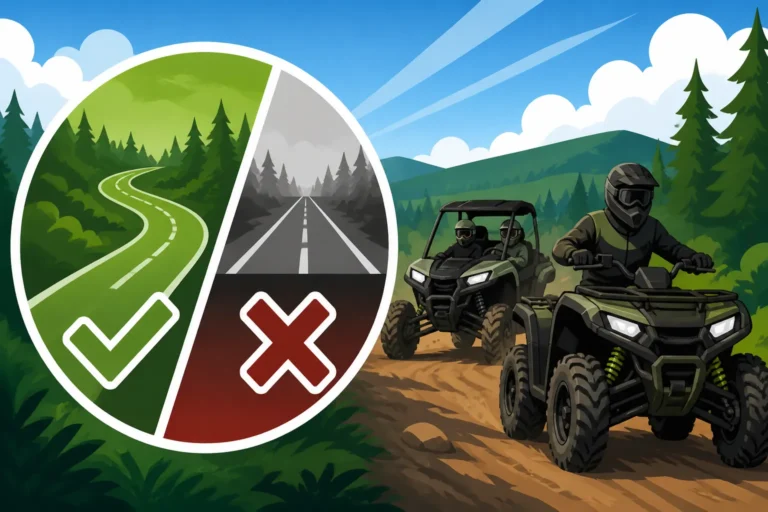
First, let's be crystal clear: riding along a provincial highway in Ontario on an ATV or UTV is generally not permitted, with very few, highly specific exceptions, typically in northern, unorganized townships where the highway is the only road available. For the vast majority of us in more populated areas, provincial highways (like the 400-series, or even many King's Highways like parts of 17, 11, or 60 outside of designated sections) are absolutely off-limits for continuous travel. What we are often allowed to do is cross them. This isn't just a semantic difference; it's a legal one. A "crossing" implies moving directly from one authorized trail or road segment on one side of the highway to another authorized segment on the opposite side, minimizing the time spent on the highway itself. You're not commuting; you're transiting. The province's laws are designed to allow trail connectivity without turning high-speed, high-volume thoroughfares into multi-use paths.
Highway Classifications and ORV Access
Ontario has various classes of highways, and your ability to cross them depends heavily on their designation. Generally, the more critical and higher-speed the highway, the more restricted ORV access will be. For instance, the 400-series highways (like the 401, 400, QEW) are almost universally off-limits for ORV crossings due to high traffic volumes and speed limits. These are designed for rapid, controlled vehicle movement, and introducing slow-moving ORVs would create significant safety hazards. However, many King's Highways (numbered routes like Highway 7, 12, 11, 60, 17 in certain areas) might allow crossings, especially where they intersect with municipal roads that are open to ORVs or connect designated trail systems. It's not a blanket rule; each highway segment needs to be assessed based on local bylaws and provincial regulations. Always assume a provincial highway is closed to ORV travel unless explicitly signed otherwise, but be aware that specific points might be designated for crossing. Your best bet is to check local municipal bylaws and official trail maps, as they often highlight legal crossing points. [Ontario Highways Closed to ORVs] provides a helpful overview.
Essential Machine Requirements for Road Use
Even if you're only on the pavement for a brief moment to cross a highway, your ATV or UTV must meet specific equipment requirements for any road use in Ontario. This isn't just about safety; it's a legal mandate. Your machine needs proper lighting: a white headlight, red taillight, and brake lights are essential, especially if crossing during dawn, dusk, or night. Functioning turn signals are also a must. You'll also need a horn or warning device, and at least one mirror securely mounted to provide a clear view of the rear.
Consider visibility; on a busy highway, even for a quick crossing, you want to be seen. Reflective tape on your machine, or even a brightly coloured flag mounted high, can make a difference. Aftermarket accessories from brands like SuperATV can significantly enhance your machine's road-readiness, offering robust mirrors, comprehensive lighting kits, and durable turn signal systems designed to withstand off-road abuse while meeting on-road visibility standards. Don't forget a proper muffler, because excessive noise can draw unwanted attention, and in some areas, it's regulated. Finally, your tires must be in good condition, as pavement can be harder on knobby tires than dirt. If your machine is slightly over the standard width for an ATV, or a UTV, make sure it still adheres to the province's limits for road use. [Ontario ATV Width Limit for Road Use] details these crucial dimensions.
Navigating a Highway Crossing Safely and Legally
Once you've confirmed that a specific highway crossing point is legal, executing the crossing itself requires precision, caution, and adherence to specific rules to ensure everyone's safety.
The "90-Degree Rule" and Direct Crossing
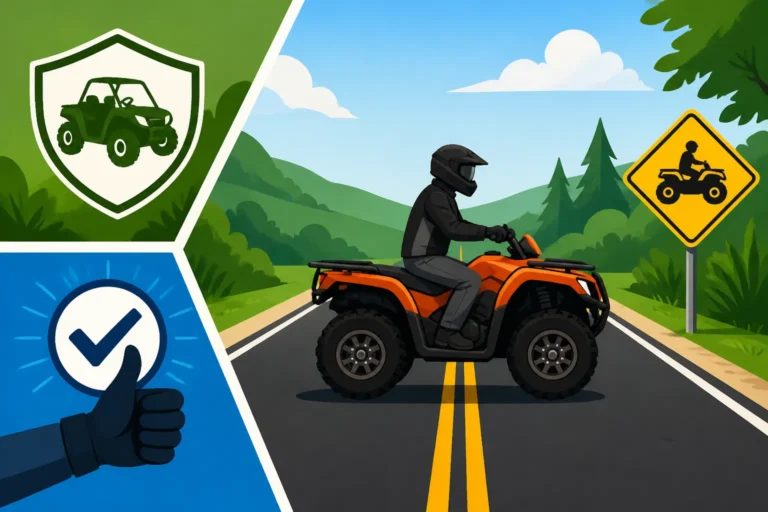
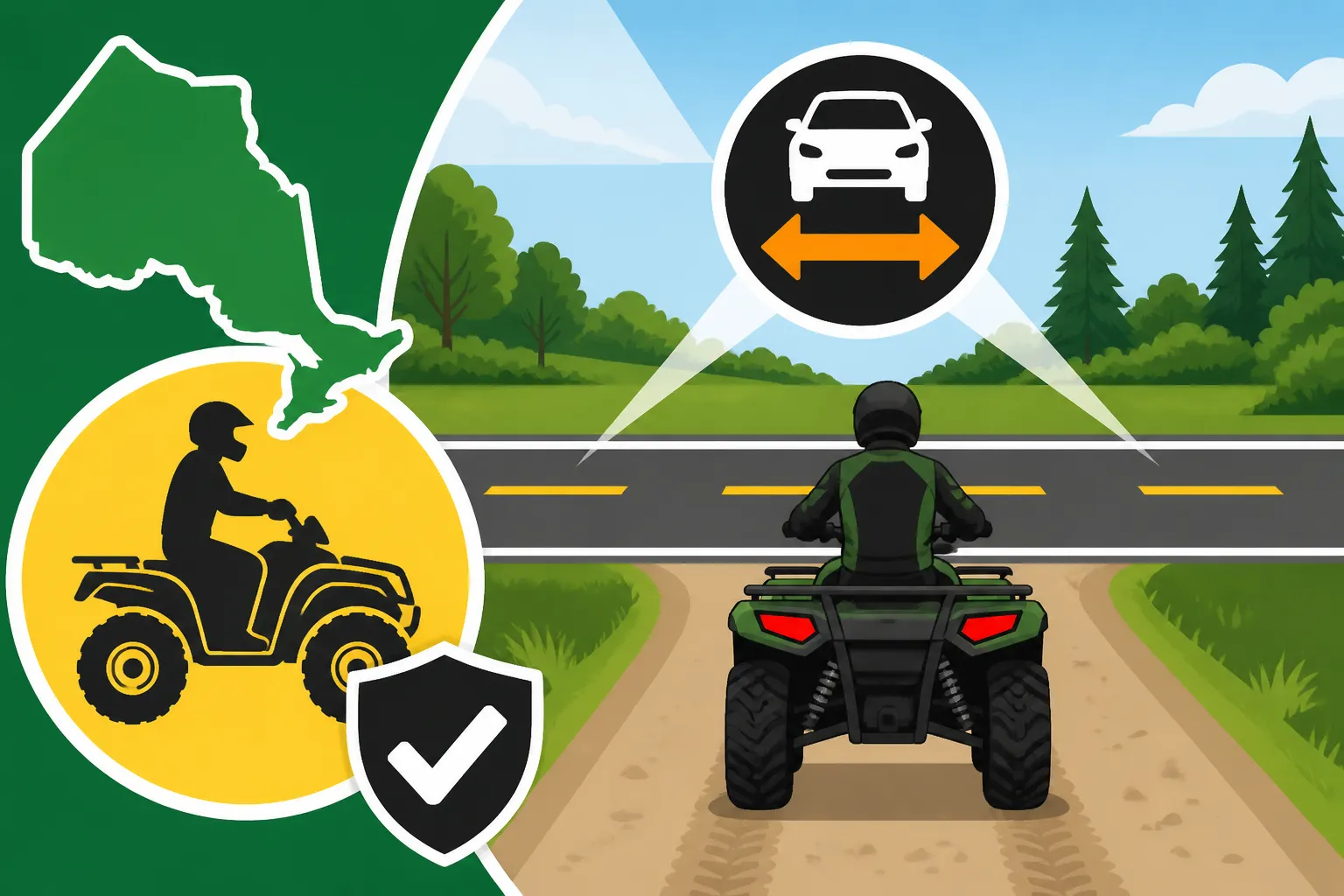
Ontario's Off-Road Vehicles Act (ORVA) generally stipulates that when crossing a public road, you must do so by the most direct route, essentially at a 90-degree angle to the flow of traffic. The intent behind this "90-degree rule" is to minimize your time exposed to road traffic and make your intentions clear to other drivers. You're not allowed to drive along the shoulder for any significant distance to find a better angle or to wait for a gap in traffic. You must stop, assess the traffic, and then proceed directly across. This means if the trail or municipal road you're on meets the highway at an acute angle, you still need to pause and make a distinct 90-degree turn to cross, rather than veering diagonally. This might feel counter-intuitive for some riders, but it's a critical safety measure, reducing the unpredictable side-to-side movement that could confuse oncoming motorists.
Speed Limits and Traffic Awareness
During a highway crossing, your speed is important. You should be slow enough to maintain control and react to unforeseen circumstances, but brisk enough to complete the crossing efficiently. While there isn't usually a specific ORV speed limit just for crossing (you're governed by the road's posted limit if you're briefly on it), common sense dictates you should only accelerate enough to clear the lanes safely. This is not the time to be racing across or dawdling. The most crucial aspect here is traffic awareness. Before you even approach the edge of the highway, you need to stop, look both ways, and listen carefully. Provincial highways often have high-speed traffic, and vehicles can approach much faster than you anticipate. Even if you have the right-of-way (which you often don't when crossing a main highway), never assume other drivers see you. Make eye contact if possible. Be patient. If there's heavy traffic, you might have to wait for several minutes to find a safe gap.
Signage, Signals, and Visibility
Always pay attention to any posted signage around the crossing point. Some crossings might have specific ORV signs indicating a crossing point, while others might simply rely on the presence of a connecting trail or municipal road. When you're ready to cross, use your turn signals to indicate your intention, even if you're only making a 90-degree turn. This communicates your movement to any approaching vehicles. If your machine is equipped with bright LED lights, such as those available from SuperATV, ensure they are on and fully functional. Bright headlights and taillights significantly increase your visibility, especially when contrasting with high-speed road traffic.
Consider wearing high-visibility gear, even if it's not strictly mandated for the crossing itself. A neon vest or jacket can make you stand out. And remember, during winter months or poor weather conditions like rain or fog, visibility dramatically decreases, making extra caution and even choosing to delay a crossing paramount. You might also encounter crossings where you need to dismount and walk your machine across, but these are generally for multi-use trails rather than highway intersections.
Rider Responsibilities and Legal Obligations
Beyond the mechanical requirements and crossing technique, the rider themselves bears significant legal responsibility when operating an ORV on or near public roads in Ontario. Ignorance of these rules is not an excuse, and non-compliance can lead to hefty fines and other serious consequences.
Licence, Insurance, and Registration Requirements
This is non-negotiable: to operate an ORV on any public road, including for a brief highway crossing, you must have a valid driver's licence. For most ORVs in Ontario, a minimum G2 licence (or M2 for an off-road motorcycle) is required. A G1 or M1 learner's permit is generally not sufficient, as these typically require a fully licensed supervisor and have strict operating restrictions that are incompatible with safe highway crossing. Furthermore, your ORV must be properly registered with ServiceOntario, meaning it has an active permit and a visible licence plate. [The Ontario Vehicle Permit Explained] delves into what this permit entails. The licence plate must be securely mounted and clearly visible, typically on the rear for quads. Lastly, mandatory insurance is not just for accidents; it's a prerequisite for legal operation on any public road. You need to carry proof of this insurance with you, as well as your valid driver's licence and the ORV permit, whenever you ride. [Ontario ATV Insurance Requirements] outlines the details of this crucial coverage.
Helmet Laws and Passenger Rules During a Crossing
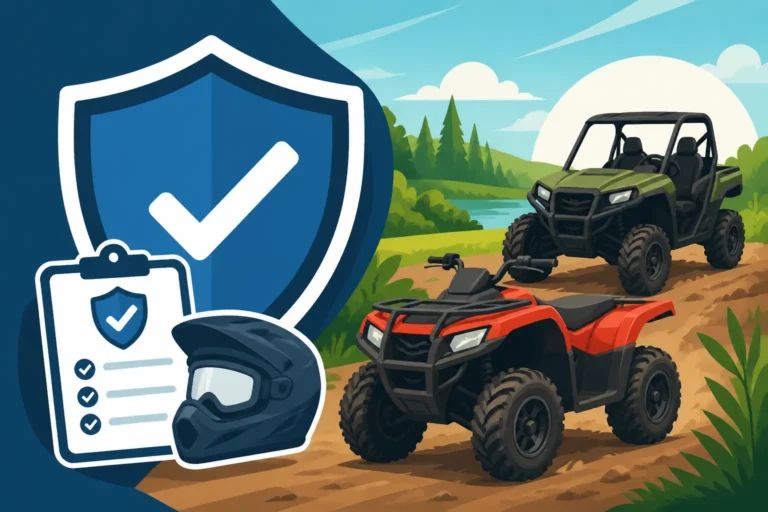
Ontario's helmet law is strict and applies anytime you're operating an ORV on a public road, including during a highway crossing. You and any passengers must wear an approved motorcycle helmet, securely fastened. This isn't just a suggestion; it's a legal requirement designed to protect riders from serious injury. An "approved" helmet means one that meets specific safety standards (e.g., DOT, ECE). Novelty helmets or bicycle helmets are not acceptable. [Approved Motorcycle Helmets in Ontario] provides more information on what constitutes an approved helmet.
If you have passengers, the rules become even more stringent. Single-rider ATVs, as their name suggests, are designed and equipped for one operator only; carrying a passenger on such a machine, especially on a public road, is illegal and highly dangerous. If your ATV or UTV is designed for a passenger (e.g., a "two-up" ATV or a multi-seat UTV), that passenger must also wear an approved helmet and be seated in a designated seating position with a seatbelt if applicable (common on UTVs). Children passengers also have age and size restrictions, and you must ensure they can safely reach the footrests and hold on properly. [Ontario ATV Passenger Rules] covers this in more detail.
Penalties for Non-Compliance
The penalties for violating Ontario's ORV rules can be severe. Riding an unregistered or uninsured ORV on a public road, even for a crossing, can lead to substantial fines, vehicle impoundment, and licence suspension. Operating without a valid licence is equally serious. Failing to wear an approved helmet, or allowing a passenger to ride without one, also carries significant fines. These aren't minor infractions; they reflect the province's commitment to road safety. Enforcement officers, whether OPP, local police, or conservation officers, are trained to identify ORV violations. It's not worth the risk to cut corners on these basic legal requirements. Always ensure you, your machine, and your passengers are fully compliant before venturing onto any public road, even for a brief crossing.
Practical Tips for a Smooth Highway Crossing
Beyond the letter of the law, there are practical strategies you can employ to make every highway crossing as smooth, safe, and stress-free as possible.
Planning Your Route and Scouting Crossings
The best defence against a stressful highway crossing is proactive planning. Before you even leave your staging area, study your trail maps. Most official OFATV or municipal trail maps will clearly mark legal road crossings. If you're unsure, contact the local trail club or municipality for clarification. Even better, if it's a new area for you, consider scouting the crossing points in a truck or car first. This allows you to observe traffic patterns, visibility issues, and confirm the legal entry/exit points without the pressure of being on your ORV. Look for clear lines of sight, good shoulders, and safe places to pause before entering the roadway. Knowing exactly where you're going to cross, and what the approach and departure look like, will significantly reduce anxiety when you're on your machine. [Ontario ATV Trail Maps] can be an invaluable resource for this pre-ride planning.
Group Riding Dynamics During a Crossing
When riding in a group, highway crossings require extra coordination and discipline. The general rule is for each rider to cross individually and safely, rather than attempting to cross in a large, unbroken convoy. The lead rider should stop at the edge of the highway, confirm a clear path, and then cross. Once safely on the other side, they should signal to the next rider when it's safe for them to proceed. This ensures that each rider has an unobstructed view of traffic and can make their own judgment call.
It's crucial for the group to maintain a safe distance from each other while waiting to cross, allowing space for any road vehicles to pass if necessary. Avoid blocking the road or shoulder while waiting. Group leaders should brief all riders on crossing procedures before the ride begins, emphasizing patience and individual responsibility for safety. Communication, whether through hand signals or helmet communicators, is vital to ensure everyone is on the same page.
Post-Crossing Trail Etiquette
Once you've successfully navigated a highway crossing, the journey isn't over. It's important to merge back onto the trail or connecting road smoothly and respect the environment and other users. Accelerate gently to rejoin the trail, avoiding spinning tires that can damage sensitive trail surfaces, especially after a period of being confined on pavement. If you were separated from your group during the crossing, find a safe, designated spot on the trail to regroup rather than stopping immediately after the crossing, which could create a bottleneck or hazard. Remember that many trails are multi-use, so be mindful of hikers, cyclists, or equestrians who might be sharing the path. By respecting these simple etiquette guidelines, you ensure that the seamless transition from road to trail is not only safe but also preserves the quality and accessibility of Ontario's off-road riding opportunities for everyone.
| Aspect | Riding ALONG a Highway (Generally Not Allowed) | Crossing a Highway (Permitted at Designated Points) |
|---|---|---|
| Purpose | Continuous travel on the highway | Direct transit from one authorized ORV-accessible area to another |
| Duration | Extended period of travel | Brief, momentary passage |
| Permitted By Law | Very rarely, only in specific northern, unorganized areas; otherwise, prohibited. | Commonly permitted at designated intersections or points, especially for King's Highways. |
| Approach | Implies merging with highway traffic flow | Stop, look, listen, then proceed directly across (90-degree rule) |
| Machine Requirements | Full road-legal status (lights, mirrors, horn, etc.) required. | Full road-legal status (lights, mirrors, horn, etc.) required for the crossing. |
| Rider Requirements | Valid G2/M2 licence, insurance, registration, helmet. | Valid G2/M2 licence, insurance, registration, helmet. |
| Key Risk | High risk of high-speed collision, legal penalties. | Risk related to brief exposure to high-speed traffic; requires extreme caution. |
Disclaimer
This article is for general informational purposes only and does not constitute professional advice. Laws, prices and regulations vary by location and change over time. Consult a qualified professional for guidance on your specific situation.