Buckling Up in a Side-by-Side
There's nothing quite like the freedom of cruising down an open road in your side-by-side, but that freedom comes with serious responsibilities, especially when it comes to safety. Many riders feel a bit fuzzy on the specific rules for seat belts when their UTV hits Ontario's paved surfaces. This guide will meticulously break down the 'why' and 'how' of buckling up in your side-by-side, ensuring you stay safe and on the right side of the law.
The Core Rule: Why Seat Belts Are Non-Negotiable on Ontario Roads
Riding an off-road vehicle (ORV) in Ontario, particularly a side-by-side, brings a unique blend of adventure and regulatory compliance. It's not just about having fun; it's about understanding and adhering to the safety standards set out by the province. One of the most critical, and often misunderstood, aspects of this is the requirement for seat belts, especially when you venture onto public roads. This isn't just a suggestion; it's a fundamental part of keeping yourself and your passengers safe, and avoiding hefty fines.
Understanding Ontario's Vehicle Classes for Road Use
Before we dive into seat belts, it's crucial to understand how Ontario classifies your side-by-side for road use. The province categorizes off-road vehicles into different types, each with its own set of rules. While many people colloquially call all these machines "ATVs," your side-by-side actually falls into a distinct category, known as a Recreational Off-road Vehicle (ROV) or Multi-purpose Off-highway Vehicle (MPV) depending on specific characteristics. Understanding these distinctions is key to knowing which rules apply to you.
Most side-by-sides are considered ROVs under the Ontario Off-Road Vehicles Act, especially newer, wider models designed with multiple occupants in mind. This classification is important because it dictates everything from your [Ontario Side-by-Side Road Rules] to required safety equipment. Unlike traditional single-rider ATVs, ROVs are built with roll-over protective structures (ROPS) and typically have bench or bucket seating, which inherently brings seat belt requirements into play.
The implications of being classified as an ROV are significant, especially for safety features. When an ORV is on a road, it's subject to many of the same safety requirements as a traditional car or truck, albeit with specific adaptations for the ORV's nature. This means that features like seat belts, which might seem optional on the trail, become absolutely mandatory and legally enforceable when you're sharing the road with other vehicles. Ignoring these classifications can lead to serious safety risks and legal repercussions.
The Legal Mandate for Occupant Restraints
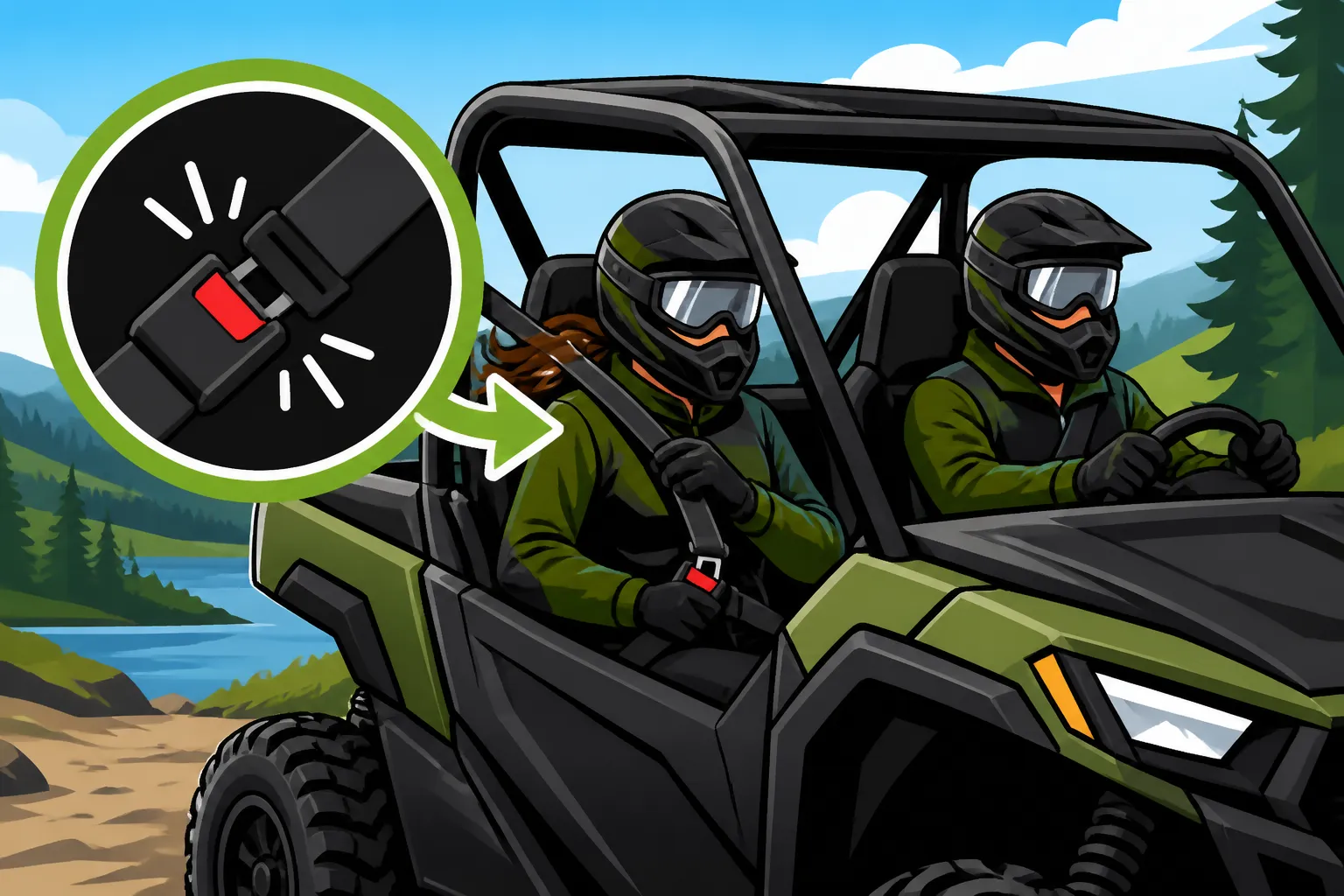
When your side-by-side ventures onto a public road in Ontario, the rules of the road kick in, and that includes occupant restraints. The province's regulations are quite clear: if your ORV is equipped with seat belts, you and all your passengers must be properly buckled up. This isn't merely good practice; it's a legal obligation that aligns with broader road safety initiatives. The expectation is that if a safety device is present and designed for occupant protection, it must be used.
This legal mandate stems from the fundamental principle of protecting occupants in the event of a collision or sudden stop. Side-by-sides, while stable, are not immune to accidents, especially when interacting with road traffic. The seat belt acts as your primary restraint, keeping you securely within the vehicle's protective cage. Without it, you risk being ejected from the vehicle, which can lead to far more severe injuries.
It's a stark contrast to riding off-road on private property, where, while still highly recommended for safety, the legal enforcement of seat belt use might not apply. However, once those tires touch a municipal road or designated highway, you're in a different regulatory environment. An officer conducting a roadside stop will undoubtedly check for proper seat belt usage, and not being buckled up can result in fines that quickly put a damper on your ride. It’s always best to be buckled up, regardless of whether you’re on the road or the trail.
Roll-Over Protection and Why It Matters
Side-by-sides are inherently designed with safety in mind, and a key component of this design is the Roll-Over Protective Structure (ROPS). This integrated cage, often made of steel tubing, is built to protect occupants if the vehicle rolls over. However, the ROPS isn't a standalone safety feature; it's designed to work in conjunction with seat belts. Think of it as a two-part system where both components are essential for maximum protection.
The ROPS creates a survival space for occupants, preventing the vehicle from crushing them in a rollover. But simply having the cage isn't enough. Without a seat belt, occupants can be jostled or even ejected from this protective space during a rollover, defeating the ROPS's purpose entirely. This is why the connection between ROPS and seat belts is so critical: the seat belt keeps you contained within the protective envelope the ROPS creates.
When considering [Roll-Over Protection on an Ontario ROV], it's clear that the design intent is for the driver and passengers to remain securely inside. This integrated approach to safety means that modifying or removing factory-installed ROPS or seat belts is not only dangerous but can also be illegal, especially for road use. Always ensure your side-by-side's ROPS and seat belts are in good condition and used correctly, as they are your first line of defense against severe injury in an accident.
Navigating Seat Belt Specifics for Your Side-by-Side
Understanding the general requirement for seat belts is one thing, but knowing the specifics of their types, proper use, and what to expect from enforcement is another. Side-by-sides often come with robust restraint systems, but like any safety feature, they are only as effective as their application and maintenance. Let's delve into the practicalities of buckling up in your UTV.
Types of Seat Belts and Approved Standards
Most modern side-by-sides come equipped with factory-installed three-point seat belts, similar to those found in cars. These consist of a lap belt and a shoulder strap, designed to distribute impact forces across the strongest parts of your body. These are generally the minimum requirement for road use and are designed to meet specific safety standards established by manufacturers and regulatory bodies.
For those who engage in more aggressive off-road riding, or simply want enhanced security, aftermarket restraint systems are popular. These can range from four-point harnesses, which add two shoulder straps that attach to a rear mounting point, to five-point harnesses that include a strap between the legs to prevent submarining under the lap belt. Brands like SuperATV offer a variety of aftermarket seat belts and harnesses designed for UTVs, providing options for riders looking for increased security. However, when considering any aftermarket product, especially for road use, it's vital to ensure it meets or exceeds any relevant safety standards and that its installation doesn't compromise the vehicle's original safety engineering. Always check with your local ServiceOntario or the manufacturer if you're unsure about the legality or safety of modifications for road-going machines.
Regardless of whether you use a factory three-point belt or an aftermarket multi-point harness, the underlying principle remains the same: the seat belt must be in good working order, properly anchored, and used correctly. Any fraying, cuts, or damage to the webbing, or issues with the buckle or retracting mechanism, mean the belt needs immediate attention or replacement. Your safety depends on the integrity of this crucial piece of equipment.
Proper Use and Enforcement on Ontario Roads
Knowing you have to buckle up is one thing; knowing how to do it properly and what an officer looks for is another. Simply having a seat belt draped across you isn't enough; it must be snug, positioned correctly, and fully latched. The lap portion should sit low across your hips, not across your stomach, and the shoulder strap should cross your chest and collarbone, not your neck. This ensures the forces are absorbed by your skeletal structure in a sudden stop or impact.
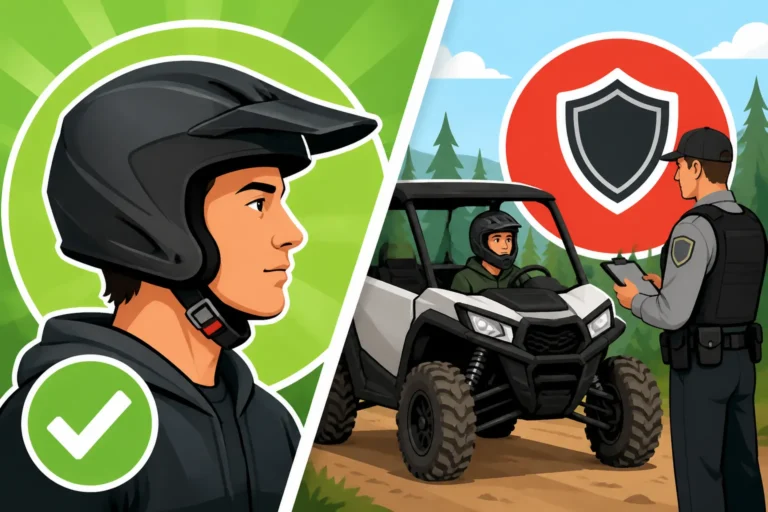
During a roadside stop, an Ontario Provincial Police (OPP) officer or municipal enforcement officer will be checking several things related to occupant safety. They'll look for visible seat belt usage by all occupants, confirm the belts appear to be in good condition, and ensure they are properly latched. They may also check for [Ontario ATV Licence Requirements] and [Approved Motorcycle Helmets in Ontario], as these are also critical for road-legal ORV operation. If you're found to be unbuckled, or if your seat belt is clearly not functioning as intended, you could face a significant fine.
The enforcement isn't meant to be punitive; it's preventative. The goal is to encourage safe riding practices on public roads, where the consequences of an accident can be far more severe than on a closed trail. It's a small action – clicking that buckle – that has an enormous impact on your personal safety and legal compliance. Ignoring this simple step can lead to legal headaches, as outlined in potential [Ontario Fines for Riding Without a Permit] or for other infractions, but more importantly, it puts you and your passengers at unnecessary risk.
| Safety Check Item | On-Road Requirement (Ontario UTV) | Why It Matters |
|---|---|---|
| Seat Belts | Mandatory for all occupants | Prevents ejection, keeps occupants within ROPS |
| Roll-Over Protection | Factory-installed ROPS required | Creates survival space in case of rollover |
| Helmets | Mandatory for all occupants | Protects against head injuries |
| Licence | G2 or M2 minimum | Ensures rider competence for road conditions |
| Insurance | Mandatory liability policy | Financial protection for accidents |
| Vehicle Class | Must meet ROV/MPV criteria | Determines specific rules for width, weight, etc. |
| Lights & Mirrors | Functional headlights, tail lights, brake lights, mirrors | Visibility and awareness on public roads |
Passengers and Child Safety Considerations
Bringing passengers along for a side-by-side ride adds another layer of responsibility, especially when on public roads. Ontario regulations regarding ORVs on roads often specify that the vehicle must be designed to carry more than one person if you have a passenger. Crucially, each passenger must have a designated seating position with a working seat belt, and they must use it. You can't just squeeze an extra person in or let them stand in the back. [Ontario ATV Passenger Rules] are very specific and must be followed for safety and legal compliance.
When it comes to children, the rules become even more stringent. While specific age limits for children riding as passengers in UTVs on Ontario roads may vary, the overarching principle is that the child must be able to sit properly, with their feet flat on the floor, and be securely restrained by the vehicle's seat belt system. This often means that very young children, who might not fit the seat belt properly, should not be passengers on public roads. Their safety is paramount, and a ill-fitting seat belt can actually be more dangerous than none at all in an impact.
Always consult the side-by-side manufacturer's recommendations for passenger and child safety, as well as the specific [Ontario UTV Road Rules] and [Ontario Side-by-Side Road Rules] for details on minimum ages or appropriate restraints. Some side-by-sides are designed with specific child seats or restraint systems in mind, and if available, these should be utilized. The rule of thumb is: if they can't be safely and securely buckled in, they shouldn't be riding on the road.
Beyond the Law: Prioritizing Safety in Your Side-by-Side
While legal compliance is a critical baseline, true safety for side-by-side riders goes beyond simply meeting the minimum requirements. It’s about cultivating a safety-first mindset, ensuring your equipment is always in peak condition, and understanding the environments you ride in. Buckling up is just one piece of a larger safety puzzle that ensures every ride is enjoyable and hazard-free.
Maintaining Your Restraint System
Just like any other component on your side-by-side, seat belts and their associated hardware require regular inspection and maintenance. They are subject to wear and tear from use, exposure to the elements, and even potential damage from cargo or debris. Before every ride, especially one involving public roads, take a moment to visually inspect all seat belts. Look for any fraying, cuts, tears, or worn spots in the webbing. Check that the buckles engage and disengage smoothly and that the retractors pull the slack out of the belt effectively.
Pay close attention to the anchorage points where the seat belts attach to the vehicle's frame or ROPS. Ensure there are no loose bolts, cracks, or signs of stress. After an incident, even a minor one like a hard stop or a bump, it’s crucial to thoroughly inspect the entire restraint system. Seat belts can stretch or sustain unseen damage in an impact, compromising their effectiveness in a subsequent collision. If you find any issues, the belt or its components should be replaced immediately. Your safety is not an area to cut corners, and a compromised seat belt is a serious liability.
Remember, even the most advanced systems from a brand like SuperATV need diligent upkeep. A clean, well-maintained seat belt is a reliable seat belt. Don't let dirt, mud, or exposure to UV rays degrade this critical safety feature. Regularly cleaning the webbing and inspecting the mechanisms can significantly extend their lifespan and ensure they perform when you need them most.
Enhancing Safety with Additional Gear
While seat belts are paramount for occupant restraint, they are part of a broader safety ecosystem for side-by-side riders. In Ontario, [Approved Motorcycle Helmets in Ontario] are mandatory for all occupants of an ORV on public roads, regardless of whether your side-by-side has a windshield or a roof. This head protection is non-negotiable and provides crucial defence against impacts and debris.
Beyond the essentials, there are other considerations for enhancing safety. Side-by-sides often have doors or side nets which, while not primary restraints like seat belts, help keep limbs inside the vehicle during aggressive riding or in a minor incident. Eye protection is also highly recommended, even with a windshield, to shield against dust, insects, and small projectiles. Protective clothing, including long sleeves, pants, gloves, and sturdy footwear, can also minimize scrapes, cuts, and abrasions.
Ultimately, the overall safety philosophy for riding a side-by-side, particularly on roads, should be comprehensive. It's about being prepared for the unexpected, mitigating risks through proper equipment and responsible riding habits, and understanding how each safety component, from your helmet to your seat belt, works in concert to protect you and your passengers.
Checking Local By-laws and Open Roads
One of the unique challenges of riding an ORV on Ontario roads is the patchwork nature of access. While the provincial government sets the overarching framework, it is up to individual municipalities to pass by-laws that allow ORVs on their specific roads. This means that [Ontario Municipalities That Allow ATVs on Roads] can vary widely, and what's permitted in one township might be strictly prohibited just down the road.
Even in municipalities that have opened their roads, there can be specific conditions or rules that go beyond the provincial mandates. These local by-laws might specify permissible hours of operation, designated routes, speed limits, or even additional safety requirements. For instance, some municipalities might have specific rules for crossing certain highways, as outlined in [Ontario ATV Rules for Crossing a Highway]. Therefore, while provincial rules mandate seat belt use, a local by-law won't negate that; it might add other nuances you need to be aware of.
Before you plan a ride that involves public roads, it is always, always essential to do your homework. Check the municipal website or contact the local municipal office directly to review their current ORV by-law. Ignorance of a local rule is not a valid excuse, and you could face fines or other penalties if you're caught riding on a prohibited road or not adhering to specific local conditions. A quick call or online search can save you a lot of grief and ensure your journey is smooth and legal.
Disclaimer
This article is for general informational purposes only and does not constitute professional advice. Laws, prices and regulations vary by location and change over time. Consult a qualified professional for guidance on your specific situation.