Parts of Highway 17 Open to Quads
It's incredibly frustrating when you just want to get from one section of a trail to another, or even access a local shop for fuel, and you're faced with a maze of rules about what roads you can and cannot use with your ATV or UTV. Navigating Ontario's vast network of roads and trails with an off-road vehicle (ORV) can feel like deciphering a secret code, especially when it comes to major arteries like Highway 17. This guide will cut through the confusion and explain exactly which parts of Highway 17 might be open to quads, why these specific sections exist, and what you need to know to ride them legally and safely.
The Nuance of Ontario's Major Highway Access for ORVs
Let's be real for a moment: the thought of riding your quad down the Trans-Canada Highway at 100 km/h is, for most of us, either a dream or a nightmare, depending on your perspective. And generally speaking, it's not allowed. Ontario's main provincial highways, like the 400-series or most of Highway 17, are typically off-limits to off-road vehicles. These are high-speed, high-volume routes designed for cars, trucks, and other conventional highway-legal vehicles, not for machines often built for mud and rocks. The frustration comes when a perfectly good trail ends abruptly at one of these highways, leaving you scratching your head about how to get to the other side, or to the nearest gas station.
The province sets overarching rules, but there are always exceptions, particularly when it comes to ORV use in different regions. These exceptions are often born out of necessity, especially in Northern Ontario where communities are more spread out and ORVs play a crucial role in daily life and local economies. It’s not a free-for-all, though. Any allowance for an ORV on a provincial highway is highly specific, often tied to a local municipal bylaw, and comes with strict conditions. You can't just assume that because one short stretch is open, the entire highway becomes your personal trail. That kind of assumption can lead to serious fines or, worse, dangerous situations.
Unpacking Highway 17: Which Parts Are Actually Open?
Highway 17, as a major artery stretching across a huge part of Ontario, presents a unique challenge and opportunity for ORV riders. It's not a simple "yes" or "no" answer. While you won't be cruising long distances on Highway 17 with your quad like you would in a car, there are indeed isolated sections that have been designated as permissible for ORV use. These aren't just random acts of kindness from the Ministry of Transportation. They are carefully considered sections, almost always for very specific purposes.
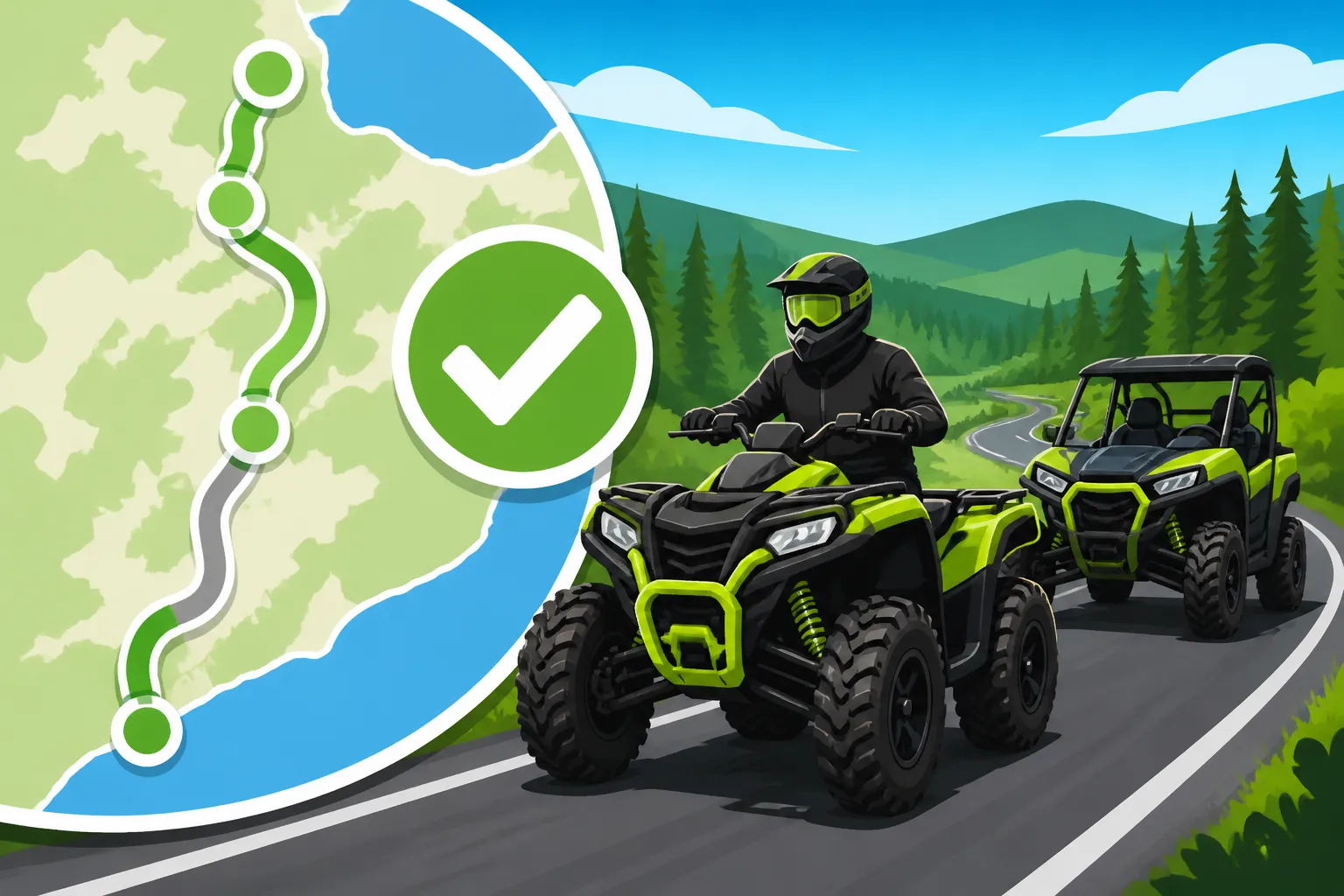
Picture this: you're riding a fantastic trail system that suddenly hits a wall – Highway 17. Instead of turning back, in certain stretches, particularly near smaller towns or where trail networks desperately need to connect, municipalities have worked with the province to open short segments of the highway. These are often brief passages, maybe a few hundred metres or a kilometre, designed to allow riders to cross the highway, access a fuel station, or link up with another trail on the opposite side. Think of it as a carefully constructed bridge, not a continuous road.
These "open" sections are usually found in areas where Highway 17 acts as a main street through a community or where the parallel secondary roads are non-existent or unsuitable. In these instances, a municipal bylaw might permit ORV travel on that specific section of the highway, often with strict speed limits—sometimes as low as the [Ontario's 20 and 50 km/h Speed Limits] you'd see on other municipal roads. The key takeaway here is specific. It's never the entire highway, and it's always regulated by local bylaws. You might find such sections between Blind River and Sault Ste. Marie, or perhaps around pockets in the Nipigon area, but these are localized decisions, not broad stroke provincial policies. Always remember that even on these permitted sections, you're sharing the road with much larger, faster traffic, so vigilance is absolutely critical.
Why These Specific Sections? Connecting the Dots for Riders
The existence of these specific, often short, open sections of Highway 17 isn't an accident; it's a strategic decision made to benefit ORV riders and the communities they visit. The primary driver behind opening these highway segments is almost always trail connectivity. Imagine a sprawling network of trails, meticulously groomed and maintained by local clubs. It would be a shame for that network to be fragmented by an impassable provincial highway, right? Local municipalities, understanding the economic benefits of ORV tourism, often advocate for these small concessions. They want riders to be able to seamlessly travel between trail sections, extending their ride and encouraging them to spend money in local businesses.
Beyond just connecting trails, these sections also serve a crucial practical purpose: access to services. When you're out exploring for hours, eventually you'll need to refuel, grab a bite, or even find accommodation for the night. If the only gas station or diner is just across Highway 17, a short, designated highway-access route becomes invaluable. It keeps riders from having to trailer their machines for a mere few hundred metres, which is a major hassle and discourages exploration. [How an Ontario Municipality Opts In] to open roads for ORVs often involves these exact considerations, balancing rider convenience with public safety.
Historically, in some of Ontario's more remote northern stretches, certain parts of Highway 17 might have served as de facto travel routes for local residents using ORVs long before formal trail systems were developed. While modern regulations are much stricter, some of these historical usages might have been formalized into current allowances. When you're equipping your machine for these varied rides, from rugged backcountry trails to short highway connectors, having robust accessories can make a huge difference. Brands like SuperATV offer a range of products, from enhanced lighting to durable storage solutions, that can handle the diverse demands of Ontario riding. Having the right setup ensures your machine is ready for whatever terrain, or road, comes next, helping you stay safe and compliant.
Navigating Open Sections Safely and Legally
Okay, so you've confirmed that a specific stretch of Highway 17 is open to ORVs. That's great! But the rules don't just magically disappear. In fact, riding on a highway, even a designated open section, demands an even higher level of caution and compliance than riding on a dedicated trail.
First, let's talk about speed. While your quad might be capable of higher speeds, the posted limit for ORVs on these highway sections will likely be much lower than for cars. Adhere strictly to these limits. Remember, you're sharing the road with vehicles that are significantly larger and faster than you. Your visibility to them is often reduced. To enhance your safety, consider upgrades like brighter LED lights or aftermarket mirrors – a brand like SuperATV offers many options that can make your machine more visible and help you keep an eye on traffic behind you.
Next, equipment is non-negotiable. You’re no longer just on a private trail. Your ORV needs to be fully equipped to meet road-legal standards. This includes proper [Ontario ATV Lighting Requirements], ensuring your headlights, taillights, and brake lights are all functioning and visible. You'll also need working [Ontario ATV Mirror Requirements] to monitor traffic around you. And of course, the helmet rule is paramount: an [Approved Motorcycle Helmets in Ontario] with the chin strap fastened is mandatory.
Beyond the machine itself, you need to be properly licensed and insured. For riding an ORV on a public road in Ontario, even a short segment of Highway 17, you must possess at least a valid G2 or M2 licence. A G1 or M1 simply isn't enough to legally operate an ORV on a road. For a deeper dive, check out [Ontario's G2 and M2 Licence Requirement]. And don't even think about leaving home without insurance. [Ontario's Mandatory ORV Insurance] is a critical requirement. You must have proof of this insurance with you, and it's always a good idea to ensure you're [Carrying an Insurance Card on a Ride] that is current and legible. Some riders prefer to [Keeping Your ORV Permit Dry on a Wet Ride] by laminating it or carrying a waterproof pouch, which is a smart move for all your essential documents.
| Aspect of Riding | General ORV Trail | Open Highway 17 Section |
|---|---|---|
| Speed Limit | Varies by trail/club | Strict, often 20-50 km/h |
| Licensing | Not always required* | Minimum G2 or M2 required |
| Insurance | Recommended | Mandatory |
| Helmet | Recommended | Mandatory (approved) |
| Lighting | Basic may suffice | Full road-legal required |
| Mirrors | Optional | Mandatory |
| Visibility | Lower traffic | High traffic, high risk |
| Paperwork | Permit often needed | Permit, Insurance, Licence |
*Note: While a licence isn't strictly required for all off-road riding on private property, it is generally required on managed trails, and absolutely required on any public road.
Failure to comply with any of these rules can lead to significant consequences, including [Ontario ATV Registration Fines] for issues like an unregistered machine, or far more severe penalties like those for [Riding an Unregistered ATV in Ontario] or riding uninsured, which can be thousands of dollars. Always confirm the exact rules for the specific section you intend to ride before you venture out.
How to Confirm Permitted Highway 17 Sections
Given the critical importance of knowing exactly where you can and cannot ride on Highway 17, how do you get this information? You can't just guess or rely on hearsay. The responsibility lies with you, the rider, to do your due diligence.
The most authoritative source for specific road allowances will almost always be the local municipality's official website. Many municipalities, particularly those in Northern Ontario that embrace ORV tourism, will have dedicated sections detailing their off-road vehicle bylaws. These bylaws will often explicitly list which roads, or parts of roads, including provincial highways that pass through their jurisdiction, are open to ORVs. Search for "ORV bylaw" or "ATV bylaw" on the specific town or township's website that you plan to ride near.
Beyond municipal websites, consult local ORV clubs and federations, like the OFATV (Ontario Federation of ATV Clubs). These organizations work closely with municipalities and the province, and their trail maps or online resources often highlight these crucial road links. Many clubs maintain up-to-date information on their websites or through dedicated apps like QuadON, which can show you open routes and designated road allowances.
Always look for official signage. When a section of a highway is legitimately open to ORVs, there will typically be clear signage indicating this, along with any specific rules or speed limits. If you don't see signage, err on the side of caution and assume it's closed. Never rely on the absence of a "No ATVs" sign as permission.
Remember that even on permitted sections, there might be additional rules, such as where you can ride. For instance, [Ontario ATV Rules for Riding a Shoulder] might dictate that you must stick to the shoulder of the road, or [Ontario ATV Rules for Riding a Ditch] could specify that ditch riding is only allowed under certain conditions. These subtle nuances are crucial for staying legal and safe. Taking the time to research thoroughly before your ride will save you a lot of headaches, and potentially a lot of money in fines.
So, while the idea of riding your quad on Highway 17 might initially seem like a pipe dream, specific, often short, sections do exist where ORV use is permitted. These aren't blanket allowances, but rather carefully designated segments vital for trail connectivity and access to local services. Your responsibility as a rider is paramount: understand the local bylaws, adhere to all safety and equipment regulations, and always prioritize caution when sharing the road with other vehicles. With careful planning and proper preparation, you can safely navigate these unique links and continue your adventures across Ontario.
Disclaimer
This article is for general informational purposes only and does not constitute professional advice. Laws, prices and regulations vary by location and change over time. Consult a qualified professional for guidance on your specific situation.