What the $40 Ready To RideON Course Covers
Ready To RideON is an optional ATV safety course for Ontario riders, but it can be hard to tell what its modules actually teach—and what a course can’t prepare you to do. Here’s what to expect, how to use the material, and why completing it doesn’t replace checking the rules for your ride.
What Ready To RideON is designed to teach
Ready To RideON is a rider-education program organized into six modules. The course is designed to build awareness of safe ATV use and the responsibilities that come with riding. It gives riders a structured introduction to topics they might otherwise learn piecemeal from an owner’s manual, a family member or a first trip on a trail.
The modules are intended to cover the foundations: understanding the machine, preparing to ride, making safer decisions and recognizing that rules apply even when a route looks informal. The material is useful for new riders, parents helping a young person get started, and experienced riders who want to review basic practices.
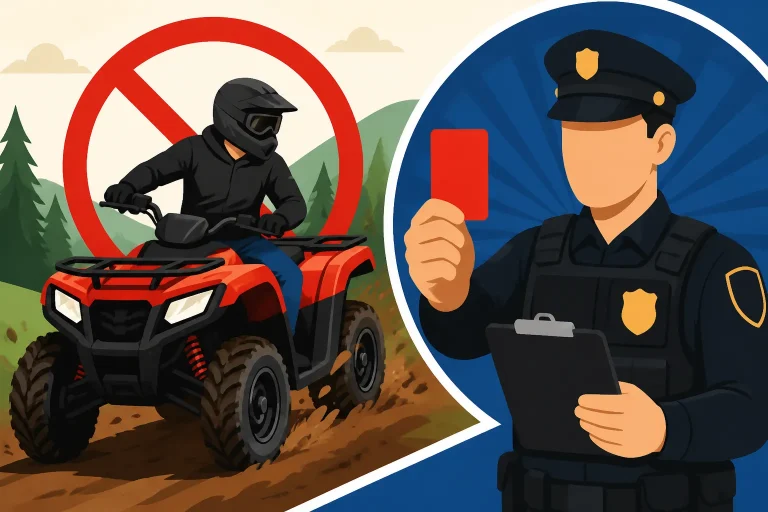
It’s important not to confuse the course with a licence or a legal requirement. Ontario does not generally require riders to complete Ready To RideON before riding an ATV. The course is voluntary, so completing it does not grant permission to ride on a road or trail, waive age or supervision rules, or replace insurance and permit requirements. For the distinction between education and a legal requirement, see Ontario Rider Training and Why It Is Voluntary.
Ready To RideON is also not a substitute for learning the controls on the specific ATV you plan to ride. Machines differ in size, power, handling, passenger capacity and equipment. A lesson about safe riding cannot tell you how a particular model responds on a steep, slippery or rutted surface. Read the owner’s manual and get practical instruction before taking a machine into challenging terrain.
The course is best treated as a starting point: it helps riders recognize what they need to know, and it gives families a shared set of safety topics to discuss before a ride.
The main topics riders can expect to encounter
The course’s six modules are not a reason to assume there are exactly six independent riding skills or that every topic is taught in equal depth. A useful way to understand the coverage is to look at the core safety areas a rider needs to think about.
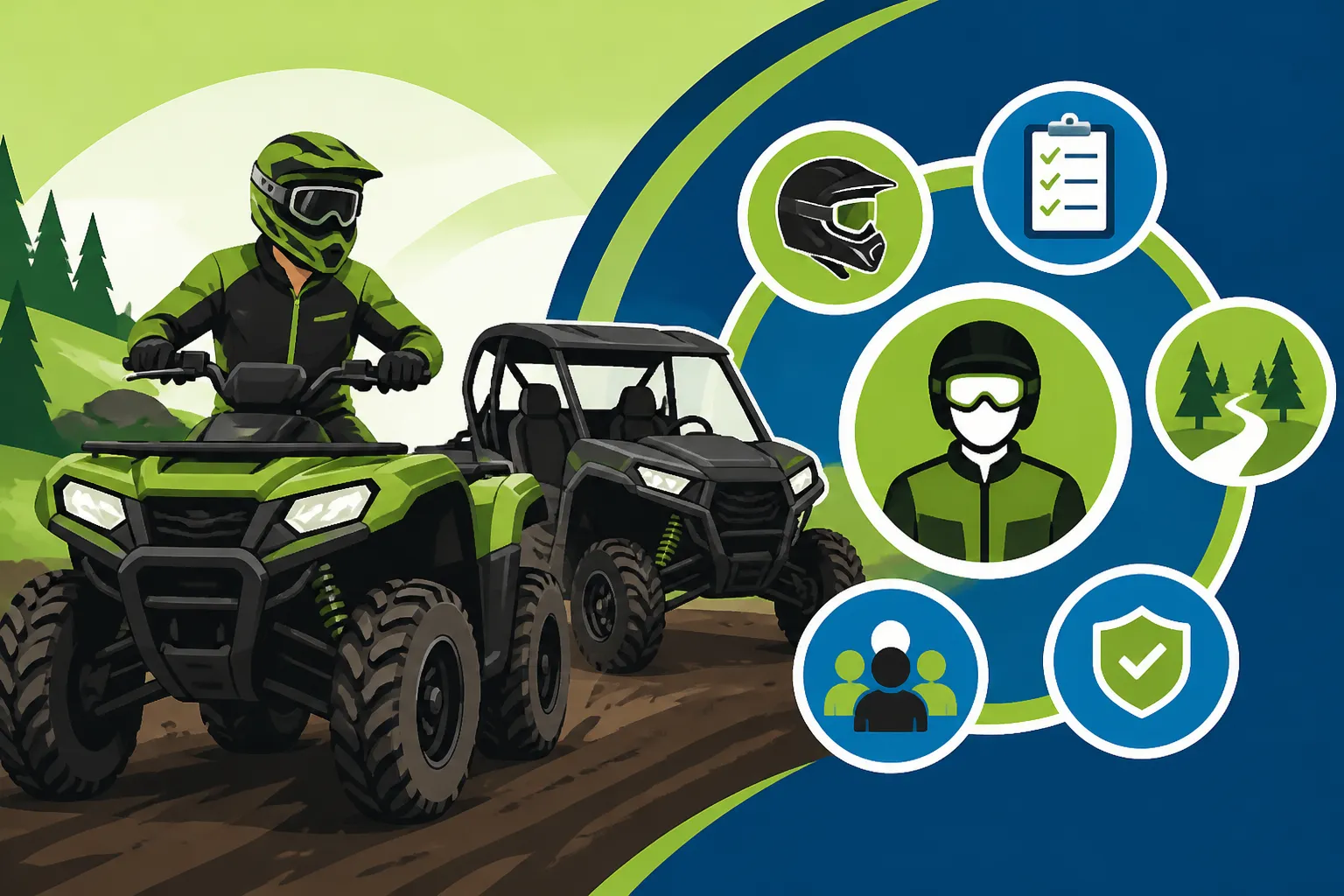
| Safety area | What a rider should take away |
|---|---|
| Knowing the ATV | Match the machine to the rider and understand its controls, limits and passenger capacity |
| Pre-ride preparation | Check the ATV, wear suitable protective gear and plan for the route and conditions |
| Riding decisions | Use controlled speed, maintain space and adjust to terrain, visibility and group traffic |
| Rules and responsibility | Understand that registration, insurance, permits, age rules and access restrictions may apply |
| Passengers and other people | Carry only permitted passengers and communicate clearly with a group |
| Responding to problems | Stop and reassess when conditions, equipment or a rider’s ability make continuing unsafe |
Understanding the machine
A key safety lesson is that an ATV is not simply a small car or a motorcycle with four wheels. Its balance and handling depend on the rider’s position, speed and terrain. A rider may need to shift weight as the machine turns or climbs, and a sudden steering input or excessive speed can make a situation harder to control.
The appropriate ATV also matters. A machine that is too powerful, heavy or difficult to operate can be a poor fit for a beginner, even if the rider is physically large enough to sit on it. Before a young person rides, a parent or guardian should consider the machine’s design and the child’s ability to understand instructions, control the vehicle and react calmly.
Passengers need particular attention. Some ATVs are designed for one rider, while others are built to carry a passenger in a designated seat. A passenger changes how the vehicle handles and must be able to sit securely and follow instructions. A passenger should never be carried on a machine that is not designed for one. The course can help prompt that discussion, but riders should check the manufacturer’s instructions and the applicable rules. Ontario ATV Passenger Rules explains the passenger issue in more detail.
Preparing before a ride
Pre-ride preparation is more than turning the key and checking whether the fuel tank is full. Riders should look over the machine for obvious damage, check that controls and safety equipment work as intended, and make sure protective gear fits properly. The owner’s manual is the right source for model-specific maintenance and inspection details.
Protective equipment should be selected for the riding conditions. A properly approved helmet is central to that preparation, but it is not the only consideration. Eye protection, gloves, long sleeves, long pants and sturdy footwear can help protect riders from debris, branches and contact with the machine. Weather and route conditions may call for additional layers or visibility equipment.
A rider should also plan the trip rather than relying on the idea that a short ride cannot go wrong. Consider the route, expected weather, daylight, fuel, communications and the experience of everyone in the group. Let someone know the plan when riding in a remote area. Carry only equipment that is safely secured, and do not let a load interfere with steering, balance or visibility.
Shopping for equipment is not the same as learning how to use it. If comparing basic items on Amazon or another retailer, check that each product is suitable for the intended use and fits the rider; a low-cost item or a product description alone does not establish that protective equipment is appropriate. Follow relevant safety standards and the equipment maker’s instructions.
Making safer decisions on the trail
Safe riding depends on judgment, not just control technique. Speed should suit the surface, visibility, traffic and rider’s ability. A familiar trail can change after rain, washouts, logging or other use. Mud, loose gravel, steep slopes, standing water and blind corners all call for a rider to slow down and leave room to react.
Riders should stay alert to other trail users and avoid assuming that everyone can see or hear them. Keep a safe following distance, communicate stops and turns within the group, and do not pressure a less experienced rider to keep up. If the trail becomes difficult, stopping to assess the route is a sensible decision—not a failure.
A course can explain sound habits, but it cannot provide hours of supervised practice. New riders benefit from starting on appropriate, familiar ground and building skills gradually. Challenging terrain, night riding, towing and riding in a large group demand additional preparation and may not be suitable for a beginner.
What the course does not replace
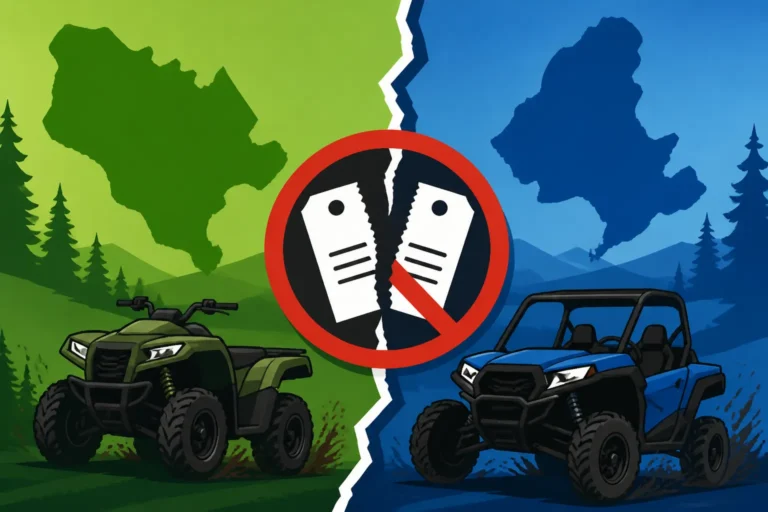
Ready To RideON does not turn an ATV into a road-legal vehicle, a trail permit or an insurance policy. The legal requirements depend on where and how the machine is used. Registration and insurance rules can apply even when a rider is not on a public road, while access rules vary between private property, public land, organized trail networks and roads.
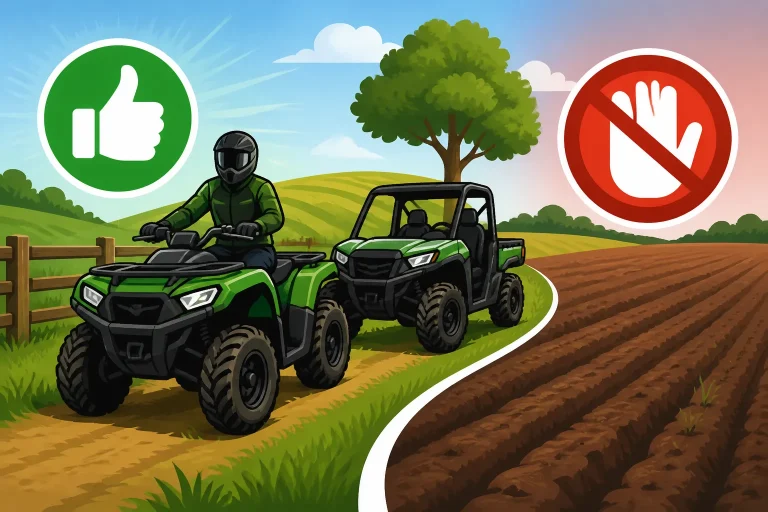
Before a trail ride, check whether the route requires a trail permit and whether the permit covers the area you plan to ride. Different clubs or land managers may have separate access arrangements. The course does not authorize a rider to enter a trail simply because it appears open. Ontario ATV Trail Permits Explained describes how trail permits differ from vehicle registration, and Ontario’s Public Lands Act Free Use Policy discusses why free use of some Crown land does not mean every route is open to motorized vehicles.
Nor does the course replace local road rules. A municipal road may be open to certain off-road vehicles under specific conditions, while another road nearby may be closed. Riders need to check the rules for the municipality and the particular road rather than relying on a general impression that ATVs are allowed in the area. Start with Ontario ATV Rules on a Municipal Road if road riding is part of your plan.
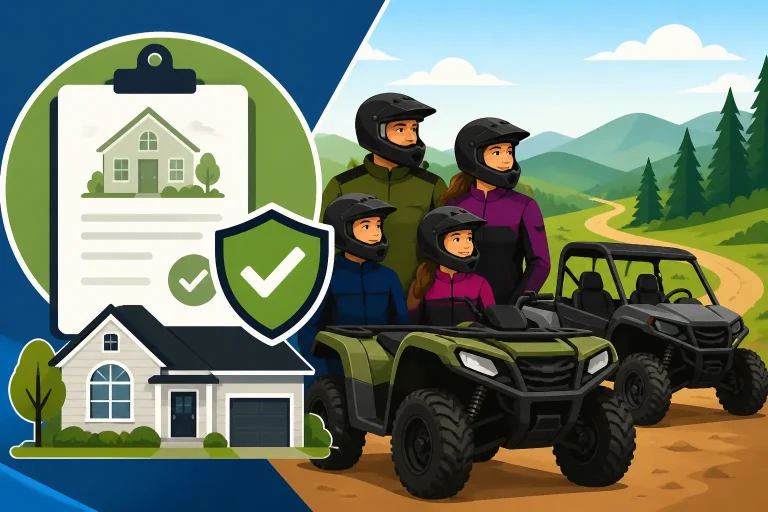
Insurance is another separate responsibility. Completing training does not provide coverage, and a rider should not assume a policy covers every activity, machine or location. Check the policy wording with the insurer and carry required proof when riding. For a broader explanation, see Ontario ATV Insurance Requirement.
Age and supervision requirements also remain in force. A parent should not treat course completion as proof that a child can ride unsupervised or operate any size of ATV. The child’s age, the location, the machine and the circumstances all matter. Review Ontario ATV Training for Young Riders alongside Ontario Supervision Rules for Minors before deciding what a young rider may do.
The course may introduce road and trail safety, but it cannot verify that a specific vehicle meets the requirements for a particular road, that a trail is currently open, or that a rider’s insurance applies. Those questions require current information from the relevant municipality, trail organization, insurer or official source.
How to get practical value from the modules
A short online course is most useful when riders treat it as preparation for real decisions, not as a box to tick. Set aside enough time to pay attention to the material, and discuss it with anyone who will ride with you. A parent and young rider can work through the topics together and turn them into a practical plan for the first ride.
Try this approach:
- Review the machine’s manual. Identify the controls, passenger design, recommended protective equipment and any limits that apply to the ATV.
- Choose a suitable first ride. Start with a legal, manageable location and conditions that match the rider’s ability. Avoid making a difficult trail the first test.
- Check the requirements for that location. Confirm registration, insurance, trail permit, access and any age or supervision rules that apply.
- Inspect and prepare the ATV. Use the manufacturer’s guidance for checks, and make sure protective equipment fits and is in usable condition.
- Practice basic control. An experienced, responsible person can supervise practice in an appropriate area before the rider joins a longer ride.
- Agree on a group plan. Discuss speed, spacing, signals, stopping points and what to do if someone has a problem.
- Review after the ride. Talk about what felt difficult, what equipment was useful and what skills need more practice before the next trip.
For a young rider, the conversation should include the adult’s role. Children need clear limits, active supervision where required and a machine they can control. They should know that they can stop or ask for help without being pressured to continue. A parent can use the course to identify questions, but should make decisions based on the child’s maturity and practical ability, not course completion alone.
For an adult who has ridden for years, the benefit may be different. A refresher can bring attention back to habits that familiarity makes easy to overlook, such as route planning, protective gear, passenger limits and changing trail conditions. Experienced riders can also use the material to set consistent expectations for a mixed-skill group.
If a rider needs hands-on instruction, look for an appropriate instructor or supervised training opportunity rather than expecting an online course to teach every physical skill. Online learning can explain why a practice matters; safe, suitable practice helps a rider apply it.
Ready To RideON is most valuable when it prompts riders to ask better questions: Is this ATV right for me? Is this route open and appropriate? Do I have the required coverage and permit? Is everyone prepared to ride safely today? Those checks still matter after the modules are complete.
Disclaimer
This article is for general informational purposes only and does not constitute professional advice. Laws, prices and regulations vary by location and change over time. Consult a qualified professional for guidance on your specific situation.