Two Hours and Six Modules
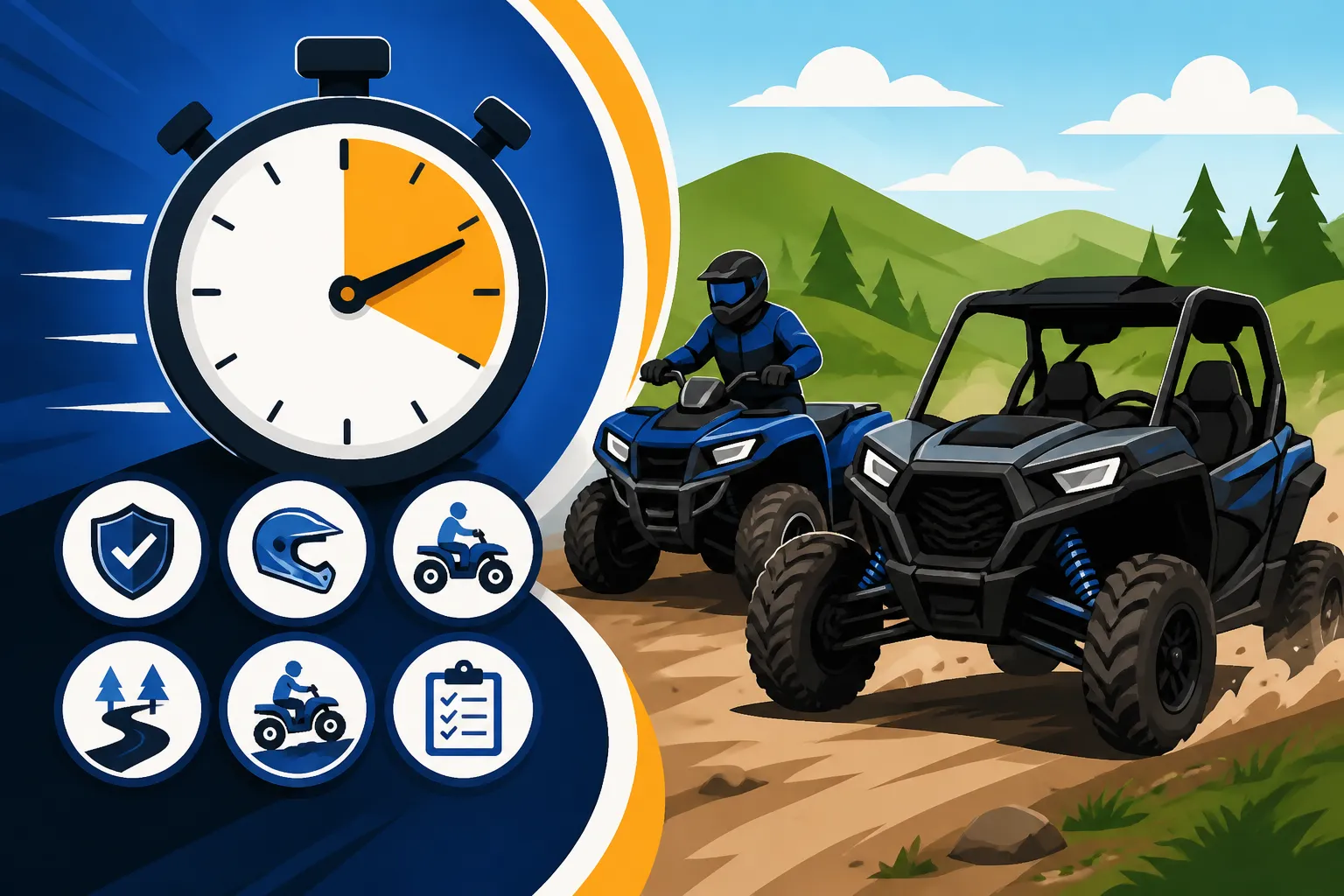
A two-hour online course can feel either manageable or vague when you do not know what it covers. Ready To RideON is organized into six modules for Ontario off-road riders. Here is how to think about the course, what to prepare for, and what its completion does—and does not—mean for riding an ATV or UTV.
What “Two Hours and Six Modules” Means
Ready To RideON is an online training option for people who want a structured introduction to off-road riding. Its six-module format breaks the material into shorter parts rather than one long lesson. The course is often described as taking about two hours, but the time you need can depend on how quickly you work through the material and whether you pause to review.
That estimate is best treated as a planning guide, not a guarantee. Set aside a quiet block of time, use a reliable internet connection, and avoid starting just before you need to leave. If the course includes questions or activities, allow time to think through them instead of rushing to finish.
The six modules are a way to organize learning, not a promise that every subject will be taught in exactly the same order or depth. Check the course provider’s current description for its module titles, access requirements, and completion process before you begin. Course details can change.
| Course feature | What it means for a learner |
|---|---|
| Online format | You can complete the material without attending an in-person classroom session. |
| Six modules | The course is divided into manageable sections that can help structure your learning. |
| About two hours | Use this as a rough time estimate and leave room for breaks or review. |
| Completion record | Keep any confirmation the course provides, but do not treat it as a substitute for required permits, insurance, or legal compliance. |
| Voluntary training | The course can support safer riding, but completing it does not by itself authorize you to ride wherever you want. |
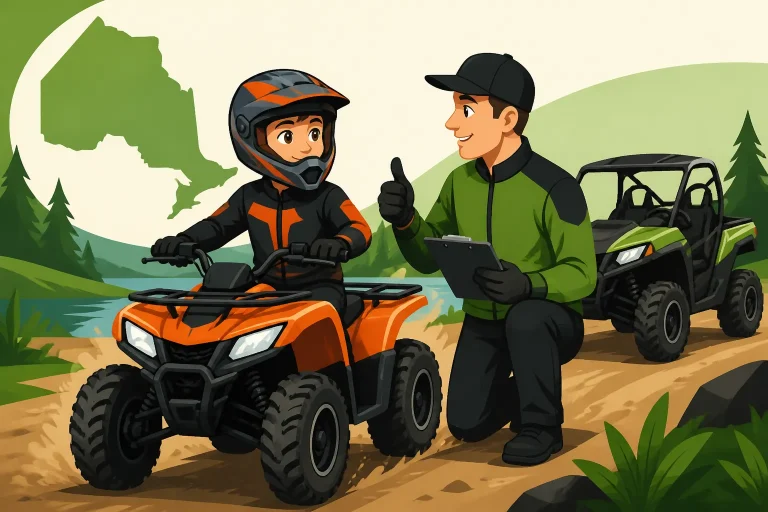
The course is intended to help riders build knowledge before getting on a machine. That is useful for a first-time rider, a young person learning under supervision, or an adult who is new to ATVs and side-by-sides. It can also give a family a shared starting point for talking about equipment, responsibility, and trail decisions.
Online learning has limits, though. Reading or watching material is not the same as practising throttle control, braking, turning, or safe hill approaches on a suitable machine. A course can introduce ideas and help you recognize risks, but it cannot assess your riding technique in person. Pair it with careful instruction and practice in a safe, lawful setting.
What the Six Modules Can Help You Learn
The course’s exact module names and lesson details should be confirmed on the provider’s current platform. Broadly, training of this kind is useful when it connects rules and safety principles to decisions a rider will make before and during a ride.
Preparing yourself and the machine
A good starting point is understanding that safe riding begins before the engine starts. Riders need to think about whether the machine is appropriate for them, whether it is in serviceable condition, and what protective equipment is suitable. A pre-ride check can help identify obvious problems with controls, tires, brakes, lights, or other key parts before they become trail problems.
The details matter because ATVs and UTVs are not interchangeable in every situation. A side-by-side has different seating and occupant-protection features from a quad, and riders need to understand the controls and instructions for the machine they will use. New riders should not assume that experience on one model automatically transfers to another.
Protective gear is another practical topic to take seriously. A helmet that meets applicable standards, properly fastened, is central to reducing risk. Other gear can help protect against weather, debris, and contact with branches or the ground. The right choice depends on the ride, conditions, and machine. For the applicable legal requirements, see Ontario ATV Helmet Law and Ontario ATV Insurance Requirement.
Understanding how a machine behaves
An off-road vehicle can be affected by terrain, speed, load, and rider input. A course can introduce the importance of smooth control and looking ahead, but those concepts become useful only when practised with appropriate supervision. Riders should learn the specific machine’s controls before setting out, including how to stop it, how to shift or select drive modes, and how to respond if it behaves unexpectedly.
A common beginner mistake is treating a quad or UTV like a car. The machine’s handling can change on slopes, loose ground, mud, or uneven trails. Carrying a passenger or cargo can also affect balance and control. Stay within the machine’s design and instructions, and do not assume that a route is safe just because another rider has completed it.
If you are learning on a UTV, pay particular attention to occupant protection and seating. Passengers should use the seats and restraints provided, and riders should understand the machine’s limits. The relevant road-use requirements are not a complete substitute for good off-road judgement. For more detail on classification and road rules, see Where a UTV Fits in Ontario’s Classes and Buckling Up in a Side-by-Side.
Choosing where and how to ride
Safe operation includes knowing where you are allowed to ride. A training course is not a trail pass, road permit, insurance policy, or permission to cross someone else’s land. Those are separate questions. Before a ride, check that the route is open to your type of vehicle, that any required permit is in place, and that you have permission where needed.
In Ontario, a rider may encounter club trails, municipal roads, private property, Crown land, and areas where off-road vehicles are restricted. The rules can differ by location and by the kind of land. Do not infer that a trail is open from the presence of tire tracks, a map pin, or another rider. Check current signs and the responsible land manager or municipality. The articles Ontario ATV Trail Permits Explained and Ontario Crown Land Riding in Ontario can help you separate trail access from other land-use questions.
Training is most useful when it encourages riders to stop and assess conditions. Weather, visibility, trail surface, other users, and fatigue can all affect a ride. A route that is manageable in dry daylight may become a poor choice after heavy rain or near dusk. Turn around when conditions exceed your ability or the machine’s limits.
Making decisions before an incident
Safety knowledge is not just about technique. Riders also need to make sound choices about group size, route planning, communication, and what to do when a machine is damaged or someone is hurt. A short course may prompt those conversations, but families and riding groups should make their own plan before leaving.
For a group ride, agree on the route, regrouping points, and what to do if someone falls behind. Carry suitable supplies for the length and remoteness of the trip. On unfamiliar trails, know how you will navigate if cell service is unavailable. A rider should be able to say no to a route or manoeuvre that feels beyond their skill.
Young riders benefit from adults who model cautious decisions. That means setting limits on speed and terrain, matching the machine to the rider, and supervising rather than relying on a completed online course as proof of readiness. See Ontario Supervision Rules for Minors for the legal side of supervision and age-related requirements.
What Course Completion Does—and Does Not—Do
Ready To RideON is voluntary training, not a general legal certificate that replaces Ontario’s riding requirements. Completing it does not register an ATV or UTV, provide insurance, grant access to a trail, or make a closed road or private property available for riding. Riders still need to follow the rules that apply to their machine and location.
That distinction is especially important for families. A young person may complete training and still need to meet the applicable age and supervision rules. The machine’s size and type, where it is being used, and whether the ride is on a road or off-road can all affect what is permitted. Review Ontario ATV Minimum Age Off-Road and Ontario ATV Minimum Age on a Road rather than relying on a course completion record to answer those questions.
The course also does not replace vehicle-specific instruction. Before a new rider operates a machine, an experienced adult should explain its controls and safety features, make sure the rider can reach and use them correctly, and supervise practice in a suitable area. Start with basic control and stopping before moving to more challenging terrain. A learner who is uncomfortable or cannot control the machine should not be pushed to continue.
Think of the course as one layer in a wider safety plan:
- Confirm the machine is suitable for the rider and intended use.
- Read the owner’s instructions and explain the controls before riding.
- Check the applicable age, supervision, registration, insurance, and access requirements.
- Use appropriate protective gear and inspect the machine.
- Practise in a safe place before attempting a trail or more difficult terrain.
- Set a route and communication plan, and be willing to turn back.
The legal requirement for rider training is a separate issue from whether training is worthwhile. Ontario does not generally require riders to complete a course certificate as a condition of riding an ATV or UTV, but that does not make preparation optional in a practical sense. New riders may find structured instruction useful, particularly when it helps them recognize hazards and ask better questions before riding. For more context, see Ontario Rider Training and Why It Is Voluntary and Why Ontario Mandates No Rider Course.
For a teenager or first-time adult, the value is less about collecting a certificate and more about starting with a common vocabulary for safety. A learner can revisit material, discuss unclear points, and use the course as a checklist for supervised practice. An experienced rider may also benefit from reviewing assumptions, especially when switching from a quad to a side-by-side or riding in a new area.
Before relying on any completion record, save the confirmation provided by the course and check whether it has a specific purpose in your situation. Do not assume it satisfies a separate requirement imposed by an employer, rental operator, insurer, club, event organizer, or land manager. Those organizations may set their own conditions.
Getting the Most From the Course
A two-hour estimate makes the course approachable, but the best approach is to treat it as preparation rather than a box to tick. Read each part carefully, note questions to ask an experienced rider, and connect the material to the machine and terrain you will actually encounter.
If a topic is unfamiliar, pause and look for clarification in the machine’s owner’s manual or from a qualified instructor. Do not guess about a control or safety feature. If the course covers a general principle, compare it with the instructions for your particular ATV or UTV; equipment and procedures can vary.
Parents and supervisors can make the learning more useful by discussing the material with a young rider. Ask the learner to explain what they would do if visibility deteriorated, a trail became too difficult, or the group separated. A conversation like that tests understanding more meaningfully than asking whether the modules are finished.
Finally, keep legal requirements and riding judgement in view. A course cannot tell you whether a particular trail is open today, whether a municipality allows ORVs on a specific road, or whether a machine qualifies for a particular use. Confirm those details separately, and treat signs and current local rules as controlling. The course is a useful introduction; safe riding still depends on preparation, supervision, appropriate equipment, and decisions made throughout the trip.
Disclaimer
This article is for general informational purposes only and does not constitute professional advice. Laws, prices and regulations vary by location and change over time. Consult a qualified professional for guidance on your specific situation.