Ontario ATV Rules for Riding a Provincial Park
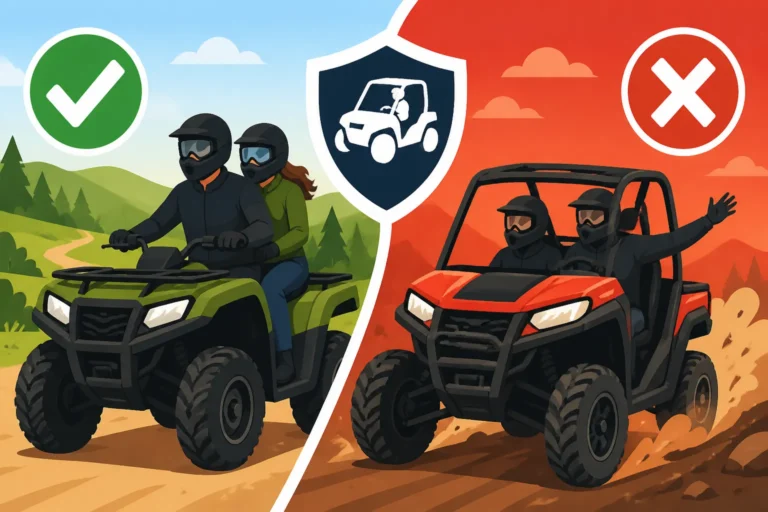
One of the most common questions I hear from fellow ATV and UTV enthusiasts in Ontario is, "Can I ride my quad or side-by-side in a provincial park?" It's a valid question, stemming from a desire to explore the province's stunning natural beauty. Unfortunately, the simple answer for most riders is a resounding "no," and misunderstanding this can lead to hefty fines and major headaches. This guide will walk you through the precise rules and regulations surrounding off-road vehicle use in Ontario's provincial parks, explain why these rules exist, and, crucially, help you discover fantastic legal riding alternatives.
The Hard Truth: Why Most Ontario Provincial Parks Say "No" to ATVs and UTVs
It’s completely understandable why you might look at a vast provincial park, with its winding trails and untouched wilderness, and think it would be the perfect place to explore on your ATV or side-by-side. The images of adventure practically leap out at you! However, the reality on the ground, or rather, on the trail, is quite different. Ontario’s provincial parks operate under a very specific mandate that, by its very nature, often conflicts with the presence of off-road vehicles.
The Mandate of Provincial Parks: Conservation and Quiet Enjoyment
At their core, Ontario Provincial Parks are established with two primary goals: the protection of natural and cultural heritage, and the provision of outdoor recreation opportunities. This means they are designed to conserve biodiversity, protect fragile ecosystems, and offer visitors a chance to connect with nature in a largely undisturbed setting. Think about it – the serene sounds of birdsong, the rustle of leaves, the distant call of a loon. These are the experiences provincial parks aim to preserve.
The introduction of motorized vehicles, even if they're as much fun as an ATV, can disrupt this delicate balance. The noise, the potential for increased traffic, and the physical impact on trails can run directly counter to the conservation mandate. Park managers often prioritize activities like hiking, birdwatching, canoeing, and camping, which align more closely with the goal of quiet enjoyment and minimal environmental disturbance. They are custodians of these spaces, tasked with ensuring they remain pristine for future generations, and that often means restricting activities that could compromise that goal.
Designated Trails vs. Off-Road Vehicles: A Fundamental Conflict
When you see a trail within a provincial park, it's usually designated for a specific type of use: hiking, cycling, or sometimes cross-country skiing in winter. These trails are often built and maintained to specific standards to withstand foot traffic, not the weight and power of an ATV or UTV. The idea of "off-road" riding, by its definition, often implies venturing beyond these designated paths, which is precisely what parks aim to prevent.
There’s a common misconception that if a trail looks wide enough, it must be open to all users. This simply isn't the case in provincial parks. The rules are often very clear, and they tend to favour non-motorized recreation. While your [Ontario ATV registration cost] might cover your machine for general use, it doesn't automatically grant you access everywhere. The park regulations supersede general off-road vehicle access laws within their boundaries. Attempting to ride your quad on a designated hiking trail, for instance, isn't just frowned upon; it's a direct violation of park rules and potentially, provincial law.
The Environmental Impact: Protecting Fragile Ecosystems
Let’s be honest: riding ATVs and UTVs, especially when you're pushing your machine through mud or over challenging terrain, can leave a significant footprint. While aftermarket parts from companies like SuperATV can help your machine tackle tough conditions, the very act of doing so can cause irreparable damage in sensitive areas. In a provincial park, every plant, every insect, every patch of soil is part of a larger, often fragile ecosystem.
ORVs can compact soil, damage roots, disrupt animal habitats, and accelerate erosion, especially on sloped terrain or near waterways. They can also introduce invasive species if mud and seeds are carried from one area to another. Provincial parks are often home to rare and endangered species, and even a seemingly minor disturbance can have significant negative consequences. The rules against ATVs aren't just about inconveniencing riders; they are a critical measure to protect the very natural heritage that makes these parks so special and worth visiting.
Are There Any Exceptions? Limited ORV Access in Ontario Provincial Parks
While the general rule is "no ATVs," like many things in life, there can be very specific, limited exceptions. These aren't loopholes for casual recreation but rather carefully controlled circumstances where an off-road vehicle might be permitted. It's crucial not to misinterpret these exceptions as a green light for recreational riding.
Permitted Access for Specific Purposes: Staff, Leaseholders, and Designated Corridors
The most common instances where you might see an ATV or UTV within a provincial park involve park staff, emergency services, or those with specific permits for maintenance or land management. Park rangers use these vehicles for patrolling, carrying tools, or accessing remote areas for conservation work. Similarly, if a private land parcel or a remote cottage exists within or directly abuts a park boundary, the owners might have a deeded right of way or a special permit to use an ORV for access to their property.
These are not recreational permits. These individuals are typically operating under strict conditions, often sticking to specific access roads or trails, and are held accountable for their impact. It’s also important to remember that such access is usually for transit only, not for recreational riding within the park’s main areas. You might encounter this, for example, if you're exploring [Ontario ATV Rules for Riding Crown Land] and find a small section that acts as a corridor through a provincial park, linking two larger Crown Land blocks.
Crossing a Park Boundary: Legalities of Transit
Sometimes, a provincial park might sit strategically along an existing trail system, or a legitimate access road might run directly through a small section of a park. In such rare cases, there might be a designated route for ORVs to pass through the park, but it is strictly for transit, not for stopping, parking, or recreational riding. These routes will be clearly marked, and riders are expected to stick to the defined path without deviation.
These situations are exceedingly rare and are usually part of a larger municipal or regional trail plan. You would need to check the specific park regulations and potentially a local by-law very carefully before even considering such a route. Generally, if you're asking, "Can I ride through this park to get to the other side?" the answer is almost always no, unless there is explicit, prominent signage indicating otherwise. Do not assume. Always verify with park authorities directly. Remember that merely possessing the proper [Ontario ATV insurance requirements] doesn't grant you access to restricted areas.
The Rare "Open Road" Within a Park: When a By-law Allows It
In extremely rare instances, a public road that pre-dates the park's establishment might run through a provincial park, and if that road has been specifically designated for ORV use by a municipal by-law, then you might be able to ride that specific stretch of road. However, this is far from common. The general rule is that even public roads within a provincial park fall under park regulations, which typically prohibit ORVs.
It's critical to understand that this would be an exception to the exception. You would need to consult not only the provincial park regulations but also the relevant municipal by-laws to confirm if a specific road segment is open to ORVs. [Checking a Township's ORV By-law] is usually done for roads outside park boundaries. Within a park, the park’s authority typically takes precedence. Don't rely on assumptions; always get definitive confirmation in writing if possible.
What Happens If You Break the Rules? Consequences of Riding Illegally in a Provincial Park
Let's not sugarcoat it: the consequences for illegally riding your ATV or UTV in an Ontario Provincial Park can be severe. This isn't just about a slap on the wrist or a friendly warning from a park warden. Park staff and Ontario Provincial Police (OPP) take these infractions very seriously, and the penalties reflect that. It's far better to understand these repercussions and avoid them entirely.
Fines and Penalties: The Cost of Trespassing
The most immediate consequence of riding where you shouldn't be is a hefty fine. Trespassing on provincial park lands with a motorized vehicle is a serious offense under the Provincial Parks and Conservation Reserves Act, 2006. These fines are not trivial; they can easily run into the hundreds, if not thousands, of dollars. This isn't just a parking ticket; it's a significant financial hit.
Consider the time, effort, and resources park staff invest in managing and protecting these areas. When rules are broken, it undermines their efforts and can lead to damage that costs taxpayer dollars to repair. The fines are meant to deter such behavior and compensate for the potential harm caused. And remember, these fines can be compounded if you're also found to be [Riding an unregistered ATV in Ontario] or without proper safety gear, like an approved helmet required under [Ontario ATV Helmet Law]. The total cost can quickly escalate.
Vehicle Seizure and Impoundment: Losing Your Machine
Beyond the financial penalty, you risk having your valuable machine seized and impounded. Yes, you read that correctly. Under certain circumstances, park wardens or police officers have the authority to confiscate your ATV or UTV. This means your pride and joy could be towed away, leaving you stranded, and facing a significant impoundment fee in addition to your fine.
Getting your vehicle back from impoundment isn't a simple process. It involves paying all outstanding fines, impoundment fees, and often requires proof of ownership and proper registration. This can turn a single illegal ride into a logistical nightmare, costing you not just money, but also valuable time and immense frustration. Imagine having invested in quality accessories from SuperATV, only for your machine to be sitting in an impound lot. It’s a gut-wrenching thought for any rider.
Long-Term Repercussions: Banned from the Park System
While less common, repeated or severe infractions could potentially lead to you being banned from accessing Ontario Provincial Parks for a specified period. This means no more camping, no more hiking, no more enjoying any of the facilities or natural beauty these parks offer. For outdoor enthusiasts, this is a truly significant consequence, essentially revoking your privilege to enjoy some of Ontario's most cherished natural spaces.
These repercussions highlight the importance of respecting park regulations. The rules are in place for a reason – to protect these special places. Ignorance of the law is not a valid defense, and park authorities are quite adept at enforcing their regulations. It's far better to channel your adventurous spirit into legal and approved riding areas, which Ontario has in abundance.
Where Can You Ride? Finding ATV-Friendly Trails and Lands in Ontario
Okay, so provincial parks are largely a no-go for ATVs and UTVs. That might feel like a bummer, but don't despair! Ontario is a massive province with incredible opportunities for off-road enthusiasts. The key is knowing where to look and understanding the rules for those specific areas. You don't need to put your [Ontario ATV registration paperwork] away; you just need to point your machine in the right direction!
Embracing the OFATV Trail Network: Your Best Bet for Legal Riding
If you're looking for organized, maintained, and legally sanctioned ATV and UTV trails in Ontario, the [Ontario's OFATV Trail Network] is your absolute best bet. The Ontario Federation of ATV Clubs (OFATV) is a provincial organization that works with local clubs to develop and maintain thousands of kilometres of trails across the province. This network provides a fantastic way to explore diverse terrain, from dense forests to open fields, all while knowing you’re riding legally and responsibly.
To access these trails, you'll need to purchase an OFATV trail permit. This permit helps fund trail maintenance, signage, and insurance, ensuring that these trails remain open and safe for riders. Many of these trails are designed to accommodate a variety of machines, including wider side-by-sides, and some clubs even offer multi-day riding opportunities with staging areas and fuel stops. This is where you can truly put your SuperATV lift kit or upgraded tires to good use, tackling trails specifically designed for off-road adventure. Remember to check out the [Ontario Trail Permit Cost] and choose a permit that suits your riding style, whether it’s a day pass or an annual membership.
Exploring Ontario's Crown Land: Opportunities and Responsibilities
Ontario boasts vast tracts of Crown Land, particularly in the northern and central parts of the province. Much of this land is open to what's known as "free use," which can include ATV and UTV riding. This offers incredible opportunities for backcountry exploration, remote camping, and simply enjoying the untamed wilderness. However, riding on [Ontario ATV Rules for Riding Crown Land] comes with its own set of responsibilities and restrictions.
While generally open, specific areas of Crown Land might have restrictions due to environmental sensitivity, logging operations, or other uses. It’s crucial to know how to identify Crown Land, understand maps, and be aware of any posted signage that might indicate restrictions. You are expected to ride responsibly, respect the environment, and adhere to principles of "leave no trace." This also means being entirely self-sufficient, as services and rescue might be hours away. Always carry appropriate gear, emergency supplies, and let someone know your route and expected return time.
Private Property and Permission: The Key to Local Riding
For many riders, especially those in more populated areas, private property offers a convenient and accessible option. If you own land, you're generally free to ride your ATV or UTV on it, provided you adhere to local noise by-laws and safety regulations, and your [Ontario ATV Insurance Requirements] are met. This is often where young riders first learn the ropes, under supervision, perhaps on a smaller machine. Remember that the [Ontario ATV Minimum Age Off-Road] is important to consider here, even on private land, for safety reasons.
If you want to ride on someone else's private property, the golden rule is always to obtain explicit permission from the landowner before you even unload your machine. This isn't just common courtesy; it's a legal necessity. Riding without permission is trespassing, which, as we've discussed with provincial parks, can lead to serious legal consequences. A simple conversation can open up great local riding opportunities, whether it's on a friend's farm, a relative's cottage property, or a private woodlot. A written agreement is always a good idea, just to avoid any misunderstandings. Respecting landowners and their property is paramount to maintaining good relationships and ensuring these private riding options remain available.
Disclaimer
This article is for general informational purposes only and does not constitute professional advice. Laws, prices and regulations vary by location and change over time. Consult a qualified professional for guidance on your specific situation.